
It's a sweltering Tuesday morning in Riyadh, and Mohammad Al-Harbi, lead contractor for a mid-sized local construction firm, is pacing the site of a new community center. His team has spent weeks coordinating timelines, securing permits, and lining up labor—but there's one piece of the puzzle that's been keeping him up at night: materials. "We need something that can handle the heat, look good for decades, and not break the bank," he mutters, scrolling through a spreadsheet of quotes from suppliers. The options feel either generic—mass-produced stones that could belong in any building in any city—or wildly expensive, imported from halfway around the world with lead times that would derail the project. "Why is it so hard to find materials that feel… *ours*?" he wonders, glancing at the design renderings that blend modern architecture with subtle nods to Saudi heritage.
Across town, in a sleek office in the King Abdullah Financial District, the team at COLORIA Saudi Agency hears this question daily. For them, supporting local construction teams isn't just about selling materials—it's about weaving a thread of reliability, creativity, and cultural resonance into every project. "These teams are the backbone of our built environment," says Lina Hassan, COLORIA's regional director. "They're not just building walls; they're building communities, preserving history, and shaping the future of our cities. We wanted to be the partner that doesn't just deliver products, but delivers *solutions* that make their jobs easier, their projects better, and their vision possible."
To truly support local teams, COLORIA knew they had to start by listening. Over six months in 2023, their team hit the road, visiting job sites from Jeddah to Dammam, sitting in on project meetings, and chatting with contractors, architects, and even laborers over cups of karak chai. What they found was a community grappling with three core challenges: sourcing materials that balance durability with design flexibility, navigating the disconnect between global trends and local aesthetic needs, and accessing reliable technical support when projects hit unexpected snags.
"One contractor in Makkah told us he'd spent three weeks replacing cracked stone cladding on a mosque extension because the material couldn't handle the region's temperature swings," recalls Kareem Othman, COLORIA's technical sales lead. "Another in Al Khobar mentioned that his client wanted a 'modern desert vibe' but couldn't find anything that didn't look like it belonged in a European ski chalet. These weren't just complaints—they were clues. We realized the problem wasn't a lack of materials; it was a lack of materials *rooted in the reality of Saudi construction*."
Armed with these insights, COLORIA set out to curate a lineup that didn't just check boxes for strength and cost, but also spoke to the unique identity of Saudi projects. They leaned into materials that celebrated local landscapes—the warm hues of the desert, the texture of ancient stone, the organic patterns of traditional crafts—while infusing them with modern engineering to meet the demands of 21st-century building.
Walk through COLORIA's Riyadh showroom, and you'll quickly see this philosophy in action. Rows of samples line the walls, each with a story to tell—and a practical purpose to serve. Take, for example, their mcm flexible stone series, a standout favorite among local teams. Unlike rigid natural stone slabs that crack under thermal expansion or require perfectly flat surfaces for installation, this modified composite material bends like a thick fabric, conforming to curves, angles, and even slightly uneven walls. "We tested it in our lab for months, exposing it to 50°C heat, sandstorms, and heavy rain," explains materials engineer Amal Al-Mansoori. "It didn't just hold up—it maintained its color and texture. For teams working on heritage restorations or modern buildings with unique geometries, that flexibility is a game-changer. No more stressing over subpar surfaces or last-minute design tweaks."
Then there's the lunar peak silvery collection, which draws inspiration from the moonlit dunes of the Rub' al Khali. Its iridescent finish shifts subtly with light, mimicking the way moonlight plays on sand—a nod to Saudi nights that feels both contemporary and deeply familiar. "A hotel project in Abha used it for their exterior cladding," Kareem says with a smile. "The client wanted something that would stand out during the day but glow at night, and the lunar peak silvery delivered. The contractors loved it because it's lightweight, so installation was faster, and it's low-maintenance—no need for regular polishing like traditional marble."
For teams craving a touch of tradition, the bamboo mat board has become a go-to. Crafted to replicate the woven texture of palm mats used in traditional Saudi homes, it adds warmth and cultural context to everything from restaurant interiors to community center walls. "We had a school in Jeddah use it for their library," Lina shares. "The kids kept running their hands over it, asking if it was real bamboo. It sparked conversations about our heritage, which was something the architect hadn't even anticipated. That's the magic of materials that connect on an emotional level."
And when it comes to balancing raw, industrial edge with timeless appeal, fair-faced concrete has emerged as a workhorse. Unlike standard concrete, which often requires painting or cladding to look finished, COLORIA's version is designed to be left exposed, with a smooth, uniform surface that highlights the material's natural character. "A tech startup in Riyadh used it for their office floors and walls," Amal notes. "They wanted that 'lo-fi, high-function' vibe, and the fair-faced concrete gave them exactly that—no frills, just durability and a cool, understated look. Plus, it's fire-resistant and sound-absorbent, which checked all their safety boxes."
| Material | What Makes It Stand Out | Why Local Teams Love It | Perfect For |
|---|---|---|---|
| mcm flexible stone | Bends without cracking; adapts to uneven surfaces | Faster installation, fewer breakages, design versatility | Heritage restorations, curved facades, tight spaces |
| lunar peak silvery | Iridescent finish inspired by moonlit desert dunes | Unique aesthetic, lightweight, low-maintenance | Hotels, cultural centers, modern exteriors |
| bamboo mat board | Replicates traditional woven palm textures | Cultural resonance, warm aesthetic, easy to cut/shape | Schools, restaurants, heritage-themed interiors |
| fair-faced concrete | Exposed finish with uniform texture; no need for cladding | Durable, fire-resistant, sound-absorbent, industrial chic | Offices, commercial spaces, modern industrial designs |
| travertine (starry blue) | Polished surface with embedded "star" flecks in deep blue | Statement design element, heat-resistant, unique color story | Feature walls, luxury hotels, art galleries |
Take travertine (starry blue) , for instance—a bold choice that's been turning heads in luxury projects. Its deep blue base is dotted with iridescent flecks that catch the light, evoking the night sky over the Arabian Peninsula. "A boutique hotel in Riyadh used it for their lobby feature wall," Kareem says. "The contractor was nervous at first—blue stone feels unconventional here—but the client wanted something that would make guests stop and stare. Now, it's the first thing people mention in reviews. That's the power of materials that to be different, but still feel connected to our environment."
For local teams, the difference between a good supplier and a great one often comes down to support—and COLORIA has built its reputation on going beyond the sale. "We don't just send a truckload of materials and wish you luck," Lina emphasizes. "We walk with you from the first sketch to the final inspection."
It starts with the "Material Matchmaker" service, where teams can book a free consultation with COLORIA's design and technical experts. "An architect in Jeddah came to us with a tricky brief: a community center that needed to feel both modern and welcoming, with materials that would age gracefully," says Amal. "We brought in samples of the bamboo mat board for the interior, paired with lunar peak silvery for the exterior, and even did a small mock-up on-site to test how the light hit the surfaces at different times of day. The team left not just with materials, but with confidence that they'd made the right choice."
Then there's the technical support hotline, staffed by engineers who've worked on Saudi job sites and understand the unique challenges—from sandstorm damage to humidity in coastal areas. "Last year, a team in Yanbu was installing mcm flexible stone on a curved facade and hit a snag with adhesion," Kareem recalls. "They called us at 7 p.m., and by 9 a.m. the next day, our technician was on-site, troubleshooting and walking the crew through a simple adjustment. No waiting for a consultant from overseas, no lost days of work. That's the support local teams deserve."
Training is another cornerstone. COLORIA hosts monthly workshops at their Riyadh and Jeddah showrooms, teaching teams best practices for installing their materials, from cutting techniques for bamboo mat board to sealing methods for fair-faced concrete. "We had a group of young laborers from a small contracting firm attend a workshop on the mcm flexible stone," Lina says. "By the end, they were showing *us* tips and tricks they'd learned on the job. It's a two-way street—we learn from them, too, which helps us make our materials even better."
Sometimes, the best way to understand impact is to see it in action. Take the Al-Mansoori Heritage House project in Jeddah's historic Al-Balad district—a 19th-century merchant's home being restored into a cultural center and museum. The team, led by contractor Salem Al-Mansoori (no relation to Amal), faced a daunting task: preserve the home's original mud-brick walls and wooden latticework while updating the structure to meet modern safety codes and add exhibition spaces.
"The biggest challenge was the interior cladding," Salem recalls. "The original walls are uneven—hand-built over a century ago—and we couldn't use heavy stone that would strain the structure. But we also didn't want to cover them with something cheap that would erase their character." After a frustrating search, a colleague suggested COLORIA's mcm flexible stone. "I was skeptical at first—how can stone be 'flexible'?" Salem admits. "But when their team brought samples and demonstrated how it bends, I knew we'd found our solution."
The team opted for the travertine (starry blue) variant, drawn to its subtle texture and the way the blue tones complemented the home's original wooden beams. "Installation was a breeze," Salem says. "We cut it on-site with standard tools, and it adhered perfectly to the uneven walls. The best part? It's lightweight, so we didn't have to reinforce the structure. Now, when you walk through the exhibition halls, you can still see the gentle curves and imperfections of the original mud bricks through the stone—like a conversation between past and present."
To add warmth to the modern extension, they chose bamboo mat board for the ceiling panels. "It's a nod to the palm frond ceilings that were common in traditional homes here," Salem explains. "Visitors—especially older Saudis—immediately recognize that texture. They'll pause, smile, and say, 'This feels like my grandmother's house.' That connection? You can't put a price on it."
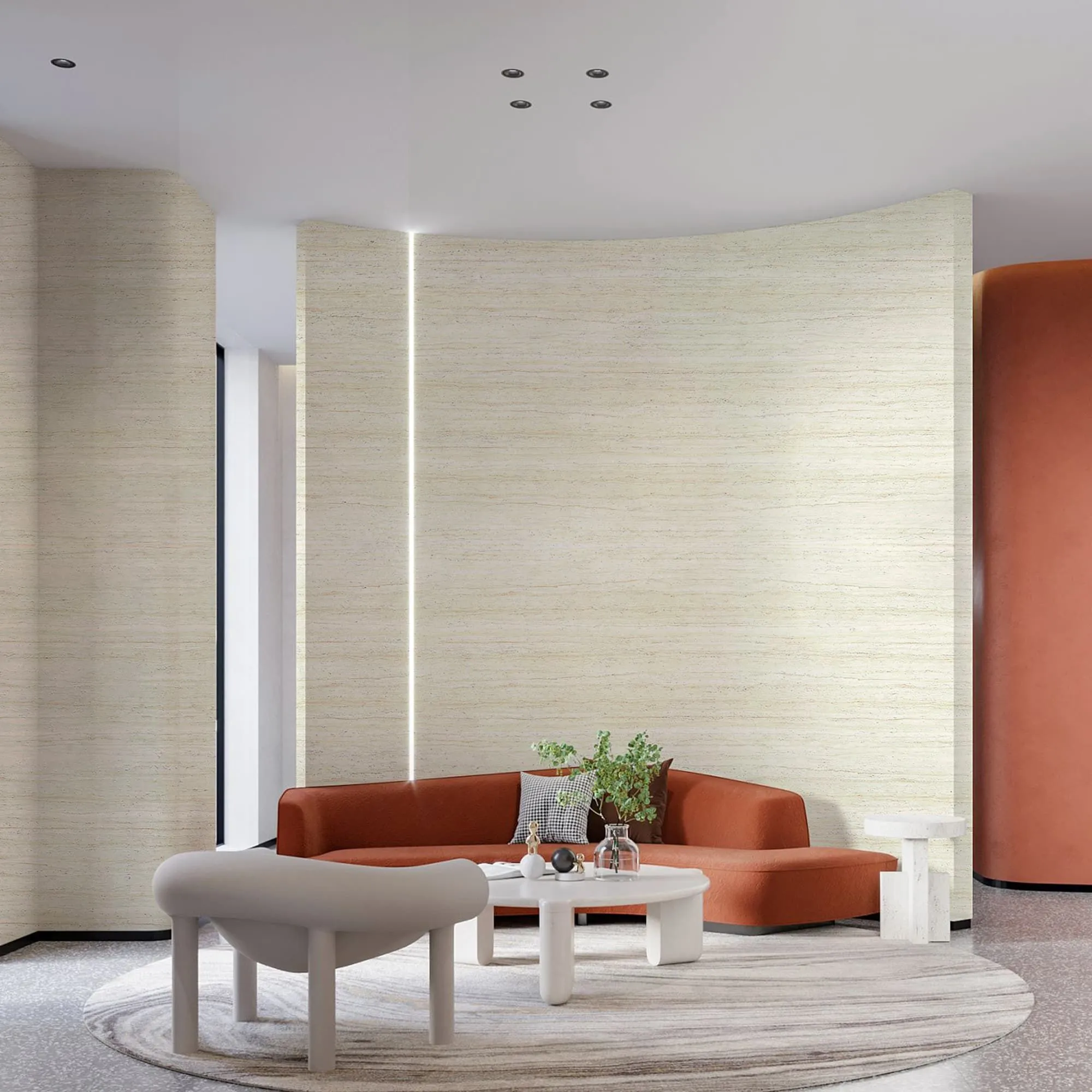
In a region where climate resilience is non-negotiable, sustainability isn't just a buzzword for local construction teams—it's a necessity. COLORIA has leaned into this by prioritizing materials that reduce environmental impact without compromising performance. "We know teams are under pressure to meet green building standards, whether from clients, governments, or their own values," Lina says. "So we've invested in options that are energy-efficient, low-waste, and sourced responsibly."
Fair-faced concrete is a prime example. Unlike traditional concrete, which often requires additional cladding or paint (adding to material waste and maintenance costs), it's designed to be left exposed, reducing the overall carbon footprint of a project. "It also reflects sunlight, which helps keep buildings cooler in the summer—lowering AC costs and energy use," Amal adds. "A hospital in Dammam used it for their outpatient wing, and they've already seen a 15% reduction in cooling bills. That's a win for the environment and the bottom line."
The bamboo mat board is another sustainability standout. Sourced from FSC-certified forests and manufactured using low-VOC adhesives, it offers an eco-friendly alternative to plastic laminates or imported hardwoods. "We had a school in Riyadh specify it for their classrooms," Kareem notes. "Their students even did a project on sustainability, tracing the journey of the bamboo from forest to classroom. It turned a building material into a teaching tool—that's the kind of ripple effect we love to see."
As Saudi Arabia continues to grow and evolve—with mega-projects like NEOM and the Red Sea Development capturing global attention—local construction teams are poised to play an even bigger role. COLORIA, too, is looking to expand its support, with plans to launch a "Heritage Collection" in 2024 that draws even more directly from Saudi cultural motifs, from the geometric patterns of traditional Najdi architecture to the earthy tones of ancient Nabataean stonework.
"Our goal is to be the thread that connects local talent with the tools they need to shine," Lina says, gazing out her office window at the Riyadh skyline, dotted with cranes and construction sites. "Every building these teams complete is a testament to their skill, their resilience, and their love for this country. We just want to be there, holding the other end of the thread, making sure they never have to wonder if they have the support to build something extraordinary."
Back on the community center site in Riyadh, Mohammad Al-Harbi is finally smiling. A week after his frustrating morning, he's standing in front of a sample wall featuring COLORIA's lunar peak silvery cladding and bamboo mat board accents. "This is it," he tells his team, pointing to the way the silvery stone catches the sunlight and the bamboo adds a soft, organic touch. "This feels like *our* community center." As the crew nods, already imagining how the materials will come together, Mohammad pulls out his phone to call Lina. "Tell your team thanks," he says. "You didn't just give us materials. You gave us our project back."
In the end, that's the power of a true partner: not just supplying products, but supplying the confidence to build something that matters. For COLORIA Saudi Agency, supporting local construction teams is about more than business—it's about building a future where every wall, every facade, and every space tells a story that's uniquely, proudly Saudi.
Recommend Products












