In the heart of Saudi Arabia's rapidly evolving architectural landscape, COLORIA has emerged not just as a supplier of building materials, but as a curator of experiences. Their residential projects tell a story—one where stone, texture, and color converge to turn ordinary exteriors into living, breathing expressions of home. Today, we're diving into their most celebrated work: the use of Milan
Travertine in residential complexes, a choice that blends Italian craftsmanship with Middle Eastern warmth. But this isn't just about a single material. It's about how COLORIA weaves together
MCM flexible stone
,
lunar peak golden
accents, and even touches of
bamboo mat board
to create spaces that feel both luxurious and deeply human. Let's walk through the details.
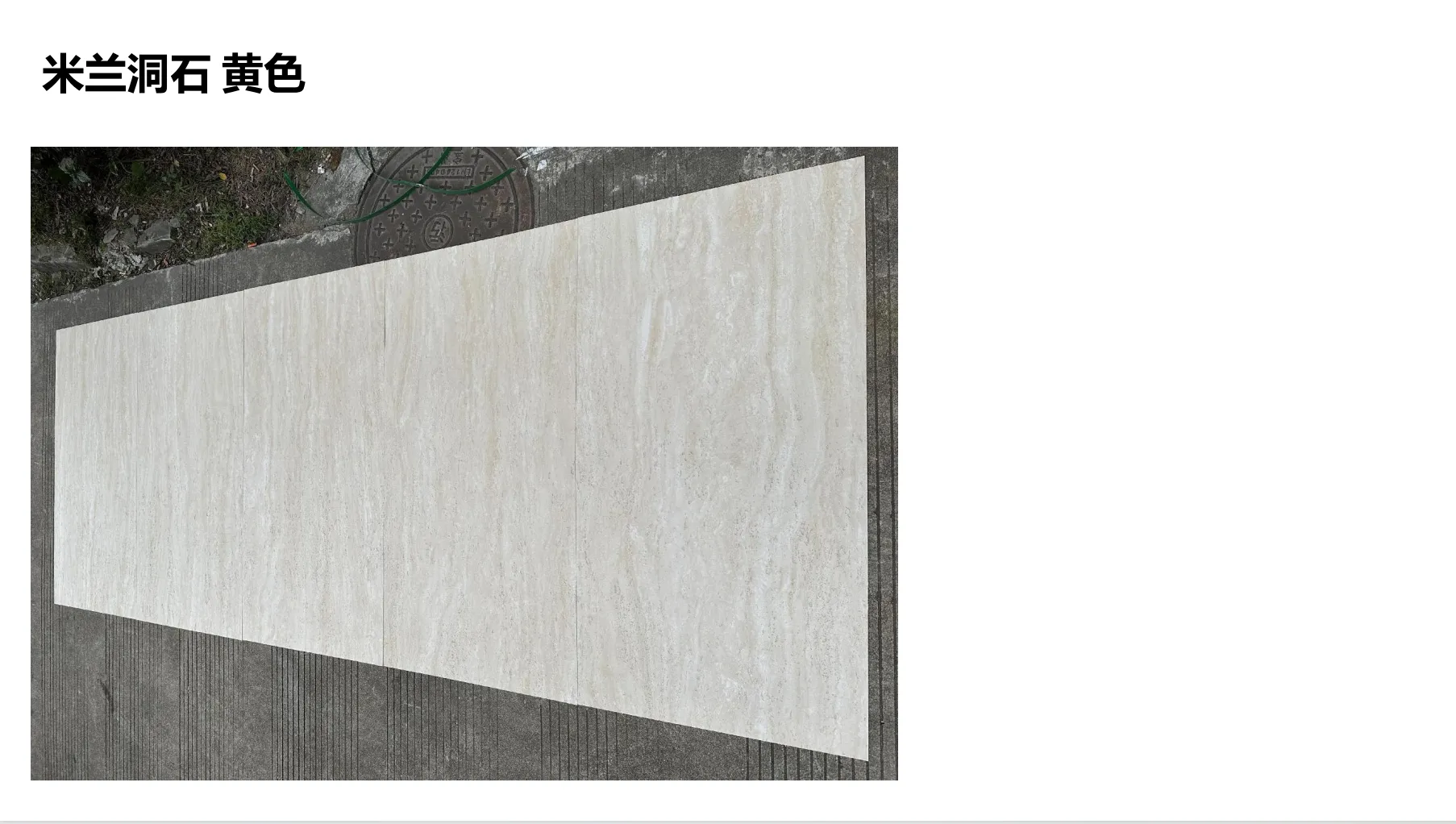
Milan Travertine: More Than Stone—A Canvas of Light and Texture
When you first lay eyes on a COLORIA residential complex clad in Milan
Travertine, it's the light that catches you. Early morning sun filters through the complex's archways, casting soft shadows across the stone's surface—each pockmark and vein telling a story of millions of years of geological formation. Unlike polished marble, which can feel cold and distant, Milan
Travertine has a warmth to it, a tactile quality that invites you to reach out and trace its contours. "
Travertine is alive," says Lina Hassan, COLORIA's lead designer. "It changes with the day: golden at sunrise, honeyed at noon, and a soft amber as the sun dips below the horizon. In Saudi Arabia, where light is so intense, that dynamism is everything. It turns the exterior into a daily show for residents."
What makes Milan Travertine stand out? For starters, its versatility. COLORIA sources it from quarries in Italy, where the stone is known for its uniform density and subtle color variations—no two slabs are identical. But it's the finish that sets COLORIA's selection apart: a gentle honing that (retains) the stone's natural porosity without feeling rough. "We wanted something that would age gracefully," explains Hassan. "In Riyadh's climate, with its hot days and occasional sandstorms, durability is non-negotiable. Milan Travertine weathers beautifully; over time, it develops a patina that only adds character. Residents don't just live
with
the building—they grow
with
it."
Texture note: Imagine running your hand over a sun-warmed desert stone—slightly gritty, yet smooth enough to feel comforting. That's the tactile experience of Milan Travertine here.
While Milan
Travertine takes center stage, COLORIA's magic lies in the supporting cast. Enter
MCM flexible stone
—a material that's revolutionizing how architects think about exterior cladding. Unlike traditional stone, MCM (Modified Composite Material) is lightweight, flexible, and easy to install, making it perfect for curved surfaces or intricate designs. "We used
MCM flexible stone on the balconies of the Al Nahda Residences," Hassan recalls. "The
travertine main facade is bold and solid, but the balconies needed something that could wrap around the curves without cracking. MCM gave us that freedom. And visually, it mirrors the
travertine's texture so closely, you'd never guess it's a composite—until you touch it. It's smoother, almost velvety, creating a lovely contrast."
But MCM isn't just about practicality. It's about accessibility. By combining the look of natural stone with a lighter, more affordable material, COLORIA ensures that luxury isn't reserved for the top tier. "A young family moving into their first home shouldn't have to compromise on beauty," says project manager Kareem Al-Mansoori. "MCM lets us offer that travertine aesthetic at a price point that works for more people. That's the heart of what we do—democratizing good design."
If Milan
Travertine is the canvas, then
lunar peak golden
is the brushstroke that ties everything together. This color variant—part of COLORIA's
Lunar Peak series—isn't a flashy gold, but a muted, earthy hue that evokes the desert at sunset. "We tested dozens of golds before settling on
Lunar Peak Golden," Hassan laughs. "Too brash, and it would clash with the
travertine; too pale, and it would disappear. This one? It's like liquid sunlight. We use it sparingly—on window frames, trim, or the edges of archways. It catches the light in the late afternoon, turning the entire complex into a glow. Residents tell us it makes coming home feel like arriving at a retreat, not just a building."
Take the Al Khobar Heights project, for example. The main exteriors are Milan Travertine in a soft beige, but the gables and balcony railings are finished in Lunar Peak Golden. "One resident, a teacher named Amina, told me her daughter loves watching the railings 'sparkle' as they drive up," Al-Mansoori shares. "That's the moment you realize: this isn't just about materials. It's about creating joy, even in the smallest details."
|
Material
|
Aesthetic Character
|
Typical Application
|
Key Resident Feedback
|
|
Milan Travertine
|
Warm, porous, natural veining
|
Main facades, entranceways
|
"Feels like the building is breathing."
|
Lunar Peak Golden
|
Subdued gold, metallic sheen
|
Trim, railings, accent walls
|
"Makes the building glow at sunset."
|
Bamboo Mat Board
|
Matte, woven texture, earthy tones
|
Patio ceilings, pergolas
|
"Reminds me of summer evenings in my grandfather's garden."
|
Fair-Faced Concrete
|
Raw, industrial, cool gray
|
Base layers, garage exteriors
|
"Balances the warmth—feels modern but not cold."
Balancing Warmth and Edge: The Role of Fair-Faced Concrete
Not every material in COLORIA's toolkit is soft or warm.
Fair-faced concrete
makes an appearance in many of their projects, and it's a deliberate choice. "We don't want everything to feel 'cozy'—homes need a sense of grounding, too," Hassan explains. "
Fair-faced concrete is honest. It's raw, unapologetic, and it provides the perfect counterpoint to the
travertine's warmth. At the Al Riyadh Gardens complex, we used it for the lower levels, creating a solid base that makes the
travertine upper floors feel like they're floating. It's a visual trick, but it works. Residents say the building feels both stable and light, which is exactly what you want in a home."
The concrete isn't just plain gray, either. COLORIA adds subtle pigments to match the travertine's undertones, ensuring the transition between materials feels seamless. "It's all about harmony," Al-Mansoori adds. "Even the 'industrial' elements need to play nice with the others. That's the difference between a collection of materials and a
design
."
Case Study: The Azure Residences—A Masterclass in Material Harmony
Nestled in Jeddah's northern district, the Azure Residences are a testament to COLORIA's philosophy. Let's break down the elements:
-
Main Facade:
Milan Travertine (vintage gold finish) with horizontal grooves that mimic desert wind patterns.
-
Accents:
Lunar Peak Golden window frames and balcony edges, adding pops of warmth.
-
Shade Structures:
Bamboo mat board ceilings over walkways, creating dappled light and a tropical, relaxed vibe.
-
Base Layer:
Fair-faced concrete with a sandblasted finish, blending into the surrounding landscape.
"My favorite part? The bamboo mat board over the parking walkway," says resident Fatima Al-Zahrani. "In the summer, it keeps the path cool, and the way the light filters through… it's like walking through a forest. You forget you're in the middle of the city."
What's most striking about Azure Residences is how the materials work together to create micro-experiences. Morning coffee on a balcony with Lunar Peak Golden railings catching the sun. Evening strolls under bamboo mats that rustle gently in the breeze. Even the travertine walls, which absorb heat during the day, release it slowly at night, keeping the building's temperature balanced—a small detail that makes a big difference in Saudi Arabia's climate.
Sustainability: Beauty That Lasts (and Does Good)
In a region where sustainability is becoming increasingly critical, COLORIA doesn't compromise. Milan
Travertine is sourced from quarries with strict environmental standards, and
MCM flexible stone reduces waste by up to 30% compared to traditional cladding. "We also prioritize local production where possible," Al-Mansoori notes. "Our
Lunar Peak series is manufactured in our Riyadh facility, cutting down on carbon emissions from shipping. And
bamboo mat board? It's harvested from renewable plantations—each board is a commitment to the planet."
But sustainability isn't just about the materials themselves. It's about longevity. "A building that needs constant replacement isn't sustainable," Hassan argues. "Our Milan Travertine exteriors are designed to last 50+ years with minimal maintenance. Residents won't be facing costly repairs or repainting every decade. That's sustainability you can feel in your wallet—and in your peace of mind."
The Human Touch: Why These Materials Matter
At the end of the day, buildings are for people. And what COLORIA does best is remember that. Milan
Travertine isn't just durable—it's comforting.
Lunar Peak Golden isn't just a color—it's a mood lifter.
Bamboo mat board isn't just a texture—it's a connection to nature in a concrete world. "We had a resident once tell us that she'd moved to Azure Residences because the exterior made her feel 'safe,'" Hassan recalls. "Not just secure in terms of construction, but emotionally safe. Like she belonged. That's the highest compliment we could ask for."
So, when you see a COLORIA residential complex, look beyond the stone and the concrete. Look for the way the light plays on the walls at different hours. Notice how the golden accents make you smile. Feel the texture under your fingertips. This is architecture with a heartbeat—one that says, "Welcome home."