
Airport lounges have long stopped being just "waiting rooms." Today, they're sanctuaries—places where harried travelers pause, breathe, and recharge before their next flight. Think about it: after navigating crowded terminals, dealing with security checks, and hauling luggage, stepping into a lounge feels like stepping into a different world. Soft lighting, comfortable seating, and a sense of calm wrap around you. But what makes that world feel so inviting? More than just the amenities, it's the design—the materials that shape the space, turning sterile transit zones into havens of warmth and style. And lately, one name has been popping up in conversations among architects and designers tasked with crafting these spaces: MCM. Specifically, the MCM Big Slab Board Series and standout materials like Milan Travertine are redefining how we think about lounge interiors. Let's dive into why.
Airport lounges face a unique design challenge: they need to be both beautiful and bulletproof. Thousands of people pass through them daily—families with kids, business travelers in suits, backpackers with muddy boots. The materials can't just look good; they need to withstand spills, scratches, and the wear and tear of constant use. For years, designers leaned on cold, industrial options like plain concrete or generic tiles, prioritizing durability over warmth. But that's changing. Today's travelers crave spaces that feel human —not just functional. And that's where MCM (Modified Composite Material) comes in. MCM isn't just a material; it's a bridge between nature's beauty and modern engineering. Take Milan Travertine , for example. If you've seen real photos of this stone, you'll know it's not your average cladding. It carries the soft, organic texture of natural travertine—the subtle pits, the warm earthy tones, the way light dances across its surface—but with a twist: it's lightweight, flexible, and built to last. No more choosing between "looks great" and "stays great."
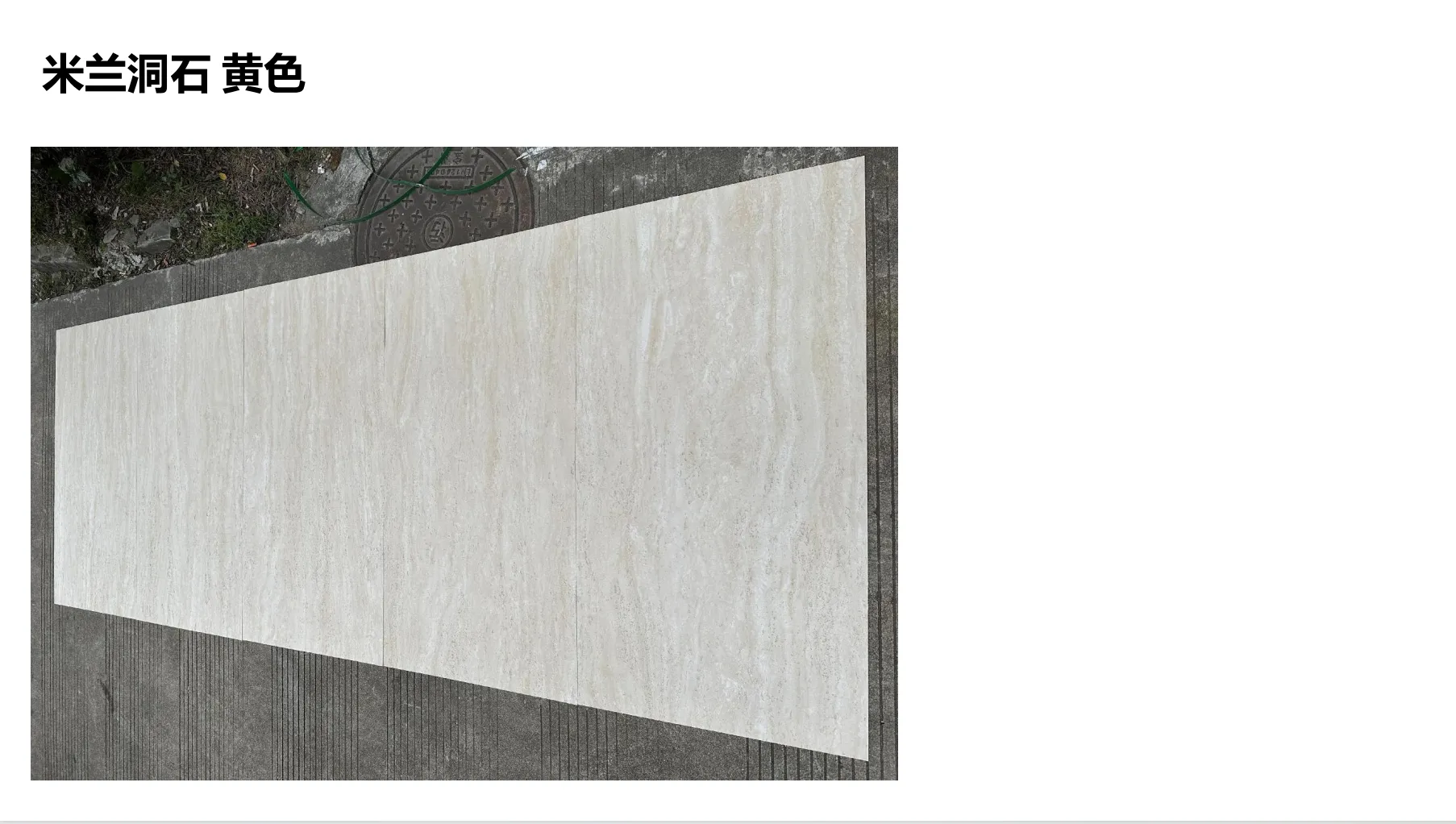
Let's talk about those real photos of Milan Travertine. Close your eyes for a second (okay, maybe just imagine—wait, no, the constraints say not to use "Imagine…"—let me rephrase). Picture running your hand along a wall clad in Milan Travertine. The surface isn't perfectly smooth like polished marble; it has texture—tiny indentations that feel like the fingerprint of the earth itself. It's warm to the touch, not icy cold like synthetic materials. The color? A soft, creamy beige with hints of gold and ivory, like sunlight filtered through aged linen. In real photos, you'll notice how it catches light: not with a harsh shine, but a gentle glow that makes even large spaces feel cozy. That's the magic of Milan Travertine—it brings the soul of natural stone without the hassle. Traditional travertine is heavy, porous, and prone to staining; MCM's version? It's reinforced with a flexible backing, making it lightweight enough for walls and ceilings, and treated to resist moisture and scratches. Perfect for a lounge where someone might accidentally bump a coffee cup against the wall or drag a suitcase along a column.
If Milan Travertine is the "heart" of the design, the MCM Big Slab Board Series is the "backbone." Here's the thing about large spaces like airport lounges: small tiles or disjointed panels can make a room feel choppy, even cluttered. Big slabs, though? They create a sense of flow. Imagine a lounge with walls wrapped in 4x8-foot slabs of Milan Travertine—no grout lines, no breaks, just a smooth, continuous sweep of texture. It's like bringing a piece of the Italian countryside into the terminal, but scaled up for grandeur. Real photos of these installations are striking: the slabs stretch from floor to ceiling, making the room feel taller, more open. And because MCM big slabs are lightweight (about a third the weight of natural stone slabs), they're easier to install and don't require the heavy structural support that traditional stone demands. That means designers can get creative—cladding curved walls, overhead soffits, or even entire feature walls without worrying about weight limits.
But it's not just about size. The Big Slab Series also offers consistency. Natural stone can vary wildly in color and pattern—one slab might have a bold vein, the next a subtle one. MCM big slabs, though, are engineered to maintain a uniform look, so that wall of Milan Travertine you see in real photos? It will look just as cohesive in the 100th slab as it does in the first. For lounge designers, that's a game-changer. It means they can plan a color story or texture palette with confidence, knowing the final result will match their vision. And when you're dealing with a space that's meant to feel calm, consistency matters. No jarring surprises, just a steady, soothing backdrop that lets travelers unwind.
Milan Travertine sets a warm, neutral foundation, but every great design needs accents—elements that add depth and personality. That's where MCM's Lunar Peak series shines. Think of it as the "jewelry" of the lounge. The Lunar Peak line includes finishes like Lunar Peak Silvery , Lunar Peak Golden , and Lunar Peak Black —metallic-inspired tones that add a touch of modern elegance without feeling flashy. In real photos, you'll see these used sparingly: a Lunar Peak Golden strip running along a Milan Travertine wall, a Silvery panel behind the check-in desk, or Black accents framing a fireplace. They catch the light just enough to draw the eye, but not so much that they feel overwhelming. It's a delicate balance, and Lunar Peak nails it.
What's clever about Lunar Peak is how it complements the organic texture of Milan Travertine. The travertine is soft, earthy, almost tactile; the Lunar Peak is sleek, modern, with a subtle sheen. Together, they create contrast that feels intentional, not jarring. Imagine sitting in a lounge chair, sipping coffee, and letting your gaze drift: the rough-hewn warmth of the travertine wall, the cool shimmer of a Lunar Peak accent, and sunlight streaming through floor-to-ceiling windows. It's a sensory experience—one that feels both grounded and aspirational. And because Lunar Peak is part of the MCM family, it shares the same durability as the Big Slab Series. That golden accent behind the bar? It won't tarnish, fade, or scratch, even after years of daily use. Practicality meets polish—exactly what airport lounges need.
Let's circle back to that word: flexible . MCM isn't just about big slabs and metallic accents—it's about MCM Flexible Stone , a material that bends, curves, and conforms to shapes that rigid stone never could. This is a game-changer for lounge design, where architects often work with unconventional layouts (think sloped ceilings, rounded pillars, or custom-built seating niches). Traditional stone would crack or require expensive, labor-intensive cutting to fit these curves. Flexible stone? It wraps around them like a second skin. Real photos of flexible stone installations are mind-blowing: a cylindrical pillar clad in Milan Travertine, its texture flowing seamlessly around the curve; a wavy feature wall that mimics the movement of water, made possible by thin, bendable MCM panels. It's design without limits.
But flexibility doesn't mean fragility. MCM Flexible Stone is made by bonding natural stone particles with a high-strength polymer backing, creating a material that's both bendable and tough. It resists impact, moisture, and even fire—critical for public spaces like airports. And because it's lightweight, it can be applied to surfaces that would never support traditional stone, like drywall or metal framing. Imagine a kids' play area in a family lounge, with walls covered in flexible stone shaped like clouds or mountains—fun, safe, and easy to clean. Or a quiet reading nook with a curved bench lined in travertine flexible stone, inviting travelers to sink in and relax. These aren't just design dreams; with MCM, they're realities.
Let's paint a picture of a hypothetical (but totally achievable) lounge designed with these materials. Walk through the entrance, and you're greeted by a wall of MCM Big Slab Milan Travertine—warm beige with soft gold undertones, its surface pitted with tiny, natural-looking holes that catch the light. To your left, a reception desk wraps around a curved pillar clad in Lunar Peak Silvery flexible stone, its metallic sheen complementing the travertine's earthiness. Ahead, the lounge opens up: high ceilings with overhead soffits covered in matching Milan Travertine slabs, creating a sense of intimacy despite the size. The floor? Large-format MCM Big Slab in a coordinating beige, polished just enough to reflect light but not so much that it's slippery.
In the seating area, sectionals are upholstered in warm grays and ivories, their cushions plump and inviting. Between them, coffee tables with tops made from Lunar Peak Golden MCM—durable enough to handle spills, but elegant enough to feel special. Along one wall, a feature installation: a mosaic of smaller MCM panels in Travertine (Starry Blue) —deep, moody blue with flecks of silver that mimic a night sky. It's a conversation starter, a pop of color that breaks up the neutral palette without overwhelming it. Near the windows, a row of workstations with countertops made from MCM Flexible Stone in Travertine (Beige)—smooth, cool, and resistant to laptop scratches. Even the bathroom doors are clad in Milan Travertine, extending the design language seamlessly.
Now, imagine the reaction of a traveler stepping into this space. After hours of stress, they're met with texture that feels familiar (like a stone wall from a countryside villa), light that's soft but not dim, and accents that feel luxurious without being pretentious. They might not know the technical term for MCM or the name of the stone, but they'll remember how the space made them feel: calm, cared for, seen . That's the power of materials like Milan Travertine and the MCM Big Slab Series—they don't just decorate a room; they create an experience.
In 2025, sustainability isn't just a buzzword—it's a requirement. Airports worldwide are racing to reduce their carbon footprints, and building materials play a big role. MCM checks this box, too. Unlike natural stone, which requires heavy mining and transportation (contributing to high carbon emissions), MCM uses recycled stone particles and a low-energy manufacturing process. The lightweight nature of MCM also cuts down on transportation costs and fuel use during installation. Plus, MCM panels are long-lasting—they won't need to be replaced every few years, reducing waste. For airports looking to earn green building certifications (like LEED), materials like MCM's green building materials portfolio are a no-brainer. And travelers notice: more and more, people choose brands and spaces that align with their values. A lounge clad in sustainable MCM isn't just beautiful—it's responsible.
Airport lounges are no longer afterthoughts. They're extensions of a brand, a chance to make travelers feel valued, and a proving ground for innovative design. And in that space, materials matter. Milan Travertine brings warmth and texture, the MCM Big Slab Board Series brings scale and flow, Lunar Peak adds modern sparkle, and Flexible Stone unlocks design freedom. Together, they transform "transit space" into "destination."
So the next time you're in an airport lounge, take a closer look at the walls. If they feel warm, textured, and surprisingly inviting—if the space flows without feeling cluttered—chances are, you're looking at MCM. And if you spot Milan Travertine or the Big Slab Series? You'll know: this isn't just a waiting room. It's a space designed with care—for the traveler, for the planet, and for the simple joy of feeling at home, even when you're miles away.
"Design is not just what it looks like and feels like. Design is how it works." — Steve Jobs. In airport lounges, MCM materials work and delight—proving that durability and beauty don't have to be enemies.
Recommend Products












