
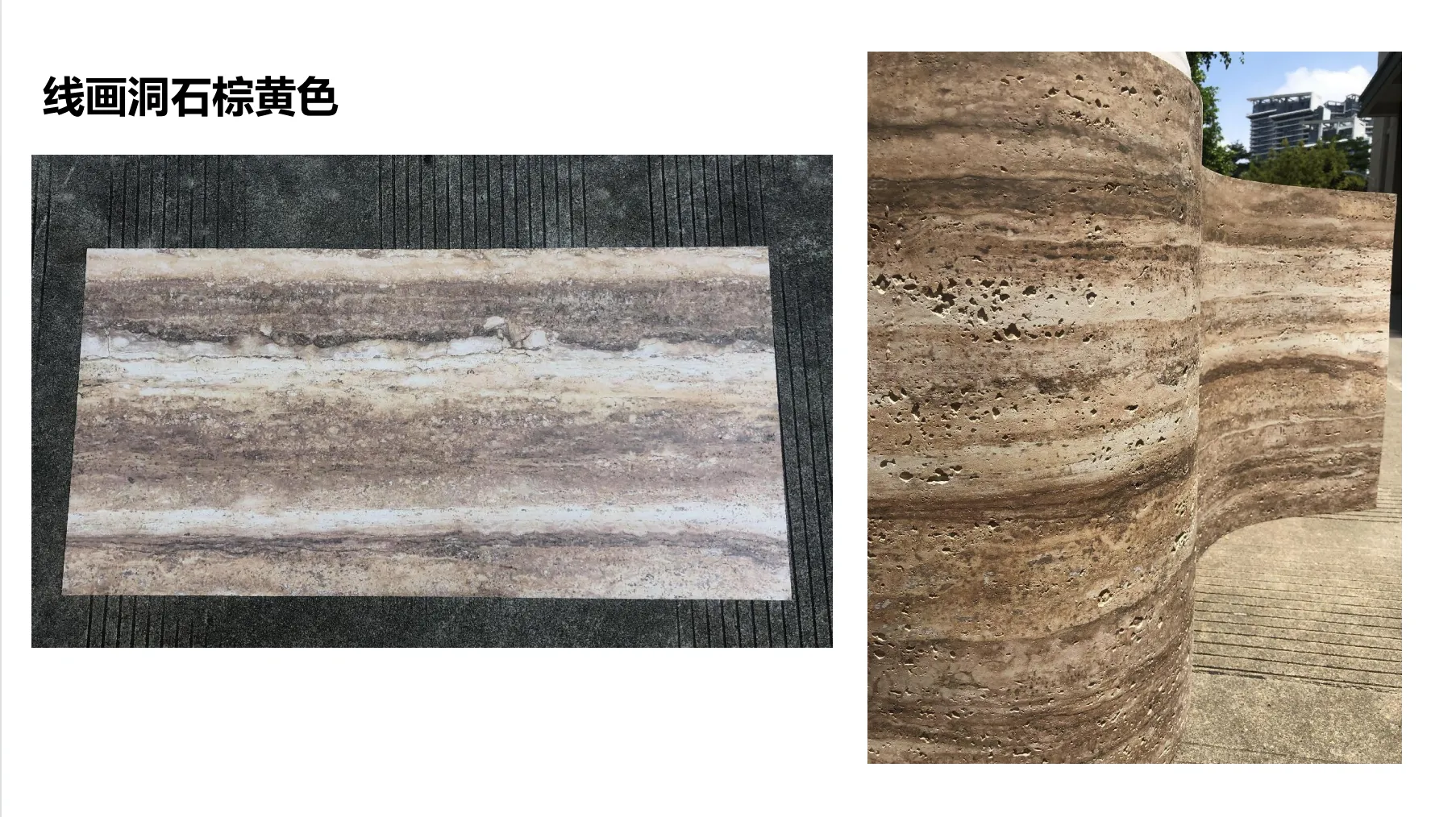
Walk into a thriving café, a sleek corporate lobby, or a luxury boutique, and what's the first thing that catches your eye? It's not just the layout or the lighting—it's the materials. The walls, the floors, the surfaces that wrap around you, telling a story of design intent and atmosphere. In commercial spaces, materials aren't just functional; they're the silent storytellers, shaping how we feel, how we move, and how we remember a place. Today, we're diving into one material that's been turning heads in the design world: Linear Travertine. But we're not stopping there—we'll explore how it pairs with timeless classics like fair-faced concrete and modern innovations like MCM flexible stone, creating spaces that blend tradition and cutting-edge style. Let's start with the star of the show.
Travertine has long been a favorite in architecture, gracing ancient Roman baths and modern museums alike. But Linear Travertine? It's travertine with a purposeful twist. Unlike its more chaotic, vein-heavy cousins, Linear Travertine (especially the claybank variety) boasts subtle, parallel grooves that mimic the flow of a river or the grain of weathered wood. It's nature's artistry meets human intention—and that's exactly why designers are obsessed.
Picture this: a wall in a high-end hotel lobby, clad in Linear Travertine (claybank). The warm, earthy tones—think soft terracotta kissed by sunlight—create an instant sense of calm. Run your hand over it, and you'll feel the gentle ridges of those linear patterns, not too deep to be overwhelming, but enough to add tactile interest. It's a material that invites touch, that makes a space feel less "designed" and more "lived-in," even in the most polished commercial settings.
What sets Linear Travertine apart is its versatility. It works as a focal point—say, a feature wall behind a reception desk—or as a unifying element, spanning floors and walls to create a cohesive flow. Its neutral palette (claybank, dark grey, and even vintage silver/gold variants) means it plays well with bold accents, like deep blue furniture or vibrant art, without fighting for attention. And because it's a natural stone, each slab is unique—no two pieces have exactly the same pattern, giving commercial spaces that "one-of-a-kind" feel clients crave.
Design isn't just about aesthetics; it's about psychology. Linear patterns, studies show, have a calming effect on the human brain. They guide the eye gently, reducing visual clutter and creating a sense of order—perfect for busy commercial spaces where people might be stressed (think airports, offices) or looking to relax (cafés, spas). Linear Travertine leverages this: those parallel grooves act like visual "breathing room," making even large, open lobbies feel intimate and grounded.
While we can't share actual snapshots here, let's paint a picture of how Linear Travertine transforms commercial interiors. Imagine stepping into a boutique hotel in downtown Chicago. The lobby is bathed in soft, natural light from floor-to-ceiling windows. To your left, a curved wall rises two stories, clad in Linear Travertine (claybank). The linear grooves catch the light, casting delicate shadows that shift as the sun moves—morning light makes them soft and diffused, while afternoon rays turn them into bold, sculptural lines. Below, the floor mirrors the wall, with large-format Linear Travertine tiles that make the space feel expansive yet cozy. A reception desk, crafted from polished concrete, sits in front, its cool grey surface contrasting beautifully with the travertine's warmth. It's a space that says "luxury" without being pretentious.
Now, shift to a trendy coworking space in Brooklyn. The vibe here is industrial-chic, and Linear Travertine (dark grey dolomitic) takes center stage. It's used as a backsplash in the communal kitchen, where the linear patterns echo the metal shelving and exposed brick. The dark grey hue adds depth, while the stone's natural porosity (sealed, of course, for durability) gives it a slightly weathered look—like it's been there for decades, even though the space is brand-new. Nearby, a lounge area features a coffee table made from a single slab of Linear Travertine, its edges left raw to highlight the stone's organic origins. Members here don't just work—they linger, drawn to the material's tactile appeal.
And let's not forget retail. A high-end fashion store in Milan uses Linear Travertine (vintage gold) to frame its window displays. The stone's warm, metallic undertones complement the store's luxury clothing lines, while the linear grooves add a subtle rhythm that guides shoppers' eyes from one rack to the next. Inside, the fitting rooms are lined with the same vintage gold travertine, creating a sense of exclusivity. Even the checkout counter, a sleek slab of Linear Travertine with a honed finish, feels like a piece of art—because in this space, every detail matters.
Great design is all about balance, and Linear Travertine shines brightest when paired with the right companions. Let's talk about two materials that designers are increasingly using alongside it: fair-faced concrete and wood grain board.
Fair-faced concrete is the ultimate "less is more" material. Raw, unpolished, and full of character, it brings a rugged, industrial edge that contrasts beautifully with Linear Travertine's organic warmth. Imagine a restaurant where the lower half of the walls is clad in fair-faced concrete—its rough, pitted surface telling a story of craftsmanship—while the upper half is Linear Travertine (claybank), softening the space with its earthy tones. The combination is striking: the concrete adds structure, the travertine adds soul.
Functionally, fair-faced concrete is a workhorse. It's durable, low-maintenance, and fire-resistant—ideal for high-traffic commercial areas like dining halls or conference rooms. And when sealed properly, it's surprisingly easy to clean, making it a practical choice for spaces that see spills or heavy use. Pair it with Linear Travertine on floors, and you've got a surface that can handle chairs scraping, foot traffic, and the occasional dropped coffee cup—all while looking better with age.
If fair-faced concrete is the "tough guy" of materials, wood grain board is the "warm hug." With its rich, organic patterns and soft texture, it adds a touch of nature to commercial spaces, creating a sense of comfort that's hard to replicate. When paired with Linear Travertine, it's like bringing the outdoors in—think a hotel hallway where wood grain board lines the ceiling (adding warmth and acoustic benefits) and Linear Travertine covers the floors (grounding the space with earthy stability).
Modern wood grain boards, often made from engineered wood or MCM (Modified Composite Material), offer the best of both worlds: the look of real wood without the warping, rotting, or high maintenance. They're also more sustainable, using recycled materials or fast-growing wood sources. In a corporate office, wood grain board paneling on meeting room walls pairs with Linear Travertine flooring to create a space that feels professional yet inviting—perfect for brainstorming sessions or client meetings where comfort fosters creativity.
| Material | Key Features | Best For | Durability | Design Vibe |
|---|---|---|---|---|
| Linear Travertine (Claybank) | Parallel linear grooves, warm earthy tones, natural porosity | Feature walls, lobby floors, retail displays | High (with sealing); resistant to scratches, heat | Timeless, organic, serene |
| Fair-Faced Concrete | Raw, unpolished surface, cool grey tones, industrial texture | Restaurant walls, office floors, reception desks | Exceptional; fire-resistant, low maintenance | Modern, rugged, minimalist |
| Wood Grain Board | Organic grain patterns, soft texture, warm hues | Ceilings, accent walls, meeting rooms | High (engineered variants); resistant to warping | Cozy, natural, inviting |
| MCM Flexible Stone | Lightweight, flexible, customizable finishes (e.g., lunar peak silvery) | Curved surfaces, large-scale installations, exterior cladding | Excellent; weather-resistant, impact-resistant | Innovative, versatile, contemporary |
While Linear Travertine and fair-faced concrete are classics, no discussion of commercial materials is complete without mentioning MCM flexible stone. MCM, or Modified Composite Material, is a game-changer for designers and contractors alike. It's made by blending natural stone particles with a lightweight, flexible backing, resulting in thin, easy-to-install panels that mimic the look of real stone—including Linear Travertine, lunar peak silvery, and even rust board granite.
Why does this matter for commercial spaces? For starters, MCM flexible stone is lightweight . Traditional stone slabs can be heavy, requiring reinforced structures to support them. MCM panels weigh a fraction of that, making them ideal for high-rise buildings or retrofits where structural limits are a concern. They're also flexible , meaning they can be bent to fit curved walls, columns, or unique architectural features—something rigid stone can't do without expensive custom cutting.
Take, for example, a airport terminal with a sweeping, curved ceiling. Cladding that ceiling in real stone would be nearly impossible due to weight and flexibility issues. But MCM flexible stone (say, lunar peak silvery) can be curved to follow the ceiling's arc, creating a stunning, seamless surface that reflects light and adds visual interest. And because it's pre-finished, installation is a breeze—no on-site cutting or polishing, reducing labor time and costs.
Sustainability is another plus. MCM flexible stone uses less natural stone than traditional slabs, reducing quarrying impact. Many manufacturers also use recycled materials in the backing, making it a greener choice for eco-conscious commercial projects. And with finishes that mimic everything from vintage gold travertine to rust mosaic stone, it's a versatile option that lets designers achieve the look they want without compromising on performance.
Today's commercial interiors aren't just about picking pretty materials—they're about telling a story of balance. Designers are increasingly mixing traditional and modern elements, creating spaces that feel both timeless and fresh. Linear Travertine fits right into this trend, with its ancient stone roots and contemporary linear pattern.
One trend we're seeing everywhere is "tactile minimalism." It's the idea that even in clean, minimalist spaces, texture is key. A lobby might have a white-on-white color scheme, but the walls are clad in Linear Travertine (light grey), its linear grooves adding depth without visual noise. The floor? Polished concrete, smooth and reflective, playing off the travertine's roughness. It's minimalism that doesn't feel cold—because the materials invite touch and interaction.
Another trend is "biophilic design," which connects people to nature through materials and patterns. Linear Travertine, with its earthy tones and organic texture, is a biophilic dream. Pair it with wood grain board and living plant walls, and you've got a space that reduces stress and boosts productivity—perfect for offices or healthcare facilities. Even better, MCM flexible stone can mimic natural materials like bamboo mat board or bali stone, extending the biophilic theme to hard-to-reach areas like ceilings or curved surfaces.
Customization is also on the rise. Clients want spaces that feel unique, not cookie-cutter. Linear Travertine delivers here, with its natural variation, but MCM flexible stone takes it a step further. Want a wall in gradient rammed earth board (matcha green to white)? Or a reception desk clad in foamed aluminium alloy board (vintage gold)? MCM makes it possible, allowing designers to create one-of-a-kind surfaces that align with a brand's identity.
Let's wrap up with a hypothetical (but realistic) case study of how these materials come together in a commercial project. Meet "The Terra," a 50-room boutique hotel in Austin, Texas, designed to blend urban sophistication with the warmth of the Texas Hill Country.
The lobby is the heart of The Terra, and it's here that Linear Travertine (claybank) takes center stage. The main wall, which stretches from floor to ceiling, is clad in large-format Linear Travertine panels, their linear grooves running vertically to draw the eye upward toward the skylight. To the right, a fireplace mantel is crafted from a single slab of boulder slab (vintage silver), its rough-hewn edges contrasting with the travertine's ordered lines. In front of the fireplace, a seating area features couches upholstered in warm leather, with coffee tables made from fair-faced concrete—their raw texture echoing the travertine's natural feel.
The check-in desk is a study in material harmony: the top is MCM flexible stone (rust square line stone), its rich, rusty hue adding a pop of color, while the base is wood grain board, its warm tones grounding the space. Behind the desk, a small accent wall is covered in weaving (khaki) panels, adding softness and acoustic benefits—because even beautiful spaces need to sound good.
Guest rooms continue the theme, with Linear Travertine (beige) in the bathrooms—shower walls and vanities—paired with rammed earth board (gradient b) on the accent wall behind the bed. The floors are a mix of wood grain board (for warmth underfoot) and polished concrete (in the entryway, durable and easy to clean). Each room feels like a retreat, blending natural materials with modern amenities—a space where guests can relax, recharge, and feel connected to both the hotel's design story and the surrounding Hill Country.
What makes The Terra successful? It's not just the individual materials—it's how they work together. Linear Travertine provides the foundation, fair-faced concrete adds edge, wood grain board brings warmth, and MCM flexible stone adds those unexpected, custom touches. Together, they create a space that's memorable, functional, and uniquely "The Terra."
Commercial spaces are more than just buildings—they're experiences. And at the heart of those experiences are the materials we choose. Linear Travertine, with its linear patterns and earthy charm, is more than a stone; it's a tool for creating spaces that feel human, that invite connection, that stick in our minds long after we've left.
When paired with complementary materials like fair-faced concrete, wood grain board, and MCM flexible stone, it becomes part of a design language that balances tradition and innovation, texture and simplicity, nature and industry. Whether you're designing a hotel, a store, or an office, these materials offer endless possibilities to tell your brand's story—one tactile, beautiful surface at a time.
So the next time you step into a commercial space that feels "just right," take a closer look. Chances are, there's Linear Travertine in there, quietly doing its job—making the space feel less like a building, and more like a memory in the making.
Recommend Products












