
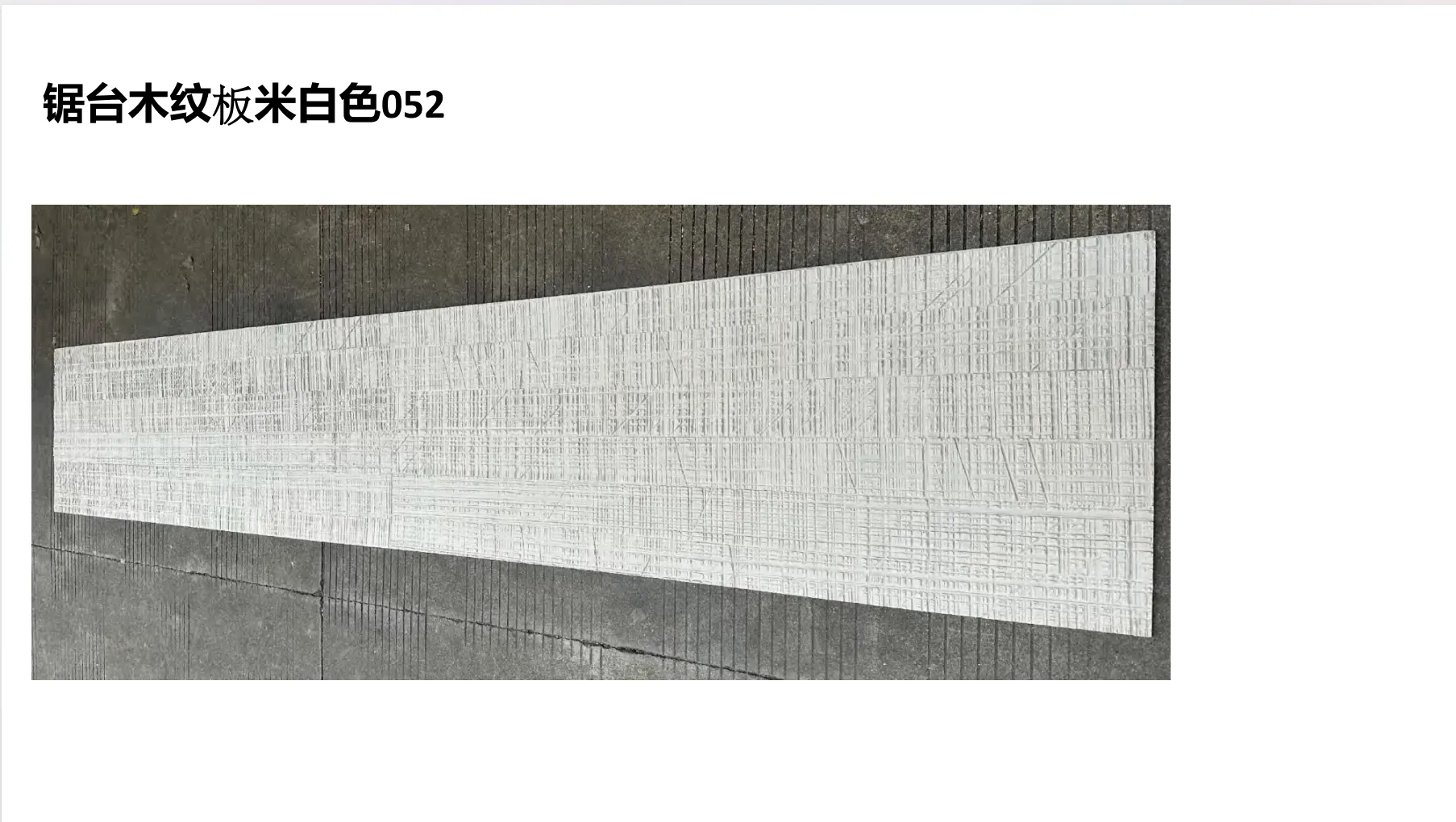
Walk into any commercial space—a bustling café, a sleek office lobby, or a vibrant retail store—and the first thing that catches your eye isn't just the layout or the lighting. It's the materials. The walls, the countertops, the accent panels—they tell a story. They set the mood, whisper about quality, and silently promise how long the space will stand the test of time. For decades, one material has been a familiar face in this narrative: sawing wood boards. But as commercial construction evolves, so do the demands on materials. Today, we're diving into why the tried-and-true wood board is showing its age, and how the MCM Project Board Series is stepping in to redefine what's possible.
Let's start with the obvious: wood has charm. There's a warmth to it, a connection to nature that feels inviting. For years, sawing wood boards were the go-to for everything from accent walls to ceiling panels in commercial projects. Builders liked them because they were easy to cut, shape, and install. Designers loved the organic (texture) and the way they softened harsh spaces. And at first glance, they seemed budget-friendly—affordable upfront, with a look that felt "authentic."
But here's the thing about "familiar friends" in construction: they don't always grow with you. Over time, the limitations of sawing wood boards start to creep in, turning initial convenience into long-term headaches. Let's break it down.
Wood is a natural material, and that means it's at the mercy of its environment. In commercial settings—where foot traffic is high, moisture (think coffee spills in cafes or humidity in lobbies) is common, and temperature swings are inevitable—wood struggles. It warps when it gets wet, cracks when it dries out, and becomes a buffet for pests like termites or carpenter ants. Even with sealants, a single leak or a season of heavy rain can leave unsightly stains or rot. Imagine investing in a beautiful wood accent wall for a restaurant, only to notice warped planks and water damage within three years. That's not just a cosmetic issue—it's a safety concern, too, as weakened wood can become unstable.
Wood doesn't just need protection from the elements; it needs constant care. Think about it: painting, staining, sealing—these aren't one-and-done tasks. Most wood boards in commercial spaces need re-sealing every 1-2 years and repainting every 3-5 years to stay looking fresh. That means downtime for the business, extra costs for labor and materials, and the hassle of coordinating maintenance around operating hours. For busy managers, this isn't just a minor inconvenience—it's a drain on resources that could be better spent elsewhere, like improving customer experiences or expanding services.
Today's clients and customers care about sustainability. They want to support businesses that prioritize the planet. But traditional sawing wood boards often come with a hidden environmental cost. Deforestation, habitat loss, and high carbon emissions from logging and transportation are hard to ignore. Even "sustainable" wood options can fall short, as slow growth rates mean replenishing forests takes decades. For companies aiming for LEED certification or simply wanting to align with eco-conscious values, wood's environmental impact is a significant drawback.
Wood has a classic appeal, but when it comes to versatility, it's surprisingly limited. Want a wood-look panel that can withstand outdoor rain? Or a bold color without constant fading? Wood can't deliver. Its natural grain is beautiful, but if you're aiming for a modern, industrial vibe or a sleek, uniform finish, wood often feels out of place. And let's not forget size—large wood boards are prone to warping, so designers are often stuck with smaller planks, limiting creative freedom. In a world where commercial spaces need to stand out and adapt to evolving trends, wood's rigidity can feel like a creative straightjacket.
Sure, sawing wood boards might seem cheap when you first buy them. But let's do the math over 10 years: initial cost + annual sealing ($200-$500 per project) + repainting every 3 years ($1,000-$3,000) + repairs for warping or rot ($500-$2,000) = a total that often dwarfs the upfront savings. Suddenly, that "budget-friendly" choice becomes a long-term financial burden. For businesses watching their bottom line, this isn't just frustrating—it's a reminder that cheap upfront costs rarely equal smart investments.
So, if wood is falling short, what's the alternative? Enter the MCM Project Board Series—a line of modified composite materials designed to address every limitation of traditional wood while doubling down on the benefits that matter most: durability, design freedom, sustainability, and cost-effectiveness. MCM, or Modified Composite Material, isn't just a "replacement" for wood—it's a upgrade that reimagines what commercial construction materials can be.
At its core, MCM Project Board Series combines the best of technology and nature. It's engineered to mimic the look and texture of natural materials—think wood grain, stone, concrete—without the vulnerabilities. Let's unpack why this series is quickly becoming the top choice for architects, builders, and business owners.
MCM Project Boards are designed to laugh in the face of harsh conditions. Water-resistant? Check. Pest-proof? Absolutely—termites and ants won't touch them. Resistant to warping, cracking, or fading? You bet. Unlike wood, these boards are made with advanced composites that stand up to rain, snow, humidity, and UV rays. Imagine installing an MCM wood grain board in a coastal restaurant—no more worrying about saltwater corrosion or warping from humidity. Or using flexible stone panels for an outdoor patio—they'll look as good after a storm as they did on day one. For commercial spaces that need to stay operational year-round, this kind of reliability is priceless.
Here's a game-changer: MCM Project Boards need almost no maintenance. No sealing, no repainting, no annual treatments. A quick wipe with a damp cloth is usually all it takes to keep them looking fresh. That means less downtime, lower labor costs, and zero hassle for business owners. For a busy café owner, this translates to more time focusing on latte art and customer service instead of scheduling wall repairs. For a retail chain, it means consistent branding across locations without the headache of uneven wear and tear.
One of the most exciting things about MCM Project Board Series is its versatility. Whether you're going for a rustic vibe, a modern industrial look, or something in between, there's a board for that. Love the warmth of wood? The wood grain board option replicates the texture and color of real wood—down to the knots and grains—without the upkeep. Want a sleek, contemporary feel? Fair-faced concrete panels offer that raw, minimalist aesthetic. Or maybe you're dreaming of something bold: flexible stone panels in vibrant hues like travertine (starry blue) or lunar peak golden add depth and personality to any space. With options ranging from bamboo mat board to foamed aluminium alloy board (vintage silver), the design possibilities are endless. MCM doesn't just match wood's "authenticity"—it elevates it, letting you create spaces that are truly one-of-a-kind.
MCM Project Board Series is a win for sustainability, too. Many boards are made from recycled materials, like reclaimed stone or recycled aluminum, reducing waste and minimizing the need for new resource extraction. They're also energy-efficient to produce, with lower carbon footprints than traditional wood or stone. Plus, since they last decades without needing replacement, they cut down on the "throwaway" culture of construction. For businesses looking to build trust with eco-conscious customers, this isn't just a selling point—it's a core value that shines through in every wall and panel.
Yes, MCM Project Boards might have a slightly higher upfront cost than basic wood boards. But let's revisit that 10-year math: initial cost + minimal maintenance ($50-$100 total over 10 years) + no repairs + no repainting = significant savings. When you factor in the longevity (MCM boards often last 20+ years) and the reduced downtime, the investment pays for itself quickly. It's not just about spending less—it's about spending smart, ensuring your commercial space looks great and performs better for decades to come.
| Feature | Sawing Wood Boards | MCM Project Board Series |
|---|---|---|
| Durability | Prone to warping, rot, pests, and moisture damage; typically lasts 5-10 years in commercial settings. | Weather-resistant, pest-proof, and warp-free; designed to last 20+ years with minimal wear. |
| Maintenance | Requires sealing every 1-2 years, repainting every 3-5 years, and frequent repairs. | Minimal upkeep—just occasional cleaning with soap and water. |
| Design Options | Limited to natural wood grains and colors; small plank sizes to avoid warping. | Wide range: wood grain board, flexible stone, fair-faced concrete, lunar peak silvery, and more—customizable colors, textures, and sizes. |
| Environmental Impact | High carbon footprint; relies on logging and slow forest regeneration. | Often made from recycled materials; low energy production; reduces long-term waste. |
| 20-Year Total Cost | High: Initial cost + maintenance + repairs + replacements = $5,000-$15,000 (varies by project size). | Low: Initial cost + minimal maintenance = $3,000-$8,000 (varies by project size)—saves 30-50% over wood. |
At the end of the day, commercial construction isn't just about building walls. It's about building spaces that work for people—spaces that inspire, function, and endure. Sawing wood boards, for all their nostalgia, simply can't keep up with the demands of modern commercial life. They require too much care, limit creativity, and come with hidden costs—both financial and environmental.
The MCM Project Board Series, on the other hand, is designed to be a partner in success. It's durable enough to handle the chaos of daily life, flexible enough to bring bold design visions to life, and sustainable enough to align with the values of today's businesses and customers. Whether you're designing a cozy bookstore with wood grain board accents or a sleek tech office with fair-faced concrete panels, MCM doesn't just meet expectations—it exceeds them.
So, the next time you're planning a commercial project, ask yourself: What do I want my space to say? Do I want it to tell a story of constant upkeep and compromise, or one of resilience, creativity, and forward-thinking? With MCM Project Board Series, the answer is clear. It's not just a material—it's a choice to build better, last longer, and inspire more.
Because in commercial construction, the right material isn't just part of the project. It's the foundation of success.
Recommend Products












