
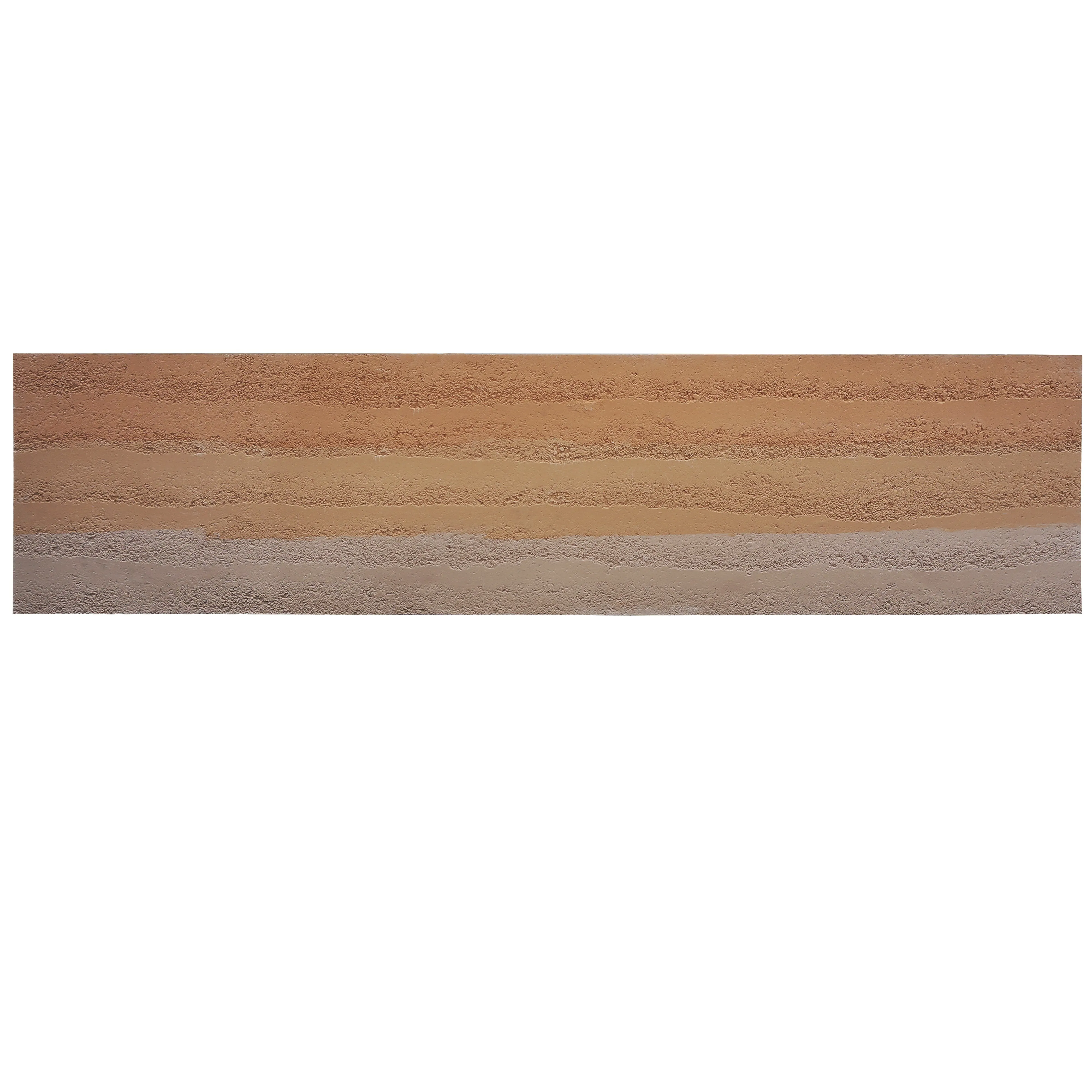
In the world of business, first impressions stick. A storefront, office building, or café facade isn't just a wall—it's a silent storyteller. It whispers to passersby who you are, what you value, and why you matter. Today, we're diving into a material that's redefining how brands speak through their exteriors: rammed earth board (gradient). More than just a surface, it's a canvas where color, texture, and narrative collide to create spaces that don't just catch eyes, but capture hearts.
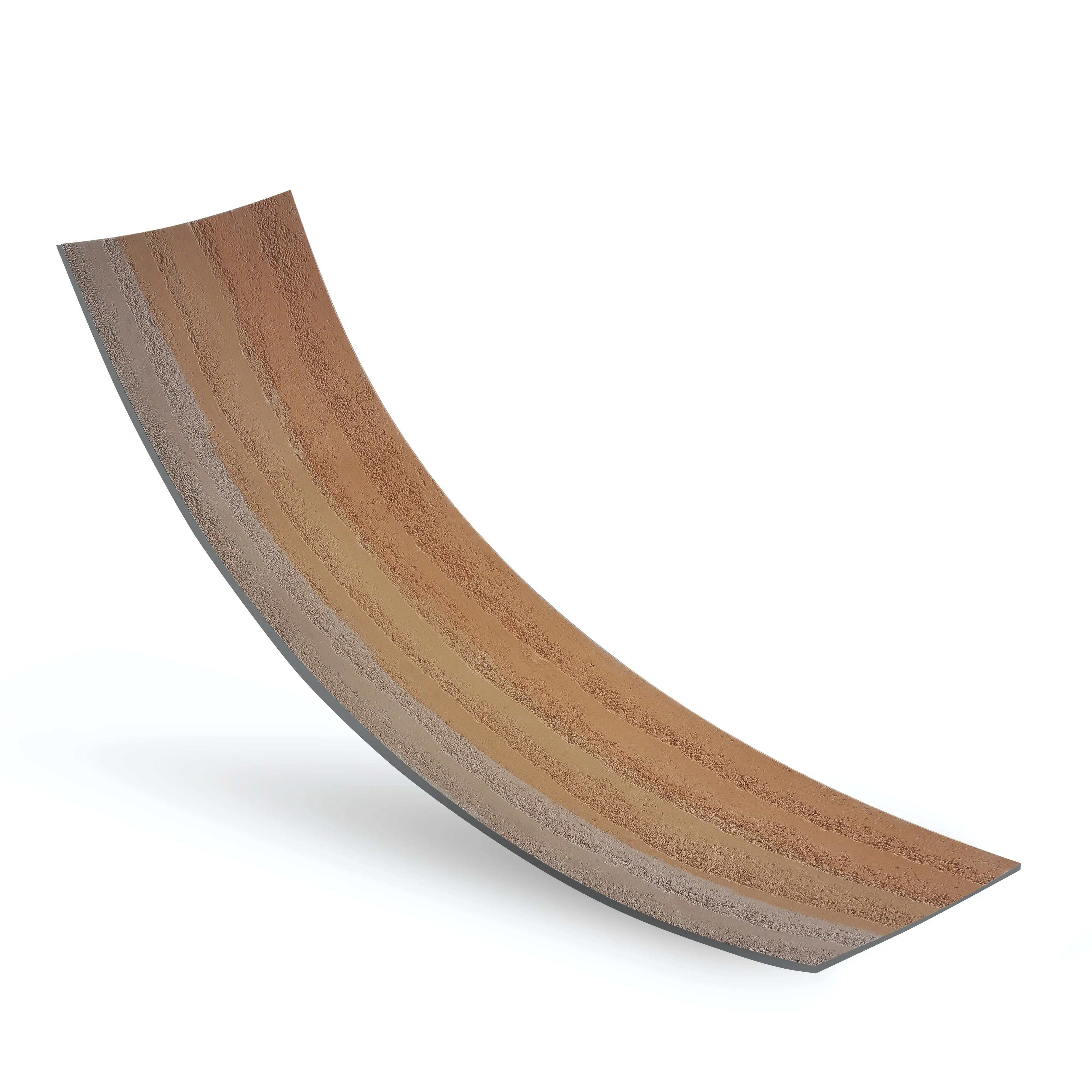
Imagine standing before a wall that seems to shift color as you move—soft beiges melting into warm terracottas, or cool grays blending into misty greens, like a landscape at dawn. That's the magic of rammed earth board (gradient). It's a modern twist on an ancient building technique, where layers of natural materials—clay, sand, and stone—are compacted under pressure, but with a contemporary edge: artisans carefully layer colored aggregates to create seamless, flowing gradients that feel alive.
Unlike flat, uniform surfaces, gradient rammed earth carries depth. Run your hand over it, and you'll feel the subtle ridges of compressed earth, the tiny flecks of stone that catch light differently with each angle. It's tactile, organic, and unapologetically human—no two panels are exactly alike, thanks to the handcrafted layering process. This isn't just a "material"; it's a piece of craftsmanship that brings the outdoors in, or the past into the present, depending on how you wield it.
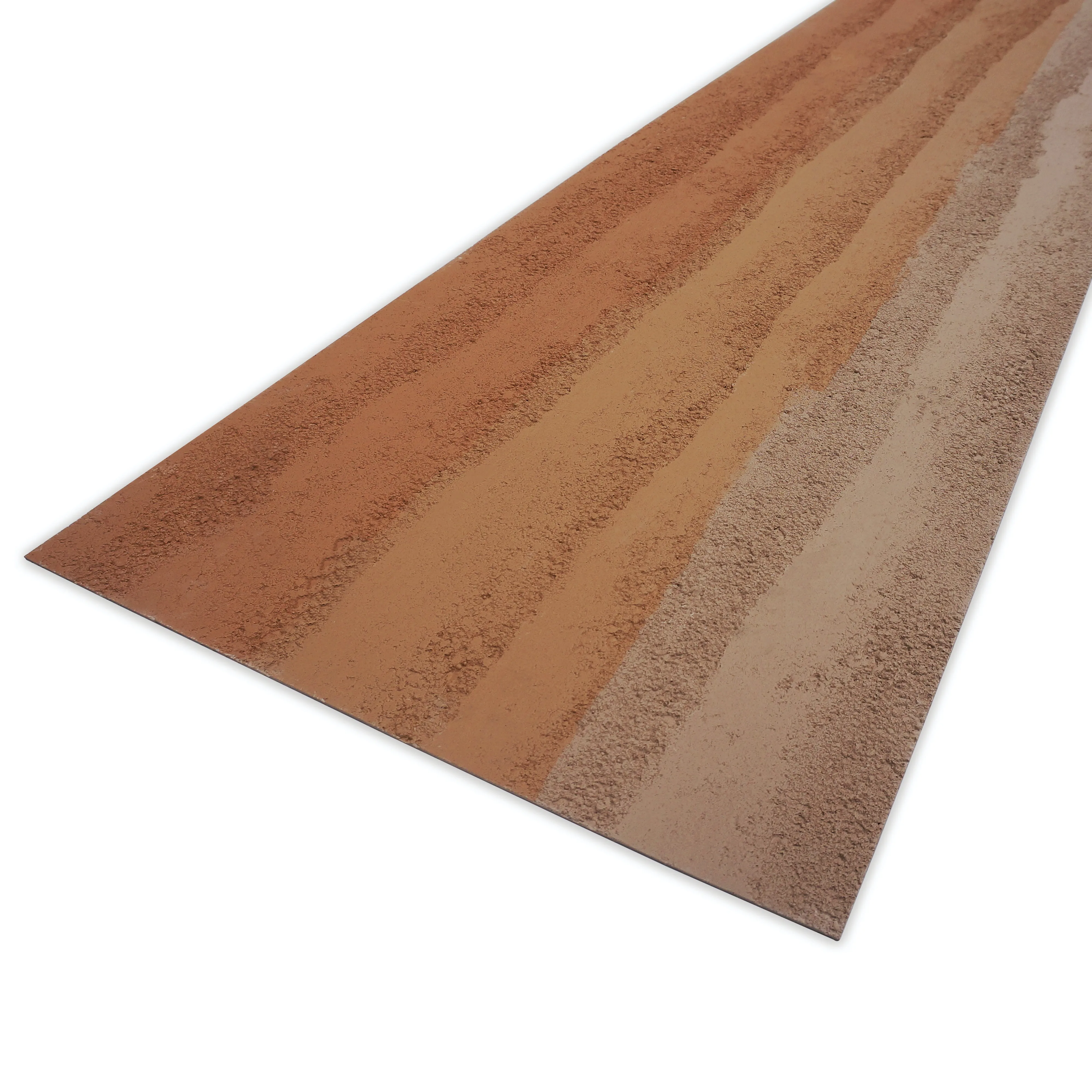
Brands today aren't just selling products—they're selling stories. A coffee shop might want to convey "cozy nostalgia with a modern kick"; a tech startup, "innovation rooted in nature." Gradient rammed earth excels here because gradients themselves are emotional. They're not static. A soft beige-to-cream gradient feels calm, reliable, like a trusted friend. A bold rusty red-to-orange shift? Energetic, passionate, unafraid to stand out. And a cool gray-to-silver fade? Sleek, forward-thinking, yet grounded.
Consider historical pathfinders stone , another material rooted in heritage, which evokes tales of old roads and timeless journeys. Gradient rammed earth shares that storytelling DNA but with flexibility. It lets brands write their own chapter, not just borrow from the past. A brewery using a amber-to-gold gradient? It's not just a wall—it's a nod to the warmth of fermentation, the slow, beautiful process of creation. A yoga studio with a sage green-to-soft blue shift? It's the transition from earth to sky, mirroring the studio's focus on balance.
In Portland, Oregon, a small café called "Roots & Rise" opened in 2024 with a mission: to serve coffee that honors both local farmers (roots) and sustainable innovation (rise). Their exterior needed to say that without a single sign. Enter gradient rammed earth.
The owners worked with artisans to create a panel that starts at the bottom in deep, rich brown—like the soil where their beans grow—then gradually lightens into warm gold, mimicking the rise of the sun over the fields. The effect? Walkers stop mid-step. "It feels like the café is growing out of the earth," one regular, Mia, told me. "I don't just see a building; I see their values. And that makes me want to support them."
Inside, the gradient continues subtly onto the walls, connecting the exterior to the interior like a seamless story. Compare that to a generic fair-faced concrete facade—sturdy, yes, but silent. Roots & Rise's gradient doesn't just attract customers; it turns them into brand advocates, because they feel they "get" the café before even stepping inside.
| Material | Visual Impact | Brand Story Fit | Sustainability | Durability |
|---|---|---|---|---|
| Rammed Earth Board (Gradient) | Dynamic, evolving color shifts; organic texture | Perfect for brands emphasizing growth, uniqueness, or heritage with a modern twist | High: Uses natural, locally sourced materials; low carbon footprint | 50+ year lifespan; resistant to weather and fading |
| Fair-Faced Concrete | Minimalist, industrial; uniform gray tone | Fits "no-nonsense," modern, or utilitarian brands | Moderate: Requires energy-intensive production | Long-lasting but prone to staining without sealing |
| Lunar Peak Silvery | Metallic, sleek; cool, futuristic sheen | Ideal for tech, luxury, or "cutting-edge" brands | Moderate: Synthetic components; recyclable but energy-heavy | Resistant to corrosion but shows fingerprints easily |
| Epoch Stone | Timeless, classic; mimics aged stone | Great for heritage brands or businesses wanting "permanence" | Moderate: Natural base but may include synthetic binders | Very durable but less customizable in color |
What makes gradient rammed earth so special isn't just the end result—it's the process. Unlike mass-produced panels, each gradient is built by hand. Artisans mix natural pigments into the earth, layer by layer, then compact them with precision. It's slow work. A single panel might take days to perfect, as the team adjusts the density of each layer to ensure the color flows naturally, not abruptly.
This craftsmanship adds another layer to your brand story. When customers learn that your facade was made by skilled hands, not just machines, it builds trust. It says, "We care about the details. We care about quality." That's a powerful message in a world of quick fixes and disposable design. It's why brands like "Roots & Rise" proudly mention their gradient panels in their social media bios—because it's not just a wall; it's a testament to their values.
Today's consumers don't just buy products—they buy ethics . A 2023 study found that 68% of customers are more likely to support brands with eco-friendly practices. Gradient rammed earth checks that box effortlessly. Made from natural, locally sourced materials (clay, sand, stone), it has a tiny carbon footprint compared to synthetic alternatives like foamed aluminium alloy board (which relies on energy-heavy metal processing). It's breathable, too—reducing the need for air conditioning by regulating indoor temperatures. And when it eventually reaches the end of its life? It decomposes, returning to the earth it came from.
For brands that prioritize sustainability, this isn't just a bonus—it's a core part of their identity. Imagine a skincare brand using a soft green-to-blue gradient rammed earth facade. The exterior doesn't just look "natural"; it is natural, aligning perfectly with their "clean, earth-derived products" promise. It's authenticity you can see—and touch.
Let's get real: A beautiful facade is useless if it chips, fades, or costs a fortune to maintain. The good news? Gradient rammed earth is surprisingly practical. Its compressed structure makes it resistant to water, fire, and pests. The natural pigments won't fade in sunlight (unlike some painted surfaces), and cleaning is simple—just a hose and mild soap. Yes, the upfront cost is higher than standard concrete, but over time, it pays off: no repainting, no replacing panels, just a facade that ages gracefully, like a well-loved book.
Installation is straightforward, too. Panels are prefabricated off-site, then transported and assembled, reducing on-site mess and time. And customization? The sky's the limit. Want a gradient that matches your brand's logo colors? Artisans can mix pigments to your exact specifications. Prefer a subtle shift or a bold contrast? The layering process allows for infinite possibilities.
Your commercial exterior is the first page of your brand's story. Will it be a blank page, or a vivid, unforgettable scene? Gradient rammed earth board isn't just a material—it's a partner in storytelling. It brings warmth, authenticity, and personality to spaces, turning walls into conversations. Whether you're a cozy café, a forward-thinking tech office, or a heritage brand reimagining itself, it offers a way to stand out not by shouting, but by resonating.
In a world of generic storefronts, gradient rammed earth asks: What story do you want to tell? And isn't it time your walls started telling it?
Recommend Products












