
First impressions stick, don't they? Think about the last hotel you visited—what do you remember first? Maybe the lobby's chandelier, the smell of fresh pastries at breakfast, or the way sunlight hit the exterior as you pulled up. For many travelers, that initial glance at a hotel's facade is the opening chapter of their stay. It's not just a wall; it's a silent storyteller, hinting at the experience inside. In a world where guests scroll through hundreds of hotel photos before booking, a memorable exterior isn't just nice to have—it's essential.
But creating that "wow" factor isn't easy. Hoteliers and architects juggle countless demands: durability against harsh weather, ease of maintenance, sustainability, and, of course, that intangible "vibe" that makes a property stand out. Traditional materials like solid stone or concrete often fall short—they're heavy, tricky to install on complex designs, and prone to fading or cracking over time. That's where MCM Big Slab Board Series steps in, redefining what's possible for hotel facades. And among its star players? Milan Travertine —a material that blends the timeless elegance of natural stone with the innovation of modern engineering.
Let's start with the basics: a hotel's exterior is its first handshake with the world. It communicates the brand's personality—whether it's a sleek, minimalist boutique in Tokyo or a rustic-chic resort in Bali. A well-designed facade can turn passersby into guests and guests into repeat visitors. But beyond aesthetics, it's a workhorse. It shields the building from rain, wind, and UV rays. It insulates interiors, cutting energy costs. It even impacts noise levels, keeping street chaos outside where it belongs.
For years, architects relied on heavy materials that prioritized function over flexibility. Solid travertine, for example, is stunning but weighs a ton—literally. Installing it on high-rises or curved structures often requires reinforced framing, driving up construction costs. Then there's maintenance: natural stone needs regular sealing to avoid stains, and cracks can be expensive to repair. Enter MCM (Modified Composite Material) technology—a game-changer that marries the beauty of stone with the practicality of modern composites. And the MCM Big Slab Board Series takes this innovation to new heights, offering large-format panels that mimic natural materials without the headaches.
So, what makes MCM Big Slab different? Let's break it down. At its core, it's a lightweight, flexible material made by bonding natural stone veneers to a high-strength composite backing. The result? Panels that look and feel like real stone but weigh up to 80% less. That lightness is a game-changer for architects—suddenly, curved walls, cantilevered overhangs, and intricate geometric designs are feasible without overloading the building's structure.
But it's not just about weight. MCM Big Slab is built to last. It resists fading from harsh sunlight, stands up to freezing temperatures and heavy rain, and even repels mold and mildew—critical for hotels in humid climates. And here's the kicker: it's flexible stone technology, meaning it can bend slightly without cracking. Imagine a hotel with a sweeping, organic facade that flows like a wave—MCM makes that possible, where traditional stone would shatter.
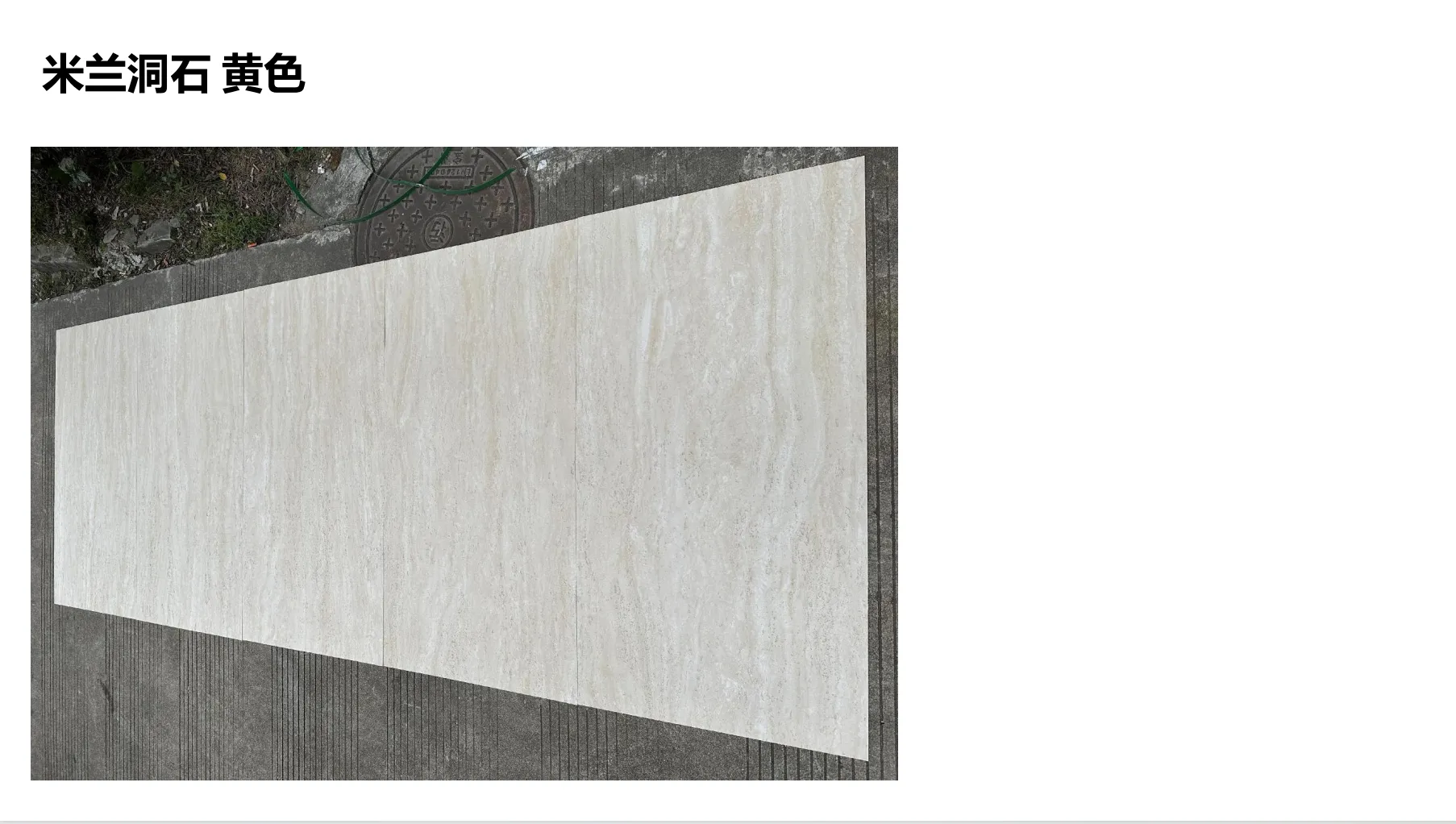
Now, within the MCM Big Slab family, one name keeps popping up in architect conversations: Milan Travertine. Inspired by the quarries of Italy's Tiber Valley—famous for producing some of the world's most coveted travertine—this line captures the natural beauty of the stone with modern twists. Think soft veining, rich color depth, and a range of finishes that adapt to any design vision. Let's dive deeper into what makes Milan Travertine a favorite for commercial hotels.
Milan Travertine isn't just a single material—it's a palette of possibilities. Whether you're designing a boutique hotel in Paris that leans into classic elegance or a futuristic resort in Dubai craving bold, contemporary flair, there's a variant that fits. Let's explore some of the most popular options, along with how they've been used in real-world hotel projects.
| Variant | Color Story | Aesthetic Vibe | Real Hotel Application |
|---|---|---|---|
| Milan Travertine (Vintage Silver) | Soft silver-gray with warm beige undertones; subtle veining | Modern minimalist; pairs with glass and steel for a sleek, urban look | The Skyline Hotel, New York—used on the facade's upper floors to reflect city lights |
| Milan Travertine (Starry Blue) | Deep midnight blue with flecks of silver "stars"; bold veining | Whimsical yet sophisticated; perfect for boutique hotels with a storytelling edge | Azure Boutique Hotel, Santorini—complemented by white trim for a coastal-meets-celestial vibe |
| Milan Travertine (Vintage Gold) | Warm golden beige with honey-toned veins; sunlit glow | Timeless luxury; evokes Mediterranean villas and classic European charm | La Scala Resort, Amalfi Coast—blends with terracotta roofs for an old-world feel |
| Milan Travertine (Starry Red) | Rustic terracotta red with copper flecks; dynamic, energetic | Boutique boldness; ideal for hotels wanting to stand out in busy districts | Fiesta Hotel, Barcelona—used on the main entrance to draw the eye from the bustling street |
| Milan Travertine (Vintage Black) | Rich charcoal black with subtle gray veining; dramatic contrast | Edgy elegance; pairs with gold accents for a high-end, contemporary look | Nexus Hotel, Tokyo—part of a black-and-white facade that nods to minimalist Japanese design |
What stands out about these variants is their ability to "breathe." Unlike printed or synthetic materials, Milan Travertine's texture is authentic—you can almost feel the natural stone's porosity, even though it's wrapped in durable MCM. This tactile quality adds depth, making the facade feel alive rather than flat. Take the Vintage Silver variant, for example: in morning light, it shimmers softly, while at dusk, it takes on a warm, inviting glow. It's a material that changes with the day, keeping the hotel's exterior dynamic and engaging.
Let's talk numbers—because at the end of the day, hoteliers need materials that make financial sense. Milan Travertine, as part of the MCM Big Slab Series, checks that box too. Installation is faster than traditional stone, cutting labor costs. Since the panels are lightweight, there's no need for expensive structural reinforcements, which can save tens of thousands on construction budgets. And maintenance? Minimal. A quick power wash once a year keeps the surface looking fresh—no sealing, no repainting, no costly repairs for chips or cracks.
Sustainability is another win. MCM Big Slab uses less raw material than solid stone, reducing environmental impact. Many variants, including Milan Travertine, are made with recycled content, aligning with the growing demand for eco-conscious hotels. Guests today care about where they stay, and a facade made from sustainable materials is a selling point that resonates—especially with millennial and Gen Z travelers who prioritize brands with green credentials.
Then there's versatility. Milan Travertine plays well with others. Pair it with Lunar Peak series—think silvery, golden, or black metallic accents—and suddenly you've got a facade that's both warm and futuristic. Or mix in foamed aluminium alloy board (vintage gold) for a pop of metallic contrast. Architects love this flexibility; it lets them layer textures and colors to create a facade that's unique to each hotel's brand.
Words can describe it, but real photos tell the full story. Take the Grand Horizon Hotel in Dubai, a 30-story luxury property that opened in 2024. Its design team chose Milan Travertine (Starry Orange) for the lower facade, a bold choice that immediately sets it apart from the city's glass-and-steel towers. The starry flecks catch the desert sun, creating a warm, inviting glow at sunset—exactly the vibe the hotel wanted for its "oasis in the city" brand. Paired with Lunar Peak Silvery panels on the upper floors, the result is a building that feels both grounded and aspirational.
Over in Lisbon, the Heritage Hotel wanted to honor the city's historic architecture while adding a modern twist. They opted for Milan Travertine (Vintage Beige), which mimics the soft, weathered stone of Lisbon's ancient alleyways. The MCM panels were curved around the hotel's arched windows, a detail that would have been impossible with traditional travertine. Guests often comment on how the facade feels "lived-in" yet fresh—a perfect reflection of the hotel's blend of old-world charm and contemporary comfort.
And in Sydney, the Wave Resort took advantage of MCM Big Slab's flexibility to create a facade that literally undulates like the ocean. Using Milan Travertine (Starry Blue) with rippled edges, the building appears to flow with the breeze off the harbor. It's become a landmark in the area, with guests posing for photos in front of it before even checking in. That's the power of a well-chosen facade—it becomes part of the guest experience, not just a backdrop.
While Milan Travertine is a standout, the MCM family has other stars that can elevate a hotel's exterior. The Lunar Peak Series , for instance, offers metallic finishes in silvery, golden, and black hues that add a touch of glamour. Imagine a hotel entrance framed by Lunar Peak Golden panels, leading into a lobby with Milan Travertine floors—the continuity creates a seamless brand experience from outside in.
For hotels going for a more industrial-chic vibe, fair-faced concrete from the MCM lineup pairs beautifully with Milan Travertine's organic texture. The contrast of rough concrete and smooth travertine creates visual interest without feeling chaotic. And for properties in coastal areas, gobi panel —inspired by desert landscapes—adds earthy tones that complement Milan Travertine's warmth, evoking a sense of calm and connection to nature.
At the end of the day, Milan Travertine and the MCM Big Slab Series are more than just building materials. They're tools for storytelling. They let hoteliers craft exteriors that don't just protect the building but welcome guests, spark curiosity, and create memories. Whether it's the soft glow of Vintage Gold at a Mediterranean resort or the bold energy of Starry Red at a city boutique, these materials turn facades into experiences.
So, the next time you walk past a hotel and find yourself pausing to admire its exterior, take a closer look. Chances are, it's not just stone or concrete—it's MCM, working quietly to blend beauty, durability, and innovation. And if it's Milan Travertine? You're looking at a material that doesn't just keep up with the times—it sets the standard.
Because in the world of hotels, first impressions last. And with MCM Big Slab and Milan Travertine, those first impressions are worth remembering.
Recommend Products












