
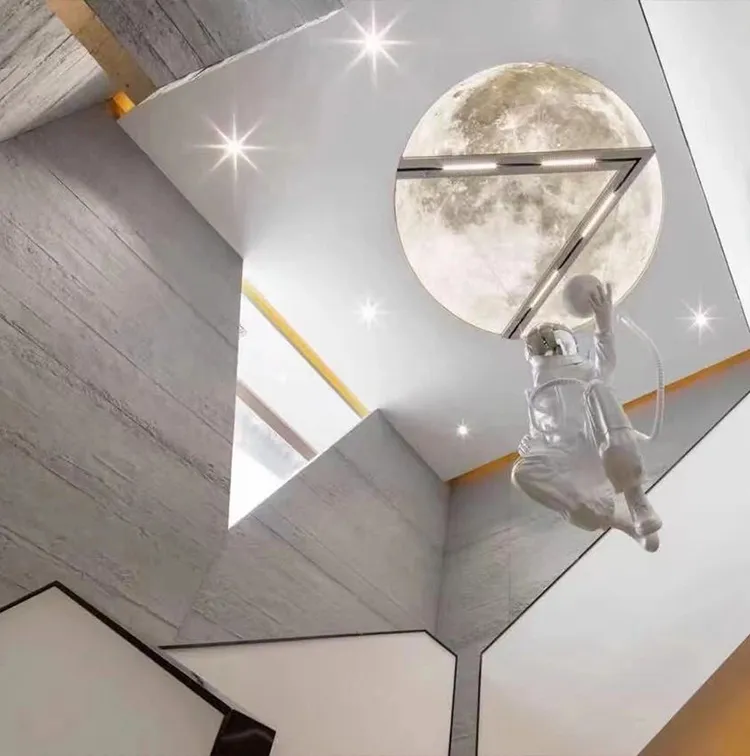
Gone are the days when malls relied solely on flashy signs and bright lights to draw crowds. Today's shoppers—especially Gen Z and millennials—crave experiences . They want to touch, feel, and connect with their surroundings. This shift has turned interior design into a sensory journey, where texture takes center stage. Enter materials like fair-faced concrete and MS Cement Board, which bring an industrial-chic, tactile quality that resonates on a primal level. Unlike polished marble or overly processed woods, these materials wear their "imperfections" proudly—subtle grooves, matte finishes, and organic variations that feel alive.
Take, for example, the lobby of a high-end fashion mall in downtown Chicago. Instead of a generic painted wall, the accent wall here is clad in MS Cement Board, its light grey surface catching the natural light streaming through floor-to-ceiling windows. The texture isn't overpowering; it's a quiet invitation to run a hand along it (though, of course, we'd advise against that in a busy mall!). Nearby, a seating nook features fair-faced concrete benches, creating a cohesive industrial vibe. Together, they tell a story of understated luxury—proof that you don't need gold leaf to feel sophisticated.
So, what exactly is MS Cement Board, and why is it becoming a go-to for mall designers? At its core, it's a composite material made from cement, reinforced fibers, and polymers, engineered to be lightweight yet incredibly durable. Think of it as concrete's cooler, more flexible cousin. Traditional concrete is heavy, hard to shape, and can crack under stress—limitations that make it tricky for dynamic spaces like malls. MS Cement Board, on the other hand, bends (literally and figuratively) to design needs. It can be cut into custom shapes, painted, or left in its natural state, making it a blank canvas for creativity.
But its real magic lies in its duality. It's tough enough to withstand the chaos of mall foot traffic—scratches, spills, and the occasional wayward shopping cart—yet refined enough to complement high-end brands. In real photos of mall interiors, you'll often spot it in unexpected places: behind a jewelry store's display cases, adding contrast to soft velvet seating in a beauty salon, or even as a backdrop for art installations in the food court. It's the chameleon of materials, adapting to whatever mood the space wants to convey.
To truly appreciate MS Cement Board, let's compare it to two other mall staples: wood grain board and travertine (beige) . Each has its charm, but MS Cement Board brings a unique edge to the table. Below is a breakdown of how they stack up in real-world mall settings:
| Material | Texture Profile | Durability in High Traffic | Aesthetic Vibe | Best For |
|---|---|---|---|---|
| MS Cement Board | Matte, with subtle, organic grooves; slightly rough to the touch | Excellent—resistant to scratches, moisture, and fading | Industrial-chic, modern, versatile | Luxury boutiques, tech stores, art installations |
| Wood Grain Board | Smooth with replicated wood knots and grain; warm to the touch | Moderate—prone to dents and water damage if not sealed | Cozy, rustic, approachable | Casual cafes, bookstore corners, kids' play areas |
| Travertine (Beige) | Polished or honed with natural pits and veins; cool, stone-like feel | Good—durable but can stain if spills aren't cleaned quickly | Elegant, timeless, earthy | High-end jewelry stores, spa zones, luxury dining |
What stands out? MS Cement Board's durability makes it ideal for high-traffic areas, while its neutral palette and texture play well with other materials. Pair it with wood grain board accents, for example, and you get a space that feels both modern and inviting—think a coffee shop where the accent wall is MS Cement Board in charcoal, with wood grain board shelves and tables adding warmth. Or mix it with travertine (beige) in a luxury mall corridor: the travertine's soft veining complements the cement board's ruggedness, creating a balanced, sophisticated look.
Critics might argue that industrial materials like MS Cement Board feel "cold" in a space meant to welcome people. But that's where the art of pairing comes in. The key is to balance its raw texture with elements that add warmth and softness. One of our favorite combinations? MS Cement Board with weaving (khaki) .
Imagine a mall's food court, once a chaotic jumble of plastic tables and fluorescent lights. Now, it's a serene oasis. The accent wall here is MS Cement Board in a warm taupe, its texture soft enough to feel inviting. Hanging above are oversized pendant lights wrapped in weaving (khaki) rope, their earthy tone echoing the wall's neutrality. The seating? Plush booths with woven (khaki) upholstery. Suddenly, the space feels less like a food court and more like a trendy outdoor market—cozy, communal, and infinitely Instagrammable. The MS Cement Board grounds the design, while the weaving adds texture and warmth, proving that industrial and inviting can coexist.
In an era where shoppers prioritize eco-conscious brands, mall developers are under pressure to choose sustainable materials. MS Cement Board checks this box, too. Unlike traditional concrete, which has a high carbon footprint, MS Cement Board is often made with recycled aggregates and requires less energy to produce. It's also lightweight, reducing transportation emissions during installation. And because it's so durable, it lasts longer—meaning fewer replacements and less waste over time.
Compare that to fair-faced concrete , which, while similarly industrial, is heavier and more resource-intensive to manufacture. Or wood grain board, which, unless certified sustainable, can contribute to deforestation. MS Cement Board offers the best of both worlds: style and sustainability, making it a favorite among green-minded designers.
At the end of the day, words can only describe so much. That's why real photos of MS Cement Board accent walls are game-changers. They show the material in action—how it looks at 9 a.m. under harsh sunlight, how it glows at 7 p.m. with artificial lighting, how it ages gracefully over months of foot traffic. For mall owners, these photos are proof of concept; for designers, they're inspiration. A real photo might capture a small boutique where the MS Cement Board accent wall, painted in soft white, makes the store's colorful merchandise pop. Or a cinema lobby where the wall, left in its natural grey, adds drama to movie posters and LED screens.
These photos also tell a story of adaptability. In a tech mall, MS Cement Board might be paired with sleek metal and glass for a futuristic look. In a heritage-themed mall, it could be stained to mimic aged stone, blending with travertine (beige) arches and wooden beams. The possibilities are endless—and real photos make them tangible.
As malls continue to evolve into "lifestyle centers," the demand for materials that balance form and function will only grow. MS Cement Board isn't just a trend; it's a reflection of how we want to experience public spaces—authentically, sensually, and sustainably. It's a material that doesn't just decorate walls; it creates moments. A teenager posing for a TikTok in front of its textured surface. A couple sharing a quiet moment, leaning against it as they people-watch. A child discovering the joy of tactile exploration.
So, the next time you step into a mall, take a closer look at the accent walls. Chances are, you'll spot MS Cement Board there, quietly redefining what a shopping space can be. And if you're lucky, you'll see real photos of its impact—proof that great design isn't just about what you see, but how it makes you feel.
Recommend Products












