
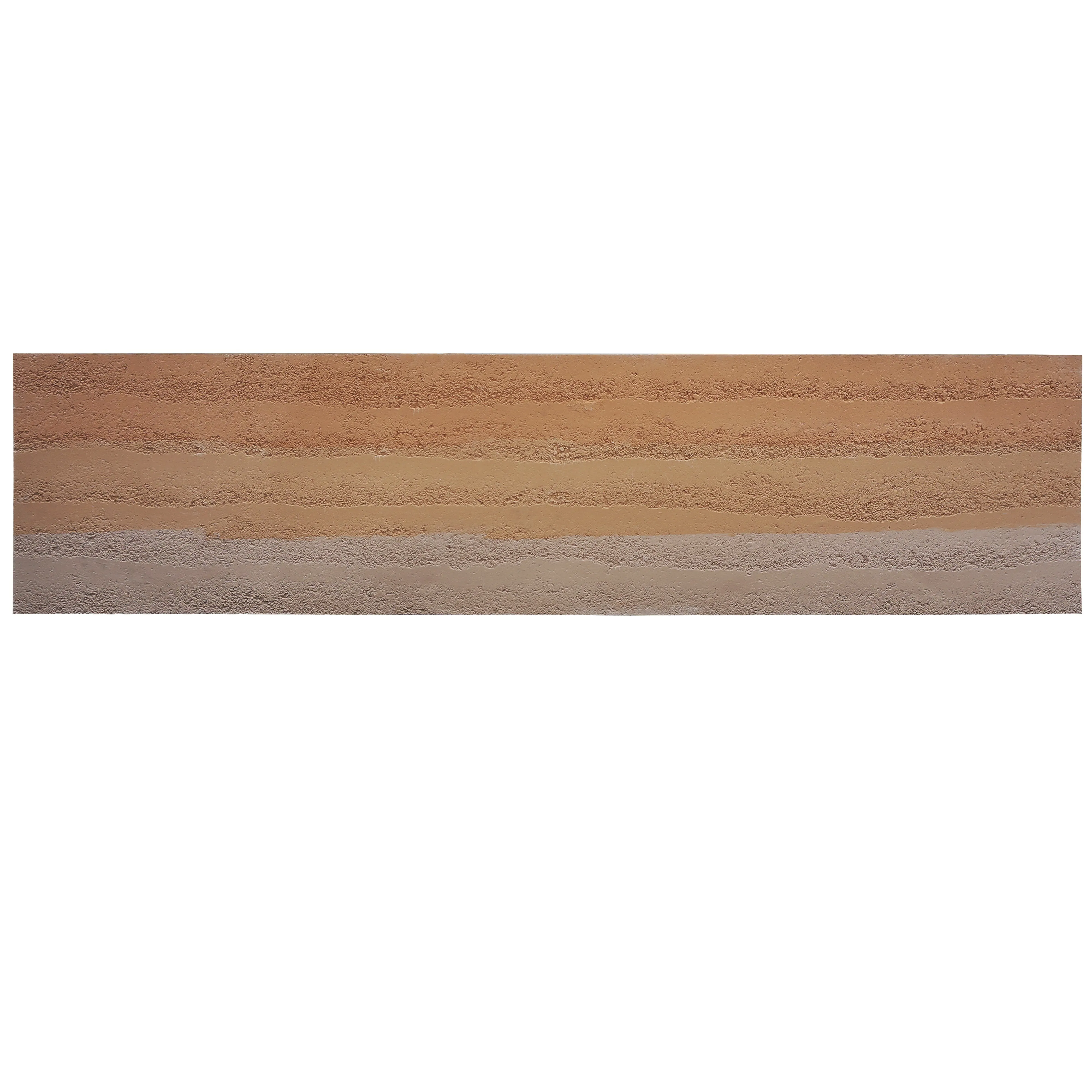
If there's one design trend reshaping commercial spaces, it's biophilia —the human instinct to connect with nature. Studies show that employees in offices with natural elements report 15% higher productivity and lower stress levels (Harvard Business Review, 2023). We're no longer satisfied with cold, sterile walls; we crave textures that remind us of forests, deserts, and mountains. Enter materials like travertine (beige) , with its porous, fossil-like surface that feels pulled from a sunlit canyon, or wood grain board , which carries the quiet story of tree rings. But rammed earth board (gradient) takes this a step further: it doesn't just look natural—it feels like holding a piece of the earth itself.
Imagine a wall that transitions from the soft green of a mossy forest floor to the warm khaki of a desert at dusk—that's the magic of gradient rammed earth. Unlike flat, uniform paints or synthetic wallpapers, it's a material with movement . Run your hand over it, and you'll feel the subtle ridges left by the ramming process, each layer of soil and pigment pressed together by hand, creating a tactile map of color. It's the opposite of the industrial chill of fair-faced concrete (though when paired thoughtfully, the two balance each other beautifully—more on that later). This isn't just design; it's storytelling.
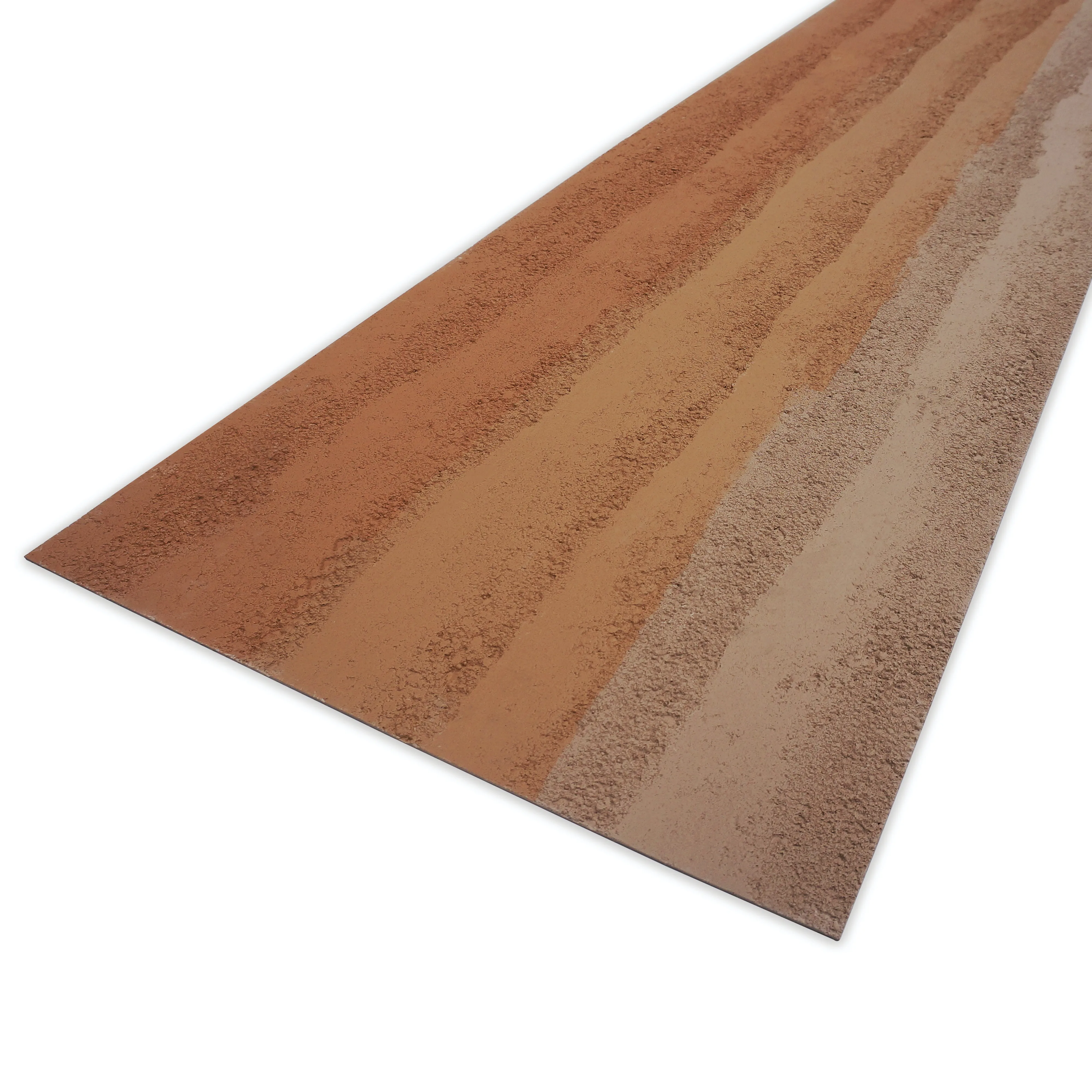
Let's start with the basics: rammed earth itself is an ancient building technique, used for centuries in regions like the American Southwest and rural China. Modern iterations, like the gradient series, blend traditional craftsmanship with contemporary innovation. Each board is made by compacting layers of soil, clay, and natural pigments—no harsh chemicals, no synthetic binders. The gradient effect is achieved by carefully adjusting the pigment ratios in each layer, creating a seamless flow from, say, rammed earth board (matcha green) at the bottom to rammed earth board (khaki) at the top, or from soft rammed earth board (light yellow) to deep rammed earth board (red) for a bold, energizing statement.
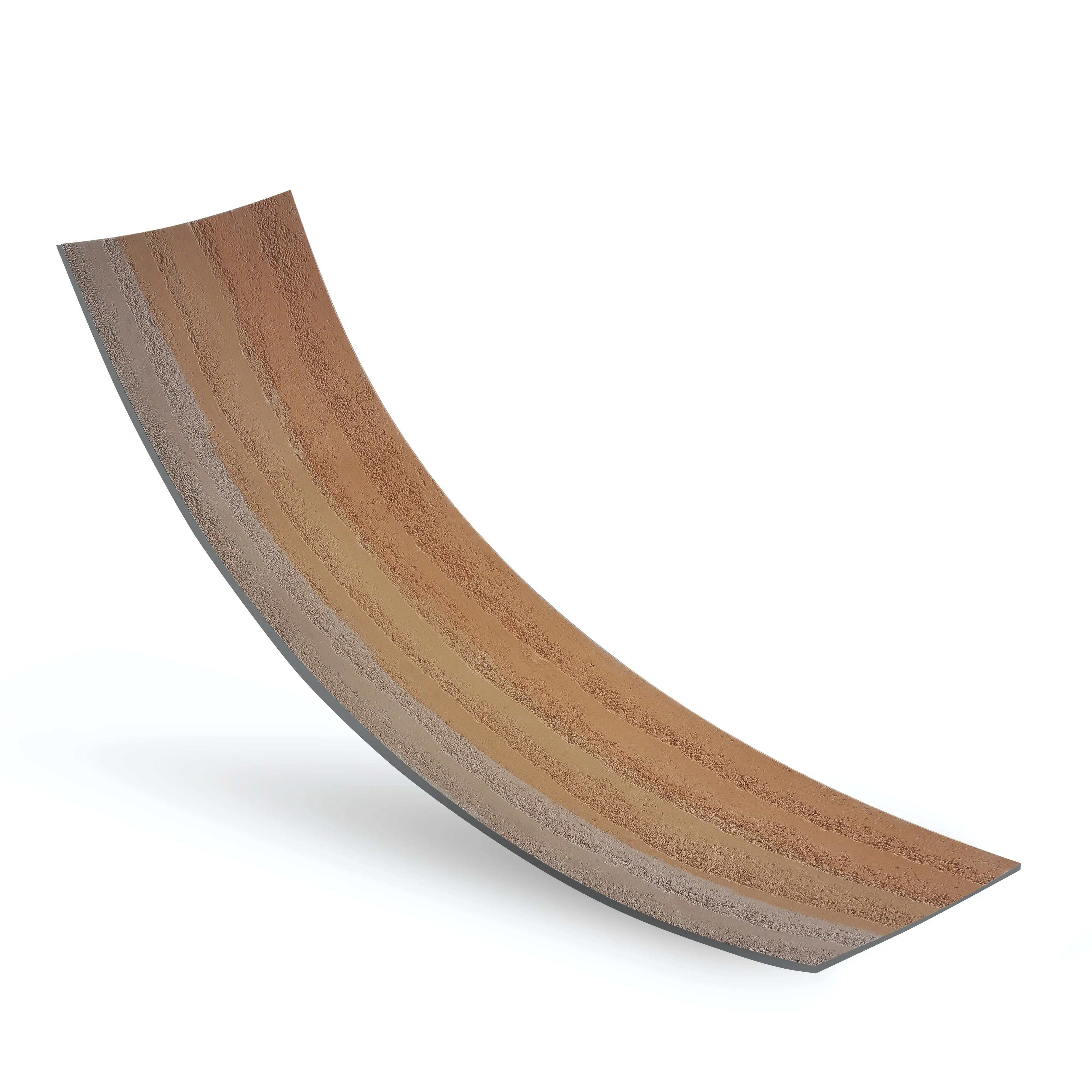
What truly sets it apart, though, is its versatility. Unlike rigid stone slabs or heavy tiles, flexible stone technologies have made rammed earth boards lightweight and easy to install, even on curved walls. This means you're not limited to square, flat surfaces—imagine a reception area with a gently curved gradient wall, welcoming clients with the softness of a sunset. And because it's made from natural materials, it ages gracefully: over time, the colors mellow slightly, developing a patina that adds character, much like a well-loved leather chair.
A gradient rammed earth wall is a star, but even stars need supporting cast members. The key is to balance its organic warmth with materials that either complement or contrast, creating a space that feels cohesive, not chaotic. Here are a few pairings designers swear by:
Not all office zones need the same energy. A reception area should wow; a focus room should calm; a breakout space should energize. Here's how to tailor gradient rammed earth to each:
Reception: Make a First Impression
Clients form opinions in 7 seconds—so make it count. A floor-to-ceiling gradient wall, say from
rammed earth board (matcha green)
to
rammed earth board (gradient c)
(a soft blend of green and cream), sets a tone of creativity and care. Pair it with a
wood grain board
reception desk and
travertine (beige)
tiles, and you've got a space that says, "We value beauty and authenticity."
Collaboration Spaces: Spark Creativity
Teams brainstorm best when they feel inspired. A gradient wall transitioning from
rammed earth board (red)
(energizing) to
rammed earth board (light yellow)
(optimistic) can fuel ideas. Add
weaving (jacinth)
cushions and
flexible stone
coasters on tables, and suddenly, the room feels less like a "meeting room" and more like a cozy studio.
Private Offices: Foster Focus
For spaces where deep work happens, opt for softer gradients:
rammed earth board (khaki)
blending into
rammed earth board (gradient b)
(a warm, neutral tone). The subtle color shift is calming without being boring, helping employees stay focused without distraction. Pair with
fair-faced concrete
shelves for a minimalist, uncluttered vibe.
Let's get real: offices need to be durable. Coffee spills, scuff marks, and the occasional chair bump are inevitable. Good news: rammed earth board (gradient) is built to last. Its compressed layers resist scratches and stains, and unlike painted walls, it won't chip or fade in sunlight. And because it's made from natural materials (clay, soil, pigments), it's low-VOC, meaning better air quality for employees—a win for sustainability certifications like LEED or WELL.
It's also surprisingly energy-efficient. Rammed earth acts as a thermal mass, absorbing heat during the day and releasing it at night, which can cut heating/cooling costs by up to 20% (Green Building Council, 2024). Compare that to polish concrete , which conducts heat and can make spaces feel drafty in winter. For companies aiming to reduce their carbon footprint, it's a material that aligns with both values and bottom lines.
| Material | Aesthetic Vibe | Best For | Care & Maintenance |
|---|---|---|---|
| Rammed Earth Board (Gradient) | Organic, warm, dynamic color transitions | Reception areas, collaboration zones, brand-focused spaces | Wipe with a damp cloth; resists stains and fading |
| Fair-Faced Concrete | Industrial, minimalist, cool-toned | Tech offices, modern lobbies, high-traffic areas | Seal yearly to prevent dust; prone to showing scratches |
| Travertine (Beige) | Timeless, porous, earthy | Floors, accent walls in luxury brands (hotels, law firms) | Seal every 2-3 years; avoid acidic cleaners |
At the end of the day, a gradient rammed earth wall isn't just a design choice. It's a statement: "We care about the planet, about our people, and about the stories we tell." It's the difference between an office that feels like a generic space and one that feels like a home —a place where employees walk in and think, "This is a company that gets it."
So whether you're designing a startup's playful collaboration hub or a law firm's sophisticated lobby, consider this: walls don't just divide space—they shape how we feel. And with materials like rammed earth board (gradient), travertine (beige) , and wood grain board , you're not just building walls. You're building experiences.
Recommend Products












