
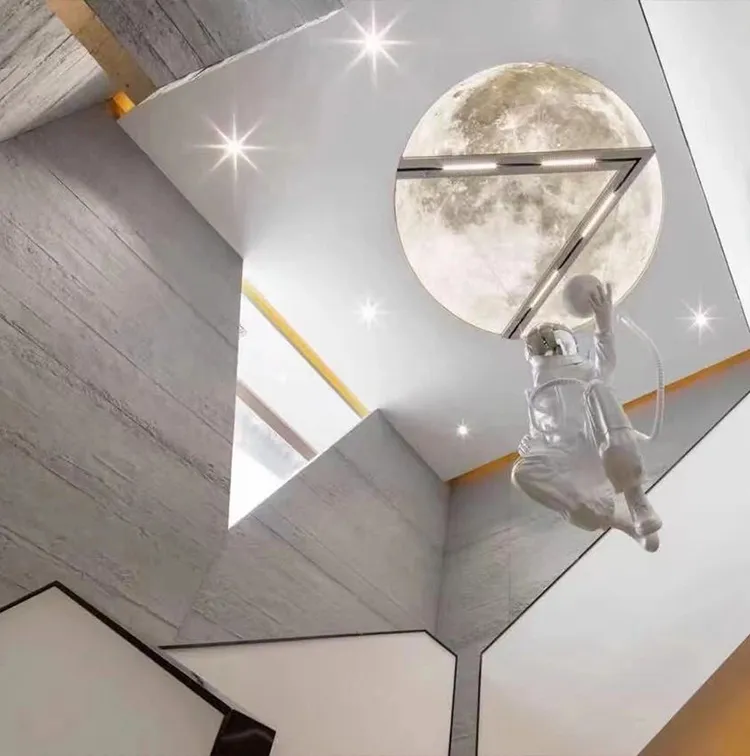
When the design team at Azure Haven Boutique Hotel first sat down with the client, there was one phrase that kept coming up: "warm minimalism." They wanted a space that felt modern but not cold, luxurious but approachable—a place where guests would sigh, "This feels like home, but better." The challenge? Translating that feeling into tangible materials. After months of sampling, testing, and debating, we landed on a curated palette from the MCM project board series, each material chosen not just for its looks, but for the stories it could tell. What follows isn't just a list of products; it's the story of how stone, concrete, and bamboo turned a blank canvas into a hotel guests don't want to leave.
The hotel sits on a quiet street in a historic district, so the exterior needed to respect the neighborhood's charm while announcing its own identity. We started with MCM flexible stone in travertine (starry blue)—a material that feels like a contradiction in the best way. It's tough enough to withstand rain and wind, yet its surface has the softness of a well-loved book cover. The starry blue hue isn't bold; it's a deep, muted tone that shifts with the light: slate-gray at dawn, indigo at dusk, and when the sun hits it just right, tiny flecks of mica catch the light like distant stars. Passersby often pause to run a hand over it, surprised by how warm it feels compared to traditional stone.
To break up the blue, we added accents of lunar peak golden around the windows. It's a subtle material—more of a glow than a shine—with a texture that mimics the rough-hewn edges of mountain stone. The combination is unexpectedly cozy: the blue wraps the building like a blanket, and the golden accents are the fireplace crackling in the corner. A local artist even commented, "It looks like the building's breathing." That's the magic of MCM flexible stone—its flexibility let us curve it around the hotel's rounded corners, turning a boxy structure into something organic, almost alive.
Step inside, and the first thing you notice is the silence—or rather, the quality of the silence. Fair-faced concrete walls line the space, their surface intentionally left unpolished. There are small air bubbles, faint tool marks, even a smudge where a worker's glove brushed the wet concrete. Instead of hiding these "imperfections," we leaned into them. They tell a story: this wall wasn't mass-produced; it was made by human hands. The concrete's neutral tone (a warm gray, not stark white) absorbs sound, turning the lobby into a calm oasis even when check-in lines are long.
Against this backdrop, we placed a reception desk wrapped in bamboo mat board. It's a material that feels like a hug. The natural weave of the bamboo creates a pattern that's both ordered and organic—like sunlight filtering through leaves. Run your hand over it, and you'll feel the slight ridges of the mat, a tactile contrast to the smooth concrete. Guests often rest their forearms on it while checking in, unconsciously seeking that connection to nature. Behind the desk, a feature wall of travertine (starry orange) adds a pop of color—not the bright orange of a traffic cone, but the soft hue of a sunset over desert hills. Its porous surface traps light, making the wall glow gently, even on cloudy days.
The hotel's restaurant, "Terra & Table," was designed to celebrate local cuisine—and the materials here mirror that ethos of "farm to table," but for design. The floors are laid with MCM big slab board series in lime stone (beige), a material that looks like it was quarried from a nearby field. Its surface has the subtle pitting and veining of natural limestone, but because it's MCM, it's durable enough to handle spills, scuffs, and the constant shuffle of chairs. The color is warm, like fresh-baked bread, and it makes the whole room feel inviting, even at 7 a.m. breakfast service.
The bar is the star, though. We clad it in foamed aluminium alloy board (vintage gold), a material that feels both retro and modern. It has a matte finish with a slight texture, so it doesn't fingerprint easily (a godsend for bartenders). The vintage gold isn't flashy; it's more like the patina on an old brass lamp—rich, lived-in, and full of character. When the bar lights dim in the evening, the gold catches the glow of the pendant lights and casts a warm hue over the cocktails. Regulars joke that their martinis taste better here, but we think it's the ambiance. And above the bar? A row of shelves made from bamboo mat board, holding local wines and artisanal spirits. The bamboo's natural color ties back to the lobby, creating a thread that runs through the hotel.
If the lobby is for hello and the restaurant is for gathering, the guest rooms are for goodbyes to the outside world. We wanted them to feel like a retreat, so we kept the color palette soft: whites, beiges, and grays, layered with textures that invite touch. The accent wall behind the bed is clad in lunar peak golden, the same material from the exterior but in a warmer shade. Up close, its surface has the granular texture of sandstone, and when the bedside lamp is on, it casts a pattern on the ceiling that looks like sunlight through pine needles. Guests often mention waking up and thinking, "Is that the mountains outside?" No—it's just the lunar peak golden catching the light.
The bathroom walls are lined with MCM 3D printing series in travertine (beige). It's a clever material: 3D printing let us create a subtle wave pattern on the surface, so when you step out of the shower, the walls don't feel cold and clinical—they feel like a gentle breeze. The beige color keeps the space bright, but the texture adds depth, so it never feels flat. Even the bathroom countertop, made from fair-faced concrete, has a secret: we mixed in tiny flecks of recycled glass, so when the light hits it, there's a subtle sparkle, like stars in a beige sky.
The courtyard is the hotel's heart—a small, enclosed space where guests can sip coffee in the morning or wine in the evening. We wanted it to feel like a garden, even in the city, so we used materials that blur the line between indoors and out. The paths are paved with gobi panel, a material inspired by the desert's rugged beauty. Its surface is rough, with the texture of wind-worn stone, but it's surprisingly slip-resistant—even when it rains. We mixed in small patches of gravel omani stone, which crunch underfoot like walking on a dry riverbed, adding an auditory layer to the experience.
A pergola covers one corner of the courtyard, its beams wrapped in bamboo mat board. Just like in the lobby, the bamboo weave dapples sunlight onto the ground, creating shifting patterns throughout the day. Below the pergola, we built a small seating area with cushions upholstered in fabric that matches the travertine (starry blue) from the exterior. It's a quiet nod to the building's skin, making the courtyard feel like an extension of the hotel, not a separate space. Even the planters are made from rammed earth board (matcha green), their color blending with the potted ferns and succulents. Run a hand over the rammed earth, and you'll feel its density—solid, grounding, like the earth itself.
Every material in Azure Haven was chosen for a reason—how it looked, how it felt, how it aged. Below is a snapshot of the key players and the roles they played:
| Material | Application | Design Note |
|---|---|---|
| MCM flexible stone (travertine, starry blue) | Exterior cladding | Soft, star-flecked texture; shifts color with light for dynamic curb appeal. |
| Fair-faced concrete | Lobby walls, bathroom countertops | Raw, handcrafted texture absorbs sound; warm gray tone adds calmness. |
| Bamboo mat board | Reception desk, bar shelves, pergola beams | Natural weave creates dappled light; tactile, warm, and sustainable. |
| Lunar peak golden | Exterior window accents, guest room accent walls | Rough-hewn mountain stone texture; subtle glow adds warmth without shine. |
| MCM 3D printing series (travertine, beige) | Bathroom walls | 3D-printed wave pattern adds gentle texture; beige hue keeps spaces bright. |
Six months after opening, we checked in with the hotel manager. "Guests keep asking where we got the stone," she laughed. "They want it for their homes." But it's not just the materials themselves—it's how they work together. The MCM flexible stone on the exterior sets a calm tone; the fair-faced concrete in the lobby says, "This is a place that values authenticity"; the bamboo mat board whispers, "You're safe here." Together, they create a space that feels less like a hotel and more like a collection of moments: the way the lunar peak golden glows at sunset, the sound of gravel omani stone underfoot in the courtyard, the warmth of bamboo against your arm as you check in.
That's the power of the MCM project board series. It's not just about building materials—it's about building feelings. And in a world that's often cold and hurried, isn't that what we all want? A space that feels human ? Azure Haven isn't perfect, but it's alive —and that's the best kind of success.
As the design team packed up their tools on the final day, one of the contractors turned to us and said, "I've built a lot of hotels, but this one… it feels like it has a soul." We couldn't have said it better ourselves. When you choose materials that tell a story—materials with texture, warmth, and character—you don't just build a building. You build a memory. And isn't that the point?
Recommend Products












