
When you're knee-deep in planning a building project—whether it's a cozy home addition, a sleek restaurant facade, or a commercial office complex—there's one decision that always seems to linger: which cladding material should I choose? Cladding isn't just about slapping something on the walls to keep the weather out. It's the skin of your building, the first thing people notice, the element that ties together your design vision. And let's be real—while we all want our projects to look stunning, budget constraints have a way of grounding even the loftiest ideas. That's why today, we're zeroing in on a material that's been making waves in the architecture world: Marble Interstellar Gray . Is it worth the investment compared to tried-and-true traditional options? Let's break it down, dollar by dollar, and see if this cosmic-inspired stone lives up to the hype.
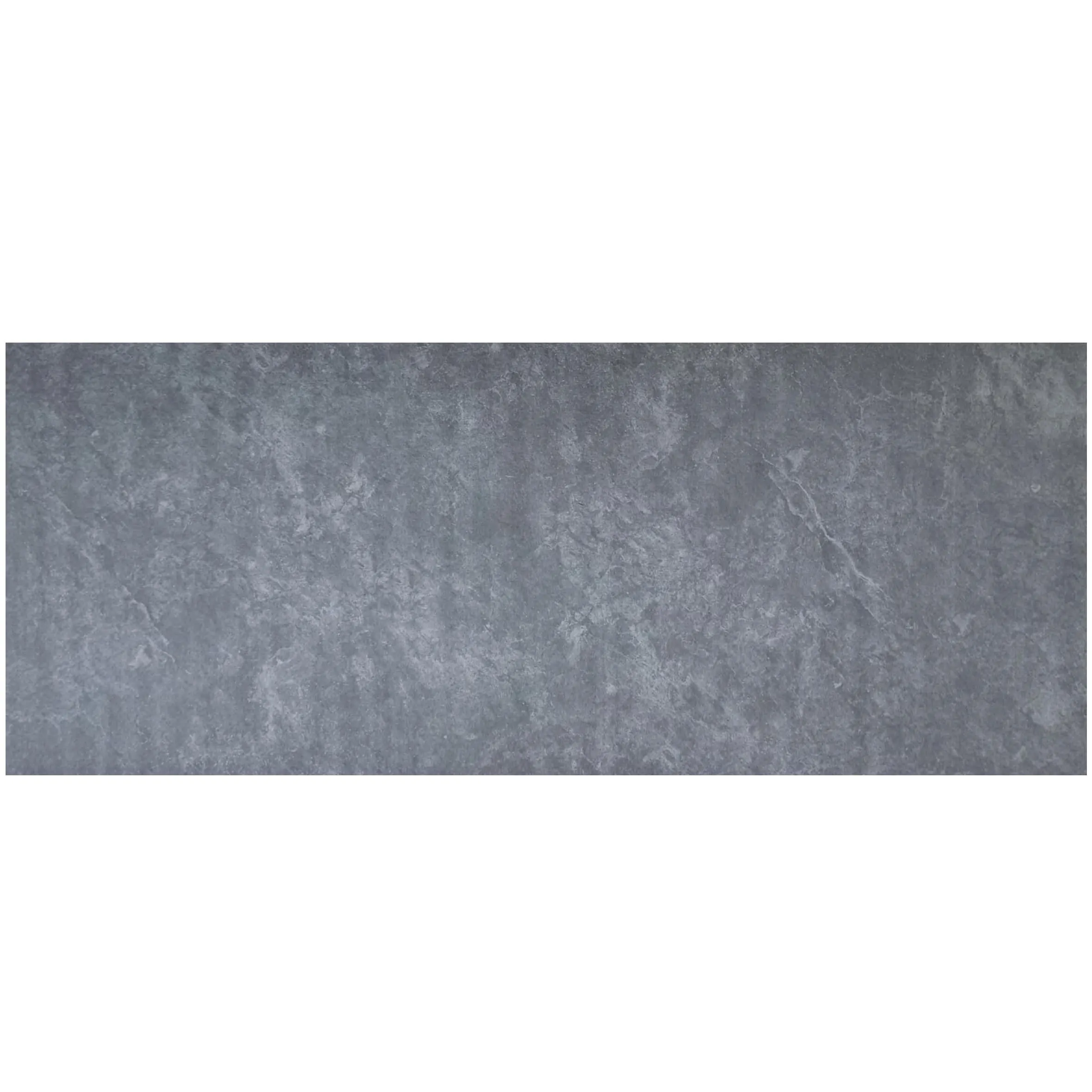
Before we start crunching numbers, let's get familiar with the star of the show. Marble Interstellar Gray isn't your average marble. Imagine a slab of stone that looks like someone captured a slice of the Milky Way and polished it to perfection—deep charcoal bases swirled with threads of silver, ash, and even faint hints of iridescent blue, depending on the light. It's dramatic without being over-the-top, modern but with the timelessness of natural stone. Quarried from select regions where geological conditions create these unique "interstellar" patterns, it's become a go-to for designers aiming to blend luxury with a touch of sci-fi elegance. You'll find it on high-end hotels in Dubai, boutique stores in New York, and even some upscale homes in California that want to make a statement without screaming "opulent."
But here's the kicker: with that "wow" factor comes questions about cost. Is this just another fancy material that looks great on Instagram but leaves your budget in shambles? To find out, we're pitting Marble Interstellar Gray against four common alternatives: fair-faced concrete (the industrial workhorse), travertine (beige) (the classic natural stone), MCM flexible stone (the modern lightweight contender), and foamed aluminium alloy board (vintage silver) (the metallic upstart). We'll compare everything from initial material costs to long-term maintenance, so you can decide if Interstellar Gray is a splurge worth making.

Cladding costs aren't just about the price per square meter on a quote. They're a puzzle with multiple pieces. To keep this fair, we'll evaluate each material across five key categories:
By the end, we'll tally these up to see which material gives you the most bang for your buck—whether you're building for the short term or investing in a structure that'll stand for decades.

Let's start with the heavyweight of budget-friendly cladding: fair-faced concrete. You know the look—raw, unpolished concrete with visible formwork lines, sometimes with exposed aggregate for texture. It's the material of warehouses-turned-lofts, minimalist homes, and modern office parks. It's rugged, it's versatile, and it's often the first choice for projects where "affordable" and "edgy" are top priorities. But how does it stack up against Interstellar Gray?
Let's cut to the chase: fair-faced concrete is cheap —at least at first glance. On average, you'll pay between $30 and $50 per square meter for basic precast concrete panels. If you want custom textures (like bush-hammered finishes or exposed stone chips), that price might climb to $60–$80 per square meter, but even then, it's still a steal compared to stone.
Marble Interstellar Gray, on the other hand, starts at a much higher baseline: $80–$120 per square meter for the raw stone. And that's before you factor in things like thickness (thicker slabs cost more) or custom cuts (curves or intricate edges can add 20–30% to the price). For a 100-square-meter facade, that's a difference of $5,000–$7,000 right off the bat. Ouch. Concrete clearly wins the initial cost battle—but we're just getting started.
Here's where the plot thickens: material cost is only half the story. Installation labor can turn a "cheap" material into a budget-buster, or a "pricy" material into a reasonable investment. Let's break it down.
Fair-faced concrete panels are designed for efficiency. They're precast in factories, so they arrive on-site ready to install—no cutting, no shaping, just lifting and securing. A crew experienced with concrete can knock out 10–15 square meters per day, and labor costs typically run $20–$35 per square meter. Even with custom formwork (for unique textures), you're looking at $30–$50 per square meter. For 100 square meters, that's $2,000–$5,000 in labor.
Marble Interstellar Gray? It's a diva in comparison. Natural stone is heavy—we're talking 20–25 kg per square meter—and fragile. One wrong move during installation, and you've cracked a $100 slab. That means you need skilled stone masons , not just general laborers. These pros charge $40–$70 per square meter, and they work slower—maybe 5–8 square meters per day for complex designs. Add in the cost of specialized tools (diamond-tipped saws, suction cups for lifting) and adhesive (high-strength mortar for stone), and labor can hit $60–$90 per square meter. For 100 square meters, that's $6,000–$9,000. Suddenly, concrete's $2,000–$5,000 looks a lot better. But wait—what if your project is small, like a 20-square-meter accent wall? The labor cost per square meter might be higher for concrete (since crews charge minimums), and the gap narrows.
Now, let's fast-forward 10 years. How much will you spend keeping these materials looking sharp? Maintenance is where some "cheap" materials start to bleed cash, and "expensive" ones justify their price.
Fair-faced concrete is the poster child for low maintenance. It's non-porous once cured, so rain, dirt, and even mild chemicals (like pool chlorine) don't faze it. Most experts recommend sealing it once every 3–5 years to prevent efflorescence (that white, powdery residue that forms when water evaporates from concrete). A gallon of concrete sealer costs $15–$25 and covers 15–20 square meters, so annual maintenance is roughly $0.50–$1 per square meter. Over 20 years, that's $10–$20 per square meter total. Easy peasy.
Marble Interstellar Gray? It's high-maintenance, but not impossible. Marble is porous, so it stains easily—think red wine spills, bird droppings, or even rainwater mixed with dirt. To protect it, you'll need to seal it every 1–2 years with a stone sealer ($20–$35 per gallon, covering 10–15 square meters). That's $1.50–$3.50 per square meter annually. Plus, if you scratch or chip it (and you will—kids, pets, or even a stray golf ball can do it), repairs cost $50–$150 per chip, depending on size. Over 20 years, maintenance and repairs could add up to $50–$100 per square meter. For 100 square meters, that's $5,000–$10,000—enough to make you wince. But here's the flip side: marble rarely needs full replacement. Concrete, while tough, can crack in freeze-thaw climates or due to ground movement. Repairing a cracked concrete panel costs $200–$500 per panel, and if you have multiple cracks, that maintenance budget starts to climb.
When it comes to longevity, both materials are built to stick around. Fair-faced concrete can last 50–80 years with minimal issues, though it may fade or develop hairline cracks over time. Marble Interstellar Gray, when properly installed and sealed, can hit 80–100 years—yes, centuries . Think about it: ancient Roman buildings still have marble facades intact. That's durability you can't put a price on, especially for heritage projects or buildings meant to be family legacies.
But there's a catch: marble is softer than concrete, so it's more prone to scratches and chips. In high-traffic areas (like a restaurant patio), you might see wear and tear faster than with concrete. Concrete, on the other hand, is tough as nails—kids can skateboard on it, and it'll barely notice. So if your cladding is in a low-traffic, sheltered area (like a second-story facade), marble's lifespan advantage shines. If it's on the ground floor of a busy mall? Concrete might outlast it.
Here's where marble starts to fight back: resale value. A building with Marble Interstellar Gray cladding is a selling point . Luxury homebuyers, hotel investors, and high-end retailers are willing to pay premium rates for that "wow" factor. In real estate terms, marble cladding can increase a property's value by 5–10% in competitive markets. Concrete, while functional, doesn't have that same cachet. It's seen as "practical," not "prestigious." So if you're building to sell or lease, that initial marble investment might pay off when it's time to cash in.
Energy efficiency is another angle. Marble is a natural insulator, helping to regulate indoor temperatures and reduce heating/cooling costs by 5–8% compared to concrete (which absorbs heat and can make interiors warmer in summer). Over 20 years, that's hundreds (or thousands) of dollars in savings. Concrete can be insulated, but that adds extra cost—negating its initial budget advantage.

Okay, so concrete is cheaper upfront—but what if you want natural stone without the Interstellar Gray price tag? Enter travertine (beige) : the warm, earthy cousin of marble. With its honey-colored base and signature pitted texture, travertine has been a staple in Mediterranean and classical architecture for centuries. It's natural, it's timeless, and it's often marketed as a "budget-friendly" stone alternative. But how does it stack up to Interstellar Gray?
Travertine (beige) sits comfortably in the middle of the price spectrum. Raw travertine slabs cost $50–$80 per square meter—cheaper than Interstellar Gray ($80–$120) but pricier than concrete ($30–$50). For a 100-square-meter project, that's $5,000–$8,000 for travertine vs. $8,000–$12,000 for Interstellar Gray—a difference of $3,000–$4,000. Not chump change, but not a night-and-day gap, either.
But here's the catch: travertine's "pitted" texture (those small holes formed by gas bubbles during formation) means it often needs to be filled with resin before installation to prevent water penetration. That adds $5–$10 per square meter to the material cost, bringing it to $55–$90 per square meter. Suddenly, the gap between travertine and Interstellar Gray narrows—especially if you opt for higher-quality travertine with fewer pits (which costs more).
Installation costs for travertine (beige) are almost identical to Interstellar Gray. It's heavy (18–22 kg per square meter), porous, and requires skilled masons to handle. Labor runs $40–$65 per square meter, plus the cost of resin filling ($5–$10 per square meter) and specialized adhesive. For 100 square meters, that's $4,500–$7,500 in labor—right on par with Interstellar Gray's $6,000–$9,000. So when it comes to installation, there's no clear winner here.
Remember how we said marble needs sealing every 1–2 years? Travertine is even thirstier. Those pits, even after filling, make it more porous than marble, so it stains faster and more easily. You'll need to seal travertine every 6–12 months to keep it looking fresh. Sealer costs the same ($20–$35 per gallon), but since you're applying it twice as often, annual maintenance jumps to $3–$7 per square meter. Over 20 years, that's $60–$140 per square meter—way more than marble's $50–$100. And if you skip sealing? Those pits will trap dirt, turning your once-beige travertine into a dingy, mess that's hard to restore.
Interstellar Gray, with its tighter grain and lower porosity, is more forgiving. A single spill won't ruin it if cleaned up quickly, and that extra year between sealings saves both time and money. For busy property owners, that's a big win.
Cost aside, there's the elephant in the room: how do they look? Travertine (beige) is warm, inviting, and pairs beautifully with earthy tones—think terracotta roofs, wooden accents, and lush greenery. It's perfect for rustic villas or coastal homes. Marble Interstellar Gray, though, is all about drama. It's sleek, modern, and pairs with metals, glass, and monochromatic palettes. It's the stone of choice for high-end boutiques, art galleries, and futuristic homes. So if your design vision is "cozy Mediterranean," travertine wins. If it's "cosmic luxury," Interstellar Gray takes the crown. And since aesthetics drive resale value, the "right" look depends entirely on your target market.

Now, let's shift gears to a newer kid on the block: MCM flexible stone . Short for "Modified Composite Material," MCM is a lightweight, flexible cladding made from natural stone particles mixed with polymers. It looks like real stone but weighs a fraction (3–5 kg per square meter) and bends to fit curves. It's marketed as a "budget-friendly alternative to natural stone," but does it hold up to Interstellar Gray in terms of cost and value?
MCM flexible stone is undeniably affordable. Raw panels cost $30–$50 per square meter—cheaper than both travertine and Interstellar Gray. For 100 square meters, that's $3,000–$5,000 vs. Interstellar Gray's $8,000–$12,000. Installation is also a breeze: it's lightweight, so you can install it with basic tools and a regular crew (no masons needed). Labor runs $15–$30 per square meter, totaling $1,500–$3,000 for 100 square meters. Total installed cost? $4,500–$8,000 vs. Interstellar Gray's $14,000–$21,000. That's a huge difference—so why would anyone choose marble?
Here's the trade-off: MCM flexible stone has a lifespan of 15–25 years, compared to marble's 80–100 years. That means you'll need to replace it 3–4 times over the life of a marble cladding. Let's do the math: if MCM costs $4,500–$8,000 per 100 square meters and needs replacement every 20 years, over 80 years, you'll spend $18,000–$32,000. Interstellar Gray, at $14,000–$21,000 upfront, lasts 80 years with minimal replacement. Suddenly, MCM isn't so budget-friendly long-term.
Then there's authenticity. MCM looks like stone, but up close, the texture is slightly plastic-y. For luxury projects or clients who value "real" materials, that's a dealbreaker. Marble Interstellar Gray, with its natural veining and depth, can't be replicated by composites. In high-end markets, that authenticity translates to higher resale value and tenant appeal.
Last but not least, let's consider a modern metallic option: foamed aluminium alloy board (vintage silver) . Sleek, lightweight, and with a cool industrial sheen, it's popular for contemporary commercial projects. It's durable, weather-resistant, and often marketed as a "low-maintenance alternative to stone." How does it compare cost-wise?
Foamed aluminium alloy board (vintage silver) costs $50–$70 per square meter for materials, plus $20–$40 per square meter for installation (lightweight, easy to cut). Total installed cost: $70–$110 per square meter, or $7,000–$11,000 for 100 square meters—cheaper than Interstellar Gray but pricier than MCM or concrete.
Aluminium is rust-proof, scratch-resistant, and needs almost no maintenance—just an occasional wash with soap and water. Annual maintenance cost? $0.10–$0.30 per square meter. Lifespan is 30–50 years, better than MCM but less than marble. Over 50 years, total cost is $7,000–$11,000 (initial) + $500–$1,500 (maintenance) = $7,500–$12,500. Interstellar Gray, over 50 years, is $14,000–$21,000 + $2,500–$5,000 (maintenance) = $16,500–$26,000. So for a 50-year project, aluminium is cheaper. But for 80+ years? Marble still wins.
Aesthetically, it's a toss-up: metallic silver vs. cosmic gray. Aluminium is better for industrial or ultra-modern designs, while marble suits luxury or classic-modern styles. It all depends on your vision.
| Material | Initial Material Cost ($/sqm) | Installation Cost ($/sqm) | Annual Maintenance ($/sqm) | Est. Lifespan (years) | Total Cost Over 20 Years ($/sqm)* |
|---|---|---|---|---|---|
| Marble Interstellar Gray | $80–$120 | $40–$70 | $1.50–$3.50 | 80–100 | $121.50–$193.50 |
| Fair-Faced Concrete | $30–$50 | $20–$35 | $0.50–$1.00 | 50–80 | $50.50–$86.00 |
| Travertine (Beige) | $50–$80 | $40–$65 | $3.00–$7.00 | 50–70 | $93.00–$152.00 |
| MCM Flexible Stone | $30–$50 | $15–$30 | $0.50–$1.50 | 15–25 | $45.50–$81.50 |
| Foamed Aluminium (Vintage Silver) | $50–$70 | $20–$40 | $0.10–$0.30 | 30–50 | $70.10–$110.30 |
*Total cost over 20 years includes initial material + installation + 20 years of maintenance. Does not include replacement costs for short-lifespan materials.
The answer depends on your priorities. If you're building on a tight budget and don't care about long-term value or aesthetics, fair-faced concrete or MCM flexible stone are your best bets. If you want natural stone on a mid-range budget and love warm, earthy tones, travertine (beige) works—just be ready for higher maintenance. If you need a modern metallic look and plan to replace cladding every 30–50 years, foamed aluminium alloy board (vintage silver) is a solid choice.
But if you're investing in a project that matters—one you want to stand the test of time, one that makes a statement, one that holds or increases value— Marble Interstellar Gray is worth every penny. Its initial cost is high, but its longevity, low long-term maintenance, and unbeatable aesthetic appeal make it a splurge that pays off. It's not just cladding; it's a legacy material.
At the end of the day, cladding is about more than cost—it's about the story your building tells. And Marble Interstellar Gray? It tells a story of luxury, durability, and a touch of cosmic wonder. Sometimes, that's worth the investment.
Recommend Products












