
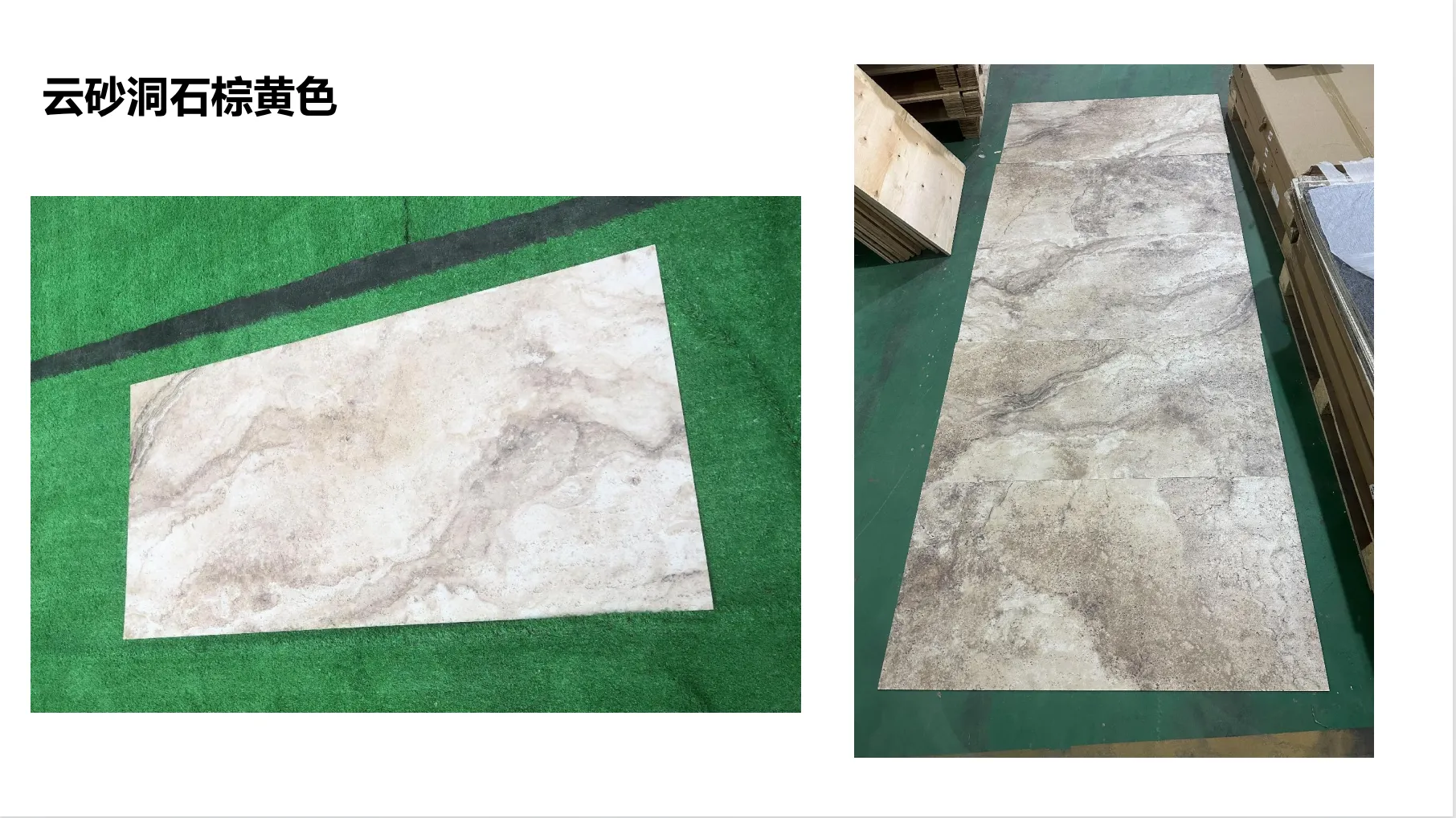
Every space tells a story, and the materials we choose are the words that write it. From the rough-hewn charm of ancient temples to the sleek minimalism of modern lofts, building materials shape not just how a room looks, but how it feels. Today, we're diving into two materials that often stand at the crossroads of tradition and innovation: Dolomitic Travertine (claybank) —a natural stone with roots in the earth's slow, patient craftsmanship—and engineered stone, a product of human ingenuity designed for consistency and resilience. Let's explore their origins, aesthetics, practicalities, and the unique stories they bring to our homes and commercial spaces.
To understand these materials, we first need to trace their beginnings. Dolomitic Travertine (claybank) is a child of time and geology. Formed in mineral-rich hot springs, it's a type of limestone where calcium carbonate deposits layer upon layer over centuries, creating soft, porous stone with distinctive veining and pockmarks. The "claybank" descriptor hints at its warm, earthy hue—think sun-baked soil or aged terracotta—tinged with subtle variations that no two slabs can replicate. This is stone with a history; each imperfection, each ripple in its surface, is a fingerprint of the natural forces that shaped it.
Engineered stone, by contrast, is a product of modern manufacturing. Born in labs and factories, it's typically made by blending crushed natural stone (like quartz, marble, or granite) with polymer resins and pigments. The mixture is compressed under high pressure and heat, creating a dense, non-porous slab that mimics the look of natural stone but with enhanced durability and uniformity. It's a material designed to solve the "problems" of natural stone—porosity, inconsistency, fragility—by trading some of nature's chaos for human control.
| Feature | Dolomitic Travertine (Claybank) | Engineered Stone |
|---|---|---|
| Composition | Natural calcium carbonate deposits; porous with organic veining and pits. | Crushed stone + polymer resins + pigments; dense, non-porous, uniform. |
| Durability | Moderate; prone to scratches, stains, and etching without sealing. | High; scratch, stain, and heat-resistant (up to 150°C/300°F). |
| Maintenance | Requires annual sealing; avoids acidic cleaners; blot spills immediately. | Low maintenance; wipe with soap and water; no sealing needed. |
| Cost | Mid-to-high range; varies by slab uniqueness and sourcing. | Mid range; consistent pricing due to standardized production. |
| Environmental Impact | Natural but energy-intensive to extract; biodegradable at end of life. | Uses recycled stone but contains non-biodegradable resins; limited recyclability. |
When it comes to looks, these materials couldn't be more different—and that's where personal preference takes center stage. Dolomitic Travertine (claybank) is a masterclass in organic beauty. Its surface is a tapestry of history: tiny fossilized bubbles, delicate veins of iron oxide that streak like sunset, and a matte finish that softens light rather than reflecting it. Run your hand over it, and you'll feel texture—subtle ridges and hollows that invite touch. It's the kind of material that ages gracefully, developing a patina over time as it absorbs the life of the space around it. In a rustic kitchen or a spa-inspired bathroom, it feels grounded, like bringing a piece of the outdoors in.
Engineered stone, on the other hand, is all about precision. Want a countertop with zero variation? A backsplash in a bold, uniform color you won't find in nature? Engineered stone delivers. Its surface is smooth, consistent, and often glossy, reflecting light to create a sleek, modern vibe. While it can mimic the veining of marble or the granular look of granite, the patterns are controlled—no random pits or unexpected color shifts. This makes it a favorite for contemporary spaces where clean lines and symmetry are key. Imagine a minimalist apartment with all-white cabinetry; engineered stone in a cool gray would feel crisp and intentional, a canvas that lets art and furniture take the spotlight.
Here's where MCM flexible stone enters the conversation—a modern alternative that bridges the gap. Part of the MCM (Modified Composite Material) product line, it's a thin, lightweight panel that mimics the look of natural stone but with added flexibility. Unlike both dolomitic travertine (heavy, rigid) and engineered stone (dense, slab-based), MCM flexible stone can bend to curved surfaces, making it ideal for accent walls or custom designs. It's a reminder that material innovation isn't just about replacing the old, but expanding what's possible.
Let's talk practicality. A beautiful material is only as good as its ability to withstand daily life. Dolomitic Travertine (claybank) , like many natural stones, is porous. That means if you spill red wine or lemon juice on an unsealed slab, it could stain. It's also softer than granite or engineered stone, so dragging a heavy pot across it might leave a scratch. But here's the catch: with proper care, it can last for decades. Sealing it annually (or even twice a year in high-traffic areas) fills those pores, creating a barrier against stains. Think of it like maintaining a vintage car—more effort, but part of the charm. In low-traffic spaces, like a powder room or a feature wall, it's less of a concern. There's a reason ancient Roman buildings still stand with travertine facades; when treated with respect, it's a survivor.
Engineered stone, by contrast, is built for resilience. Its non-porous surface means spills bead up instead of soaking in—no need to panic if you forget to wipe up that morning coffee. It's also scratch-resistant enough to handle knife work (though experts still recommend cutting boards) and heat-resistant, so a hot pan won't leave a mark. This durability makes it a top choice for kitchens, bathrooms, and commercial spaces like restaurants or hotels, where wear and tear are constants. But it's not indestructible: extreme heat (like a lit cigarette) can melt the resin, and while it resists scratches, heavy impacts (like dropping a cast-iron skillet) might chip it. Still, for busy households, it's hard to beat the peace of mind.
To put it in perspective: Imagine two families. The first, with young kids and a love for messy art projects, might lean toward engineered stone—they need something that can handle crayon marks and juice spills without a second thought. The second, empty nesters who cherish craftsmanship and don't mind a little upkeep, might fall for dolomitic travertine's character. Neither is "better"; they're just better suited to different lifestyles.
Installing natural stone is no small feat. Dolomitic Travertine (claybank) slabs can be thick and heavy—sometimes weighing 50-70 pounds per square foot. This means you'll need experienced installers to handle them, and your subfloor or wall structure may need reinforcement. Cutting the stone also requires specialized tools to avoid cracking, adding to labor costs. But for those who prioritize authenticity, the investment is worth it. The result is a solid, permanent surface that feels "real" in a way few materials do.
Engineered stone, being man-made, is often lighter and more uniform, making installation quicker and less labor-intensive. Many slabs come pre-cut to standard sizes, reducing waste and cutting time. It's also easier to handle on-site—no need for a team of installers to maneuver a single heavy slab. This can translate to lower installation costs, which is a big plus for budget-conscious projects. That said, it's still a rigid material, so it won't conform to uneven surfaces the way something like fair-faced concrete might. Fair-faced concrete, with its raw, industrial look, is another option for those who want durability with a more organic texture, though it lacks the warmth of travertine.
Let's get down to the nitty-gritty: what will you actually do to keep these materials looking good? For Dolomitic Travertine (claybank) , maintenance is a ritual. Start with sealing—use a high-quality penetrating sealer designed for porous stones, and reapply it every 6-12 months. When cleaning, avoid acidic cleaners like vinegar or lemon; opt for a pH-neutral stone cleaner instead. Blot spills immediately (don't wipe, which can spread the liquid), and use coasters under glasses. Over time, you might notice some etching (dull spots) from acidic substances, but these can often be buffed out by a professional. Think of it as part of the stone's story—those little marks are proof it's being used and loved.
Engineered stone is the low-maintenance cousin. Its non-porous surface means you can wipe it down with soap and water, and that's about it. No sealing, no special cleaners, no panic over spills. Even oil and grease wipe away easily. This makes it a dream for busy professionals, parents, or anyone who'd rather spend weekends hiking than sealing countertops. The only caveat? Avoid harsh abrasives like steel wool, which can dull the finish over time. A soft cloth or sponge is all you need.
Budget is often the final deciding factor, and here's how it breaks down. Dolomitic Travertine (claybank) falls into the mid-to-high range for natural stone. Prices vary based on slab size, uniqueness (rare veining means higher costs), and sourcing (imported stone is pricier than local). On average, you might pay $50-$100 per square foot installed. Engineered stone, meanwhile, is more consistent in pricing, typically ranging from $40-$80 per square foot installed. The lower end comes from mass-produced brands, while higher-end options with premium pigments or textures can creep into the travertine range.
But cost isn't just about upfront dollars—it's about long-term value. Dolomitic travertine, with proper care, can last a lifetime and may even increase a home's resale value for buyers who appreciate natural materials. Engineered stone, while durable, may need to be replaced sooner if it's chipped or damaged beyond repair (though this is rare). And let's not forget maintenance costs: sealer for travertine adds up over time, while engineered stone has almost none.
In an era where sustainability matters more than ever, both materials have their pros and cons. Dolomitic Travertine (claybank) is a natural resource, which means extracting it requires mining. While responsible quarries use eco-friendly practices (reclaiming land after mining, reducing water usage), it's still an energy-intensive process. On the flip side, it's biodegradable—at the end of its life, it can be crushed and reused as aggregate. It also has a low carbon footprint once installed, as it doesn't off-gas or require chemical treatments beyond sealing.
Engineered stone's sustainability depends on its composition. Many brands use recycled stone chips, which reduces waste, but the polymer resins are typically petroleum-based, which are non-renewable. The manufacturing process also involves energy and chemicals, and at the end of its life, engineered stone is hard to recycle (the resins bind the materials together, making separation difficult). That said, its durability means it may need to be replaced less often than some natural stones, offsetting some environmental impact.
At the end of the day, the choice between Dolomitic Travertine (claybank) and engineered stone isn't about "better" or "worse"—it's about what you value most in a space. Do you crave the warmth of natural materials, even with a little upkeep? Are you drawn to the stories hidden in every vein and pit, the sense that your home is built from something that took centuries to form? Then dolomitic travertine might be your match. It's for the romantic, the preservationist, the person who believes imperfection is part of beauty.
Or do you prioritize practicality, consistency, and modernity? Do you want a material that works as hard as you do, that looks flawless day in and day out, no fuss? Engineered stone could be the answer. It's for the minimalist, the problem-solver, the person who wants their space to feel intentional and low-stress.
And if you're somewhere in between? Consider exploring hybrid options like MCM flexible stone or even mixing materials—dolomitic travertine on a feature wall, engineered stone on the countertops. After all, the best spaces are often the ones that blend stories, textures, and traditions. Whatever you choose, remember: the right material doesn't just fill a space—it transforms it, turning houses into homes and rooms into memories.
Recommend Products












