
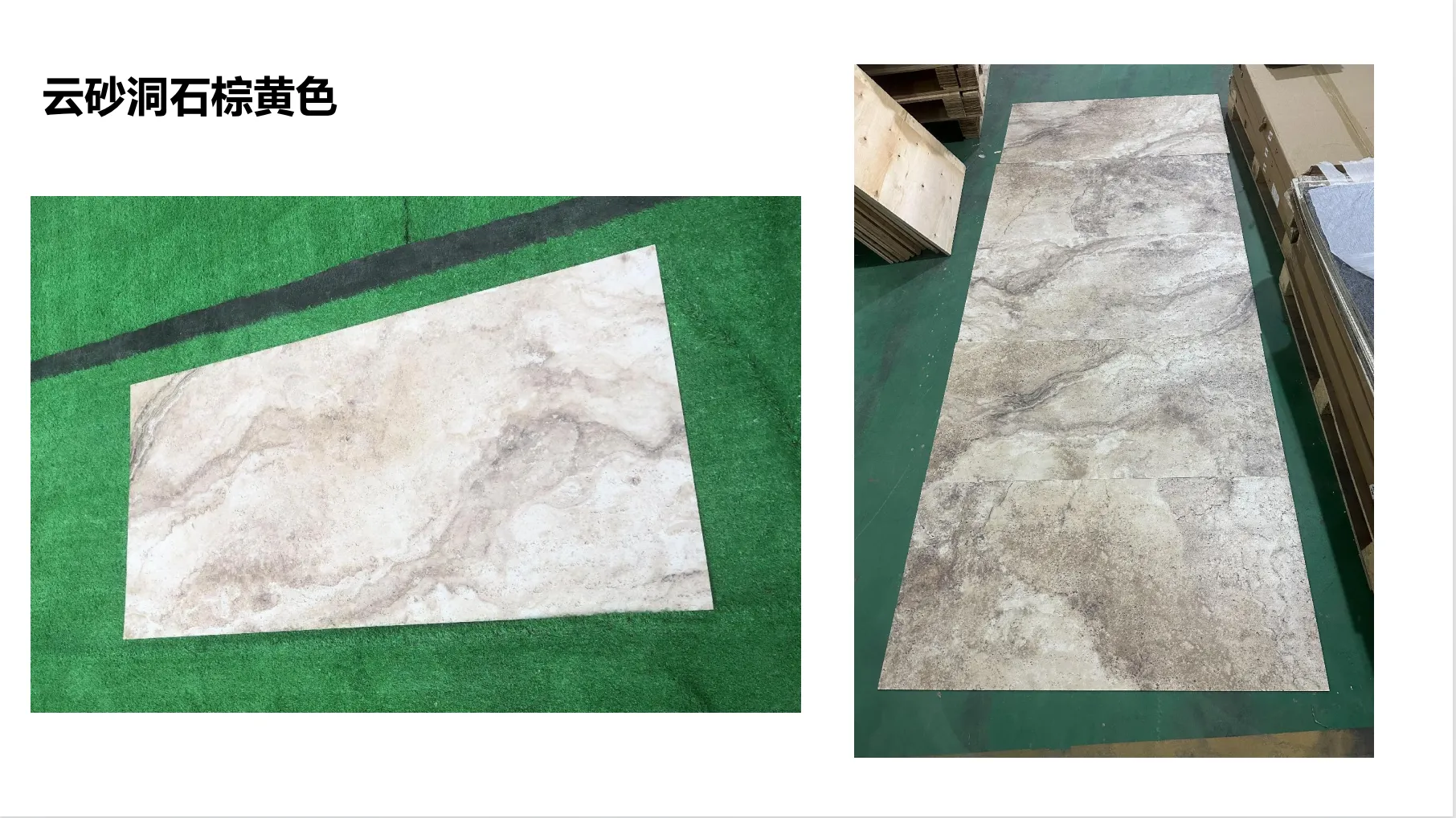
Choosing the right natural stone for your home or commercial project is like picking a partner for a long-term relationship—you want something that's not just beautiful at first glance, but also reliable, resilient, and able to stand the test of time. Two stones that often top the shortlist for architects, designers, and homeowners alike are Dolomitic Travertine (Claybank) and Quartzite . Both bring unique charm to spaces, but when it comes to the nitty-gritty of performance—specifically strength and porosity—they couldn't be more different. Let's break down what these differences mean for your floors, walls, countertops, and everything in between.
Before we dive into strength and porosity, let's get to know our two stars. Think of this as a first impression—what do they look like, where do they come from, and what makes them unique?
If stones had personalities, Dolomitic Travertine (Claybank) would be the laid-back, sun-kissed friend who feels like home. Picture a surface in soft, earthy claybank tones—think warm beiges with hints of terracotta or sand, swirled with subtle veins and tiny, natural pits that tell the story of its formation. Travertine itself is a sedimentary rock, born from mineral-rich hot springs. As water evaporates, calcium carbonate deposits build up, creating layers of stone with characteristic voids (those "holes" you often see in travertine).
But what makes dolomitic travertine special? Unlike regular travertine, which is mostly calcium carbonate, dolomitic travertine has a higher concentration of dolomite—a mineral that's a mix of calcium and magnesium carbonate. This dolomite infusion isn't just a chemical tweak; it gives the stone a slight edge in durability compared to its non-dolomitic cousins. Think of it as travertine with a "strength upgrade," though it still retains that signature porous, organic texture we love.
Quartzite, on the other hand, is the rockstar of resilience. Formed from sandstone that's been cooked and compressed deep within the Earth's crust (a process called metamorphism), it's like sandstone that hit the gym and came out a superhero. The result? A hard, crystalline stone with a sparkly, almost glassy surface. Its colors range from pure whites and soft grays to bold golds and even deep blues, often with dramatic veining that rivals marble—though don't let the looks fool you: quartzite is far tougher.
Here's the key: quartzite is made mostly of quartz, one of the hardest minerals on Earth. That's why it's known for being scratch-resistant, heat-resistant, and generally unfazed by the chaos of daily life. If Dolomitic Travertine (Claybank) is the cozy cottage, Quartzite is the fortified castle—still beautiful, but built to withstand sieges (or, you know, rowdy kids and clumsy adults).
"Strength" in stones isn't just about how hard you can hit them with a hammer (though we don't recommend testing that at home). It's about scratch resistance, compressive strength (how much weight they can bear), and overall durability. Let's break it down in ways that matter for your project—like whether your kitchen countertop will survive a dropped pan or your patio will hold up under years of foot traffic.
Imagine dragging a key across your stone surface. Will it leave a mark? The Mohs Hardness Scale, which rates minerals from 1 (softest, like talc) to 10 (hardest, like diamond), gives us the answer. Here's how our two stones stack up:
What does this mean in real life? If you're installing Dolomitic Travertine (Claybank) in a high-traffic area like a hallway, you might notice minor scratches over time. Quartzite, though, can handle busy spaces like kitchen floors or commercial lobbies without breaking a sweat.
Compressive strength measures how much weight a stone can bear before cracking. It's measured in megapascals (MPa), and higher numbers mean more resilience. For context, residential concrete typically has a compressive strength of 20-30 MPa—so these stones are in a whole different league:
Ever dropped a cast-iron skillet on your floor? Ouch. Impact resistance is about how well a stone handles sudden, concentrated force. Dolomitic Travertine (Claybank), with its softer, more porous structure, is more prone to chipping or cracking if something heavy is dropped on it. Quartzite, being denser and more crystalline, is far more impact-resistant. It's not indestructible (nothing is), but it's much less likely to suffer major damage from accidental drops.
Porosity is the measure of how much water (or other liquids) a stone can absorb. Think of it as tiny pores or "sponges" within the rock. Why does this matter? Because porosity affects everything from staining to freeze-thaw damage to maintenance needs. Let's get into the details.
Water absorption is measured as a percentage of the stone's weight. A lower percentage means the stone is less porous and more water-resistant. Here's how our two compare:
If you live in a climate with freezing winters, porosity becomes a make-or-break factor. When water seeps into a porous stone and freezes, it expands—like ice in a cracked pipe—and can cause the stone to crack or flake (a process called spalling). Dolomitic Travertine (Claybank), with its higher porosity, is at risk here unless it's sealed meticulously and used in covered outdoor areas. Quartzite, with its low porosity, laughs in the face of frost. It's a top choice for outdoor patios, walkways, and pool decks in cold regions.
Let's be real: life is messy. A spilled cup of coffee, a drippy burger, or a leaky olive oil bottle can turn a beautiful stone surface into a stained nightmare. Porous stones like Dolomitic Travertine (Claybank) are like sponges for liquids—especially oils and acidic substances (hello, lemon juice). Without a good sealer, those stains can become permanent. Quartzite, with its tight, non-porous structure, is much more stain-resistant. Even if you forget to wipe up that wine spill for an hour, chances are it won't leave a mark.
Sometimes, seeing the numbers side by side makes all the difference. Here's a quick reference guide to strength and porosity for Dolomitic Travertine (Claybank) and Quartzite:
| Property | Dolomitic Travertine (Claybank) | Quartzite |
|---|---|---|
| Mohs Hardness | 4-5 (softer; prone to scratches) | 7 (hard; scratch-resistant) |
| Water Absorption | 2-5% (porous; needs sealing) | <0.5% (low porosity; minimal sealing) |
| Compressive Strength | 150-200 MPa (good for light to medium use) | 250-300+ MPa (excellent for heavy use) |
| Stain Resistance | Low (prone to staining without sealer) | High (resistant to most stains) |
| Freeze-Thaw Resistance | Poor (risk of cracking in cold climates) | Excellent (ideal for outdoor winter use) |
Now that we know their strengths (pun intended) and weaknesses, let's talk about where each stone shines. Because even the toughest stone might not be the best fit for every space—and vice versa.
Dolomitic Travertine (Claybank) is all about beauty and warmth. Its soft, earthy tones and organic texture make it perfect for spaces where aesthetics take center stage, and foot traffic is moderate. Think:
Pro tip: Pair Dolomitic Travertine (Claybank) with Wood Grain Board accents for a space that feels both natural and cohesive. Wood Grain Board mimics the look of real wood but with the durability of engineered stone, making it a great complement to travertine's organic texture.
Quartzite is the stone you call when you need both beauty and brawn. Its strength and low porosity make it ideal for spaces that see a lot of action:
For a modern, industrial look, pair Quartzite with Fair-Faced Concrete walls. Fair-Faced Concrete's raw, unpolished finish contrasts beautifully with quartzite's crystalline sparkle, creating a space that's both edgy and elegant.
Let's be honest: no one wants a stone that requires constant TLC. Here's what you're signing up for with each:
Because of its porosity, Dolomitic Travertine (Claybank) needs regular sealing—plan on doing it every 1-2 years (more often for high-moisture areas like bathrooms). The sealer fills in the pores, preventing stains and water absorption. You'll also want to:
Quartzite is the "set it and forget it" stone. Seal it once (maybe twice) a year, and you're good to go. Day-to-day care is simple:
At the end of the day, the choice between Dolomitic Travertine (Claybank) and Quartzite comes down to your priorities. Ask yourself:
If you want warmth, texture, and don't mind a little upkeep, Dolomitic Travertine (Claybank) is a stunner. If you need a tough, low-maintenance stone that can handle whatever life throws at it, Quartzite is your rock (pun absolutely intended).
And remember: there's no "wrong" choice—just the right stone for your unique space. Whether you go with the cozy charm of Dolomitic Travertine (Claybank) or the rugged resilience of Quartzite, both stones bring a piece of the Earth's beauty into your home or project. And if you're still torn? Mix and match! Use Quartzite for high-traffic areas and Dolomitic Travertine (Claybank) for accent walls—because why choose when you can have the best of both worlds?
Recommend Products












