
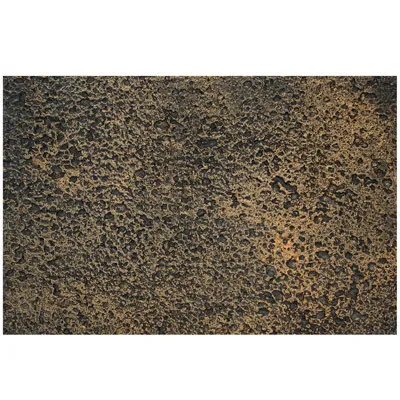
Choosing the right wall cladding is one of the most critical decisions in any architectural project. It defines the building's character, dictates its first impression, and plays a huge role in its long-term performance and maintenance. The market is flooded with options, each promising a unique blend of style, durability, and value. Today, we're putting two popular, yet fundamentally different, modern materials under the microscope: the striking Foamed Aluminium Alloy Board in its trendy Vintage Gold finish, and the incredibly versatile MCM (Modified Cementitious Material) panels from COLORIA GROUP.
For architects, designers, and developers, this isn't just a choice between two products; it's a choice between two philosophies of design and construction. One offers a specific, bold, metallic aesthetic, while the other provides a canvas for nearly limitless creative expression. Let's dive deep into a comprehensive comparison to see which material truly stands out for your next residential or commercial project.
Before we can compare, we need to understand what we're working with. What are these materials made of, and what are their inherent properties?
Foamed Aluminium Alloy Board is a type of sandwich panel. Imagine two thin sheets of aluminum alloy bonded to a lightweight core. This core is often made from a foamed polymer or another lightweight material. The "foamed" aspect gives the board rigidity without adding significant weight. The surface is then treated with a high-performance coating to achieve the desired look—in this case, a luxurious "Vintage Gold."
Its primary appeal lies in its sleek, futuristic, and metallic appearance. It's a go-to for creating modern, high-tech facades or dramatic interior feature walls. The Vintage Gold finish, in particular, taps into a trend that blends industrial chic with a touch of opulence. It's a statement piece, designed to be noticed. However, it's a very specific statement. The material is inherently rigid, flat, and metallic.
Now, let's talk about MCM, or Modified Cementitious Material. This is where things get really interesting. Developed by COLORIA GROUP through decades of industry expertise, MCM is a groundbreaking material that redefines what's possible with wall cladding. It's not a metal, not a traditional ceramic, and not a simple polymer.
MCM is crafted from a base of natural inorganic materials like modified soil, stone powder, and other mineral components. Through a unique, low-temperature curing process (no high-temperature firing like ceramics), these raw materials are transformed into lightweight, thin, and surprisingly flexible panels. This production process is a cornerstone of its identity—it's incredibly eco-friendly, consuming far less energy than manufacturing metal or traditional tiles.
The true magic of MCM lies in its chameleon-like ability to replicate an astonishing array of natural textures and finishes. It's not just about color; it's about capturing the authentic feel of split-face stone, the grain of aged wood, the texture of raw concrete, or the smooth elegance of polished marble. This versatility is the core of COLORIA GROUP's offerings, from the grand, seamless aesthetic of the MCM Big Slab Board series to the incredible pliability of the MCM Flexible Stone.
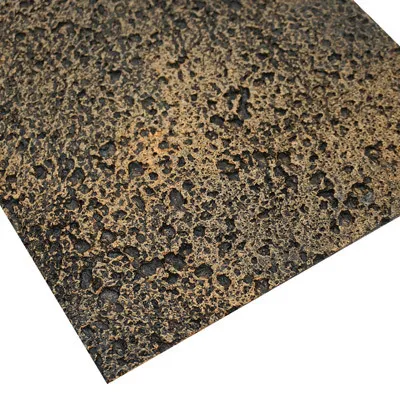
Aesthetics are often the primary driver for material selection. How do our two contenders stack up when it comes to visual appeal and design freedom?
The Foamed Aluminium board in Vintage Gold is undeniably eye-catching. It provides a clean, precise, and uniform finish. The metallic sheen plays with light in a predictable yet beautiful way, creating a facade that feels modern, expensive, and technically sophisticated. It excels in minimalist and industrial designs where clean lines and a monolithic metallic surface are desired.
However, this strength is also its limitation. You get one look: flat, metallic, and gold. There is little-to-no textural variation. It can feel cold or impersonal in certain contexts. Moreover, it's a trend-driven finish. While popular now, its long-term timelessness might be a consideration. For a project aiming for a very specific, machine-age look, it's a perfect fit. But for anything else, it can be creatively restrictive.
This is where MCM panels completely change the game. Instead of being confined to a single look, MCM offers a virtually endless library of possibilities. COLORIA GROUP leverages this technology to empower architects and designers, not restrict them.
The verdict in the aesthetic round is clear. While Foamed Aluminium offers a potent, specific look, MCM offers a universe of looks. It's the difference between buying a single, well-made instrument and owning an entire orchestra.
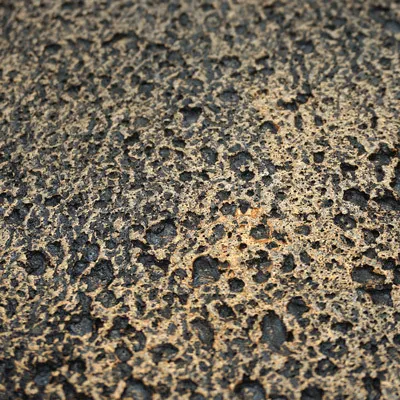
A material can look great in a brochure, but its real-world value is heavily influenced by how easy and efficient it is to install. This directly impacts labor costs, project timelines, and overall budget.
Installing Foamed Aluminium panels is a structured, multi-step process. Because they are rigid panels, they almost always require a sub-frame system, often a metal grid (keel) that is first attached to the building's structural wall. The panels are then precisely cut to size and mechanically fastened or clipped onto this frame. Seams between panels are typically sealed with silicone or feature a designed gap.
This method has its challenges. It requires skilled labor experienced with framing systems. Cutting aluminum panels requires specialized saws. On-site adjustments can be time-consuming. The rigidity means that any imperfections in the sub-frame can translate to visible misalignments in the panels. Most importantly, it's a relatively slow and labor-intensive process, which can significantly drive up installation costs.
COLORIA GROUP's MCM panels offer a dramatically different installation experience. The key advantages are their light weight and flexibility.
In most cases, MCM panels can be applied directly to a prepared substrate (like a cement board or even an existing clean wall) using a specially formulated adhesive. There's no need for a heavy, expensive sub-frame system. This immediately eliminates a major step, saving time, material costs, and labor.
The process is more akin to tiling than to installing metal cladding. The panels are incredibly easy to handle and cut. In fact, many MCM products, especially the thinner MCM Flexible Stone, can be cut on-site with just a standard utility knife. This makes fitting panels around windows, doors, and other obstacles incredibly fast and simple.
For curved surfaces, the advantage is even more pronounced. Wrapping a column with rigid aluminum panels is a fabrication nightmare. With a flexible MCM product, it's a simple matter of applying adhesive and smoothly wrapping the material around the curve. The time and cost savings in these scenarios are immense. This streamlined process not only accelerates project timelines but also reduces the reliance on highly specialized labor, broadening the pool of qualified installers.
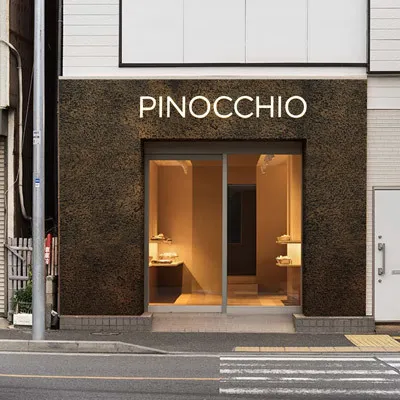
A building's facade is its shield against the elements. It needs to withstand sun, rain, wind, temperature changes, and physical impacts for decades.
Aluminum alloy panels have a good reputation for weather resistance. The high-quality coatings used are UV stable, meaning the Vintage Gold color should resist fading for many years. Aluminum doesn't rust, so corrosion isn't an issue unless the protective coating is severely breached. They are also generally Class A fire-rated, depending on the core material used.
However, they have a significant vulnerability: impact resistance. Being a relatively thin metal sheet over a foam core, the panels are susceptible to denting from hail, stray objects, or accidental impacts in high-traffic areas. A dent is not just an aesthetic issue; it's often impossible to repair perfectly, usually requiring the replacement of the entire panel, which can be costly and difficult to color-match perfectly with aged surrounding panels. Furthermore, deep scratches can expose the aluminum or core beneath, creating a visual flaw that's hard to hide.
MCM panels exhibit a different, arguably superior, form of durability. Their composition gives them a unique combination of hardness and flexibility.
In today's world, the environmental credentials of a building material are no longer a "nice-to-have"; they are a core consideration for responsible development.
Aluminum's sustainability story is mixed. On the plus side, it is infinitely recyclable, and recycling aluminum uses only about 5% of the energy needed to produce virgin aluminum. This is a huge benefit. However, the initial production of virgin aluminum through smelting bauxite ore is an extremely energy-intensive process with a significant carbon footprint. Furthermore, composite panels can be difficult to recycle, as it requires separating the aluminum layers from the foam core, a process that isn't always economically viable.
This is an area where MCM panels from COLORIA GROUP have a profound advantage. The entire lifecycle is designed with sustainability in mind.
For any project seeking LEED certification or simply aiming to be environmentally responsible, MCM presents a compellingly green alternative.
So, after exploring aesthetics, installation, durability, and sustainability, what's the final takeaway? Let's summarize the comparison in a straightforward table.
| Attribute | Foamed Aluminium Alloy Board (Vintage Gold) | COLORIA GROUP MCM Panels |
|---|---|---|
| Aesthetic & Versatility | Specific, modern, metallic look. Limited to a flat, uniform finish. High-impact but creatively restrictive. | Virtually limitless options. Can replicate stone, wood, brick, etc. with authentic texture. Customizable colors and 3D patterns. Supports curved and organic designs. |
| Installation | Requires a rigid sub-frame (keel). Slower, more labor-intensive. Requires specialized tools for cutting. Difficult for curved surfaces. | Lightweight. Can be directly adhered to substrate. Fast and simple installation. Can be cut with a utility knife. Excellent for curved surfaces (e.g., MCM Flexible Stone). Lower labor costs. |
| Durability | Good weather/UV resistance. Prone to denting and scratching, which are difficult to repair. | Excellent impact resistance. Class A fire-rated. Waterproof and breathable. Freeze-thaw resistant. Through-body color makes scratches less visible. Superior resilience. |
| Sustainability | Virgin production is very energy-intensive. Recyclable, but separation of composite layers can be a challenge. | Made from natural materials. Low-energy production process. Lightweight for lower transport emissions. Minimal on-site waste. Inherently eco-friendly. |
| Best For | Projects demanding a specific, high-tech, metallic, and uniform appearance, where design flexibility is not a priority. | Projects where design freedom, textural richness, installation efficiency, long-term durability, and sustainability are key priorities. Suitable for a vast range of styles and applications. |
The choice becomes quite clear. The Foamed Aluminium Alloy Board is a niche product for a specific aesthetic. It does its one job well, but it is a one-trick pony.
COLORIA GROUP's MCM, on the other hand, is not just a product; it's a comprehensive material solution. It answers the call for creative freedom with its vast range of finishes. It addresses budget and timeline pressures with its efficient installation. It ensures longevity and safety with its superior durability. And it satisfies the growing demand for sustainable building practices with its eco-friendly DNA. From the impressive scale of an MCM Big Slab Board facade to the intricate detail of an MCM 3D Printing feature wall, it offers a smarter, more versatile, and more responsible way to clad our buildings. For the modern architect and developer, the choice is not just about what a material looks like on day one, but how it performs for a lifetime. In that all-important comparison, MCM stands in a class of its own.
Recommend Products












