
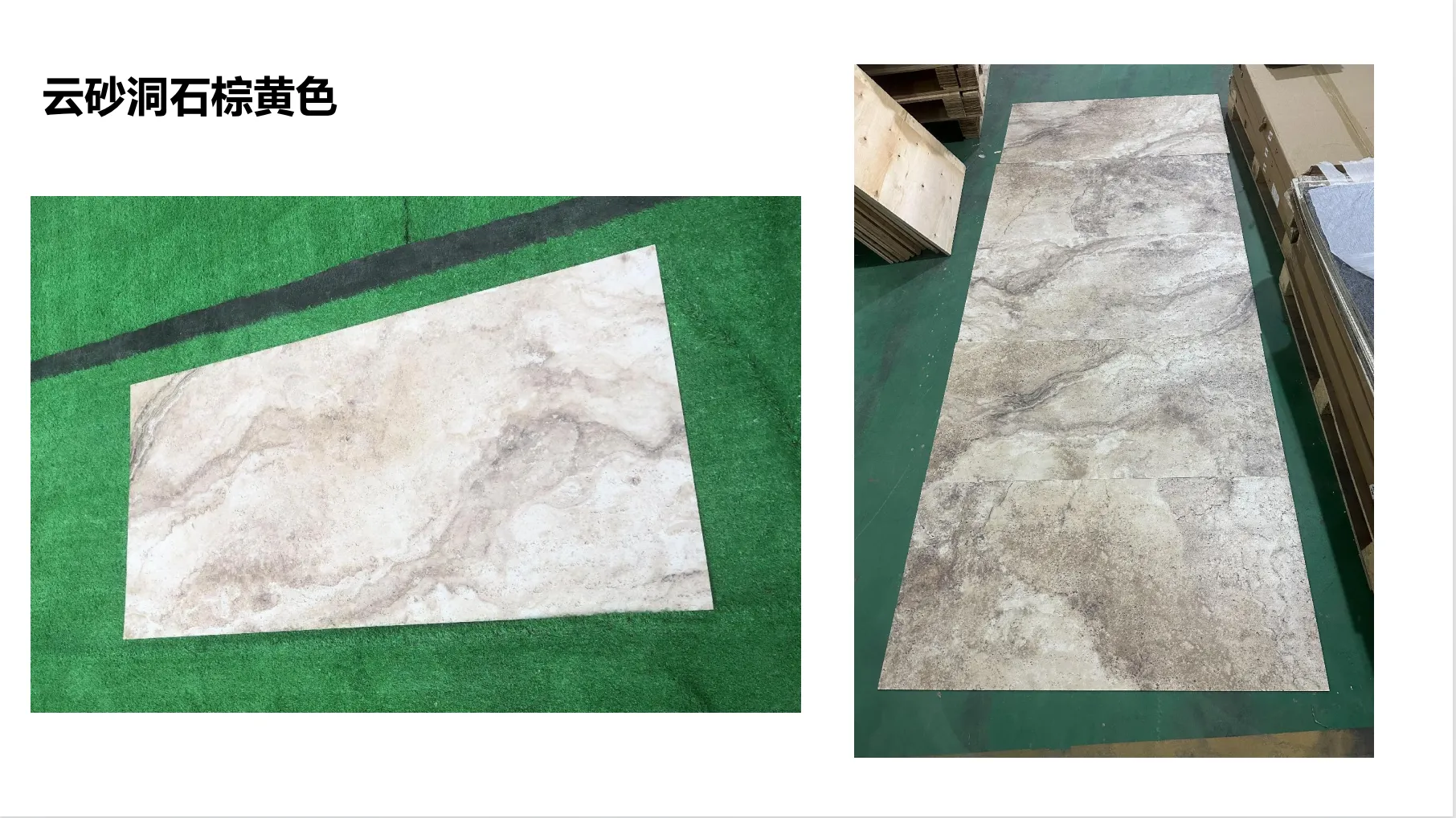
When it comes to building and design, we often get swept up in the flashy stuff—colors, textures, the "wow" factor of a finished space. But behind every stunning facade or interior wall lies a quiet hero (or sometimes a hidden challenge): the weight of the materials. It's not the sexiest topic, but ask any architect, contractor, or even a DIY homeowner who's tried to hang a heavy stone slab, and they'll tell you: weight shapes everything. Today, let's shine a light on two materials that stand at opposite ends of the weight spectrum but both demand attention in modern construction: the timeless Dolomitic Travertine (Claybank) and the innovative MCM Big Slab Board. By the end, you'll see why weight isn't just a number—it's a game-changer for functionality, cost, and creativity.
Let's start with the classic. Dolomitic Travertine (Claybank) is a type of natural stone that feels like a piece of Earth's history you can touch. Formed over millennia by mineral-rich water flowing through limestone, it's got that signature porous, layered look—think soft claybank hues with subtle veins and pockets that tell stories of ancient rivers and mineral deposits. It's been used for centuries, from Roman baths to Renaissance palaces, and even today, it's a go-to for designers craving warmth and authenticity.
But here's the catch: natural stone, by its very nature, is dense. Dolomitic Travertine (Claybank) is no exception. On average, it weighs in at around 22–28 kg per square meter (that's roughly 4.5–5.7 pounds per square foot) for a standard 20mm thickness. Some thicker slabs, like those used for countertops or outdoor paving, can push 35 kg/m² or more. Why does that matter? Imagine hauling a 10-square-meter section of this stone up to the 15th floor of a building. Suddenly, "heavy" becomes more than a descriptor—it's a logistical puzzle. Cranes, reinforced structural supports, extra labor—all of these get added to the project budget because of that weight.
Yet, for all its heft, Dolomitic Travertine (Claybank) has staying power. It's durable, heat-resistant, and ages beautifully, developing a unique patina over time. In low-rise buildings, heritage restorations, or spaces where weight isn't a structural constraint, it's irreplaceable. But in a world where buildings are getting taller, construction timelines tighter, and sustainability goals sharper, its weight can feel like a limiting factor.
If Dolomitic Travertine is the wise elder of building materials, MCM Big Slab Board is the tech-savvy upstart. MCM stands for Modified Composite Material, and as the name suggests, this isn't your average stone or concrete. It's an engineered material, crafted by bonding layers of natural minerals (like stone powder or fibers) with high-performance polymers, often using advanced processes like 3D printing or foaming to reduce density without sacrificing strength. The result? A slab that looks and feels like natural stone but weighs a fraction of the real thing.
The MCM Big Slab Board Series, in particular, is designed for large-scale applications—think exterior cladding, feature walls, or even ceiling panels. Its weight? A mere 6–12 kg/m² for most variants, even in thicknesses up to 30mm. That's less than half the weight of Dolomitic Travertine (Claybank). How does it pull that off? Engineers have mastered the art of creating microstructures within the material—tiny air pockets or lightweight cores—that cut down on mass while keeping the slab rigid and impact-resistant. It's like comparing a solid oak table to a carbon fiber bike frame: same strength, drastically different heft.
But MCM Big Slab Board isn't just about being light. It's about versatility. Since it's engineered, it can mimic the look of almost any natural stone—including Dolomitic Travertine (Claybank)—with precise color matching and texture replication. Want the claybank warmth of travertine without the weight? MCM delivers. And because it's lighter, it opens doors for designs that would be impossible with natural stone: overhangs, curved walls, even vertical gardens where structural load is a concern. It's no wonder it's become a favorite for "architectural big slab solutions" in modern skyscrapers and commercial spaces.
Let's put this into concrete terms (pun intended). Below is a quick breakdown of how these two materials stack up when it comes to weight and related properties:
| Material | Average Weight (kg/m²) | Thickness Range (mm) | Key Weight-Related Benefits |
|---|---|---|---|
| Dolomitic Travertine (Claybank) | 22–28 kg/m² (20mm thickness) | 15–50mm | Natural durability, timeless aesthetic, heat resistance |
| MCM Big Slab Board | 6–12 kg/m² (20–30mm thickness) | 10–40mm | 50–70% lighter than natural stone, easier installation, reduced structural load |
Let that sink in: for the same coverage area, MCM Big Slab Board can weigh as little as 6 kg/m²—less than a third of Dolomitic Travertine (Claybank)'s weight. For a 1,000 m² project, that's a difference of 16–22 tons. To put that in perspective, that's like removing the weight of 3–4 African elephants from the building's structural load. Suddenly, the benefits go beyond just "lightweight"—they become transformative.
You might be thinking, "So MCM is lighter—so what?" Let's break down the real-world impacts, because they add up fast:
Structural Load: Buildings have weight limits. Every material added to a wall, floor, or facade adds stress to the foundation and framework. Heavier materials like Dolomitic Travertine (Claybank) require beefed-up support beams, thicker concrete slabs, and sometimes even reinforced foundations. That means higher material costs for structural elements and more time spent on engineering calculations. MCM Big Slab Board, with its minimal weight, eases that burden, letting architects design taller, more ambitious structures without overloading the building's bones.
Installation Headaches (and Costs): Have you ever watched a crew install natural stone slabs? It often takes 2–3 people per slab, special lifting equipment, and careful maneuvering to avoid cracks or injury. MCM Big Slab Board, on the other hand, is so light that one or two people can carry and install it. That cuts labor time by 30–50%, which translates directly to lower costs. Plus, lighter materials mean fewer accidents on-site—a win for safety, too.
Transportation and Carbon Footprint: Shipping heavy stone requires bigger trucks, more fuel, and more trips. A single truckload of Dolomitic Travertine (Claybank) might carry 200 m² of slabs; the same truck could carry 500+ m² of MCM Big Slab Board. Fewer trucks mean fewer emissions, which aligns with the growing demand for green building materials. It's a small detail, but in an industry striving for sustainability, every ton of CO2 saved counts.
Retrofitting and Renovations: Old buildings are tricky. Many weren't designed to handle the weight of modern materials. Trying to install Dolomitic Travertine (Claybank) on a 1920s apartment building's exterior? You might need to reinforce the walls first, adding weeks (and thousands) to the project. MCM Big Slab Board skips that step. Its lightweight nature makes it ideal for retrofits, where preserving the original structure while updating the look is key.
Before we crown MCM Big Slab Board the winner, let's be clear: Dolomitic Travertine (Claybank) isn't going anywhere. There are spaces where nothing beats the real deal. If you're designing a luxury villa with a focus on natural materials, or restoring a historic building that calls for authentic stone, Dolomitic Travertine (Claybank) brings a depth and character no engineered material can fully replicate. Its weight, in those cases, is a trade-off for timeless beauty.
But for most commercial projects, high-rises, or spaces where functionality and cost-efficiency matter, MCM Big Slab Board shines. Think about a hotel chain rolling out a new facade design across 50 locations—MCM's consistency, light weight, and lower installation costs would make the project feasible. Or a restaurant wanting a statement wall that looks like travertine but needs to hang over a mezzanine—MCM's lightness removes the structural risk. It's also a star in "lightweight flexible stone sheets" applications, where you need the stone look but with the ability to bend or curve (yes, some MCM boards can flex slightly without breaking).
These days, sustainability isn't just a buzzword—it's a requirement. So how do these two materials stack up there? Dolomitic Travertine (Claybank) is natural, which is a plus, but quarrying, cutting, and transporting heavy stone guzzles energy. MCM Big Slab Board, being engineered, uses fewer raw materials and produces less waste during manufacturing. Its lightweight nature also slashes transportation emissions. Many MCM products are even made with recycled content, and their durability means they last just as long as natural stone, reducing the need for replacements. For projects aiming for LEED certification or other green building standards, MCM often gets extra points here.
At the end of the day, comparing Dolomitic Travertine (Claybank) and MCM Big Slab Board isn't about declaring one "better." It's about understanding what each brings to the table (or the wall, or the facade). Dolomitic Travertine (Claybank) is nature's masterpiece—heavy, historic, and unapologetically real. MCM Big Slab Board is innovation in action—light, versatile, and built for the demands of modern construction.
So the next time you walk into a building and admire the walls, take a second to think about the weight you don't see. It's there, shaping the design, the budget, and even the future of what's possible. Whether you lean into the heft of natural stone or embrace the lightness of engineered materials, remember: the best choice is the one that balances beauty with practicality. And in that balance, weight will always be a key player.
Recommend Products












