
Walk into any building—whether it's a sleek modern office, a cozy café, or a grand hotel lobby—and one of the first things that hits you isn't just the layout or the lighting. It's the materials. The texture under your feet, the finish on the walls, the way light plays off a surface—these elements don't just fill space; they define it. They tell a story, set a mood, and even influence how we move and feel within a room. In the world of architecture and design, choosing the right material is a bit like choosing the right words for a poem: it's about balance, purpose, and beauty.
Lately, one material has been turning heads in design circles: Marble Interstellar Gray MCM panels. Part of the broader MCM (Modified Composite Material) family, these panels blend the timeless elegance of natural stone with the practicality of modern engineering. But here's the thing: even the most stunning material can fall flat if you don't get the details right. And when it comes to MCM panels, few details matter more than thickness. Let's dive into why thickness is a game-changer, and how to pick the perfect option for your next project.

Before we get into thickness, let's take a quick detour to talk about what makes MCM panels so special. MCM, or Modified Composite Material, is a hybrid of natural minerals, resins, and fibers. Think of it as nature and technology shaking hands: it borrows the authentic look and feel of materials like stone or wood but adds a layer of durability and flexibility that natural counterparts often lack. That's where terms like MCM flexible stone come into play—these panels can bend, curve, and adapt to surfaces in ways that rigid natural stone never could.
Then there's the MCM big slab board series , a game-changer for designers who crave seamless, uninterrupted surfaces. Traditional stone slabs are heavy and prone to cracking, limiting their size. MCM big slabs, though? They can stretch up to 1200x2400mm (and sometimes larger) without sacrificing structural integrity. Imagine a wall clad in a single, sweeping panel of Marble Interstellar Gray—no grout lines, no breaks, just a smooth, continuous flow. That's the magic of big slab MCM.
But MCM's perks don't stop at looks. These panels are lightweight (often 70% lighter than natural stone), which cuts down on installation time and structural support costs. They're also resistant to moisture, UV rays, and temperature fluctuations—qualities that make them a workhorse for both indoor and outdoor use. And unlike materials like fair-faced concrete, which can feel cold or industrial, MCM panels offer warmth and texture without the added weight or maintenance hassle.

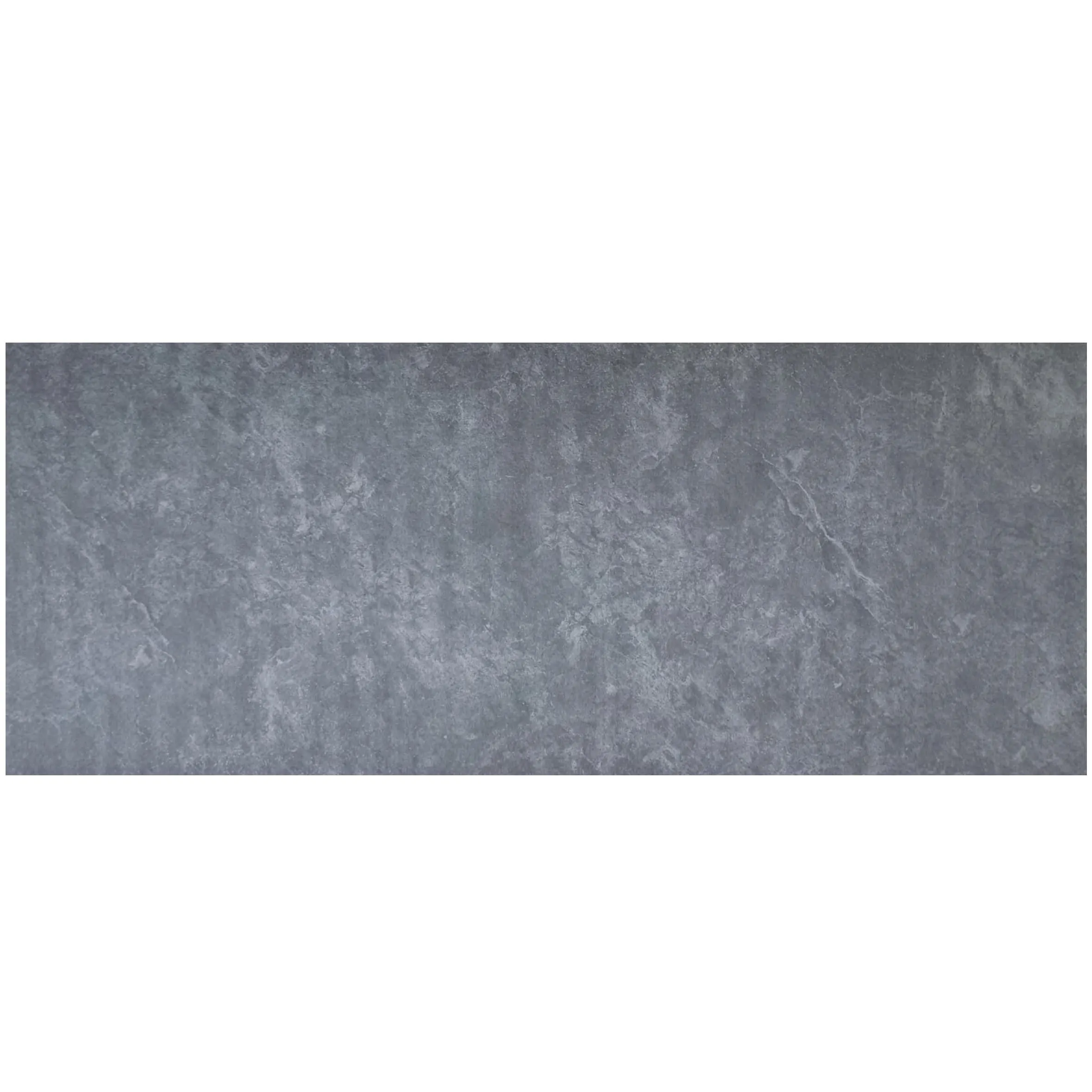
Now, let's shine the spotlight on the star of our story: Marble Interstellar Gray. Picture this: a deep, moody gray base swirled with lighter veins that mimic the look of distant galaxies—hence the "Interstellar" name. It's not just gray, though; there are hints of silver, charcoal, and even subtle blue undertones, depending on how the light hits it. The texture is soft yet tactile, with a matte finish that feels organic, like a stone polished by time rather than machines.
What makes it so popular? Versatility. Marble Interstellar Gray plays well with almost any design style. Pair it with warm woods and brass fixtures, and it feels cozy and inviting—perfect for a boutique hotel lobby. Mix it with sleek black metal and glass, and it leans into modern minimalism, ideal for a tech startup's office. It's neutral enough to let other elements (art, furniture, lighting) take center stage, but it has enough personality to stand alone as a statement piece.
And because it's an MCM panel, it avoids the pitfalls of natural marble. No worries about etching from acidic spills, no need for constant sealing, and no fear of cracks from structural movement. It's the best of both worlds: the luxury of marble, the resilience of modern engineering.

Now, let's get to the heart of the matter: thickness. When it comes to Marble Interstellar Gray MCM panels, thickness isn't just a number—it's a decision that will impact everything from installation ease to long-term durability. Let's break down the most common options, what they're good for, and where they might fall short.
| Thickness | Key Features | Ideal Applications | Pros | Cons |
|---|---|---|---|---|
| 3mm | Ultra-thin, lightweight (≈3kg/m²), highly flexible | Curved walls, ceilings, furniture surfaces, decorative accents | Easy to cut/bend, minimal structural support needed, cost-effective for large areas | Less impact-resistant; not ideal for high-traffic or exterior use |
| 6mm | Balanced thickness, moderate flexibility (≈6kg/m²) | Interior walls, backsplashes, elevator cabs, lightweight exterior cladding (sheltered areas) | Versatile, good durability for most indoor uses, easy to install | Not recommended for floors or exposed exterior walls in harsh climates |
| 10mm | Durable, rigid yet manageable (≈10kg/m²), impact-resistant | Exterior facades, commercial walls, retail spaces, light foot traffic floors | Withstands weather/abuse, suitable for both indoor and outdoor use, stable for large slabs | Heavier than 3/6mm; may require stronger mounting systems |
| 15mm | Heavy-duty, high density (≈15kg/m²), maximum durability | High-traffic floors, exterior cladding in extreme climates, countertops, stair treads | Almost indestructible, sound-insulating, ideal for high-impact areas | Bulky, requires professional installation, higher cost per square meter |
At just 3mm thick, this is the featherweight champion of the MCM world. Weighing in at around 3kg per square meter, it's so light you could probably carry a large slab by yourself (though we don't recommend testing that!). What it lacks in heft, it makes up for in flexibility—this stuff can bend around curves with a radius as tight as 50mm, making it perfect for projects with organic, flowing shapes. Think a restaurant with a curved accent wall, or a retail display with rounded edges that soften the space.
But 3mm isn't all about curves. It's also a budget-friendly option for covering large areas, like a ceiling in a conference hall or the back of a built-in bookshelf. Since it's thin, it doesn't require heavy-duty mounting systems—often, simple adhesive or lightweight clips will do. The tradeoff? It's not built for roughhousing. drop a heavy object on a 3mm panel, and you might end up with a dent. Save this one for low-traffic, indoor spots where looks and flexibility matter most.
If there's a "default" thickness for Marble Interstellar Gray MCM panels, it's 6mm. At roughly 6kg per square meter, it strikes a sweet spot between flexibility and durability. Installers love it because it's easy to handle—no need for a team of people to hoist a single slab—yet it's sturdy enough to stand up to daily wear and tear in most indoor settings.
Where does 6mm shine? Interior walls are its bread and butter. Whether you're cladding a home's living room accent wall or a hotel's hallway, 6mm panels install quickly and look seamless, especially when using the MCM big slab board series. They're also a solid choice for backsplashes in kitchens or bathrooms—moisture-resistant and easy to clean. Even some exterior projects can work with 6mm, provided the area is sheltered (think a covered patio or a wall under an overhang). Just avoid exposing it to direct rain, snow, or high winds—for those, you'll want something thicker.
Step up to 10mm, and you're entering "heavy-duty" territory—though at 10kg per square meter, it's still lighter than natural stone (which can weigh 25kg/m² or more). This thickness is all about durability. The extra density makes it resistant to impacts, scratches, and the elements, making it a top pick for exterior facades. Imagine a (office building) with a Marble Interstellar Gray exterior—10mm panels would stand up to rain, UV rays, and even the occasional hailstorm without fading or cracking.
Indoors, 10mm is great for commercial spaces that see a lot of foot traffic, like retail stores or airport lobbies. It can even handle light floor use, such as in a boutique where customers aren't dragging heavy carts or machinery. The only catch? Installation requires a bit more planning. You'll need sturdier mounting brackets or a metal subframe to support the weight, and cutting 10mm panels takes more effort than 3mm or 6mm. But for projects where longevity is non-negotiable, the extra work is worth it.
At 15mm thick, these panels mean business. Weighing around 15kg per square meter, they're the thickest and densest option in the lineup—and they act like it. Think of 15mm Marble Interstellar Gray panels as the "tank" of the MCM world: they're built to take a beating. High-traffic floors? No problem. Stair treads in a busy train station? Bring it on. Exterior cladding in a coastal area with salt spray and strong winds? They'll laugh it off.
Beyond durability, 15mm panels offer added benefits like sound insulation (handy for offices or apartments) and thermal mass (helping regulate temperature in extreme climates). The downside? They're not for DIYers. Installing 15mm panels requires professional equipment and a solid structural base—you can't just stick them to drywall with adhesive. They're also pricier per square meter, so you'll want to reserve them for areas where their toughness is truly needed.

With all these options, how do you pick the right thickness for your project? It's not just about "thicker = better"—it's about matching the panel to the job. Here are five questions to ask yourself:
Outdoor projects almost always demand thicker panels. Exposure to rain, snow, wind, and temperature swings takes a toll, so 10mm or 15mm is safer. Indoor projects have more wiggle room—3mm or 6mm works for most walls, while 10mm+ is better for floors or high-traffic zones.
Flat walls? 6mm or 10mm will do. Curved or uneven surfaces? Go with 3mm—it's flexible enough to conform without cracking. For floors, 10mm+ is a must to handle foot traffic and furniture weight.
A bedroom accent wall? 3mm or 6mm is fine—hardly anyone will touch it. A restaurant kitchen backsplash? 6mm or 10mm, since it will get splashed and cleaned often. A hotel lobby floor? 15mm, no question—it needs to survive luggage, heels, and daily cleaning machines.
Thicker panels cost more upfront (both materials and labor). If you're working with a tight budget, 3mm or 6mm can stretch your dollar further, especially for large areas. If durability is critical and cost is less of a concern, invest in 10mm or 15mm.
Thinner panels have a sleeker, more delicate look—great for modern, minimalist designs. Thicker panels feel more substantial and industrial, which can work well in rustic or brutalist-inspired spaces. Also, remember the MCM big slab board series: thicker slabs (10mm+) in large formats can create a bold, monolithic effect that thinner panels can't match.
You might be thinking, "Why not just use natural marble or fair-faced concrete instead?" It's a fair question—both are popular in design. But MCM panels, especially Marble Interstellar Gray, have some clear advantages. Let's take fair-faced concrete, for example. It's loved for its raw, industrial vibe, but it's heavy (2400kg/m³ vs. MCM's 1800kg/m³), porous (prone to staining), and hard to install in large, seamless pieces. MCM panels offer a similar level of texture and depth but with flexibility, lighter weight, and zero porosity—plus, Marble Interstellar Gray adds a touch of luxury that concrete can't match.
Natural marble, meanwhile, is stunning but fragile. It scratches easily, etches with acidic substances, and requires constant sealing. MCM panels mimic its look but are practically maintenance-free. And when it comes to thickness options, natural stone is limited—you can't get a 3mm-thick natural marble slab that bends around a curve. MCM's flexibility and range of thicknesses make it a more versatile tool in the designer's toolkit.
Still on the fence? Let's look at a few hypothetical (but realistic) scenarios to see how thickness choices play out:
The goal: A grand, seamless wall behind the reception desk, with a curved archway leading to the elevator. Solution: 3mm Marble Interstellar Gray panels for the curved arch (flexibility is key) and 6mm panels for the flat wall sections (easy installation, sleek look). The result? A cohesive, high-end feel without the weight of natural stone.
The goal: A durable, weather-resistant facade that stands out in a busy downtown area. Solution: 10mm MCM big slabs in Marble Interstellar Gray. The thickness handles rain and wind, while the large slabs create a modern, uninterrupted look that draws customers in.
The goal: A backsplash that's stylish, easy to clean, and budget-friendly. Solution: 6mm Marble Interstellar Gray panels. They're moisture-resistant, install quickly over existing drywall, and the neutral color pairs with both light and dark cabinetry.
The goal: A floor that can handle thousands of passengers daily, luggage carts, and heavy cleaning equipment. Solution: 15mm Marble Interstellar Gray panels. Their density resists scratches and impacts, and the non-slip texture keeps travelers safe—even when wet.
At the end of the day, choosing the right thickness for Marble Interstellar Gray MCM panels is about balance. It's about understanding your project's needs—where the panels will go, how they'll be used, and what look you're trying to achieve—and then matching those needs to the right option. Whether you go ultra-thin (3mm) for curves, balanced (6mm) for versatility, tough (10mm) for exteriors, or heavy-duty (15mm) for high traffic, one thing is sure: MCM panels, with their flexibility, durability, and stunning aesthetics, are built to elevate your space.
So, the next time you're planning a project, don't just focus on color and texture. Take a moment to think about thickness. It might seem like a small detail, but in the world of design, small details are what turn a good space into a great one. And with Marble Interstellar Gray MCM panels, you've already got a head start on greatness.
Recommend Products












