
Navigating texture, durability, and style for your dream bathroom
Renovating a bathroom is more than just picking fixtures and paint—it's about creating a space that feels like a daily retreat. The walls, often overlooked, play a starring role in setting the mood. For years, ceramic tiles have been the go-to choice, prized for their shine and familiarity. But in recent years, a new contender has emerged: MCM flexible stone, particularly its weaving real photos series. If you've ever stood in a tile showroom, running your hand over a ceramic sample and wondering if there's something more—something that captures the softness of woven fabric or the depth of natural stone—you're not alone. Today, we're diving into the world of MCM weaving designs and traditional ceramic tiles, breaking down which one deserves a spot on your bathroom walls.
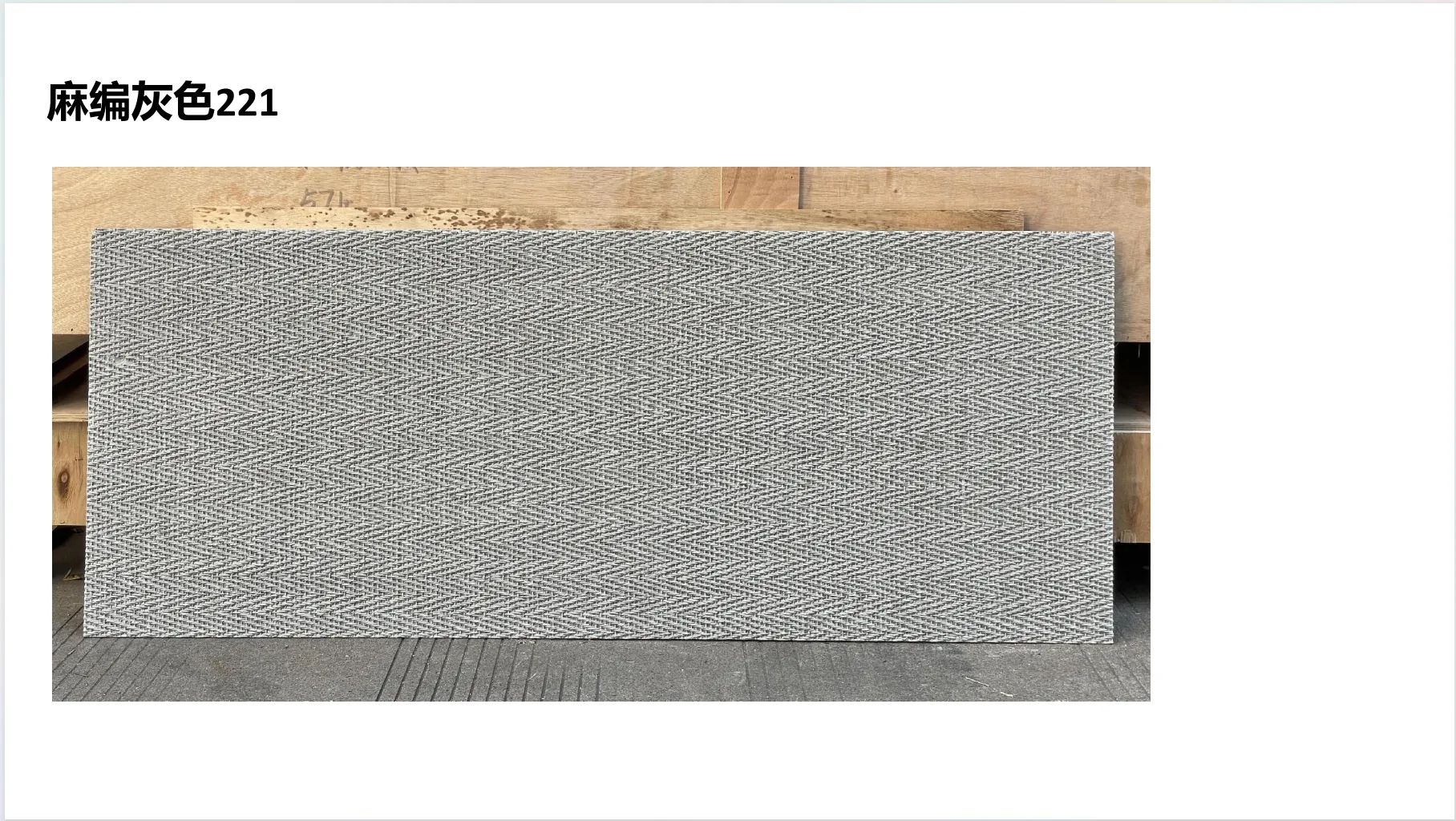
First, let's demystify MCM. Short for Modified Composite Material, MCM flexible stone is a revolutionary building material that blends natural minerals (think crushed stone, sand) with high-performance polymers. The result? A material that's thin (often just 3-5mm thick), lightweight, and surprisingly flexible—unlike the rigid slabs of traditional stone or ceramic. But what truly sets MCM apart, especially in the weaving real photos series, is its ability to mimic textures with uncanny realism. The "weaving real photos" technique isn't just a print; it's a 3D-like reproduction of woven patterns, captured through advanced imaging and layered onto the MCM surface. Run your hand over it, and you'll feel the subtle ridges and valleys of a handwoven mat, not the flatness of a printed sticker.
Take the weaving real photos collection, for example. Designers at MCM studied actual woven textiles—jute rugs, bamboo mats, even macramé wall hangings—to create digital renderings. These renderings are then transferred onto MCM flexible stone using a process that adds micro-textures, so the final product doesn't just look woven; it feels woven. And because MCM is flexible, it can be applied to curved surfaces, like shower niches or rounded walls, without cracking. Imagine a bathroom where the walls flow like fabric, softening the hard edges of sinks and toilets—that's the magic of MCM.
Ceramic tiles, on the other hand, are the tried-and-true workhorses of bathroom design. Made from clay that's shaped, glazed, and fired at high temperatures, they've been used for centuries (ancient Romans had ceramic mosaics, after all). Ceramic tiles come in endless colors and patterns, including designs that mimic weaving. Walk into any home improvement store, and you'll find ceramic tiles printed with woven motifs—stripes, checks, even herringbone patterns. They're affordable, widely available, and familiar to most contractors, which is why they remain popular.
But here's the catch: ceramic tile designs are typically surface-level. The weaving pattern is printed onto the glaze, which sits on top of the tile. Run your finger over it, and you'll feel a smooth, glassy surface—no texture, no depth. Some high-end ceramic tiles use embossing to add slight ridges, but it's nothing compared to the tactile realism of MCM's weaving real photos. And because ceramic is rigid, it requires precise cutting around corners or fixtures, often leaving unsightly gaps that need grout to fill. Grout, as any homeowner knows, is a magnet for mold and mildew in humid bathrooms—hardly the "low-maintenance" promise we all crave.
To really understand the difference, let's put them head-to-head. Below is a breakdown of how MCM weaving real photos and ceramic tiles stack up in the areas that matter most for bathroom walls:
| Factor | MCM Weaving Real Photos | Traditional Ceramic Tiles |
|---|---|---|
| Durability | Resistant to cracks, chips, and moisture; flexible enough to withstand minor wall shifts. | Prone to cracking if walls settle; glaze can chip, exposing porous clay underneath. |
| Weight | Lightweight (3-5kg/m²); no need for structural reinforcement. | Heavy (15-20kg/m²); may require wall strengthening for large installations. |
| Texture & Aesthetics | 3D, tactile weaving patterns from real photos; mimics natural texture depth. | Mostly flat, printed designs; limited embossing for texture. |
| Water Resistance | Non-porous; resists mold and mildew without sealing. | Porous clay core; requires regular sealing (every 1-2 years) to prevent water damage. |
| Installation | Peel-and-stick or thin-set application; cuts easily with a utility knife. | Requires precise cutting with a wet saw; grout lines needed between tiles. |
Numbers tell part of the story, but let's talk about the "feel" factor—the intangible quality that turns a bathroom into a sanctuary. MCM's weaving real photos series doesn't just look good; it creates atmosphere. Imagine stepping into a bathroom where the walls are clad in a soft, beige weaving pattern, reminiscent of a woven basket. The light hits it, casting subtle shadows that shift as you move, making the space feel dynamic, alive. It's the opposite of the sterile, flat look of a ceramic tile with a printed weave—there's no "fakeness" here. It's texture you can believe in.
Take Sarah, a homeowner in Portland who renovated her bathroom last year. She'd initially picked a ceramic tile with a "woven linen" design, but when she saw MCM's weaving real photos sample in person, she hesitated. "The ceramic tile looked nice in the showroom, but under my bathroom lights, it just looked… printed," she says. "The MCM sample? I kept touching it because I couldn't believe it wasn't actual fabric. Now, when I take a shower, the steam makes the texture look even softer. It's like having a little piece of nature indoors."
In an era where sustainability matters, MCM has another trick up its sleeve. Traditional ceramic tiles require firing in kilns at temperatures over 1200°C, guzzling energy and releasing CO2. MCM, by contrast, uses recycled stone waste and low-temperature manufacturing, cutting its carbon footprint by up to 60%. And because it's lightweight, transporting MCM generates less emissions than hauling heavy ceramic tiles. For eco-conscious homeowners, that's a big deal—you're not just getting a beautiful bathroom; you're getting one that's easier on the planet.
Ceramic tiles do have some eco-credentials (many are made from natural clay), but their production process is far more energy-intensive. Plus, if a ceramic tile cracks, you're left with a chunk of waste that's hard to recycle. MCM, being flexible and durable, is less likely to need replacement, reducing long-term waste.
To be fair, ceramic tiles aren't obsolete. They're still a solid choice for budget renovations—ceramic is often cheaper upfront than MCM, especially for basic designs. And if you're after a high-gloss finish (think sleek, modern bathrooms), ceramic delivers that mirror-like shine that MCM, with its matte, textured surfaces, can't replicate. For small bathrooms with limited wall space, ceramic tiles might also be easier to source locally, whereas MCM weaving real photos series may require ordering from specialty suppliers.
But for most homeowners, the trade-off is clear: spend a little more upfront for MCM, and you'll save on installation (no need for a pro to handle heavy tiles), maintenance (no grout to scrub), and replacement (it lasts decades). And let's not forget the joy factor—walking into a bathroom that feels like a luxury spa, thanks to walls that look and feel like handwoven art.
At the end of the day, choosing between MCM weaving real photos and ceramic tiles comes down to what you value most. If you want a bathroom that's durable, low-maintenance, and brimming with tactile, natural texture—one that feels less like a utilitarian space and more like a retreat—MCM flexible stone is the way to go. Its weaving real photos series isn't just a material; it's a design philosophy that brings warmth and authenticity to every wall.
Ceramic tiles will always have their place, but they're no longer the only option. MCM has redefined what's possible, proving that bathroom walls can be both functional and deeply beautiful. So the next time you're standing in that tile showroom, remember: great design isn't just about how something looks—it's about how it makes you feel. And with MCM weaving real photos, you'll feel like you've brought a piece of the natural world, woven with care, right into your home.
Recommend Products












