
A deep dive into why building material strength matters— and which option stands taller.
Let's start with the obvious: when you're building something—whether it's a sleek commercial facade, a cozy home exterior, or a high-traffic public space—you don't just want it to look good. You need it to last . And "lasting" starts with strength. A weak material can crack under pressure, warp in the sun, or crumble after a storm, turning a dream project into a costly headache.
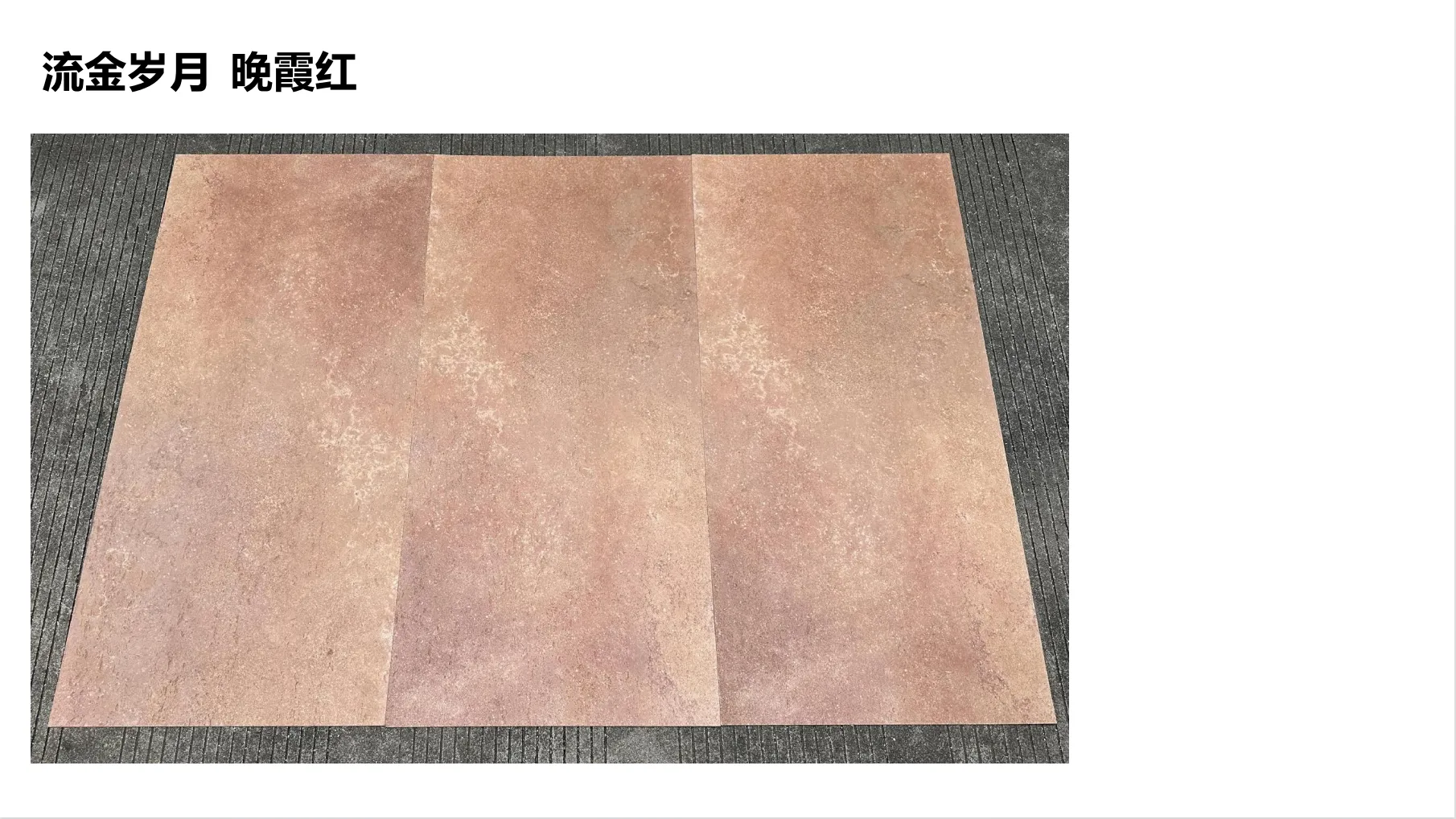
That's why today, we're putting two heavyweights head-to-head: MCM Project Board (part of the innovative MCM Project Board Series) and the tried-and-true fiber cement . We'll break down their strength, durability, and real-world performance—with a special focus on Golden Faith Real Photos , a project that showcases how material choice can make or break a design vision.
Spoiler: It's not just about "which is stronger." It's about how strength translates to real value—for contractors, architects, and homeowners alike.
If you're not deep in the building materials world, you might be thinking, "MCM… that sounds like alphabet soup." Let's simplify. MCM stands for Modified Composite Material , and the MCM Project Board Series is a line of next-gen cladding solutions designed to tackle the biggest pain points of traditional materials. Think: lightweight, flexible, and surprisingly tough—thanks in part to its star ingredient: flexible stone .
Here's the quick breakdown: MCM Project Boards are made by bonding layers of natural stone (like travertine or slate) or mineral composites to a reinforced backing. The result? A material that's thin (often just 3-6mm thick), lightweight (around 3-5 kg/m²), but packed with strength. Unlike rigid materials that crack when bent, MCM bends—making it resistant to impacts, thermal expansion, and the kind of stress that leaves other materials shattered.
And yes, it's part of a bigger family. The MCM Project Board Series includes everything from boulder slab (with a rugged, natural stone look) to 3D-printed designs, but today, we're zeroing in on the core: its strength.
Fiber cement, on the other hand, is the grizzled veteran of the building materials world. You've probably seen it on homes, schools, or offices—it's the gray, wood-look siding that's been around since the 1970s. Made from a mix of cement, sand, cellulose fibers (like wood pulp), and water, it's marketed as "tough as nails" and fire-resistant.
Traditional fiber cement is thick (usually 8-12mm), heavy (12-16 kg/m²), and rigid. It's made by pressing the mixture into boards, then curing them under high heat and pressure. For decades, it's been the go-to for homeowners and contractors who prioritize "sturdy" over "sleek." But here's the catch: rigidity isn't always a strength. When materials can't flex, they crack—especially under stress from temperature changes, earthquakes, or even just a stray baseball.
So, fiber cement is strong… but is it smart strong? Let's compare.
Let's cut to the chase: how do these two stack up when it comes to raw strength? We're talking tensile strength (how much pull it can take before breaking), impact resistance (how it handles a hard hit), flexural strength (how much it bends without snapping), and weight (because a heavy material strains structures over time). Check out the breakdown below—we'll even throw in a table to make it crystal clear.
| Strength Metric | MCM Project Board | Fiber Cement |
|---|---|---|
|
Tensile Strength
(Resistance to pulling forces) |
8-12 MPa | 4-6 MPa |
|
Impact Resistance
(How it handles hits/drops) |
Resists cracking from impacts up to 50J (think: a 5kg weight dropped from 1m) | Prone to chipping/cracking at impacts above 20J |
|
Flexural Strength
(Bending without breaking) |
15-20 MPa (can bend up to 30° without cracking) | 8-10 MPa (bends <5° before cracking) |
|
Weight
(Strain on structures) |
3-5 kg/m² | 12-16 kg/m² (3x heavier!) |
|
Water Absorption
(Resistance to moisture damage) |
<1% (negligible—no swelling or rotting) | 6-8% (prone to swelling, mold, and freeze-thaw damage) |
Let's unpack that. MCM Project Board has double the tensile strength of fiber cement, meaning it can handle more pulling force (like wind or structural movement) without tearing. Its impact resistance is more than double, too—so if a ladder bumps the wall or a storm sends debris flying, MCM is less likely to chip. And that flexural strength? That's a game-changer. In places with extreme temperature swings (hello, desert heat or icy winters), materials expand and contract. MCM bends with the movement; fiber cement? It fights back—until it cracks.
Oh, and the weight? A 100m² wall clad in fiber cement adds 1,200-1,600 kg to a structure. MCM? Just 300-500 kg. That's less strain on foundations, fewer support beams needed, and lower installation costs. Strength without the bulk? Sign us up.
Lab tests are great, but how do these materials hold up when the rubber meets the road? Let's talk about real-world scenarios—because a material that's strong in a lab but falls apart in the rain isn't worth your time.
Take the Middle East, where temperatures soar to 50°C (122°F) in summer and dip to 10°C (50°F) at night. Traditional fiber cement absorbs heat, expanding during the day and contracting at night. Over time, that cycle weakens the material, leading to cracks. MCM Project Board, with its low thermal conductivity and flexibility, stays stable. It doesn't soak up heat, and its bendy nature lets it expand and contract without stress.
Or consider coastal areas, where saltwater spray eats away at materials. Fiber cement, with its high water absorption, can trap salt, leading to corrosion and crumbling. MCM's tight, non-porous surface? It repels salt and moisture, keeping the board intact for decades.
In earthquake-prone regions (like parts of California or Turkey), buildings move. Rigid materials like fiber cement can't keep up—they crack, peel, or even fall off. MCM Project Board, though? Its flexibility acts like a shock absorber. During a quake, it shifts with the building, reducing the risk of damage. That's not just strength—that's smart strength.
Let's be real: no one wants a building that's strong but ugly. Here's where MCM Project Board pulls ahead again. The MCM Project Board Series isn't just about strength—it's about options. Want the look of travertine (starry blue) for a cosmic-inspired facade? Done. Prefer the rugged texture of boulder slab (vintage silver) ? You got it. Or maybe fair-faced concrete for that industrial-chic vibe? MCM can mimic all of these—without the weight or fragility of the real thing.
Fiber cement, on the other hand, is stuck in a style rut. Most options are gray, wood-look, or plain white. Custom colors? Possible, but expensive and prone to fading. And because it's rigid, you can't get the 3D textures or curved designs that make modern buildings stand out.
Which brings us to Golden Faith Real Photos . This luxury residential project in Dubai wanted a facade that was both strong enough to withstand the desert sun and stunning enough to justify its "Golden Faith" name. They chose MCM Project Board in lunar peak golden —a shimmering, metallic finish that catches the light. The result? A building that's as tough as it is beautiful. You can see it in the photos: no cracks, no fading, just a facade that looks as good today as it did on day one.
Strength isn't just about the material—it's about how easy it is to work with. Let's talk installation. Fiber cement is heavy, so you need a crew of 3-4 people to lift and install each panel. It's also brittle, so cutting it (even with special tools) often leads to chipping. And because it's rigid, it needs precise measurements—no room for error.
MCM Project Board? A single installer can carry 10-15 panels at a time (thanks to that lightweight design). It cuts cleanly with standard tools (no special saws needed), and its flexibility means it can adapt to minor unevenness in the wall. Translation: faster installation, fewer labor hours, and lower costs.
Maintenance? Fiber cement needs repainting every 5-7 years (and that's if you're lucky). It's also prone to mold in humid climates, which means regular cleaning with harsh chemicals. MCM? Just hose it down with water—no painting, no scrubbing. Its color is baked into the material, so it won't fade or peel. Over 20 years, that's thousands of dollars saved on upkeep.
Let's zoom in on Golden Faith Real Photos , the project we've been teasing. This 12-story residential building in Dubai faced three big challenges: (1) withstand 50°C summer heat and sandstorms, (2) look luxurious enough to attract high-end buyers, and (3) stay within a tight construction timeline.
The original plan? Fiber cement. But after seeing the lab tests (and the weight issue), the architect switched to MCM Project Board in lunar peak golden and travertine (starry blue) accents. Here's what happened:
Today, the Golden Faith photos speak for themselves: a building that's strong, stunning, and built to last. And the best part? The developer saved 15% on installation costs and expects to save even more on maintenance over the building's lifetime.
Let's wrap this up. If you're prioritizing raw rigidity and don't mind the weight, cost, and limited style options, fiber cement might work. But if you want smart strength —the kind that combines tensile toughness, impact resistance, flexibility, and aesthetic versatility— MCM Project Board Series is the clear winner.
It's lightweight but strong, flexible but durable, and stylish without the upkeep. And as Golden Faith Real Photos prove, it's not just a lab success—it's a real-world solution that delivers on its promises.
At the end of the day, building materials shouldn't just be strong. They should make your project easier, more affordable, and more beautiful. MCM Project Board does all three. And isn't that the kind of strength we all want?
Recommend Products












