
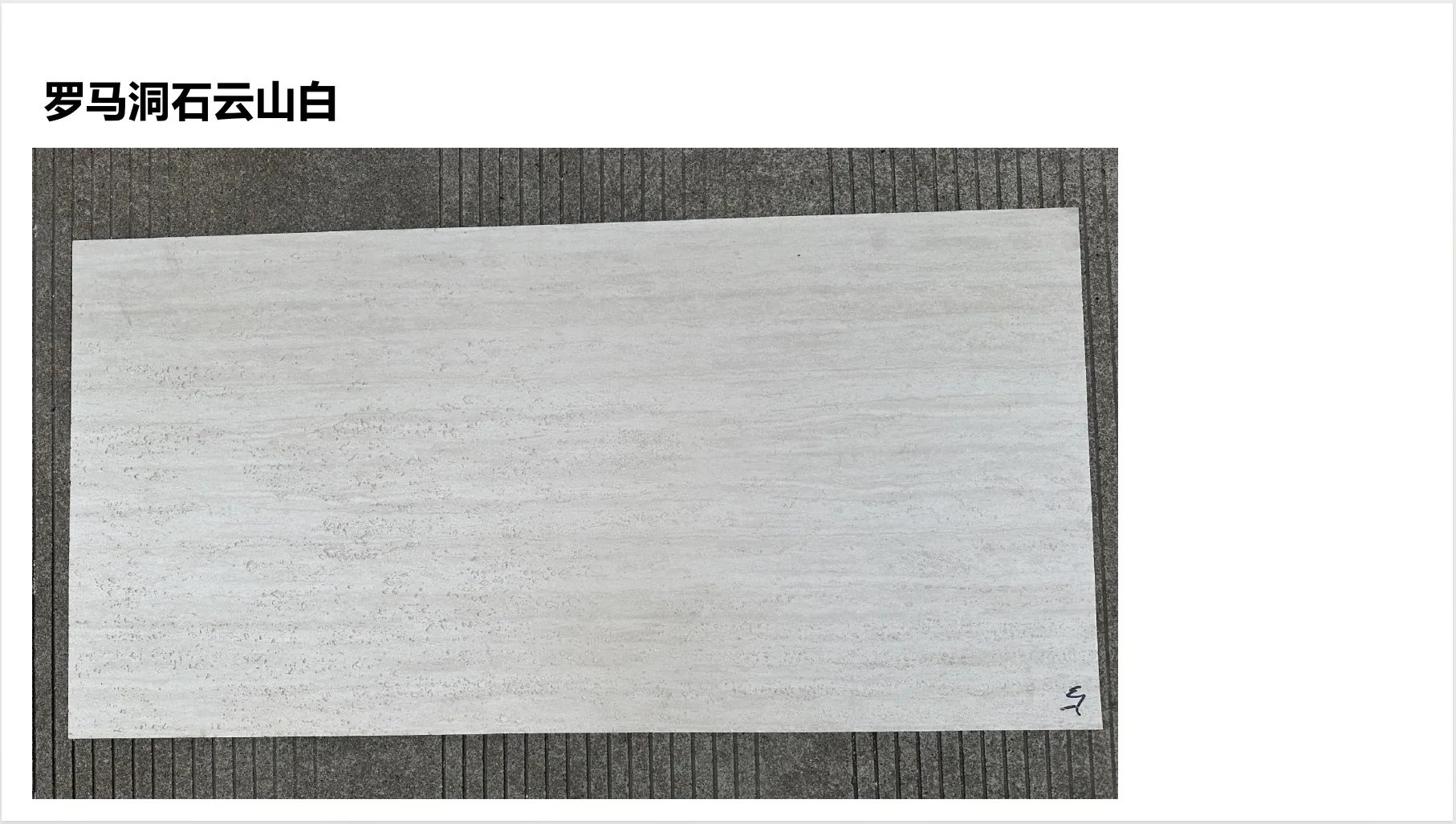
Walk through any modern city, and you'll notice convention centers aren't just boxes anymore. They're canvases. Places where architecture whispers about innovation, heritage, and the human need to connect. But what turns a facade from "just a wall" into a conversation starter? It's in the materials—the way they catch light at dawn, the texture that invites a curious touch, the colors that echo the sky or the earth. Today, we're diving into one such star material: Romanite, brought to life through COLORIA MCM's large-size real photos. And we're not stopping there—we'll explore how it dances with MCM flexible stone, travertine (starry green), foamed aluminium alloy board (vintage silver), and fair-faced concrete to redefine what a convention center can feel like.
Let's start with the star of the show: Romanite. You've seen small samples, maybe in a design catalog—sleek, stone-like, with a quiet confidence. But until you flip through COLORIA MCM's large-size real photos, you can't truly grasp its presence. These aren't just images; they're windows into scale. Imagine unrolling a photo that's nearly as tall as you are, capturing a section of Romanite facade that spans three stories. Suddenly, the subtleties hit you: the way the surface isn't perfectly uniform, but dotted with tiny, natural-looking pits that catch the light like scattered stardust. The edges, where the large panels meet, create clean, bold lines that give the building a sense of grandeur without feeling cold.
A designer friend once told me, "You can't design a facade from a swatch." She's right. When she first saw Romanite's large-size real photos, she stopped mid-sentence. "That's it," she said, pointing to a shot of the material under golden hour light. "The warm gray base with those faint taupe veining— it doesn't scream. It breathes." And that's the magic of these photos: they don't just show color; they show mood. A Romanite facade at 9 a.m., bathed in soft morning sun, feels calm, almost meditative. At dusk, when the sky turns pink, the same panels take on a honeyed glow, turning the convention center into a beacon that says, "Come in—something extraordinary is happening here."
But what makes Romanite more than just a pretty face? It's the "MCM" in COLORIA MCM—Modified Composite Material. That means it's lightweight but tough, flexible enough to wrap around curved walls (we'll get to MCM flexible stone later) but sturdy enough to stand up to rain, wind, and the hustle of a busy convention center. The large-size panels also mean fewer seams, which isn't just aesthetic—it cuts down on maintenance. No more chasing cracks between tiny tiles; Romanite's expanse stays smooth, like a single, unbroken story.
If Romanite is the backbone of a facade, MCM flexible stone is its dance partner. Think of a convention center with a sweeping, curved entrance—too organic for rigid materials, too important to skimp on style. That's where flexible stone shines. I once watched a installer unroll a sheet of it like a rug, and my first thought was, "That can't be stone." But run your hand over it, and you'll feel the familiar coolness, the slight grit of natural stone. It's stone, but reimagined—pliable, lightweight, and ready to follow the architect's wildest curves.
COLORIA MCM's flexible stone comes in textures that mimic everything from rough-hewn limestone to polished marble, but what really sets it apart is how it plays with Romanite. Picture this: a convention center facade where Romanite forms the straight, bold "bones" of the building—tall vertical panels that reach for the sky. Then, at the corners, where the building softens into a curve, MCM flexible stone takes over, its surface slightly more porous, more tactile, like a handshake between strength and softness. It's the difference between a building that feels "built" and one that feels "grown"—grounded but alive.
Designers love it for another reason, too: sustainability. Traditional stone quarrying leaves a heavy footprint, but MCM flexible stone uses recycled materials and less energy to produce. When you stand in front of a facade that blends Romanite and flexible stone, you're not just looking at beauty—you're looking at a choice to honor the planet. And in a space where people gather to discuss the future, that matters.
Now, let's talk about color—the kind that makes you pause and say, "Is that… green?" Travertine (starry green) from COLORIA MCM isn't your grandma's beige stone. It's a soft, mossy hue, shot through with tiny, iridescent flecks that catch the light like dewdrops on leaves. The "starry" in its name isn't just marketing—run your finger over it, and you'll see pinprick holes (natural in travertine) that, from a distance, look like stars scattered across a forest floor.
Imagine a convention center in a city known for its parks—say, Portland or Seattle. The architects wanted the facade to feel like an extension of the surrounding greenery, but without looking kitschy. Enter travertine (starry green). They paired it with Romanite's warm gray panels, creating stripes of "earth" and "forest" that flow up the building. At night, when the facade lights glow softly, the green takes on a magical, almost bioluminescent quality, as if the building itself is breathing with the park next door.
What I love most about this material is its duality. Up close, it's rugged—those starry pits tell a story of time, of water and mineral deposits slowly building something beautiful. From afar, it's serene, a whisper of nature in a concrete jungle. For a convention center hosting sustainability summits or eco-friendly expos? It's not just a facade. It's a statement.
Let's shift gears—from earthy greens to something with a metallic edge. Foamed aluminium alloy board (vintage silver) is the cool, modern cousin in COLORIA MCM's lineup. It's lightweight (thanks to the "foamed" structure), but don't let that fool you—it's tough as nails, resistant to corrosion and scratches. And that "vintage silver" finish? It's not shiny like a mirror; it's muted, with a soft sheen that looks like it's been gently weathered by time, giving it character without looking dated.
I recently visited a tech convention center in Austin that used this material alongside Romanite, and the contrast was electric. The Romanite panels formed the main body of the building, solid and grounding, while vertical strips of vintage silver aluminium ran up the corners, catching the Texas sun and turning the facade into a dynamic, ever-changing canvas. At noon, the silver glinted bright, modern and bold. At sunset, it took on a warm, pinkish hue, softening into the Romanite's gray like a handshake between past and future.
Designers also love how it plays with shadows. The foamed texture isn't perfectly smooth—it has tiny, uniform pores that cast delicate, dappled shadows when the sun moves. Stand under the overhang of a facade clad in this aluminium, and you'll feel like you're standing under a tree, the light filtering through in patterns that make the space feel intimate, even in a massive convention center.
Last but never least: fair-faced concrete. It sounds simple—concrete left "as is," without paint or cladding. But in the hands of a designer who knows what they're doing, it's anything but plain. COLORIA MCM's take on fair-faced concrete has a velvety, matte finish, with subtle variations in tone that come from the way the concrete cures—no two panels are exactly alike. It's raw, honest, and surprisingly warm, like a well-loved book with dog-eared pages.
Pair it with Romanite, and you get a facade that feels both timeless and modern. I visited a convention center in Chicago that did just that: Romanite's large gray panels formed the upper floors, sleek and imposing, while the lower levels were clad in fair-faced concrete, with its rough, organic texture. The effect? The building felt rooted, like it had grown out of the city's industrial past, but was reaching for the future. It wasn't trying to be "pretty"—it was trying to be real . And in a space where people come to share ideas, authenticity matters.
What's striking about fair-faced concrete is how it ages. Unlike some materials that fade or scratch, this concrete gets better with time. Rainwater leaves subtle stains that add depth; sunlight softens the edges. It's a material that tells the story of the building's life, not just its opening day. For a convention center that hosts generations of events—tech fairs, art shows, political rallies—that's a powerful thing. It becomes a living part of the community's history.
The magic isn't in one material—it's in how they talk to each other. Let's break down a hypothetical (but totally plausible) convention center facade using Romanite, MCM flexible stone, travertine (starry green), foamed aluminium (vintage silver), and fair-faced concrete. Think of it as a band: each instrument has a role, but together, they make music.
| Material | Texture & Feel | Color Story | Role in the Facade | Vibe |
|---|---|---|---|---|
| Romanite (Large Size) | Smooth with subtle pits; cool to the touch; solid, unbroken panels. | Warm grays, soft taupes; neutral but with depth. | The "backbone"—tall vertical panels, defining the building's silhouette. | Timeless, grand, quietly confident. |
| MCM Flexible Stone | Porous, tactile; slightly rough like natural stone; bends to curves. | Earthy tones (beige, sand, soft gray); mimics quarried stone. | The "softener"—curved corners, transitions between materials. | Organic, approachable, grounded. |
| Travertine (Starry Green) | Mossy green with iridescent flecks; "starry" pits; cool, slightly damp feel. | Soft green base with silver/blue flecks; nature-inspired. | The "accent"—horizontal stripes or inset panels for color pop. | Vibrant, alive, connected to the outdoors. |
| Foamed Aluminium Alloy (Vintage Silver) | Muted metallic sheen; uniform pores; lightweight but rigid. | Weathered silver; not too shiny, with a vintage patina. | The "modern edge"—vertical strips, overhangs, or entrance accents. | Sleek, industrial, forward-thinking. |
| Fair-Faced Concrete | Velvety matte; subtle color variations; rough in all the right ways. | Off-white to light gray; natural curing variations. | The "roots"—lower levels, grounding the building. | Honest, raw, industrial-chic. |
At the end of the day, a convention center's facade isn't just about keeping the rain out. It's about setting the tone for what happens inside. When attendees walk up to a building clad in Romanite, MCM flexible stone, and travertine (starry green), they don't just see a wall—they feel something. Maybe it's the grandeur of Romanite making them excited for the innovation inside. Maybe it's the warmth of fair-faced concrete making them feel welcome, like they're part of something bigger.
COLORIA MCM's materials don't just look good—they work hard. They're durable, sustainable, and designed to last decades, which matters when you're building a space that will host thousands of events, millions of people. But beyond that, they tell a story. A story of balance—between nature and industry, tradition and innovation, strength and softness.
So the next time you pass a convention center, take a second look. Notice the materials. Run your hand over the facade (if you can!). See how the light plays with Romanite's large panels, how MCM flexible stone curves like a wave, how travertine (starry green) winks like a hidden forest. These aren't just rocks and metal and concrete—they're the building blocks of connection. And in a world that's more digital than ever, there's something deeply human about that.
*All materials mentioned are part of COLORIA MCM's extensive lineup, with Romanite real photos (large size) available for designers to explore texture, scale, and application in detail. Because when it comes to building something unforgettable, seeing is believing.*
Recommend Products












