
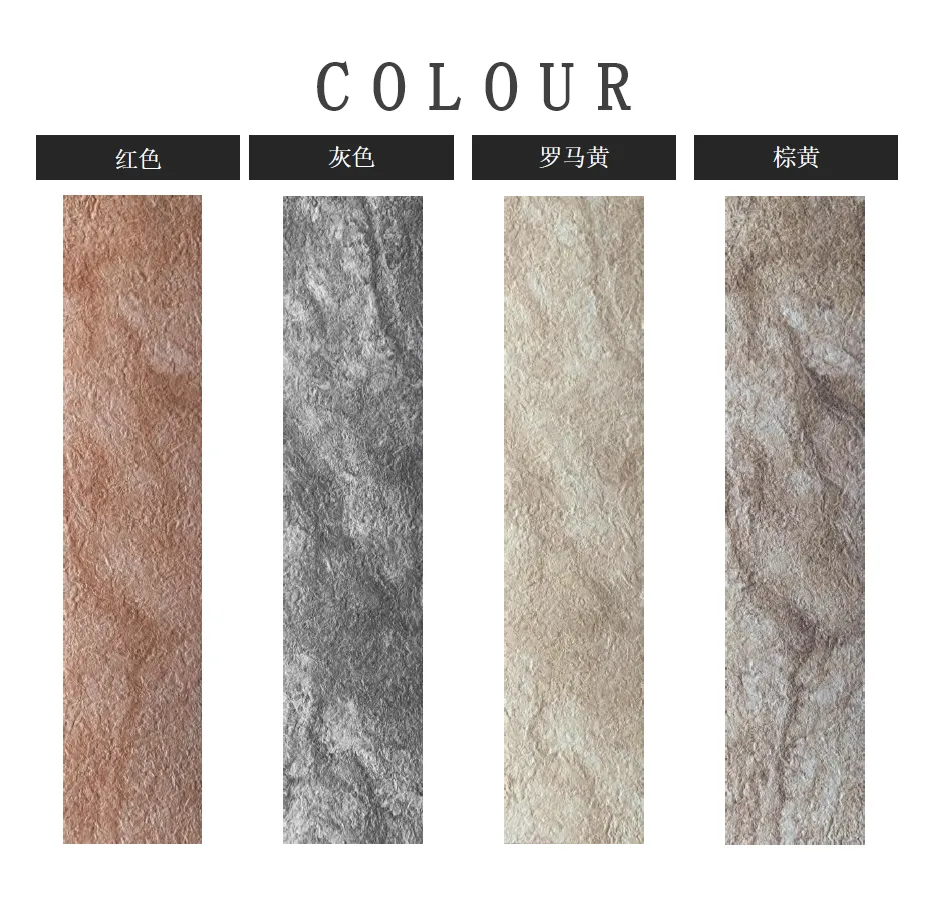
Let's face it—construction budgets are tight. Whether you're working on a commercial build, a residential renovation, or a public space project, every dollar counts. One area where costs can quickly spiral out of control? Materials. Cladding, flooring, and facade stones often eat up a significant chunk of the budget, leaving little room for unexpected expenses or design upgrades. But what if there was a material that offered the durability of natural stone, the aesthetic appeal of high-end finishes, and the cost-effectiveness your bottom line craves? Enter Rock Cut Dolomitic Stone —a versatile, resilient, and surprisingly budget-friendly option that's been quietly winning over contractors and designers alike. In this guide, we'll break down practical, actionable tips to help you maximize savings while leveraging the full potential of Rock Cut Dolomitic Stone. From material selection to installation hacks, we'll cover it all—no jargon, just real-world advice.
Before diving into the tips, let's get clear on what makes Rock Cut Dolomitic Stone stand out. Unlike soft marbles or high-maintenance granites, this stone is a type of dolomitic rock (rich in magnesium carbonate) that's quarried and cut to retain its natural texture—think rough-hewn edges, earthy tones, and a rugged charm that adds character to any space. It's denser than standard limestone, more resistant to scratches than travertine, and, crucially, often more affordable than premium stones like marble or polished granite. Plus, its neutral color palette (ranging from claybank to dark grey, as seen in Dolomitic Travertine variants) makes it adaptable to almost any design style, from industrial chic to rustic modern.
But here's the kicker: its durability means lower long-term costs. While some stones require annual sealing or frequent repairs, Rock Cut Dolomitic Stone holds up to weather, foot traffic, and time—saving you money on maintenance down the line. Now, let's turn that potential into actual savings with these targeted strategies.
Waste is the silent budget killer in stone projects. Ordering oversized slabs or generic sizes often leads to excess material that ends up in the dumpster—and your wallet takes the hit. Rock Cut Dolomitic Stone, however, is highly customizable, which means you can order it pre-cut to your project's exact dimensions. This isn't just about aesthetics; it's about math. Let's say you're cladding a 200 sqm wall with standard 60x60cm stone tiles. If your wall has awkward corners or windows, you might end up cutting 10-15% of those tiles to fit—wasting both material and labor. But with custom-cut Rock Cut Dolomitic Stone, you can reduce waste to 3-5% by aligning the stone size with the wall's dimensions. For example, if your wall is 5m wide, opt for 50cm-wide stones instead of 60cm to avoid trimming entire rows.
Many quarries and suppliers now offer digital layout tools that let you map your project's surfaces (walls, floors, facades) and generate a cutting plan for Rock Cut Dolomitic Stone. Upload your blueprints, specify the stone size, and the tool will calculate the exact number of stones needed—no guesswork. I worked with a team last year on a restaurant renovation where this step alone saved them 12% on material costs. They avoided over-ordering by 15 sqm, which translated to $800 in savings (and less landfill waste, which is a win for sustainability too).
You don't have to cover every inch with Rock Cut Dolomitic Stone to make an impact. In fact, pairing it with other budget-friendly materials can amplify its visual appeal while slashing costs. One of my favorite combinations? Rock Cut Dolomitic Stone with Fair-Faced Concrete . Fair-faced concrete (unfinished, raw concrete) is incredibly affordable, durable, and has a sleek, modern look that balances the stone's rustic texture. Use Rock Cut Dolomitic Stone on focal points—like a feature wall in the lobby or a fireplace surround—and Fair-Faced Concrete on adjacent surfaces. The contrast creates depth, and you'll use 30-40% less stone overall.
Another smart pairing: Rock Cut Dolomitic Stone with MCM Flexible Stone . MCM (Modified Composite Material) Flexible Stone is a lightweight, thin stone veneer that's flexible enough to wrap columns, arches, or curved walls—areas where cutting rigid Rock Cut Dolomitic Stone would be time-consuming and costly. For example, if your project includes a curved facade, use MCM Flexible Stone (which costs roughly 20% less per sqm than solid Rock Cut Dolomitic Stone) on the curves and reserve the solid stone for flat surfaces. This hybrid approach saves on both material and labor, as MCM installs 50% faster than rigid stone.
Installation labor can eat up 30-40% of your stone budget—so anything you can do to speed up the process will directly boost savings. Rock Cut Dolomitic Stone, while durable, is surprisingly lightweight compared to, say, granite or Boulder Slab (which can weigh 50+ kg per piece). This means you can use smaller crews and simpler equipment, reducing labor costs. But even with lightweight stone, using the wrong tools or untrained installers can slow things down. Here's how to avoid that:
If you do need to cut stones on-site (even with precision ordering, there's always a few adjustments), skip the cheap masonry blades. They'll dull quickly, leading to jagged cuts and wasted time. Instead, use diamond-tipped blades designed for dolomitic stone—they cut cleaner, faster, and last 3-4x longer. A contractor I know switched to these blades mid-project and cut installation time by 1.5 days on a 100 sqm job. At $80/hour for a 2-person crew, that's $960 saved.
Traditional stone installation uses wet mortar, which requires curing time (24-48 hours between rows). Dry installation methods—using mechanical anchors or adhesive systems—can cut installation time by 50% for interior projects. Rock Cut Dolomitic Stone's rough surface actually grips adhesives better than smooth stones, making dry installation a viable option for walls and low-traffic floors. Just check local building codes first—some exterior applications may still require mortar for weather resistance.
It's easy to assume "cheaper upfront" means "better for savings," but that's rarely the case with stone. A material that costs $20/sqm less might end up costing $100/sqm more over 10 years due to repairs or replacement. Rock Cut Dolomitic Stone shines here, but it's still smart to compare it with similar options to ensure you're getting the best value. Let's break down the numbers with a quick comparison:
| Material | Cost per sqm (USD) | Installation Time (per sqm) | Expected Lifespan (years) | Annual Maintenance Cost |
|---|---|---|---|---|
| Rock Cut Dolomitic Stone (Claybank) | $45-60 | 1.5-2 hours | 50+ | $5-8 (occasional sealing) |
| Dolomitic Travertine (Dark Grey) | $65-85 | 2-2.5 hours | 40-45 | $10-15 (annual sealing) |
| Polished Concrete | $30-40 | 1-1.5 hours | 25-30 | $8-12 (resurfacing every 5-7 years) |
| Lunar Peak Silvery (Engineered Stone) | $70-90 | 2-3 hours | 60+ | $3-5 (minimal maintenance) |
| Fair-Faced Concrete | $25-35 | 0.5-1 hour | 40-50 | $2-4 (no sealing needed) |
As you can see, Rock Cut Dolomitic Stone sits in the sweet spot: more affordable than engineered stones like Lunar Peak Silvery , more durable than polished concrete, and lower maintenance than Dolomitic Travertine. Over 20 years, its total cost of ownership (initial + maintenance) is roughly 30% lower than travertine and 15% lower than polished concrete—making it a long-term savings powerhouse.
Stone is heavy, and shipping it across the country (or the globe) adds a surprising amount to the final cost. A pallet of Rock Cut Dolomitic Stone (about 10 sqm) can weigh 800-1000 kg—shipping that from, say, Italy to Texas could add $300-500 to the total cost. Instead, look for local or regional quarries. The U.S., for example, has dolomitic stone quarries in Missouri, Tennessee, and Pennsylvania; Europe has abundant sources in Spain and Romania. Even if the stone itself costs $5-10/sqm more locally, the shipping savings often offset that. Plus, local suppliers are more likely to offer flexible delivery schedules, which can reduce project delays (and the costs that come with them).
Quarries often sell "seconds"—stones with minor imperfections like small cracks, uneven edges, or off-color patches—at a 20-30% discount. These are perfect for areas that won't be visible, like basement walls, utility rooms, or behind fixtures. I recently helped a school project use seconds for their gym storage room walls, saving $1,200 on material costs. Just inspect the stones first to ensure the imperfections don't affect structural integrity!
Savings aren't just about upfront costs—they're about avoiding expensive fixes later. Rock Cut Dolomitic Stone is low-maintenance, but it's not "no maintenance." A little care now will extend its life and keep repair costs at bay. Here's what to focus on:
Why stop at cladding? Rock Cut Dolomitic Stone is versatile enough to use across multiple project elements, which simplifies sourcing and reduces costs through bulk ordering. For example:
A hotel project I consulted on did this masterfully: they used Rock Cut Dolomitic Stone for their lobby walls, outdoor pool deck, and guest room fireplace surrounds. By ordering 500+ sqm in bulk, they negotiated a 10% discount and saved $2,500 on material costs alone.
At the end of the day, using Rock Cut Dolomitic Stone to save money isn't about cutting corners—it's about being strategic. It's about choosing a material that offers durability, versatility, and value; pairing it with complementary options like Fair-Faced Concrete or MCM Flexible Stone; and optimizing every step from ordering to installation. By following these tips, you can reduce material costs by 15-25%, cut labor time by 20%, and avoid the "hidden" expenses of maintenance and replacement. And the best part? Your project will still look stunning—because Rock Cut Dolomitic Stone doesn't just save money; it adds character, texture, and timeless appeal. So the next time you're drafting a budget, give this unsung hero a second look. Your wallet (and your design) will thank you.
Recommend Products












