
Let's face it: large-scale construction projects are like balancing acts. You've got timelines to hit, quality standards to meet, and a budget that never seems to stretch quite far enough. One of the biggest headaches? Material costs. From sourcing to installation to long-term upkeep, the numbers add up fast—especially when you're dealing with high-end finishes like marble or stone. But what if there was a way to get that premium look without the premium price tag? Enter the MCM Marble Series. Over the past few years, this line of modified composite materials has quietly become a go-to for project managers and architects who refuse to choose between aesthetics and affordability. Today, we're diving into how products like MCM flexible stone, MCM big slab board series, and even unique options like travertine (starry green) and lunar peak silvery are reshaping cost-saving strategies in large-scale builds.
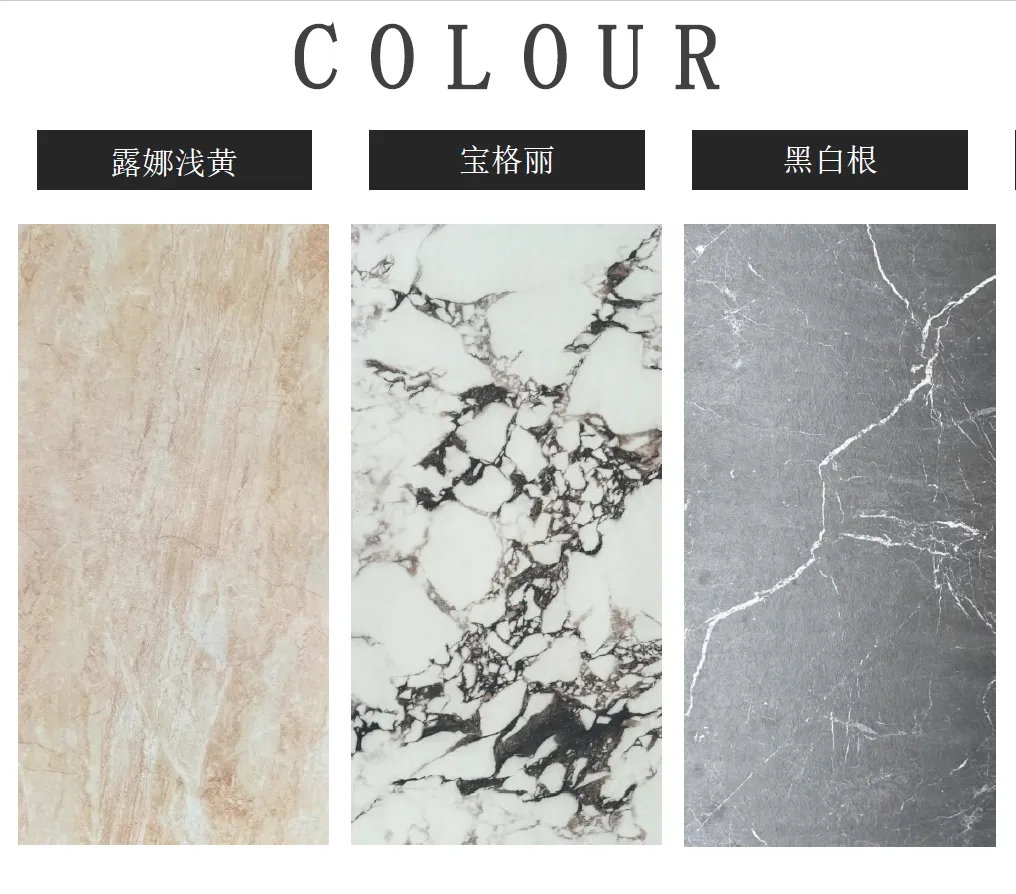
First things first: Let's clear up any confusion. MCM stands for "Modified Composite Material," and it's exactly what it sounds like—a blend of natural minerals, recycled polymers, and advanced binders engineered to mimic the look and feel of natural stone, but with a few superpowers traditional materials can't match. Think of it as stone's smarter, more budget-friendly cousin. The MCM Marble Series isn't just one product; it's a family. There's MCM flexible stone, which bends and conforms to curved surfaces (goodbye, waste from cutting rigid slabs!). There's the MCM big slab board series, offering large-format panels that minimize joints and speed up installation. And then there are the design-focused options: travertine (starry green) with its subtle, star-like veining, lunar peak silvery for that sleek, modern metallic finish, and even fair-faced concrete for an industrial, raw aesthetic—all without the weight or cost of their natural counterparts.
What makes MCM different? For starters, it's lightweight. Traditional marble or granite can weigh 20–25 kg per square meter; MCM clocks in at 6–8 kg. That might not sound like a big deal, but when you're cladding a 50-story building, every kilogram saved translates to lower shipping costs, fewer structural supports, and faster installation. It's also durable—resistant to scratches, UV rays, and moisture—and flexible, which means it can handle the minor shifts and vibrations that would crack natural stone. But the real star here? Its price tag. Let's break down how that translates to savings.
Let's start with the obvious: upfront material costs. Natural marble, especially rare varieties, can run you $150–$300 per square meter. Even mid-range stone options like limestone or travertine often hit $80–$120/sqm. MCM? Depending on the series, you're looking at $40–$80/sqm. Take the MCM big slab board series, for example. A 1200x2400mm slab (that's 2.88 square meters!) costs a fraction of what a natural marble slab of the same size would. And unique finishes like travertine (starry green)? You get that eye-catching, starry veining without paying a premium for quarried travertine. It's simple math: for a 10,000 sqm project, switching from natural marble to MCM could save you $700,000–$2.2 million upfront. That's not chump change—it's funding for other parts of the project, like upgrading fixtures or adding green features.
Here's where the lightweight magic really kicks in. Traditional stone installation is labor-intensive. You need a crew to haul heavy slabs, specialized tools to cut them (often on-site, creating dust and waste), and careful handling to avoid cracks. MCM? Because it's lightweight and flexible, one or two workers can carry and install panels instead of three or four. The MCM big slab board series, with its large panels, means fewer cuts and fewer joints—so a team can cover more square meters in a day. Let's put this into numbers: Installing natural stone might take 2–3 hours per square meter (including cutting, fitting, and sealing). MCM? 30–45 minutes. For a 10,000 sqm project, that's 15,000–22,500 fewer labor hours. At an average labor cost of $25/hour, that's $375,000–$562,500 saved just on installation time.
And let's not forget transportation. Shipping 25kg/sqm stone across the country (or the globe) requires heavy-duty trucks and extra fuel. MCM's 6–8 kg/sqm means you can fit 3–4 times more material per truck. For a project needing 10,000 sqm, that's 10 trucks for stone vs. 3 trucks for MCM. Lower fuel costs, fewer trips, less hassle—all adding up to more savings.
"But isn't cheaper material just going to need replacing sooner?" It's a fair question. Here's the thing: MCM isn't "cheap"—it's cost-effective. Traditional marble, for example, is porous and prone to staining, scratching, and weathering. Even with sealing, you might need to replace high-traffic areas every 10–15 years. MCM, though? Its composite structure is non-porous, so spills wipe right off. It resists fading from sunlight, so that lunar peak silvery finish you love today will still look sharp in 20 years. And because it's flexible, it can handle temperature changes and minor structural movement without cracking. Most manufacturers back MCM products with 15–20 year warranties, but real-world projects show they can last 30+ years with minimal upkeep. That means no costly replacements mid-project lifecycle.
Let's talk long-term costs. Natural stone needs regular TLC. Marble? Seal it every 1–2 years, at $5–$10 per square meter. Granite? Maybe every 3–5 years, but still an added expense. Travertine? Its pitted surface traps dirt, requiring frequent cleaning with specialized products. MCM? Zip. No sealing, no special cleaners. A quick wipe with soap and water is all it takes. For a 10,000 sqm building, that's $50,000–$100,000 saved on sealing alone over 10 years. And since it doesn't stain or scratch easily, you won't be shelling out for repairs or refinishing. It's low-maintenance in the best way—set it and forget it.
These days, sustainability isn't just a buzzword—it's a budget line item. Green building certifications like LEED or BREEAM can earn you tax credits, grants, or even higher property values. MCM checks a lot of boxes here. Its production uses 70% less water and 50% less energy than quarrying and processing natural stone. Many MCM products, including fair-faced concrete and MCM flexible stone, contain recycled materials, reducing waste. And because it's lightweight, transportation emits fewer greenhouse gases. For large-scale projects aiming for green certifications, MCM can help unlock incentives that offset initial costs even further. It's a win-win: you save the planet and your budget.
| Feature | Traditional Natural Marble | MCM Big Slab Board Series | MCM Flexible Stone |
|---|---|---|---|
| Initial Material Cost (per sqm) | $150–$300 | $60–$80 | $40–$60 |
| Weight (per sqm) | 20–25 kg | 7–8 kg | 6–7 kg |
| Installation Time (per sqm) | 2–3 hours | 30–45 minutes | 20–30 minutes (curved surfaces) |
| Estimated Lifespan | 15–20 years | 30+ years | 30+ years |
| Annual Maintenance Cost (per sqm) | $5–$10 (sealing/cleaning) | $0.50–$1 (soap/water) | $0.50–$1 (soap/water) |
| Carbon Footprint (per sqm produced) | High (quarrying, heavy transport) | Low (recycled materials, lightweight) | Low (recycled materials, lightweight) |
When Dubai's Roads and Transport Authority set out to expand its metro network, they needed a durable, low-maintenance cladding material for 10 new stations—each spanning 15,000–20,000 sqm. Initially, they budgeted $8M for natural travertine and granite. But after consulting with MCM suppliers, they switched to MCM big slab board series (travertine starry green finish) for station interiors and lunar peak silvery panels for exteriors. The result? Total material costs dropped to $3.8M (a 52% savings). Installation time was cut by 40%, reducing labor costs by $1.2M. And because MCM's lightweight panels required fewer structural supports, they saved an additional $500k on steel and concrete. Three years later, the stations still look brand-new, with zero maintenance costs beyond routine cleaning.
A 12-story office building in downtown Chicago wanted a modern, industrial aesthetic for its lobby and facade. The design called for fair-faced concrete and large-format stone panels. Traditional fair-faced concrete would have required custom formwork and on-site finishing, with a risk of inconsistencies. Instead, the team opted for MCM fair-faced concrete panels and MCM flexible stone for curved lobby walls. Material costs fell by 35% compared to natural concrete and stone, and installation was completed in 6 weeks instead of the projected 12. Today, the lobby's curved walls (clad in MCM flexible stone) are a design highlight, and the facade's fair-faced concrete panels have held up through Chicago's harsh winters without cracking or fading. The project manager later noted, "We thought we'd have to compromise on the design to stay on budget. MCM let us have both."
No product is perfect, and MCM has its considerations. For one, it's not natural stone, so if you're after the exact mineral composition or unique veining of a rare marble quarry, MCM might not be the right fit. But for 90% of projects, the visual difference is negligible—especially with advances in 3D printing (yes, MCM uses 3D printing to replicate textures!) that make travertine (starry green) or lunar peak silvery look indistinguishable from the real thing. Another consideration: availability. While MCM is growing in popularity, not all local suppliers carry the full range, so planning ahead for sourcing is key. But with global distributors expanding their networks, this is becoming less of an issue.
At the end of the day, large-scale construction isn't about cutting corners—it's about making smart choices that balance quality, aesthetics, and cost. The MCM Marble Series does exactly that. Whether you're using MCM flexible stone for a curved feature wall, MCM big slab board series for a seamless facade, or travertine (starry green) to add a pop of design flair, you're not just saving money upfront. You're investing in a material that will keep saving you cash for decades—through faster installation, lower maintenance, and unmatched durability.
So the next time you're staring at a budget spreadsheet, wondering how to make those numbers work, remember: premium doesn't have to mean pricey. With MCM, you can have the stone-like finish you love, the durability you need, and a budget that stays intact. Now that's a construction win we can all get behind.
Recommend Products












