

Walk down any street, and you'll notice them—the silent storytellers of our built environment. Building facades don't just shelter us; they shape how we feel about a space. A rough-hewn stone wall might make us pause, evoking a sense of timelessness, while a sleek glass surface can feel futuristic, even a little cold. In the world of architecture, the choice of facade material is more than practical—it's emotional. It's about creating a first impression that lingers, a texture that invites touch, a color that shifts with the sun. And in this quest for meaningful design, one material has been turning heads for its ability to blend nature's artistry with human creativity: Bali stone.
Bali stone isn't just another building material—it's a piece of the earth with a personality. Quarried from the volcanic landscapes of Indonesia, where tectonic forces and centuries of weathering have sculpted its surface, each slab carries the marks of time: tiny pits like raindrops frozen mid-fall, veins of mineral deposits that twist like rivers, and a color palette that ranges from warm terracotta to soft sand, with hints of gold that catch the light on sunny afternoons. Unlike uniform, factory-made materials, Bali stone feels alive. Run your hand over it, and you'll feel the subtle bumps and grooves, a tactile reminder of the natural world in the heart of our cities.
What truly sets Bali stone apart, though, is its adaptability. Architects and designers aren't just limited to its natural state—they can customize its texture to fit a project's unique vision. Want a surface that mimics the rough edge of a cliff? Artisans can chisel it by hand. Prefer something smoother, with a gentle sheen that reflects the sky? A careful polishing process brings out its inner glow. This flexibility has made Bali stone a favorite for projects that aim to be one-of-a-kind, from boutique hotels in coastal towns to cultural centers in bustling cities.
Take, for example, the Serenity Resort in Ubud, Bali. Its facade, clad in custom-textured Bali stone, was designed to mirror the region's rice terraces. The stone was etched with shallow, wavy lines that ripple across the surface, creating the illusion of water flowing down the building. At dawn, when the sun rises over the surrounding hills, the texture catches the light, turning the facade into a canvas of gold and amber. Guests often mention how the building "feels like part of the landscape," as if it grew from the earth rather than being built on it. That's the magic of Bali stone: it doesn't fight nature—it dances with it.
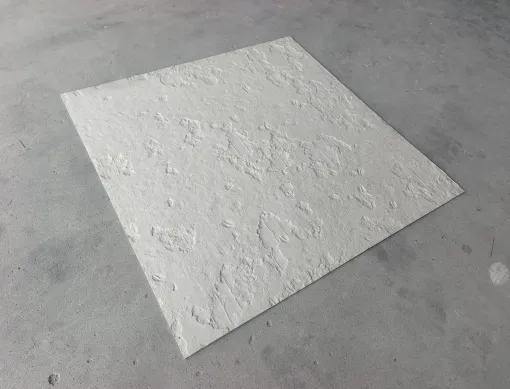
Customization is where Bali stone truly shines. Unlike mass-produced materials that offer limited options, Bali stone invites collaboration between designers, artisans, and nature. The process starts with a conversation: What story does the building want to tell? Is it a modern cafe aiming for a cozy, rustic vibe? A corporate headquarters seeking to balance professionalism with warmth? Once the vision is clear, artisans get to work, using techniques passed down through generations—plus a few modern twists—to shape the stone's texture.
One popular custom technique is hand-chiseling , where skilled craftsmen use traditional tools to carve patterns into the stone. For a recent project in Tokyo, a designer wanted a facade that felt "like a forest floor, covered in fallen leaves." Artisans responded by chiseling tiny, irregular indentations across the Bali stone slabs, varying the depth and spacing to mimic the randomness of nature. The result? A facade that feels soft to the eye, almost fuzzy, despite being made of hard stone. When the wind blows, shadows play across the indentations, making the building seem to breathe.
Another approach is acid washing , which gently etches the stone's surface to reveal hidden layers of color. A hotel in Sydney used this technique to create a "sunset effect" on its Bali stone facade. By applying acid in varying concentrations, artisans brought out warm oranges and pinks in some areas and deep reds in others, mimicking the way the sky shifts from day to night. The effect is striking: in the morning, the facade glows soft pink; by evening, it deepens to a rich amber, matching the city's famous sunsets.
But customization isn't just about aesthetics—it's about function, too. For buildings in rainy climates, a slightly rough texture can help water runoff more efficiently, preventing mold growth. In urban areas with high pollution, a smoother, denser texture makes cleaning easier. Bali stone's versatility means it can adapt to both the look and the needs of a project, making it a favorite for architects who refuse to compromise.
Of course, Bali stone isn't the only player in the facade game. Materials like MCM flexible stone, fair-faced concrete, and even travertine (starry green) offer their own unique perks. So what makes Bali stone the go-to for designers chasing that "unforgettable" facade? Let's break it down:
| Material | Texture Personality | Durability | Aesthetic Vibe | Best For |
|---|---|---|---|---|
| Bali Stone (Custom Textured) | Organic, varied—think river stones polished by time or cliff faces carved by wind | High (resistant to weather, fading, and wear) | Warm, earthy, and alive with natural variation | Cultural centers, boutique hotels, residential buildings seeking a connection to nature |
| MCM Flexible Stone | Smooth to slightly textured, with a consistent finish | Medium-High (lightweight, easy to install) | Modern, sleek, and uniform | Commercial buildings, retrofits where weight is a concern |
| Fair-Faced Concrete | Raw, industrial—smooth or with subtle formwork patterns | Very High (low maintenance, fire-resistant) | Minimalist, edgy, and utilitarian | Art galleries, warehouses converted to lofts |
| Travertine (Starry Green) | Porous with tiny, star-like holes; cool to the touch | Medium (requires sealing to prevent staining) | Luxurious, with a subtle shimmer from mineral deposits | High-end retail, luxury resorts |
What jumps out? Bali stone's "personality" is unmatched. While MCM flexible stone and fair-faced concrete excel in uniformity, Bali stone celebrates imperfection—the way no two slabs are exactly alike, the way its texture evolves with age. It's not just a material; it's a collaborator. And when paired with complementary elements, its impact only grows.
Great design is often about balance—mixing textures to create harmony, not chaos. Bali stone, with its warm, organic feel, plays beautifully with materials that offer contrast. Take fair-faced concrete, for example. Its cool, gray uniformity can feel stark on its own, but when paired with Bali stone, something magical happens. The stone's roughness softens the concrete's rigidity, while the concrete's structure gives the stone a modern edge. This combo was used in the Harbor Arts Center in Singapore, where a Bali stone accent wall wraps around the building's concrete facade. The result? A space that feels both industrial and inviting, like a warehouse that grew a garden.
Then there are wave panels—those sinuous, curved elements that add movement to facades. When mounted above or alongside Bali stone, they create a dynamic interplay of static and flowing forms. A recent project in Barcelona, a seafood restaurant called Mar y Tierra (Sea and Earth), used wave panels made of lightweight metal above its Bali stone base. The panels, painted a soft blue, mimic ocean waves, while the stone below evokes the rocky shore. Diners often comment on how the facade "feels like a day at the beach," even though the restaurant is blocks from the water. It's a reminder that texture isn't just visual—it's emotional.
Even something as simple as lighting can transform Bali stone's texture. Uplighting from the ground can cast dramatic shadows, turning a smooth slab into a landscape of peaks and valleys. Downlighting, on the other hand, can highlight the stone's natural pits and veins, making it look like a starry sky. At the Lumina Museum in Paris, designers used programmable LED lights to shift the mood of the Bali stone facade throughout the day: warm yellows at noon to enhance its golden hues, cool blues at night to make it feel ethereal. Visitors say the building "changes personality" with the light, keeping the space fresh and engaging.
Sure, Bali stone looks stunning—but its appeal goes deeper than aesthetics. For one, it's surprisingly durable. Unlike wood, which rots, or some marbles, which stain easily, Bali stone holds up to the elements. In coastal areas, where saltwater and humidity can damage less resilient materials, Bali stone weathers gracefully, developing a rich patina over time. A hotel in Thailand, built with Bali stone in 2005, still looks as vibrant as the day it opened, its texture only deepening with age.
Then there's sustainability. Quarried locally in many regions, Bali stone reduces the carbon footprint associated with transporting materials long distances. Its natural composition also means it doesn't off-gas harmful chemicals, making it a healthier choice for both occupants and the planet. Compare that to synthetic facades, which often rely on plastics and require frequent replacement—Bali stone is a material that respects the earth, not just the eye.
And let's not forget customization. In a world where so much feels mass-produced, custom Bali stone textures let buildings stand out as unique. A small bookstore in Kyoto, for instance, used hand-carved Bali stone with tiny, book-shaped indentations across its facade. It's become a local landmark, not just for its books, but for the story its walls tell. That's the power of a custom texture: it turns a building into a brand, a conversation starter, a place people remember.
As architects and designers push for more meaningful, sustainable, and human-centered spaces, materials like custom-textured Bali stone are poised to play a bigger role. We're moving beyond "facades as walls" to "facades as experiences"—surfaces that engage our senses, tell stories, and connect us to the world around us. Bali stone, with its blend of nature's unpredictability and human creativity, is perfectly suited to this shift.
Imagine a city where every facade tells a different story: a school with Bali stone textured like children's handprints, a hospital with smooth, calming Bali stone that feels like a gentle touch, a community center with a mosaic of custom Bali stone textures reflecting the diversity of the neighborhood. These aren't just buildings—they're extensions of who we are.
In the end, the beauty of custom Bali stone textures lies in their ability to bridge the gap between nature and design. They remind us that the most memorable buildings aren't just constructed—they're grown , shaped by the earth's history and human imagination. So the next time you walk past a building with a facade that makes you pause, take a closer look. Maybe it's Bali stone, whispering its story in every groove, every color shift, every texture that invites you to reach out and touch.
After all, in a world that often feels rushed and impersonal, isn't that what we all crave? A little bit of nature, a little bit of art, and a lot of heart—in the walls that surround us.
Recommend Products












