
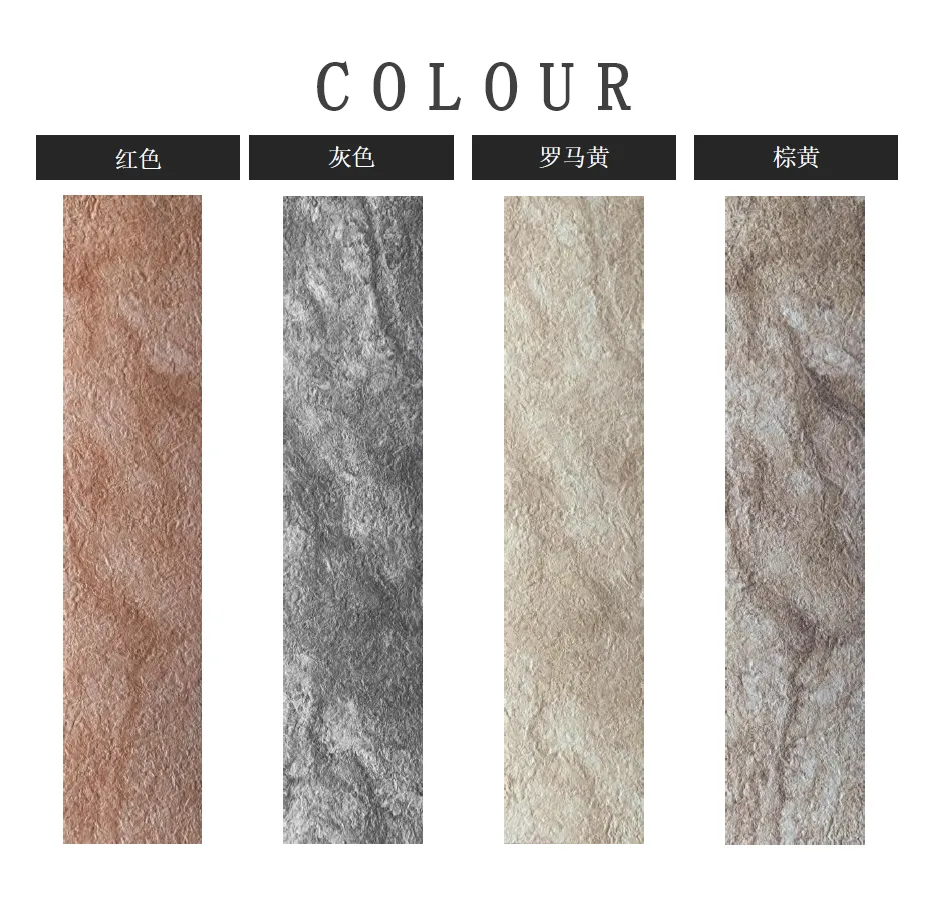
Walk into any thoughtfully designed space—whether a boutique hotel lobby, a modern home's accent wall, or a historic building's facade—and you'll likely notice it: the quiet power of natural stone. Its texture, depth, and color don't just fill a room; they shape it. Warm beiges evoke calm, deep grays exude sophistication, and vibrant hues spark curiosity. Among the stars of this natural palette is rock cut dolomitic stone —a material prized for its rugged, earthy charm and versatility. But what happens when designers crave a shade that nature didn't quite craft? Enter custom color matching: a blend of art, science, and respect for stone's inherent character. In this article, we'll explore how this process transforms rock cut dolomitic stone, the boundaries it faces, and why striking that balance matters.
Before diving into color, let's get to know the stone itself. Dolomitic stone forms from dolomite, a mineral-rich sedimentary rock that's cousin to limestone but with a higher magnesium content. When quarried and "rock cut," it retains the raw, chiseled texture of its extraction—think rough-hewn surfaces that tell the story of the earth's slow, geological dance. Unlike polished marble or sleek granite, rock cut dolomitic stone wears its character on its sleeve: subtle pits, natural veining, and a tactile quality that invites touch.
You've likely seen its variants without realizing it. Dolomitic travertine (dark grey) brings moody depth to industrial-chic spaces, while dolomitic travertine (claybank) leans into warm, terracotta-inspired tones that feel like a hug from the desert. These natural shades are stunning, but they're just the starting point. Designers today aren't just choosing from nature's catalog—they're asking, "Can we make it sing in this specific hue?"
Imagine a client who dreams of a restaurant with walls that mirror the starry night sky. Or a corporate office wanting to echo its brand's signature teal in every surface. Natural stone's existing palette is vast—think lunar peak silvery (pale, metallic-tinged) or travertine (starry green) (flecked with emerald-like sparkles)—but it's not infinite. Custom color matching bridges that gap, turning a generic material into a storytelling tool.
"Color isn't just visual—it's emotional," says Maria Lopez, a senior designer at a boutique architecture firm in Barcelona. "A space clad in dolomitic travertine (claybank) feels grounded, almost nostalgic. But if we shift that claybank to a softer, peachier tone, suddenly it's airy, youthful. Custom color lets us dial into exactly the mood a project needs."
It's also about cohesion. When designing a campus or a large commercial complex, matching stone colors across buildings ensures a unified identity. A hotel chain might want its signature rona yellow (a warm, golden shade) woven into every lobby's stone accents, tying locations together even as architecture varies.
Custom color matching for rock cut dolomitic stone isn't about slapping paint on a surface. It's a delicate dance with the stone's pores, minerals, and structure. Here's how the magic happens:
Mineral stains are the most common method, and for good reason: they penetrate the stone rather than sitting on top, becoming part of its fabric. These stains are typically water-based and reactive, meaning they bond with the stone's natural minerals (like calcium or magnesium) to create new, stable compounds. The result? Color that looks "lived-in," as if the stone was always that shade.
Take travertine (starry green) —a popular custom option for eco-conscious designs. To achieve that deep, forest-like hue with subtle sparkles, craftsmen mix iron-based stains with microscopic metallic particles. The stain seeps into the stone's pores, while the particles catch light, mimicking the way sunlight filters through leaves. It's not just color; it's a texture story.
For clients craving a touch of luxury, metallic surface coatings deliver. Unlike stains, these are thin, translucent layers applied to the stone's surface, often using spray or brush techniques. They're ideal for creating finishes like lunar peak silvery —a cool, iridescent shade that evokes moonlight on rock.
"The key is to keep the stone's texture visible," explains Javier Ruiz, a stone finisher with 15 years of experience. "If you overdo the metallic, you lose that raw, rock-cut feel. We apply the coating in thin layers, letting the stone's pits and ridges peek through. It's like giving the stone a subtle glow, not a mask."
When designers need a color that's consistent across large surfaces—say, a hospital wanting calming slate veil white walls—pigment infusion is the way to go. Here, pigments are mixed into a sealant or resin and pressure-injected into the stone's pores. The result is a more uniform color that still allows the stone's natural veining to show through, like a watercolor wash over textured paper.
This technique is often used to enhance existing shades, too. Dolomitic travertine (claybank) , for example, might get a pigment boost to deepen its orange-brown tones, making it richer and more vibrant without straying from its earthy roots.
| Technique | How It Works | Best For | Pro Tip |
|---|---|---|---|
| Mineral Staining | Reactive stains bond with stone minerals | Earthy, natural-looking custom shades (e.g., starry green) | Test on scrap stone first—minerals vary! |
| Metallic Coating | Thin metallic layers applied to surface | Shimmery, light-catching finishes (e.g., lunar peak silvery) | Avoid heavy coats—let texture shine through |
| Pigment Infusion | Pigments mixed into sealant/resin, injected into pores | Uniform, bold colors (e.g., slate veil white) | Pair with a top sealant for durability |
For all its possibilities, custom color matching isn't a free-for-all. Stone is, at its core, a product of nature—and nature doesn't always play by our rules. Here are the key constraints designers and craftsmen must navigate:
Rock cut dolomitic stone is a product of millennia of geological activity, and that means variation is baked in. One slab might have more iron deposits (creating red or orange undertones), while the next could be richer in magnesium (leaning gray or white). These differences can throw off color matching, even with the same staining process.
"I once worked on a project where the client wanted 50 slabs of dolomitic travertine (dark grey) with a custom blue tint," recalls Ruiz. "The first batch came out perfect—deep, moody blue-gray. The second batch? The stone had more calcium, so the blue turned slightly teal. We had to adjust the stain formula on the fly. You learn to embrace the 'happy accidents,' but they can test a designer's patience."
Outdoor spaces pose a unique challenge. Sunlight, rain, and temperature swings can fade or alter custom colors over time. Metallic coatings, for example, may lose their sheen faster in direct UV light, while some mineral stains can bleed or discolor when exposed to heavy moisture.
This is why travertine (starry green) is often recommended for indoor use—its metallic flecks and rich green hue stay vibrant in controlled environments. For exteriors, designers might opt for more stable options like lunar peak silvery , which uses UV-resistant coatings to stand up to the elements.
There's a fine line between enhancing stone's beauty and overshadowing it. A neon pink rock cut dolomitic stone might technically be possible, but it risks looking artificial—a far cry from the material's organic appeal. "Stone has a soul," says Lopez. "If the color feels like it belongs, it elevates the space. If it feels like a sticker, it cheapens it."
This is why many designers stick to earthy, nature-inspired custom shades—think rusty red , cloud-dragon (a mottled gray-white), or gold sand . These hues complement the stone's inherent character rather than fighting it.
So, how do professionals navigate these challenges? It starts with collaboration: designers, stone suppliers, and finishers working together from the start. Suppliers can source slabs from the same quarry batch to minimize variability. Finishers can test color formulas on sample slabs, letting clients approve the shade before full production. And designers can embrace the stone's natural quirks, using variation as a design feature rather than a flaw.
Take the example of a recent boutique hotel in Lisbon, which wanted to blend lunar peak silvery accents with rock cut dolomitic stone (claybank) walls. The team sourced 20 slabs from the same quarry, tested three metallic coating thicknesses, and ultimately used the slight color variation between slabs to create a "gradient wall"—darker at the base, lighter at the top—mimicking the way light plays on natural rock formations. The result? A space that feels both curated and authentic.
Custom color matching for rock cut dolomitic stone is more than a technical process—it's a dialogue between human creativity and the earth's ancient artistry. It allows designers to push boundaries, create spaces that tell unique stories, and infuse personality into otherwise neutral materials. But it also demands respect: for the stone's natural variability, its durability needs, and its inherent beauty.
Whether it's the starry sparkle of travertine (starry green) , the cool shimmer of lunar peak silvery , or the warm depth of custom-tinted dolomitic travertine (claybank) , the best color-matched stone feels like it was always meant to be that way—like nature, with a little help from us, finally got the memo on the perfect shade.
In the end, that's the magic: not just creating color, but creating harmony—between design vision and the timeless, rugged charm of rock cut dolomitic stone.
Recommend Products












