
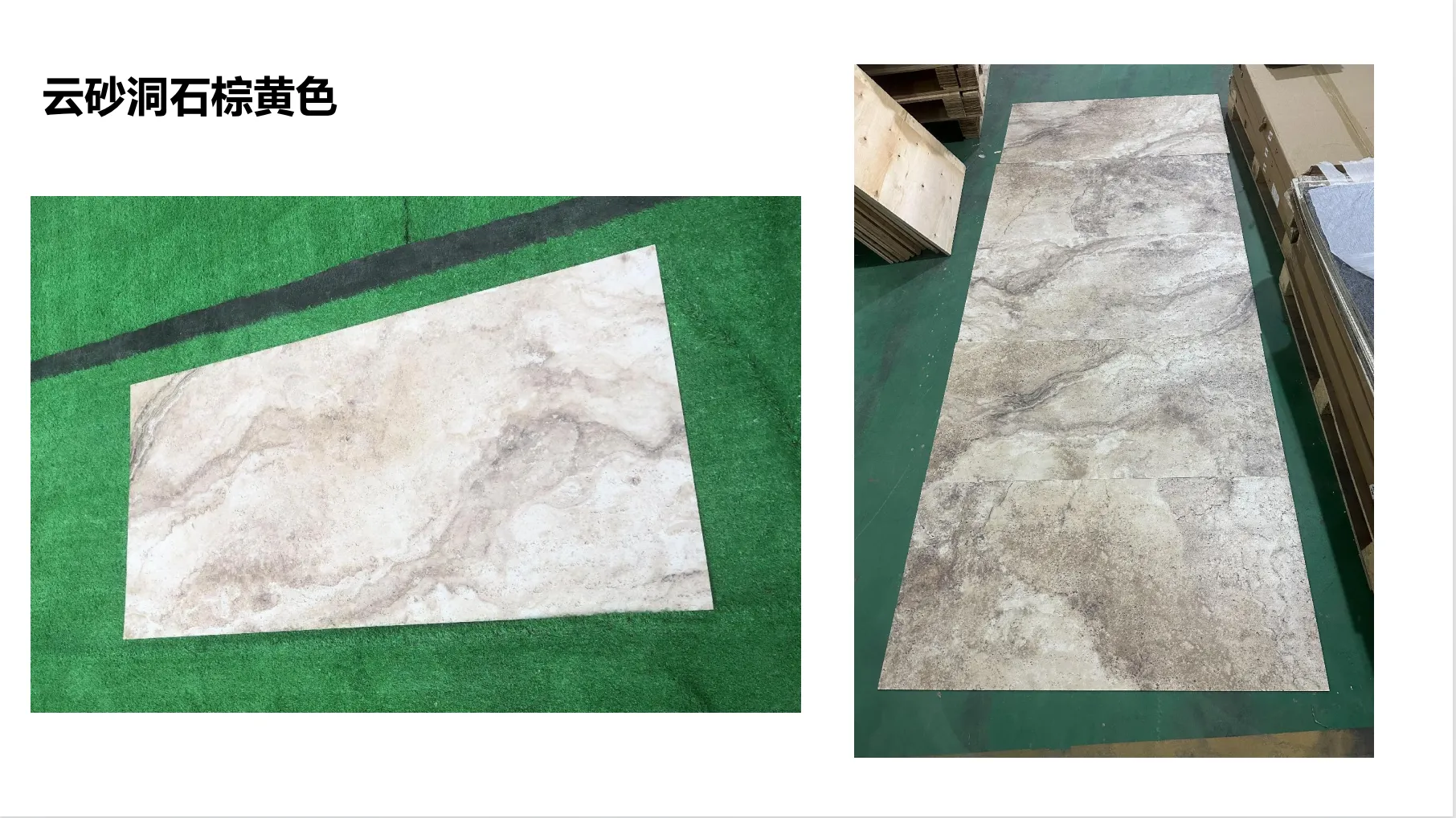
Architecture is more than steel beams and concrete walls—it's a language. It speaks through textures, colors, and forms, telling stories of culture, history, and human connection. In this dialogue between structure and soul, materials aren't just building blocks; they're the words that shape the narrative. Among these materials, dolomitic travertine (claybank) stands out as a quiet poet, its warm, earthy hue and soft, veined texture inviting both touch and thought. When paired with custom engraving, it transforms from a surface into a canvas, where every groove and curve carries meaning. Today, we're diving into how custom engraving on dolomitic travertine (claybank)—paired with innovations like MCM Flexible Stone , accents of Lunar Peak Golden , and scalable solutions like Architectural Big Slab Solutions —is redefining what architecture can feel like: personal, intentional, and alive with story.
Before we talk about engraving, let's get to know the star of the show: dolomitic travertine (claybank). Unlike the stark whites or bold grays of some stones, this material wears its character softly. Picture a warm, sunbaked clay hue—earthy, grounding—with subtle veins that meander like ancient rivers. It's porous, yes, but that's part of its charm: the texture catches light and shadow, making every surface feel dynamic, never flat. Run your hand over it, and you'll feel the gentle roughness, a reminder that this stone isn't mass-produced; it's shaped by time, pressure, and the quiet work of nature.
What makes dolomitic travertine (claybank) ideal for custom engraving? For starters, its density. It's firm enough to hold fine details—think delicate floral patterns or crisp typography—yet soft enough that artisans can carve with intention, letting the stone guide their tools. Unlike brittle materials that chip or crumble, this travertine ages like a well-loved book: its edges soften, its color deepens, and the engraved lines become more pronounced over time, as if the stone itself is nurturing the stories etched into it. It's also surprisingly versatile. Whether used for a grand facade, a cozy fireplace surround, or a walkway that invites visitors to slow down and read, dolomitic travertine (claybank) adapts, making every space feel rooted in both history and modernity.
Custom engraving isn't just about adding patterns to stone—it's about collaboration. It starts with a conversation: an architect dreams of a wall that tells the story of a neighborhood's founding; a designer imagines a hotel lobby where guests feel they're stepping into a local legend; a homeowner wants their backyard patio to honor family traditions. Then, artisans step in, translating those visions into something tangible. Today, engravers blend age-old techniques with modern precision, ensuring that every mark serves a purpose.
Take hand chiseling, for example. There's an intimacy to it—each strike of the hammer is guided by the artisan's intuition, resulting in organic, slightly imperfect lines that feel human. It's perfect for projects that celebrate heritage, like a community center's exterior where local elders' stories are engraved in looping, handwritten script. On the flip side, laser engraving offers pinpoint accuracy, ideal for contemporary designs with sharp angles or intricate geometric patterns. Imagine a tech startup's office wall, where a dolomitic travertine (claybank) panel is engraved with a minimalist map of the city's innovation districts—clean lines, precise proportions, a nod to progress without losing warmth.
But here's the magic: the stone itself influences the art. The natural veins in dolomitic travertine (claybank) become part of the design—an unexpected curve might turn a simple leaf motif into a dance of light, or a darker vein could emphasize a key word in an engraved quote. It's a reminder that great architecture isn't about controlling nature, but partnering with it. And when paired with complementary materials like MCM Flexible Stone —a lightweight, durable alternative that bends to curved surfaces—designers can extend that storytelling even further, creating seamless transitions from engraved travertine walls to flexible stone ceilings, wrapping visitors in a cohesive narrative.
Custom engraving on dolomitic travertine (claybank) isn't just decorative—it's a tool for connection. Let's walk through a few real-world examples where this combination has turned ordinary spaces into something unforgettable.
In the heart of a historic district in Lisbon, a new museum dedicated to local maritime history wanted its exterior to reflect the stories of the sailors, merchants, and fishermen who shaped the city. The architects chose dolomitic travertine (claybank) for the facade, drawn to its ability to weather gracefully, much like the district itself. Custom engravers then set to work, etching large-scale maps of 17th-century trade routes into the stone, along with snippets of sailors' journals—"The sea is a harsh mistress, but she gives more than she takes"—scrawled in a font that mimics old logbooks. To add depth, they paired the travertine with Architectural Big Slab Solutions , using oversized panels to minimize seams and create a continuous "page" of history. The result? A building that doesn't just house artifacts—it becomes one, inviting passersby to reach out and trace the paths of those who came before.
Not all stories are loud. Sometimes, the most powerful narratives are told in whispers. Take a boutique hotel in Tokyo, where the design ethos is "calm luxury." The lobby features a 20-foot wall of dolomitic travertine (claybank), engraved with a single, continuous line that loops and curls like a Zen garden's raked sand. No words, no images—just a gesture that invites guests to pause, breathe, and find their own meaning in the flow. To balance the travertine's earthiness, the designers added accents of Lunar Peak Golden —a shimmering stone with warm, metallic veins—in the reception desk and lighting fixtures. The contrast is striking: the claybank travertine grounds the space, while the Lunar Peak Golden adds a touch of quiet opulence, like sunlight filtering through bamboo. It's a masterclass in how custom engraving can elevate minimalism from "cold" to "contemplative."
In Santa Fe, a community center serving Indigenous and Latino residents wanted its walls to celebrate the area's diverse cultural roots. The solution? A mix of materials that honor both tradition and innovation. The main hall features MCM Flexible Stone panels—chosen for their flexibility to create a curved, womb-like space—engraved with traditional Navajo geometric patterns and Mexican folk art motifs. Adjacent to it, a outdoor courtyard uses dolomitic travertine (claybank) pavers, each engraved with a single word in Spanish, English, and Navajo: "community," "familia," "tłʼááshchíní." Kids run their fingers over the words as they play; elders sit on benches and trace the patterns, sharing stories of what each symbol means. It's architecture that doesn't just serve a function—it fosters belonging.
| Material | Key Features | Best For | Aesthetic Vibe |
|---|---|---|---|
| Dolomitic Travertine (Claybank) | Earthy clay hue, natural veins, porous texture, ideal for hand or laser engraving | Historical narratives, warm interiors, outdoor pathways | Timeless, grounded, storybook-esque |
| MCM Flexible Stone | Lightweight, bendable, durable, available in diverse finishes | Curved surfaces, high-rise exteriors, cultural motifs | Versatile, modern, adaptable |
| Lunar Peak Golden | Metallic golden veins, smooth finish, light-reflective | Accent walls, lighting fixtures, luxury interiors | Warm, opulent, sunlit |
In a world where "green building" is no longer a trend but a responsibility, the materials we choose matter—and custom engraving on dolomitic travertine (claybank) aligns with this ethos beautifully. Dolomitic travertine is a natural stone, quarried with minimal processing, and its durability means it rarely needs replacement, reducing waste over time. Even better, MCM Flexible Stone is engineered to be eco-friendly: it's made with recycled materials, low-VOC adhesives, and requires less energy to transport than heavy natural stone, making it a smart choice for large-scale projects aiming for LEED certification.
But sustainability isn't just about the materials—it's about the spaces they create. A building engraved with stories of community resilience might inspire residents to care for it more deeply, reducing vandalism and extending its lifespan. A hotel using locally sourced dolomitic travertine (claybank) and MCM Flexible Stone tells guests that the brand values both beauty and the planet, fostering loyalty. It's a circular idea: when we build with intention, using materials that honor the earth and the people who inhabit it, we create spaces that last—physically, emotionally, and culturally.
At the end of the day, architecture is about more than keeping the rain out or the heat in. It's about creating environments that shape how we feel, how we connect, and how we remember. Custom engraving on dolomitic travertine (claybank)—enhanced by materials like MCM Flexible Stone, Lunar Peak Golden, and scalable solutions like Architectural Big Slab Solutions—does exactly that. It turns walls into storytellers, floors into conversation starters, and buildings into living, breathing testaments to what matters: our histories, our cultures, our shared humanity.
So the next time you walk into a space and feel an connection—a sense that the walls "know" something—take a closer look. Chances are, you're standing before a canvas of stone, etched with care, waiting to share its story. And in that moment, you're not just in a building. You're in a dialogue—with the past, with the present, and with the hands that crafted something beautiful, meaningful, and uniquely human.
Recommend Products












