
Every space has a story to tell. Whether it's the quiet warmth of a home, the dynamic energy of a café, or the timeless elegance of a public gallery, the materials that shape these environments are more than just building blocks—they're storytellers. In a world where mass-produced uniformity often dominates, there's a growing hunger for designs that feel alive, authentic, and deeply connected to the natural world. Enter custom gradient color rammed earth boards: a material that doesn't just cover walls, but evokes emotion , honors tradition , and unfolds like a landscape within the spaces we inhabit.
Imagine walking into a room where the wall isn't a flat, static surface, but a canvas of earthy hues—soft terracottas blending into warm ambers, dusty greens melting into muted golds, or deep umbers fading into gentle grays. These are the gradients of gradient color rammed earth boards, each panel a snapshot of the earth's own palette, frozen in time through artisanal craftsmanship. They're not just "materials"; they're bridges between the built environment and the natural world, bringing the calm of a mountain range, the warmth of a desert sunset, or the serenity of a forest floor into the places we live, work, and gather.
At their core, gradient color rammed earth boards are a modern reimagining of an ancient building technique: rammed earth. For centuries, civilizations across the globe—from the Great Wall of China to the adobe villages of the American Southwest—used rammed earth to create structures that stood strong against time and the elements. Today, this tradition meets innovation in gradient color rammed earth boards, which blend natural materials like soil, sand, clay, and mineral pigments with advanced manufacturing processes to create panels that are both durable and breathtakingly beautiful.
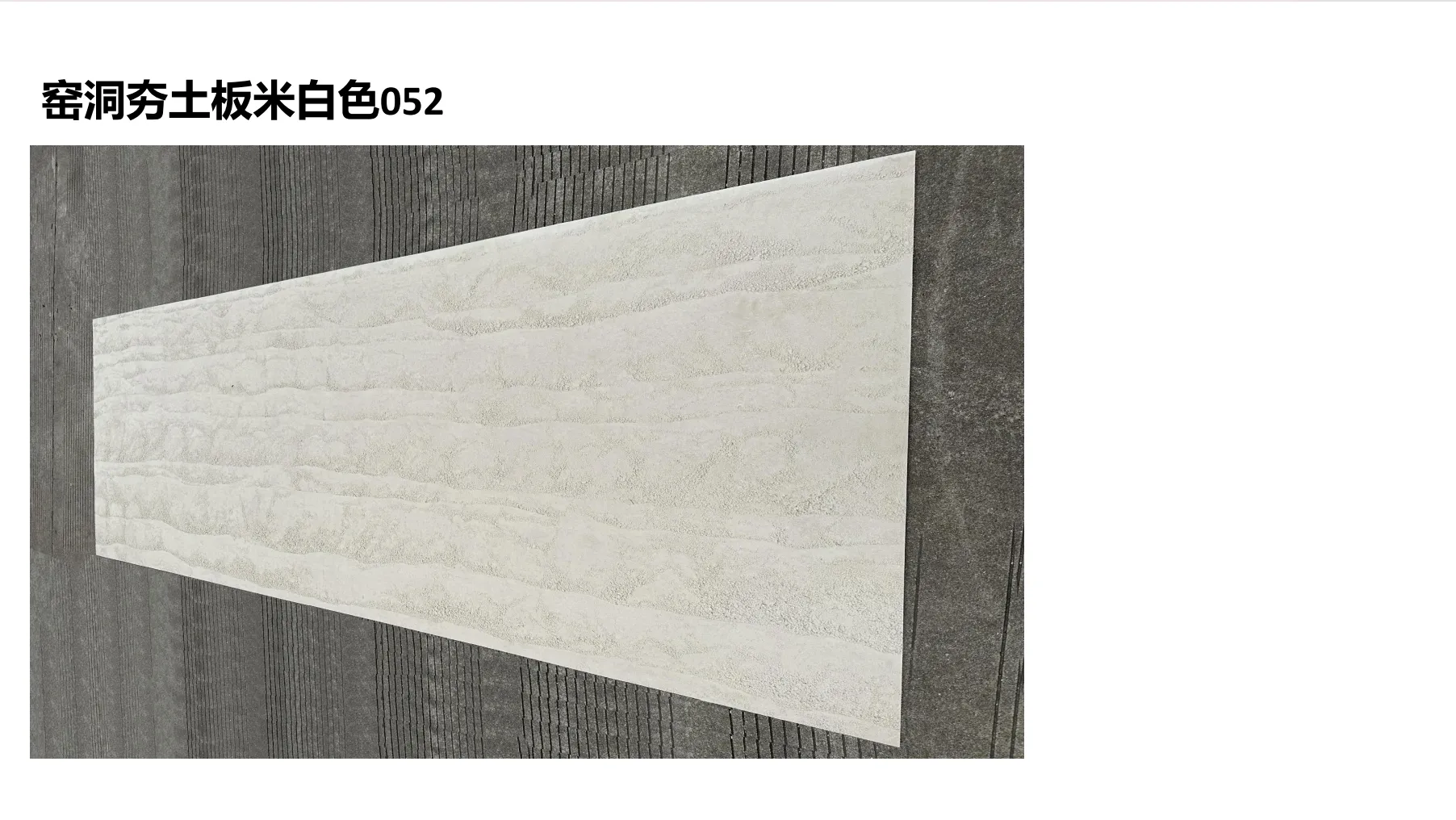
What sets gradient color rammed earth boards apart is their color transition . Unlike solid-colored materials, these boards feature subtle, organic shifts in hue—think of the way sunlight paints a hillside at dawn, or how layers of sediment build up in a riverbed. Each panel is crafted by compressing layers of pigmented earth into a mold, allowing the colors to intermingle slightly at the edges, creating a look that's impossible to replicate with machines. The result? A surface that feels less like a man-made product and more like a piece of the earth itself, extracted gently and preserved with care.
And while they honor tradition, these boards don't shy away from modern practicality. Thanks to innovations like MCM flexible stone technology, gradient rammed earth boards are lighter, more durable, and easier to install than traditional rammed earth. They can be cut to size, curved around corners, or applied to both interior and exterior surfaces, making them a versatile choice for designers who refuse to compromise on beauty or functionality.
In design, texture and color are the quiet conductors of emotion. A smooth, cold surface might evoke sterility; a rough, warm one might feel like a hug. Gradient color rammed earth boards master both, offering a sensory experience that goes beyond the visual.
No two gradient panels are identical. The way pigments blend, the density of each layer, and the pressure applied during ramming all create unique patterns. A single board might shift from "rammed earth board (khaki)" to "rammed earth board (gradient C)" in a way that mimics the fade of light over a valley—subtle enough to feel cohesive, but dynamic enough to keep the eye moving.
Run a hand across a gradient rammed earth board, and you'll feel the texture of the earth itself—fine grains of sand, the slight resistance of compacted clay, the gentle rise and fall of color transitions. It's a far cry from the smooth, lifeless surface of synthetic materials. This tactile quality turns walls into interactive elements; people don't just look at them—they touch them, connecting with the space on a deeper level.
Made from natural, locally sourced materials, gradient rammed earth boards have a minimal carbon footprint. They require little energy to produce (unlike "foamed aluminium alloy board (vintage silver)" or "polish concrete," which rely on industrial processes), and their durability means they won't need to be replaced for decades. In a world craving eco-conscious design, they're a choice that aligns with both aesthetics and ethics.
To truly appreciate the uniqueness of gradient color rammed earth boards, it helps to see how they compare to other popular design materials. Below is a snapshot of how they measure up against two widely used options: fair-faced concrete and travertine (starry blue) .
| Material | Aesthetic Vibe | Texture | Emotional Resonance | Sustainability |
|---|---|---|---|---|
| Gradient Color Rammed Earth Boards | Organic, earthy, dynamic color transitions (e.g., khaki to matcha green) | Warm, grainy, slightly uneven—like a handcrafted landscape | Evokes calm, connection to nature, nostalgia for simpler times | High: Made from natural, local materials; low energy production |
| Fair-Faced Concrete | Minimalist, industrial, monochromatic (gray, off-white) | Cool, smooth to slightly rough; uniform and consistent | Feels modern, sleek, but can lack warmth in residential spaces | Moderate: Requires cement production (high CO2); durable but heavy |
| Travertine (Starry Blue) | Timeless, elegant, with subtle veining and metallic flecks | Polished or honed; smooth with natural pits and pores | Conveys luxury, sophistication, but can feel formal | Moderate: Natural stone but requires mining and transportation |
What stands out? Gradient rammed earth boards offer a middle ground that's hard to find: the warmth of natural materials, the uniqueness of a handcrafted product, and the versatility to fit both cozy homes and bold commercial spaces. They don't just compete with other materials—they complement them. Imagine pairing a gradient rammed earth accent wall with "lunar peak silvery" metal accents, or using it as a backdrop for "weaving (khaki)" textiles—the contrast of textures would create a space that feels layered and alive.
Gradient color rammed earth boards aren't just beautiful—they're surprisingly adaptable. From intimate home nooks to grand public spaces, they bring their earthy charm to any setting. Here are a few ways designers are using them to transform spaces:
In a modern mountain home, a gradient rammed earth feature wall in the living room becomes the focal point. Blending "rammed earth board (gradient B)" (soft beiges) with "rammed earth board (matcha green)," it mirrors the forest outside, creating a seamless flow between interior and exterior. At night, warm lighting highlights the color transitions, turning the wall into a quiet work of art that calms the mind after a long day.
A small café in the city uses gradient rammed earth boards behind the counter, transitioning from "rammed earth board (light yellow)" to "rammed earth board (rusty red)." The colors evoke the warmth of coffee beans roasting, the glow of sunrise, and the coziness of a morning ritual. Customers don't just come for the coffee—they stay for the feeling of being wrapped in a space that feels both familiar and special.
A museum dedicated to local history uses gradient rammed earth boards in its entrance hall, blending "historical pathfinders stone" tones with modern gradients. The walls tell a story of the land itself—how it's evolved over time, and how human hands have shaped it gently. Visitors feel a sense of reverence, not just for the artifacts inside, but for the earth that sustained the community for generations.
Behind every gradient color rammed earth board is a process that marries old-world skill with modern precision. It's not just manufacturing—it's craftsmanship , where each step is guided by an understanding of how earth behaves, how colors blend, and how texture breathes life into a surface.
The result? A board that bears the marks of human hands—the slight unevenness of the ramming, the unique blend of colors, the warmth of natural materials. It's a far cry from the uniformity of factory-made products, and that's exactly the point. In a world that values speed and sameness, gradient rammed earth boards celebrate slowness, imperfection, and the beauty of the unique.
Design is about solving problems—how to make a space functional, how to reflect a client's personality, how to create joy. Gradient color rammed earth boards solve a problem that's often overlooked: the hunger for authenticity . Here's why designers are choosing them for their most ambitious projects:
At the end of the day, design is about creating spaces that make us feel something. A well-chosen material doesn't just fill a room—it transforms it into a place where memories are made, where stories are told, where we feel truly at home. Gradient color rammed earth boards do exactly that: they turn walls into landscapes, surfaces into stories, and houses into homes.
Whether you're designing a cozy reading nook, a bustling restaurant, or a community center, these boards offer something rare: beauty with purpose, craftsmanship with heart, and a connection to the earth that's becoming all too precious. They're not just a trend—they're a return to what matters: authenticity, sustainability, and the quiet power of natural beauty.
So why settle for a space that feels like every other? Choose gradient color rammed earth boards, and let your space tell a story that's as unique as you are—one that honors the past, celebrates the present, and embraces the future, one beautiful, earthy gradient at a time.
Recommend Products












