
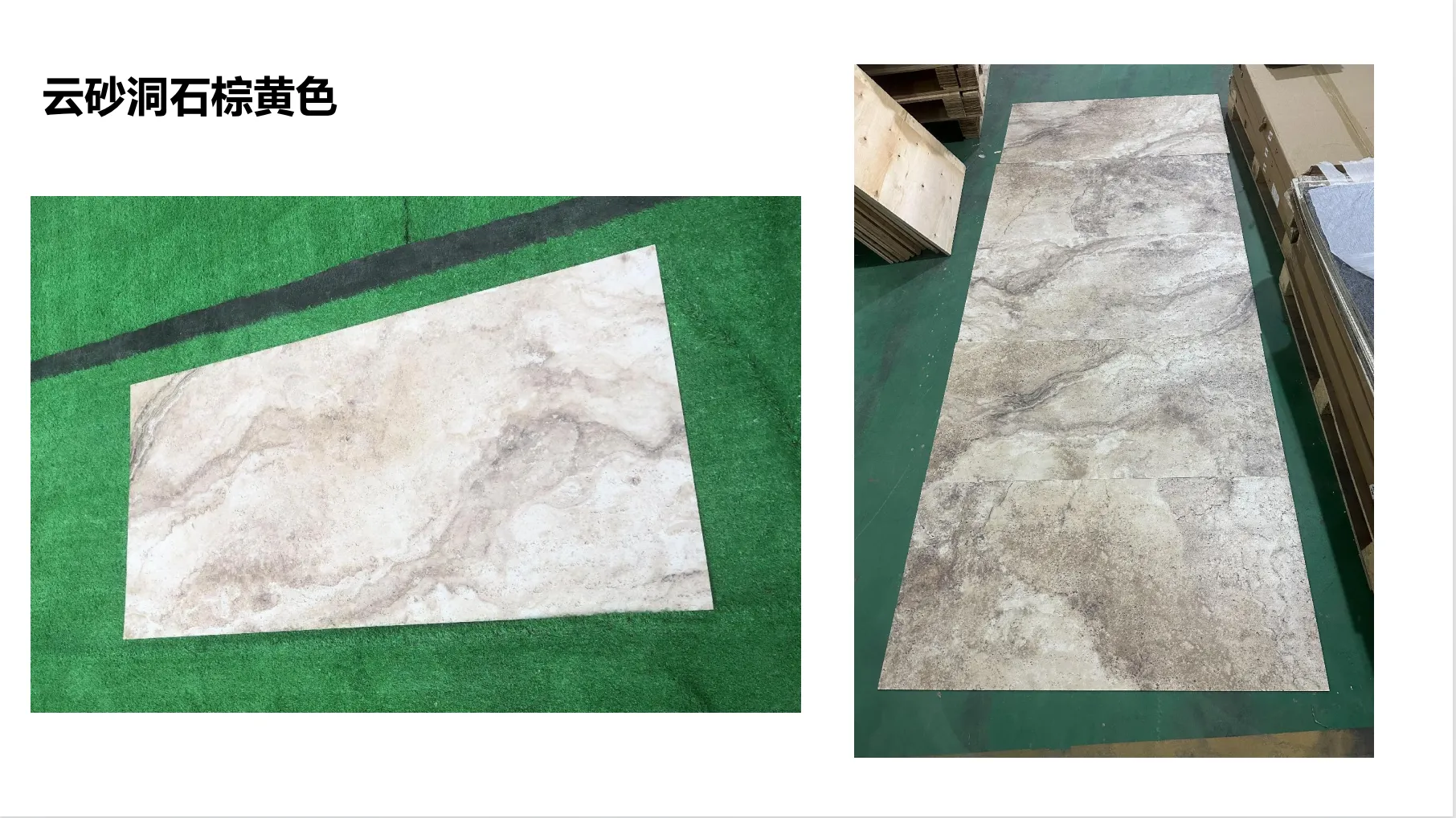
When you walk into a space that feels effortlessly cohesive—where the walls, floors, and even the countertops seem to speak the same design language—there's often a quiet hero behind that harmony: the materials chosen, and how they've been tailored to fit the vision. For architects and designers who crave both natural beauty and precision, Dolomitic Travertine (Claybank) has emerged as a standout choice, and much of its appeal lies in something surprisingly practical yet deeply impactful: custom sizing options. In the world of construction, where one size rarely fits all, the ability to shape a material to the exact dimensions of a project isn't just a convenience—it's the difference between a design that feels forced and one that feels inevitable. Let's dive into why Dolomitic Travertine (Claybank) is turning heads, and how its custom sizing options are empowering creators to build spaces that tell a more intentional story.
First, let's get to know the star of the show. Dolomitic Travertine (Claybank) isn't your average stone. Part of the broader MCM flexible stone family—a category celebrated for blending the organic allure of natural stone with the durability and adaptability of modern composites—it stands out for its warm, earthy claybank hue. Picture a palette that sits somewhere between sun-baked terracotta and soft sand, swirled with delicate veins of cream and taupe. It's a color that feels both rooted in nature and surprisingly versatile, complementing everything from minimalist modern interiors to rustic, heritage-inspired exteriors.
But what truly sets it apart is its structure. Unlike brittle natural stones that crack under stress, Dolomitic Travertine (Claybank) benefits from MCM technology, which layers natural stone particles with reinforced polymers. This gives it the best of both worlds: the authentic look and texture of travertine, with the flexibility to be shaped into large, thin slabs without sacrificing strength. And when paired with the MCM big slab board series —a line engineered specifically for large-scale architectural needs—it becomes a powerhouse for projects that demand both grandeur and precision.
Imagine designing a 12-meter-long feature wall for a luxury hotel lobby. You've dreamed of a seamless expanse, where the stone flows like a single, unbroken canvas. But if your material only comes in standard 2-meter slabs, you're suddenly staring at five visible seams—each one a tiny interruption in the story you're trying to tell. Worse, cutting those slabs to fit creates waste, drives up labor costs, and risks damaging the stone's natural pattern. This is where custom sizing steps in, and it's not just about aesthetics. It's about respect for the material, efficiency in construction, and the freedom to let a design breathe.
Custom sizing options for Dolomitic Travertine (Claybank) slabs allow architects and contractors to order stone cut to the exact dimensions a project demands. No more forcing a square peg into a round hole. Whether you need a 3-meter-long slab for a cantilevered countertop, a 10mm-thin panel for a lightweight facade, or a uniquely shaped piece to follow the curve of a circular room, the ability to tailor size means the material serves the design—not the other way around. It's a shift that turns "good enough" into "exactly right."
So, what exactly can you customize when it comes to Dolomitic Travertine (Claybank) slabs? Let's break it down. The MCM big slab board series offers a range of base dimensions, but the real magic is in how far you can push those boundaries. Below is a breakdown of standard and custom options, designed to give you a sense of what's possible:
| Slab Thickness | Standard Width Range | Standard Length Range | Customization Limits | Best For |
|---|---|---|---|---|
| 10mm | 600mm – 1200mm | 1200mm – 2400mm | Width up to 1500mm; Length up to 3000mm (special order) | Vertical applications (feature walls, backsplashes, interior facades) |
| 15mm | 800mm – 1400mm | 1500mm – 2700mm | Width up to 1600mm; Length up to 3200mm (4-week lead time) | Horizontal/vertical hybrid (floors, low-traffic walls, countertops) |
| 20mm | 1000mm – 1600mm | 2000mm – 3000mm | Width up to 1800mm; Length up to 3600mm (engineer approval required) | High-traffic floors, exterior facades, heavy-duty countertops |
| 30mm+ (Heavy-Duty) | 1200mm – 1800mm | 2400mm – 3000mm | Custom thickness up to 50mm; Length up to 4000mm (project-specific quote) | Outdoor patios, pool surrounds, structural elements (e.g., benches) |
Let's unpack this. Thickness is a key variable, as it dictates both weight and application. For example, 10mm slabs are lightweight enough to be installed on interior walls without additional structural support, making them ideal for feature walls or kitchen backsplashes where you want to add texture without weighing down the space. On the flip side, 20mm slabs are tough enough to handle the wear and tear of a busy restaurant floor or an exterior facade exposed to rain, wind, and UV rays.
Width and length customization, though, is where the creativity really kicks in. Take the 20mm thickness option: standard lengths max out at 3000mm, but with a special order and engineer approval, you can push that to 3600mm. That's 12 feet of uninterrupted stone—enough to span a small room or create a dramatic entranceway without a single seam. And for projects with unique shapes? While the table focuses on rectangles, the MCM flexible stone technology also allows for custom cuts, including curves, angles, and even intricate patterns, as long as the structural integrity is maintained.
At this point, you might be thinking, "Custom sounds great, but isn't it more expensive?" It's a fair question, but the reality is that custom sizing often saves money in the long run—and delivers value that goes beyond the bottom line. Let's break down the benefits:
1. Reduced Waste, Lower Costs: When you order slabs cut to your exact dimensions, there's less cutting on-site. Less cutting means less material wasted (no more piles of leftover stone fragments in the dumpster) and less labor time spent trimming and fitting. Over a large project, these savings add up fast. A recent study by the Construction Waste Reduction Network found that custom-sized materials can reduce on-site waste by up to 30% compared to standard sizes—translating to thousands of dollars saved on disposal and material costs.
2. Aesthetic Cohesion: Seams aren't just functional; they're visual cues. Too many can make a space feel choppy or disjointed, while too few can create a sense of calm and expansiveness. Custom sizing lets you control the rhythm of the stone. For example, a residential bathroom with a 2.5m ceiling can use 2.5m-tall slabs for the shower walls, eliminating the need for a horizontal seam that would break the eye line. The result? A space that feels larger, more intentional, and almost sculptural in its simplicity.
3. Flexibility for Complex Designs: Not all buildings are box-shaped, and not all designs follow straight lines. Think of a museum with a curved facade, a boutique store with a sloped ceiling, or a home with a spiral staircase wrapped in stone. These projects demand materials that can adapt, and Dolomitic Travertine (Claybank)'s custom sizing (paired with its inherent flexibility) makes it possible. Architects no longer have to compromise on bold ideas—they can let the design lead, and the stone follow.
4. Sustainability: In an era where green building practices are non-negotiable, reducing waste is a critical goal. Custom sizing aligns with circular economy principles by ensuring every slab is used to its full potential. And because Dolomitic Travertine (Claybank) is part of the MCM flexible stone family, it also requires less raw natural stone to produce than solid slabs—meaning a smaller environmental footprint from quarry to construction site.
Dolomitic Travertine (Claybank) with custom sizing isn't a one-trick pony. Its versatility makes it suitable for a wide range of projects, from intimate residential spaces to sprawling commercial complexes. Let's explore a few scenarios where custom sizing truly elevates the result:
Commercial Spaces: Making a Statement
Consider a high-end retail mall in Dubai, where the design team wanted the atrium to feel like a "canyon of light." The vision called for 10m-tall walls lined with stone, but standard slabs would have required five seams per wall—hardly the seamless effect they imagined. By working with the
MCM big slab board series
, they ordered custom 5m-long slabs (stacked vertically with minimal vertical seams) in 15mm thickness (light enough to hang without excessive structural support). The result? A space where the stone rises like cliffs, with light filtering through the atrium glass and playing across the travertine's natural texture. Shoppers don't just walk through the mall—they feel immersed in it.
Residential Design: Tailored to Life
For homeowners, custom sizing is about making a house feel like a home. Take the example of a family in Portland, Oregon, who wanted their kitchen to blend rustic warmth with modern efficiency. They chose Dolomitic Travertine (Claybank) for the countertops and backsplash, but with a twist: the island is an L-shape with a 3.2m-long straight section. Instead of using two standard 1.6m slabs (which would have created a seam right in the middle of the counter), they ordered a single 3.2m custom slab. Now, when they host dinner parties, the island feels like a single, communal gathering place—no awkward seam dividing the prep space from the serving area. It's a small detail, but one that makes daily life feel more connected.
Heritage Restoration: Honoring the Past, Building the Future
Restoring a historic building is a delicate dance between preservation and progress. Many older structures use stone sizes that are no longer standard, making repairs or additions challenging. A recent project in Rome, for example, involved restoring a 19th-century villa's exterior walls, which featured irregularly sized travertine blocks. Using custom-sized Dolomitic Travertine (Claybank) slabs, the restoration team was able to match the original dimensions exactly—ensuring the new stone blended seamlessly with the old, while adding modern durability. It's a testament to how custom sizing can bridge the gap between history and innovation, allowing heritage buildings to stand strong for another century.
Of course, Dolomitic Travertine (Claybank) isn't the only stone in the game. Let's compare it to a few popular alternatives to see why its custom sizing options give it an edge:
vs. Historical Pathfinders Stone: A beloved choice for heritage projects, Historical Pathfinders Stone is prized for its weathered, rustic charm. However, its natural brittleness makes large custom slabs risky—too much weight or stress, and it cracks. Dolomitic Travertine (Claybank), with its reinforced MCM structure, offers similar warmth but with the flexibility to go bigger and bolder without fear of damage.
vs. Lime Stone (Beige): Limestone is classic, but it's porous and prone to staining, which limits its use in high-moisture areas like bathrooms or kitchens. Dolomitic Travertine (Claybank) has a denser surface (thanks to MCM technology) and better resistance to water and stains, making it more versatile. Plus, its claybank hue offers a richer, more dynamic color than the often-pale beige of limestone.
vs. Foamed Aluminium Alloy Board (Vintage Silver): Metal panels are sleek and modern, but they lack the organic texture of stone. For projects that want industrial edge with natural warmth, Dolomitic Travertine (Claybank) is a happy medium. And while aluminum can be custom-sized, it doesn't offer the same depth of color variation or tactile appeal as travertine.
To get a real sense of how custom sizing impacts day-to-day design work, I spoke with Maria Gonzalez, a principal architect at Studio Mosaic, a firm specializing in luxury commercial and residential projects. Here's what she had to say:
Gonzalez's sentiment is echoed by contractors, too. John Patel, a project manager at BuildRight Construction, notes: "From a construction standpoint, custom-sized slabs mean fewer deliveries, less cutting on-site, and fewer callbacks for repairs. When the stone fits perfectly the first time, the whole project moves faster, and the client is happier. It's a win-win."
In the end, construction is about more than just putting up walls—it's about creating spaces that shape how we live, work, and connect. Dolomitic Travertine (Claybank) with custom sizing options isn't just a material; it's a tool for intentionality. It lets designers say, "This is exactly how I imagined it," and contractors say, "We can build that—efficiently, sustainably, and beautifully."
Whether you're designing a skyscraper's facade, a cozy kitchen, or a historic restoration, the ability to tailor your stone to the project's unique needs is transformative. It turns "good design" into "unforgettable design," and "construction" into "craftsmanship." And in a world that often prioritizes speed over substance, that's a rare and precious thing.
So, the next time you walk into a space that takes your breath away, take a closer look at the stone. Chances are, it's not just any stone—it's a stone that was made to fit. And in that fit, there's a story: of a designer's vision, a material's potential, and a project that refused to settle for "good enough." Dolomitic Travertine (Claybank) isn't just building spaces—it's building stories. And isn't that what great architecture is all about?
Recommend Products












