
Ever walked into a room and thought, "This space feels… right"? Maybe it's the way the materials flow, the colors complement each other, or the little details that make it feel uniquely yours. But behind that "right" feeling often lies a hidden challenge: finding building materials that don't just fit the measurements on paper, but fit the vision in your head. Whether you're a homeowner redoing a backsplash, an architect designing a commercial lobby, or a DIY enthusiast building a outdoor bench, the struggle is real: standard sizes feel limiting, generic finishes clash with your style, and off-the-shelf options leave you compromising on what you truly want. That's where customizable poly wood board steps in—not just as a material, but as a collaborator in bringing your project to life. It's not about settling. It's about creating space that feels like an extension of who you are.
Let's start with the obvious: no two projects are the same. A tiny urban apartment with quirky angled walls has different needs than a sprawling suburban home with open-concept rooms. A café aiming for a cozy, rustic vibe needs different materials than a high-tech startup office going for sleek minimalism. Standard building materials—those 4x8 sheets or one-size-fits-all textures—were designed for efficiency, not. They work for mass production, but they don't account for the way we actually live and create. Maybe you need a 5'7" panel to cover that awkward gap above your fireplace, or a finish that matches the faded red of your grandmother's old barn wood. Customization isn't a luxury; it's the bridge between "good enough" and "exactly right."
And it's not just about aesthetics. Custom-sized materials cut down on waste—no more hacking a 4x8 sheet into pieces and throwing away 30% of it because it doesn't fit. Custom finishes mean you're not stuck with a texture that collects dust in your kitchen or fades in the sun on your patio. When a material is tailored to your project, it performs better, lasts longer, and feels more intentional. That's the promise of poly wood board: a material built to bend to your vision, not the other way around.
Let's talk about size first—because if the measurements are off, nothing else matters. Standard poly wood boards typically come in 4x8 feet or 2x4 feet sheets, which work great for most walls, shelves, or basic furniture. But what if your project isn't "most"? Take, for example, a homeowner in Portland who wanted to line their staircase wall with poly wood panels. The wall, following the staircase's slope, was a irregular shape: 3 feet wide at the bottom, tapering to 2 feet at the top, with a total height of 9'6". Standard sheets would've meant cutting awkward angles, leaving gaps, or overlapping panels—none of which screamed "polished." Instead, they opted for custom-sized poly wood boards, cut to the exact slope and height of each section. The result? A seamless, flowing wall that feels like it was built specifically for that staircase, not just plopped there.
| Aspect | Standard Poly Wood Board | Custom Poly Wood Board |
|---|---|---|
| Width Range | 2ft – 4ft (fixed increments) | 6in – 10ft (any width, in 1in increments) |
| Length Range | 4ft – 8ft (fixed increments) | 1ft – 20ft (any length, depending on project needs) |
| Thickness | 0.5in, 0.75in, 1in (standard options) | 0.25in – 2in (custom thickness for load-bearing or decorative use) |
| Edge Options | Square edge only | Square, beveled, rounded, or custom profiles (e.g., tongue-and-groove) |
The table above barely scratches the surface. Customization isn't just about bigger or smaller—it's about precision. For example, a restaurant in Chicago wanted to create a feature wall using poly wood board panels of varying heights, like a modern art installation. They requested 12 panels, each 18 inches wide but with heights ranging from 3ft to 7ft, spaced 2 inches apart. Standard sheets would've required cutting down 8ft panels for each, wasting material and time. With custom sizing, each panel was cut to exact specs, minimizing waste and ensuring the pattern they envisioned came to life without compromise.
If size is about fitting the space, finish is about fitting the feeling. A poly wood board's finish is what you touch, what catches the light, what tells the story of your project. Do you want it to feel like weathered driftwood, smooth as silk, or rough like a tree bark? Do you need it to glow warm gold in the morning sun or blend into a cool gray palette? Custom finishes turn a blank slate into something with personality—and the options are surprisingly endless.
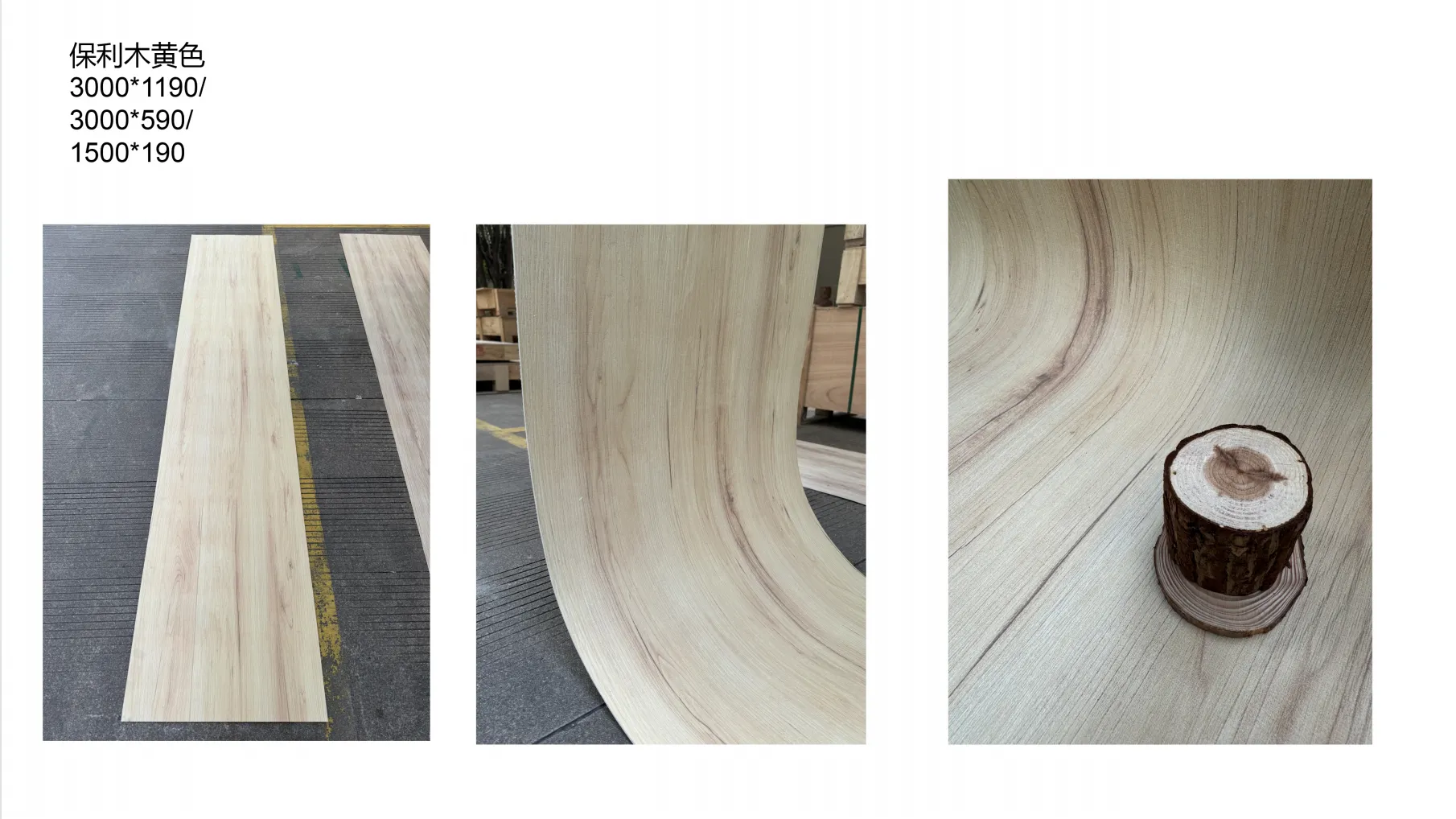
One of the most popular finish options is the wood grain board texture, which mimics the look and feel of real wood without the upkeep. Run your hand over it, and you'll feel the subtle ridges of growth rings, the slight indentations where a branch once grew—details that make it feel alive. But wood grain is just the start. For a more modern look, there's the smooth matte finish, which reflects light softly and works beautifully in minimalist spaces. If you're going for industrial chic, the rough-hewn texture adds depth, like the surface of a reclaimed beam. And for something truly unique, there's the embossed finish—think geometric patterns, abstract designs, or even custom logos for commercial projects. A brewery in Colorado, for example, used poly wood board with an embossed hop pattern on their taproom walls, tying their brand into the space in a way that feels organic, not forced.
Color is personal. What feels "cozy" to one person might feel "dull" to another. That's why customizable poly wood board offers more than just a standard color chart—it offers color matching. Have a specific shade in mind? Bring in a sample—a paint chip, a fabric swatch, even a photo of your favorite sunset—and the finish can be mixed to match. A homeowner in Arizona wanted their outdoor patio ceiling to echo the warm terracotta of the desert at dusk; the custom color they chose isn't on any standard list, but it's exactly what makes their patio feel like an extension of the landscape.
Popular go-to colors include soft beiges that complement natural light, deep grays for sophistication, and warm browns that feel like home. But the fun comes in the outliers: a nursery with pale blue poly wood board walls that look like sky, a home theater with black panels that absorb light and enhance the movie experience, or a café with bright green boards that match the owner's favorite childhood treehouse. The point is, your color shouldn't be limited by what's in stock—it should be limited only by your imagination.
When Maria, a graphic designer in Seattle, decided to redo her kitchen, she had a clear vision: a space that felt warm but modern, with touches of her Mexican heritage. The problem? Her kitchen has a unique curved island, and standard backsplash tiles looked clunky against the. She turned to poly wood board for the backsplash, customizing both size and finish. The panels were cut to follow the island's curve exactly, with a width of 14 inches (narrower than standard) to keep the focus on the countertop. For the finish, she chose a wood grain board texture in a custom terracotta color, inspired by the tiles in her grandmother's kitchen in Oaxaca. "It's not just a backsplash," she says. "Every time I wash dishes, I'm reminded of her. That's the power of something made just for you."
Customization is great, but it means nothing if the material itself doesn't hold up. Poly wood board isn't just customizable—it's built to last, even in the trickiest environments. Made from a blend of recycled wood fibers and high-density polyethylene (HDPE), it's resistant to moisture, pests, and rot. That means it works indoors and out, from humid bathrooms to rainy outdoor decks. Unlike real wood, it won't warp, crack, or fade in the sun, and it requires almost no maintenance—no sanding, staining, or sealing. Just a quick wipe with a damp cloth, and it looks as good as new.
Sustainability is another plus. By using recycled materials, poly wood board reduces the demand for virgin wood, which helps protect forests. And since it's durable, it doesn't need to be replaced every few years, cutting down on waste. For eco-conscious builders and homeowners, that's a big win—you can have a beautiful, custom space without compromising your values.
The best projects aren't about one material doing all the work—they're about materials working together. Poly wood board plays well with others, and pairing it with complementary options can take your design to the next level. One popular pairing is with bamboo mat board, which adds a subtle, woven texture that complements the smoothness of poly wood. A yoga studio in California, for example, used poly wood board for their main walls and bamboo mat board for accent panels, creating a space that feels calm and grounded, like a forest retreat.
For a more industrial look, poly wood board pairs beautifully with fair-faced concrete. The warmth of the wood grain balances the raw, cool texture of concrete, creating a space that feels both modern and inviting. A co-working space in Brooklyn used this combo—poly wood board desks with fair-faced concrete floors—and the result is a space that's equal parts productive and cozy. It's the kind of place where you don't mind staying late to finish a project, because the materials make you feel at ease.
John and Lisa, empty nesters in Maine, wanted an outdoor deck where they could host family dinners and watch the leaves change. But Maine winters are harsh—snow, ice, and salt can wreak havoc on traditional wood decks. They chose poly wood board for the decking, custom-sized to fit their irregularly shaped yard (no more awkward gaps!). To add visual interest, they paired it with bamboo mat board railings, which let in light and add a tropical vibe, even in the cold north. Three years later, the deck still looks brand new—no splinters, no fading, no warping. "We used to spend weekends staining the old deck," Lisa laughs. "Now we spend them actually enjoying it."
Customizable poly wood board isn't just a trend—it's a sign of where building materials are headed: toward flexibility, personalization, and sustainability. As more of us seek spaces that reflect our individuality, the demand for one-size-fits-all solutions will fade. We don't want homes that look like everyone else's; we want homes that tell our stories. We don't want offices that feel sterile; we want workspaces that inspire. And we don't want to choose between beauty and durability, or between our vision and practicality.
So the next time you start a project, ask yourself: What would this space look like if I didn't compromise? If the materials fit my vision, not the other way around? With customizable poly wood board, that question isn't just hypothetical. It's a starting point. Because the best projects aren't built with materials—they're built with intention. And intention, as it turns out, is pretty customizable.
Whether you're building a tiny bookshelf or a whole house, remember: the right material doesn't just fill a space. It makes it feel like home. And home, more than anything, should be exactly what you want it to be.
Recommend Products












