
Walk into any thoughtfully designed space—whether it's a cozy café with sunlit walls, a sleek office lobby that feels both modern and warm, or a home kitchen that makes you want to linger over morning coffee—and you'll notice something: the materials tell a story. They set the mood, reflect the personality of the space, and even influence how we feel in it. In today's design world, two materials have emerged as front-runners for those who refuse to settle for "cookie-cutter": the MCM Marble Series and engineered stone. Both promise customization, but how do they really stack up when it comes to turning a designer's vision into reality? Let's dive in.
Before we start weighing their customization chops, let's make sure we're on the same page about what these materials are. Engineered stone is probably the more familiar of the two. You've seen it in kitchens, bathrooms, maybe even hotel lobbies—it's that polished, consistent surface made by mixing natural stone aggregates (like marble or quartz) with resin binders. It's durable, low-maintenance, and has long been a go-to for spaces where uniformity is key.
Then there's the MCM Marble Series , part of the broader MCM (Modified Composite Material) family. Think of MCM as the rebel with a toolbox: it's a lightweight, flexible material made by blending natural minerals, polymers, and fibers. Unlike traditional stone or even engineered stone, MCM isn't rigid—it can bend, curve, and adapt to all sorts of surfaces, from curved walls to uneven facades. And within the MCM lineup, the Marble Series leans into the timeless beauty of natural marble but with a modern twist, thanks to innovations like the MCM project board series (which allows for extra-large slabs) and MCM flexible stone (exactly what it sounds like: stone-like texture with the bend of a thin sheet).
Customization isn't just about picking a color—it's about texture, pattern, size, and even how the material interacts with light. Let's break down the biggest battlegrounds.
Engineered stone has come a long way in color options. You can find it in classic whites, grays, and beiges, plus bold hues like navy or emerald. But here's the catch: because it's made by mixing pigments into a base, the patterns tend to be controlled . You'll get consistent veining or speckling, which is great if you want a uniform look, but not so much if you crave the organic, one-of-a-kind feel of natural stone.
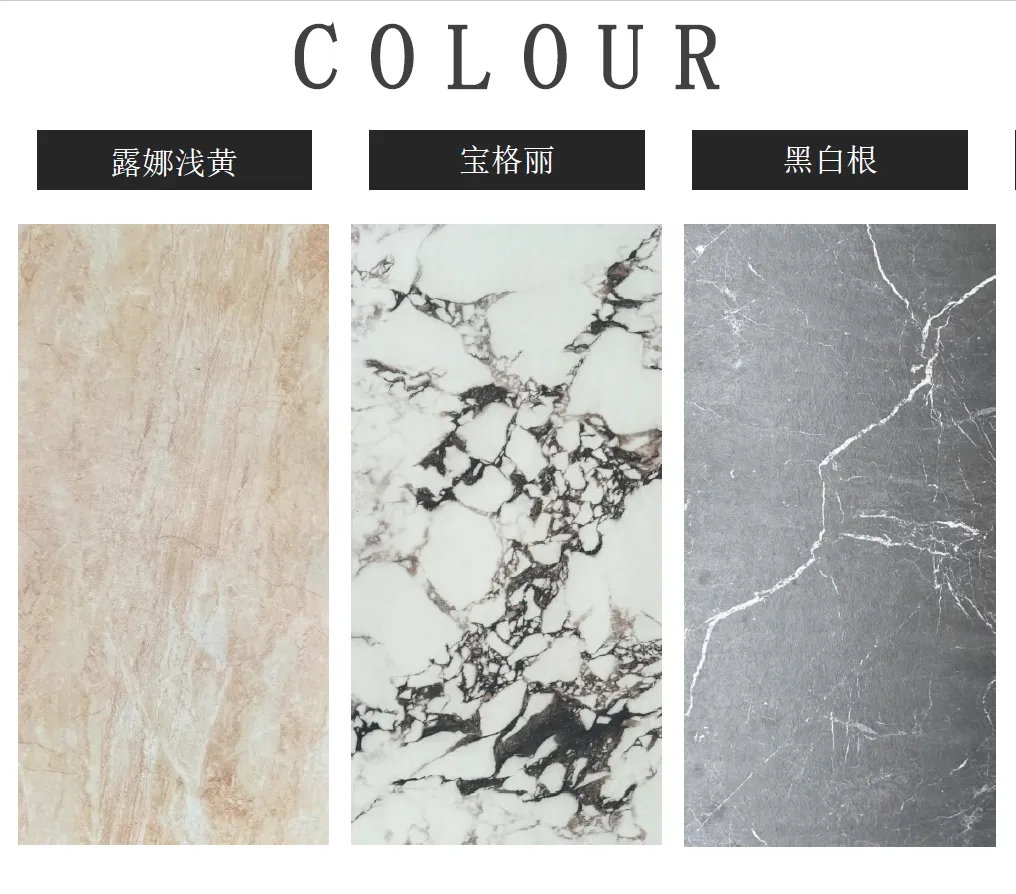
MCM Marble Series, on the other hand, is a playground for color and pattern lovers. Take, for example, travertine (starry green) —a finish that mimics the look of travertine stone but with tiny, iridescent "stars" scattered across the surface, catching light like a night sky. Or lunar peak silvery , which has a soft, metallic sheen that shifts from cool gray to warm silver depending on the light. These aren't just "colors"—they're experiences . The MCM lineup also includes options like fair-faced concrete (raw, industrial chic with subtle texture) and lunar peak golden (warm, sunlit tones that feel both luxurious and earthy). And because MCM is manufactured with precision, you can even request custom color blends—perfect for brands or homeowners who want a shade that's uniquely theirs.
Texture is where materials stop being "flat" and start feeling alive . Engineered stone typically defaults to a polished or honed finish—smooth, sleek, and easy to wipe clean. Some brands offer "leathered" or "brushed" textures, but these are often limited in variety. If you want something that feels like it was pulled straight from a mountain (rough, tactile, full of character), engineered stone might leave you wanting more.
MCM, though? It's all about texture. The MCM flexible stone line, for instance, can replicate the rough-hewn feel of natural travertine, the grain of weathered wood, or even the pebbled surface of a riverbed. Imagine running your hand over a wall covered in travertine (starry green) —you'd feel the subtle pits and ridges of real travertine, but with the added surprise of those starry flecks catching your fingertips. Or consider fair-faced concrete MCM panels: they've got that raw, slightly porous texture that makes industrial design feel cozy, not cold. And because MCM is thin and flexible, these textures can be applied to curved surfaces without losing their depth—something engineered stone, with its rigid composition, struggles to do.
Nothing kills a seamless design faster than unsightly grout lines or awkwardly placed seams. Engineered stone slabs are typically around 120" x 60"—big enough for most countertops, but if you're dreaming of a floor-to-ceiling feature wall or a massive kitchen island without a single seam, you'll be stuck with visible joins. And forget about curves: engineered stone is heavy and brittle, so bending it isn't an option.
Enter the MCM project board series , a game-changer for large-scale projects. These boards can be manufactured in sizes up to 144" x 72" (and even larger for custom orders), meaning fewer seams and a more cohesive look. Picture a luxury hotel lobby with a wall clad in lunar peak silvery MCM panels—no breaks, no grout lines, just a continuous sweep of that shimmering, moonlit texture. And because MCM is lightweight (about 1/5 the weight of natural stone), installation is easier, too—no need for reinforced structures to support heavy slabs.
But size isn't the only win here: MCM's flexibility lets designers get creative with shapes. Want a rounded breakfast nook with travertine (beige) walls that curve gently around the space? Or a retail display with wavy, organic edges clad in star gravel MCM? No problem. Engineered stone, by contrast, is stuck in a world of straight lines and right angles.
Customization isn't just about aesthetics—it's about making a material work for your life. Let's talk practical perks that matter when you're turning a design into a daily reality.
Engineered stone installation is straightforward but not exactly flexible. It requires precise measurements, heavy equipment to transport slabs, and skilled installers to cut and seal it. If your space has uneven walls, tricky angles, or curves, you're looking at more time, more labor, and more cost.
MCM, with its lightweight and flexible nature, is a breeze by comparison. MCM flexible stone panels can be cut with standard tools (no diamond blades required), and because they're thin (as little as 3mm thick), they adhere easily to most surfaces—drywall, concrete, even existing tile. This means faster installation, lower labor costs, and the ability to retrofit old spaces without tearing everything out. Imagine updating a 1920s bungalow's kitchen backsplash with travertine (starry red) MCM panels—no need to reinforce the walls or worry about the structure supporting heavy stone. It's customization that doesn't disrupt your life.
A common myth? Custom materials are delicate. Engineered stone is known for its toughness—it's scratch-resistant, heat-resistant, and doesn't stain easily, which is why it's a staple in busy kitchens. But it's not indestructible: heavy impacts can crack it, and once it's cracked, repairs are tough (you usually have to replace the entire slab).
MCM holds its own here, too. While it's lightweight, it's surprisingly durable: resistant to moisture, UV rays, and even moderate impacts. The secret is in its composite makeup—the fibers and polymers add flexibility, so it can absorb shocks that would shatter rigid materials. And if it does get damaged? Small dents or scratches can often be repaired on-site, saving you the cost of full replacement. For high-traffic areas like restaurant floors or retail storefronts, that's a customization win that keeps on giving.
Let's ground this in examples—because at the end of the day, design is about real spaces and real people.
The Café with a Starry Ceiling: A small neighborhood café in Portland wanted to stand out without feeling pretentious. The designer's vision? A ceiling that looked like a night sky. Engineered stone was out (too heavy, too rigid for overhead installation). Then they discovered travertine (starry blue) MCM panels from the MCM project board series . The large, lightweight panels were installed overhead with minimal structural support, and the starry blue texture—with its tiny, reflective flecks—transformed the space. Now, customers sit under a "sky" that shimmers when the lights dim, and the café's Instagram feed is full of photos of that ceiling. Customization turned a small space into a destination.
The Home Office That Blends Old and New: A freelance designer in Chicago lives in a historic brick townhouse and wanted her home office to honor the building's 19th-century roots while feeling modern. She chose fair-faced concrete MCM panels for one wall (raw, industrial texture) and lunar peak silvery MCM for the built-in desk (sleek, metallic, and lightweight enough to mount without damaging the original brick). The result? A space that feels both timeless and contemporary, with textures that play off each other—all without compromising the integrity of the old brick. Engineered stone, with its uniform look, would have felt too "new" and clashed with the building's character.
Let's cut to the chase: if your idea of customization is picking a solid color or a standard marble pattern and prioritizing durability above all else, engineered stone is a reliable choice. It's tried-and-true, and for spaces where uniformity is key (like a corporate office with 50 identical workstations), it gets the job done.
But if you're craving a space that feels unique —one where the materials tell a story, where textures invite touch, and where size and shape don't limit your vision—the MCM Marble Series is in a league of its own. From the MCM project board series 's seamless large slabs to the tactile charm of travertine (starry green) and the flexibility of MCM flexible stone , MCM doesn't just let you customize—it lets you create . It's for the designer who wants a wall that curves like a wave, the homeowner who refuses to choose between "modern" and "rustic," and anyone who believes that the best spaces are the ones that can't be replicated.
At the end of the day, both materials have their place. But when it comes to turning "what if" into "what is"? MCM doesn't just compete—it redefines what's possible.
Design is about more than function; it's about feeling. Whether you're drawn to the polished consistency of engineered stone or the boundless creativity of the MCM Marble Series , the best choice is the one that lets you build a space that feels yours . And in a world that's full of mass-produced everything, that's a power worth investing in.
Recommend Products












