
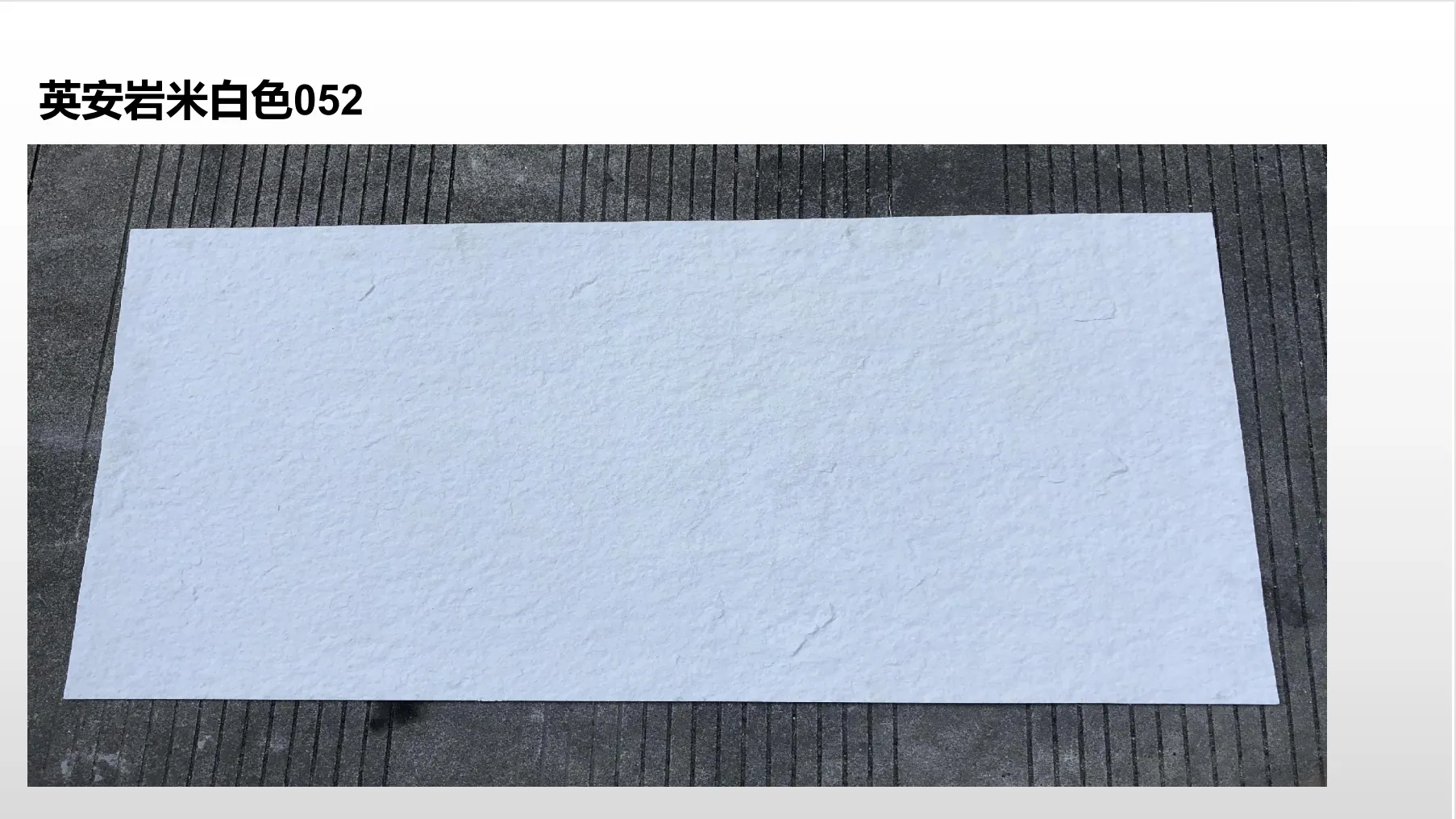
Walk into any modern architectural marvel these days, and you'll notice something: texture matters. It's the rough-hewn edge of a stone facade, the subtle ripple of a panel that catches the light, the way a surface feels both ancient and futuristic at once. For architects and designers, the quest for that "perfect texture" often leads them to the earth itself—rocks, minerals, and stones that carry millions of years of natural artistry. But what happens when the very thing that makes a material beautiful also makes it nearly impossible to shape? Enter dacite, a volcanic rock with a personality as rugged as the mountains it comes from, and the game-changing technology that's finally letting us unlock its full potential: 3D printing. Today, we're diving into how 3D printing is revolutionizing dacite-inspired design, with a spotlight on the MCM 3D Printing Series and why those dacite real photos you've seen online are more than just pretty pictures—they're proof of a design revolution.
If you've ever stood at the base of a volcano (safely, of course), you might have brushed against dacite without even knowing it. This igneous rock forms when magma cools slowly beneath the Earth's surface, then erupts and hardens into a material with a granular texture, speckled with minerals like plagioclase feldspar and quartz. Its natural palette ranges from pale gray to deep charcoal, often with hints of pink or gold that catch the light—a visual symphony that architects have lusted after for decades.
But here's the catch: dacite is tough. Like, "takes a diamond-tipped saw hours to cut a single slab" tough. Its crystalline structure, while beautiful, makes it resistant to shaping. Traditional methods—chiseling, grinding, casting—can only do so much. Want a dacite panel with a wave-like curve? Good luck. Dream of a facade covered in intricate, interlocking semicircles? You'd be looking at months of labor and a budget that would make even luxury developers wince. Worse, the waste is staggering: up to 40% of a natural dacite block ends up as dust when carving complex shapes, a sustainability nightmare in an industry already grappling with green goals.
I spoke with Eliza Hart, a senior architect at a boutique firm in Portland, who summed up the frustration: "We had a client who fell in love with dacite after seeing it in a national park. They wanted the lobby of their tech headquarters to feel like walking into a modern cave—rough, organic, but with clean lines. We spent weeks sourcing slabs, but every time we tried to carve the curved edges they wanted, the stone cracked. We ended up using a concrete imitation, and it just… wasn't the same. The client could tell it lacked that raw, natural soul."
Enter 3D printing—a technology that's been quietly revolutionizing manufacturing for years, but only recently found its way into the heart of architectural design. When we talk about 3D printing in construction, we're not just talking about plastic prototypes. We're talking about industrial-grade printers that extrude modified composite materials (hello, MCM's flexible stone) layer by layer, building up complex shapes with pinpoint precision. And for dacite-inspired design, this isn't just a tool—it's a game-changer.
Here's why: 3D printing doesn't carve away material; it adds it. That means no more wasted stone, no more cracked slabs, and no more limits on geometry. Want a panel that twists like a river? Print it layer by layer, each stratum mimicking dacite's natural layering. Crave a facade covered in tiny, star-like indentations (think travertine (starry blue) but with a dacite base)? The printer can dot those details with the accuracy of a jeweler setting gems. And because the materials used are often lightweight composites—like MCM's flexible stone, which blends natural mineral aggregates with polymer binders—the end result is durable enough for exteriors but light enough to install without reinforcing entire walls.
"It's like going from painting with a broom to a fine-tipped brush," says Marcus Rivera, lead engineer at a 3D construction tech firm. "Traditional dacite work is brute force—you're fighting the stone. With 3D printing, you're collaborating with it. We can scan a piece of natural dacite, map its texture, then replicate that texture on a panel that bends, curves, or interlocks with others. The real magic? The client can hold a sample, run their hand over it, and say, 'That's exactly the look I saw in my head.'"
If 3D printing is the brush, then MCM's 3D Printing Series is the artist's palette. This line of building materials has quickly become a favorite among designers who refuse to choose between natural beauty and bold design. What sets MCM apart? They don't just replicate dacite—they elevate it. By combining 3D printing technology with their signature flexible stone, they've created a range of panels that capture dacite's raw, earthy charm while offering the kind of design freedom that was once unthinkable.
Take their 3D art concrete board, for example. These panels start with a base of high-strength concrete, but instead of leaving it smooth, MCM's printers etch in patterns inspired by dacite's natural grain. The result? A surface that looks like it was hewn from solid rock, but with the added twist of intentional, repeating motifs—like the linear grooves of lunar peak silvery, which mimic the way lava flows and cools into dacite's layered structure. And when you see the 3D art concrete board real photos, you can't help but lean in: the details are so crisp, you'd swear you could chip off a piece and find the same mineral specks as natural dacite.
But MCM doesn't stop at texture. Their 3D printing process allows for true customization. Need a set of panels in a specific shade to match a desert landscape? They can tweak the mineral additives to shift the color from dacite's classic gray to a warm, terracotta rusty red. Want a mix of smooth and rough surfaces on the same facade? The printer can switch between fine and coarse extrusion mid-print, creating a dynamic interplay of light and shadow.
| Feature | Traditional Dacite Panels | MCM 3D Printed Dacite-Inspired Panels |
|---|---|---|
| Design Complexity | Limited to simple shapes (flat slabs, basic curves); complex geometries often crack or fail. | Unlimited: waves, spirals, semicircles, and custom motifs—all printed without structural compromise. |
| Production Time | Weeks to months (quarrying, cutting, carving, finishing). | Days to weeks (digital design, printing, curing); no waiting for natural stone sourcing. |
| Weight | Heavy (20–30 kg/sq.m); requires reinforced mounting. | Lightweight (8–12 kg/sq.m); compatible with standard wall systems. |
| Sustainability | High waste (30–40% of stone is lost to carving); energy-intensive quarrying. | Low waste (only material needed is printed); uses recycled aggregates in flexible stone. |
| Customization | Limited to what natural stone provides; color and texture can't be altered. | Full customization: color, texture, pattern, and shape tailored to project needs. |
They say a picture is worth a thousand words, but when it comes to 3D printed dacite-inspired panels, a photo might be worth a thousand client approvals. Dacite real photos—those high-res shots of MCM's finished panels—aren't just marketing tools; they're proof that this technology delivers on its promises. Let's zoom in on a few examples that have architects buzzing.
First up: the lunar peak silvery series. These panels take dacite's cool gray base and add a subtle metallic sheen, like moonlight hitting wet stone. But what really stands out is the texture. The 3D printer etches tiny, overlapping ridges that mimic the way dacite forms when lava cools and contracts. In photos, you can see how the light plays across these ridges—some areas glow softly, others sink into shadow—creating depth that flat, traditional panels could never achieve. One hotel in Boulder, Colorado, used lunar peak silvery panels for their exterior, and the result is stunning: the building looks like it's emerging from the surrounding rock formations, but with a modern, almost futuristic edge.
Then there's the travertine (starry blue) inspired design, which MCM adapted for their dacite line. Imagine a deep blue-gray panel (reminiscent of dacite found in volcanic regions) dotted with tiny, reflective "stars"—actually, microbeads of glass embedded during the printing process. In real photos, these stars catch the light from every angle, turning a simple facade into a night sky. A boutique winery in Napa Valley used these panels for their tasting room, and guests often comment on how the walls "sparkle like the sky over the vineyards at dusk." It's a detail that would have been impossible with traditional dacite—you can't embed glass beads into natural stone without cracking it—but with 3D printing, it's just another layer in the design.
And let's not overlook the 3D art concrete board real photos. These images often focus on the "imperfections" that make the panels feel alive: a slight variation in texture here, a deeper groove there, all intentional. One photo, taken of a restaurant interior in Chicago, shows a wall of 3D art concrete board with a wave-like pattern. The camera angle catches the way the light runs along the curve, highlighting the layers of printed material—each one a nod to dacite's geological history. It's not just a wall; it's a story.
At this point, you might be thinking, "This all sounds great for luxury projects, but what about the rest of us?" The truth is, 3D printed dacite-inspired materials are more accessible than you'd think—and their impact goes beyond aesthetics. Let's break down the benefits that make them a smart choice for everything from high-end hotels to community centers.
Durability that lasts: MCM's flexible stone isn't just pretty—it's tough. These panels are resistant to weather, UV rays, and even impact, making them ideal for both exteriors and high-traffic interiors. I visited a school in Phoenix that used 3D printed dacite-inspired panels for their courtyard walls, and after three years in the desert sun, they still look brand new. No fading, no cracking, just that same rich texture they started with.
Lightweight, but not light on quality: Traditional dacite panels can weigh 30 kg per square meter, which means walls and hiring extra labor for installation. MCM's 3D printed versions clock in at 8–12 kg/sq.m, which cuts down on installation time and costs. A contractor friend of mine recently worked on a retail project where switching to 3D printed panels shaved two weeks off the timeline—and saved the client $15,000 in labor.
Sustainability that adds up: The construction industry is one of the world's biggest polluters, but 3D printing is helping to change that. By using recycled aggregates in their flexible stone and reducing waste to near-zero, MCM's 3D Printing Series aligns with green building standards like LEED and BREEAM. And because the panels are lightweight, transporting them uses less fuel—another win for the planet.
Design for everyone: Maybe you're not building a skyscraper—maybe you're just remodeling your home's exterior. 3D printed dacite-inspired panels make it possible to bring high-end, natural texture to even small projects. Imagine a backyard patio wall clad in lunar peak silvery panels, or a fireplace surround with travertine (starry blue) details. These materials turn "dream home" into "doable home."
If the last five years are any indication, the future of dacite-inspired design is only going to get more exciting. MCM and other innovators are already experimenting with new materials—like blending flexible stone with foamed aluminium alloy board (vintage gold) for a metallic-dacite hybrid that's equal parts industrial and organic. They're also pushing the limits of size: imagine a single 3D printed panel that spans an entire building facade, with no seams to break the texture.
Sustainability will play an even bigger role, too. Researchers are working on 3D printing with carbon-negative materials, turning CO2 into a building block for dacite-inspired panels. And as printers get faster and more affordable, we might see local production hubs popping up, reducing shipping emissions and making custom designs accessible to smaller firms.
But perhaps the most thrilling trend is collaboration. Architects, geologists, and engineers are teaming up to study natural dacite formations in greater detail, then using 3D scanning and printing to replicate those formations at scale. One project in Iceland is even using 3D printed panels to recreate the texture of ancient lava flows, turning a museum into an immersive journey through geological time.
At the end of the day, architecture is about more than walls and roofs—it's about creating spaces that make us feel something. Dacite, with its raw, untamed beauty, has always had that power. But for too long, its potential was locked away by the limitations of traditional tools. Now, thanks to 3D printing and innovators like MCM, we're finally free to let that beauty shine—curves, stars, waves, and all.
Whether you're an architect chasing the next big design trend, a homeowner wanting to add a touch of natural elegance to your space, or just someone who appreciates the marriage of technology and nature, 3D printed dacite-inspired panels are worth exploring. And when you look at those dacite real photos—those close-ups of lunar peak silvery ridges or travertine (starry blue) sparkles—remember: what you're seeing isn't just a building material. It's proof that when we work with nature, instead of against it, we can create something truly extraordinary.
So here's to the future: a skyline dotted with 3D printed textures, a world where every facade tells a story, and where dacite—once a stubborn, untamable rock—becomes a canvas for human creativity. The tools are here. Now, let's build something amazing.
Recommend Products












