
Walk into any high-end hotel, boutique café, or modern home, and you'll likely be struck by the beauty of natural stone. The rough-hewn texture of travertine, the sleek finish of marble, the earthy warmth of rammed earth—these materials have defined luxury architecture for centuries. But behind that beauty lies a hidden cost: waste. Quarrying stone rips up landscapes, manufacturing leaves piles of discarded offcuts, and installing heavy slabs often results in broken pieces tossed aside. For decades, this seemed like an unavoidable trade-off. Until now.
Let's start with the numbers. According to the Global Construction Review , natural stone extraction generates an estimated 20-30% waste even before the stone leaves the quarry. Imagine a massive block of travertine being hacked from the earth—only a fraction of it is usable; the rest becomes rubble. Then, during cutting and polishing, another 15-20% is lost to dust and offcuts. By the time the stone arrives at a job site, it's already contributed tons of waste to landfills.
On-site, the problems get worse. Natural stone is heavy—some slabs weigh over 500 pounds—and fragile. A misstep during installation, a crack from uneven flooring, or a miscalculation in measurements means that expensive slab is suddenly trash. Contractors I've spoken to estimate that up to 10% of natural stone is wasted on-site, just from breakage alone. And that's not counting the environmental impact of transporting all that weight: more fuel, more emissions, more strain on roads.
Take travertine, for example. A popular choice for its porous, organic look, travertine extraction in regions like Italy and Turkey has left quarries pockmarked with unused stone. One quarry manager in Tuscany told me, "We used to call it 'the cost of beauty.' But as sustainability regulations tighten and clients demand greener options, we can't ignore it anymore."
So, what if there was a way to get the look and feel of natural stone—from the starry veining of travertine (starry blue) to the rustic charm of rammed earth board (gradient)—without the waste? That's where Modified Composite Material, or MCM, comes in. MCM isn't a single product; it's a category of lightweight, durable materials made by bonding natural stone particles, minerals, and polymers into thin, flexible panels. Think of it as nature's beauty, reimagined with science.
MCM manufacturers start with recycled or sustainably sourced stone aggregates—think leftover dust from natural stone cutting, or minerals that would otherwise go unused. These are mixed with eco-friendly polymers and pressed into panels that mimic the texture, color, and even the weight (or lack thereof) of natural stone. The result? A material that's 70-80% lighter than natural stone, flexible enough to bend without breaking, and—most importantly—far less wasteful at every stage of its lifecycle.
Let's break down exactly how MCM reduces waste, step by step. It's not just one innovation—it's a chain of smart choices that add up to a greener, more efficient process.
Natural stone requires mining entire mountainsides or digging deep quarries, displacing ecosystems and generating massive waste. MCM, by contrast, often uses recycled stone particles. For example, the stone aggregates in MCM panels might come from leftover dust from natural stone processing facilities—material that would otherwise be dumped. Even when new minerals are used, MCM requires a fraction of the extraction volume. A single MCM panel can replicate the look of 10 square feet of natural travertine, but it uses less than 10% of the raw material.
Take travertine (starry blue) , a popular MCM option that mimics the cosmic, blue-tinged veining of rare natural travertine. To create this, manufacturers blend recycled travertine dust with pigments and polymers. No need to quarry new travertine; instead, they're giving new life to waste from existing operations.
Natural stone cutting is messy. Sawing through a 3-inch slab of granite creates dust, chips, and offcuts—most of which can't be reused. MCM manufacturing, on the other hand, is a controlled process. Panels are made in molds, with exact measurements and minimal excess. Since MCM is lightweight and flexible, it can be cut to size in factories with computerized precision, reducing offcuts to less than 2%. That's a stark contrast to the 15-20% waste from natural stone manufacturing.
Consider rammed earth board (gradient) , a MCM favorite for its soft, earthy color transitions—think warm terracottas fading into muted greens. These panels are cast in layers, with pigments added incrementally to create that gradient effect. Because the process is automated, there's no guesswork, no uneven layers, and no need to discard "ugly" batches. Every panel is usable.
Natural stone's weight is its Achilles' heel. A truckload of natural travertine slabs might carry 200 square feet of material. The same truck can carry over 1,000 square feet of MCM panels—because MCM weighs just 3-5 pounds per square foot, compared to natural stone's 20-30 pounds. Fewer trucks mean less fuel burned, fewer emissions, and—crucially—less risk of breakage during transport. I've heard horror stories from contractors about entire truckloads of natural stone arriving cracked, thanks to potholes or sudden stops. With MCM, that risk drops dramatically.
Take foamed aluminium alloy board (vintage silver) , a sleek, metallic MCM option popular in modern commercial projects. Its foam core makes it incredibly lightweight—so lightweight that a single worker can carry a 4x8 panel with ease. During transport, these panels stack like puzzle pieces, with zero breakage. Compare that to natural aluminium, which is dense and prone to dents; even a small bump can render a sheet unusable.
On the job site, MCM truly shines. Natural stone slabs are heavy and rigid, making them hard to maneuver. A slight tilt, a sudden drop, or a mismatch in measurements, and that slab is ruined. MCM panels, though, are flexible and lightweight. They can be cut on-site with basic tools (no need for industrial saws), bent around curves, and even trimmed to fit odd angles—all without cracking. Contractors report on-site waste for MCM as low as 2-3%, compared to 10% for natural stone.
One contractor in Texas told me about a recent project using fair-faced concrete MCM panels. "We had a wall with a slight curve, and with natural concrete, we would've had to order custom-cast slabs, which are expensive and risky. With MCM fair-faced concrete panels, we just bent them to the curve on-site. No waste, no extra cost, and it looked perfect."
Waste isn't just about the initial production—it's about how long a material lasts. Natural stone, while durable, is porous and prone to staining, chipping, and weathering. A spilled glass of wine on travertine, a hailstorm on a limestone facade, or years of foot traffic on a marble floor can mean costly repairs or full replacements—generating even more waste. MCM, though, is engineered to be tough. Its polymer core resists water, stains, and impacts, and its surface is treated to withstand UV rays and harsh weather. Many MCM panels come with 20+ year warranties, meaning fewer replacements and less long-term waste.
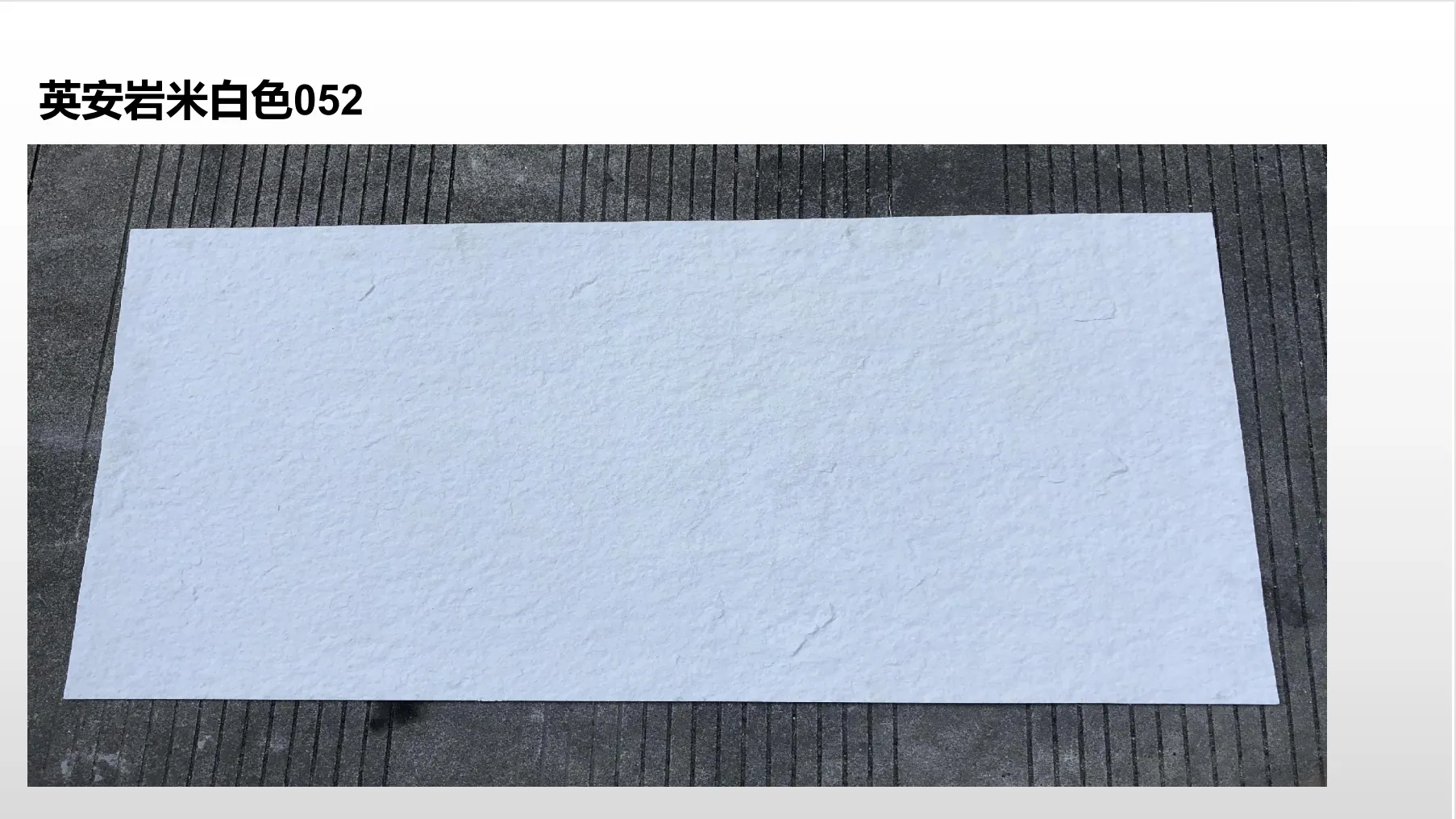
Now, let's circle back to the title: Dacite Real Photos . Dacite is a volcanic rock known for its rugged, textured surface and earthy tones—think dark grays, rusty reds, and speckled blacks. It's stunning, but quarrying dacite is notoriously wasteful; the rock is brittle, so much of it breaks during extraction. MCM dacite panels, though, capture that same raw, volcanic look without the waste.
When you look at dacite real photos from MCM manufacturers, you'll notice the details: the subtle variations in color, the rough-hewn texture that feels like it was pulled straight from a mountain. But here's the secret: that panel is 80% lighter than real dacite, uses 90% less raw material, and generates almost no waste during production. It's a perfect example of how MCM doesn't just reduce waste—it elevates the aesthetic by making rare, wasteful stones accessible to more projects.
One designer I worked with used MCM dacite panels in a mountain lodge in Colorado. "The client wanted that 'authentic' volcanic feel, but we couldn't justify the waste of real dacite," she said. "The MCM panels looked so real that guests kept asking where we quarried the stone. When we told them it was MCM, they were shocked—then excited about the sustainability angle."
To put it all in perspective, let's look at a side-by-side comparison of waste metrics for MCM and natural stone. The numbers speak for themselves:
| Stage of Lifecycle | Natural Stone Waste | MCM Waste | Waste Reduction with MCM |
|---|---|---|---|
| Extraction | 20-30% | 5-8% | ~70% |
| Manufacturing | 15-20% | 1-2% | ~90% |
| Transportation | 5-8% (breakage) | 0.5-1% | ~90% |
| On-Site Installation | 8-10% | 2-3% | ~75% |
| Long-Term Replacement (10 years) | 15-20% (staining/breakage) | 2-5% (minimal wear) | ~80% |
MCM isn't just a "green alternative"—it's a better alternative. It offers the same (if not better) aesthetic appeal as natural stone, with added benefits like flexibility, durability, and lower costs. But most importantly, it addresses the elephant in the room: waste. In an industry responsible for 30% of global waste, according to the UN Environment Programme, MCM is a beacon of hope.
Whether you're a contractor tired of discarding broken travertine slabs, a designer craving the look of rammed earth board (gradient) without the environmental guilt, or a homeowner who wants the sleekness of foamed aluminium alloy board (vintage silver) in your kitchen backsplash, MCM delivers. It's proof that we don't have to choose between beauty and sustainability.
So, the next time you see a stunning stone facade or a textured wall, take a closer look. It might just be MCM—and that means less waste, less environmental impact, and a more beautiful world for future generations. After all, the best kind of beauty is the kind that doesn't cost the Earth.
Recommend Products












