
In the heart of Saudi Arabia's bustling urban landscape, where tradition and modernity dance in a delicate balance, a new architectural landmark has emerged: a sprawling mall that doesn't just redefine shopping—it redefines what a building's skin can say. More than a structure, its facade is a narrative woven from stone, innovation, and cultural reverence. At the center of this story is dacite, a material as rugged as the Saudi desert and as refined as the kingdom's vision for the future. Paired with cutting-edge MCM flexible stone and timeless fair-faced concrete, it forms a visual symphony that has locals and visitors alike stopping in their tracks. Let's step behind the scenes of this transformative project, exploring how dacite real photos captured not just a facade, but a moment in architectural history.
The mall, located in a rapidly developing district of Riyadh, was conceived as more than a commercial hub. "We wanted it to be a reflection of Saudi identity—one that honors our past while embracing progress," says Lina Al-Mansoori, lead architect at the award-winning firm behind the design. The team drew inspiration from Saudi Arabia's rich cultural tapestry: the geometric precision of traditional Najdi architecture, the undulating patterns of desert sand dunes, and the weathered textures of historical pathfinders stone, which has guided travelers across the Arabian Peninsula for centuries.
"Historical pathfinders stone isn't just a material—it's a symbol of resilience," Al-Mansoori explains. "Those stones marked paths through harsh landscapes, and we wanted our facade to mark a new path for architectural expression here. But we needed something that could translate that legacy into a modern language. That's where dacite came in."
Selecting materials for a facade in Saudi Arabia's extreme climate—scorching summers, occasional sandstorms, and temperature swings—was no small feat. The team needed durability, visual impact, and a connection to the land. After months of testing samples, three materials rose to the top: dacite, MCM flexible stone, and fair-faced concrete. Each brought something unique to the table, creating a harmony that feels both intentional and organic.
| Material | Key Characteristics | Role in the Facade |
|---|---|---|
| Dacite | Volcanic rock with a granular texture, earthy tones (ranging from warm grays to terracottas), high heat resistance | Primary visual element; forms large, custom-patterned panels that anchor the facade's identity |
| MCM Flexible Stone | Lightweight, bendable composite material with stone-like texture, weather-resistant, customizable finishes | Accent material; used for curved sections and intricate geometric motifs that dacite couldn't achieve alone |
| Fair-Faced Concrete | Raw, uncoated concrete with a smooth, industrial finish, high structural integrity, neutral tone | Base material; provides contrast to dacite and MCM, framing the facade and emphasizing clean lines |
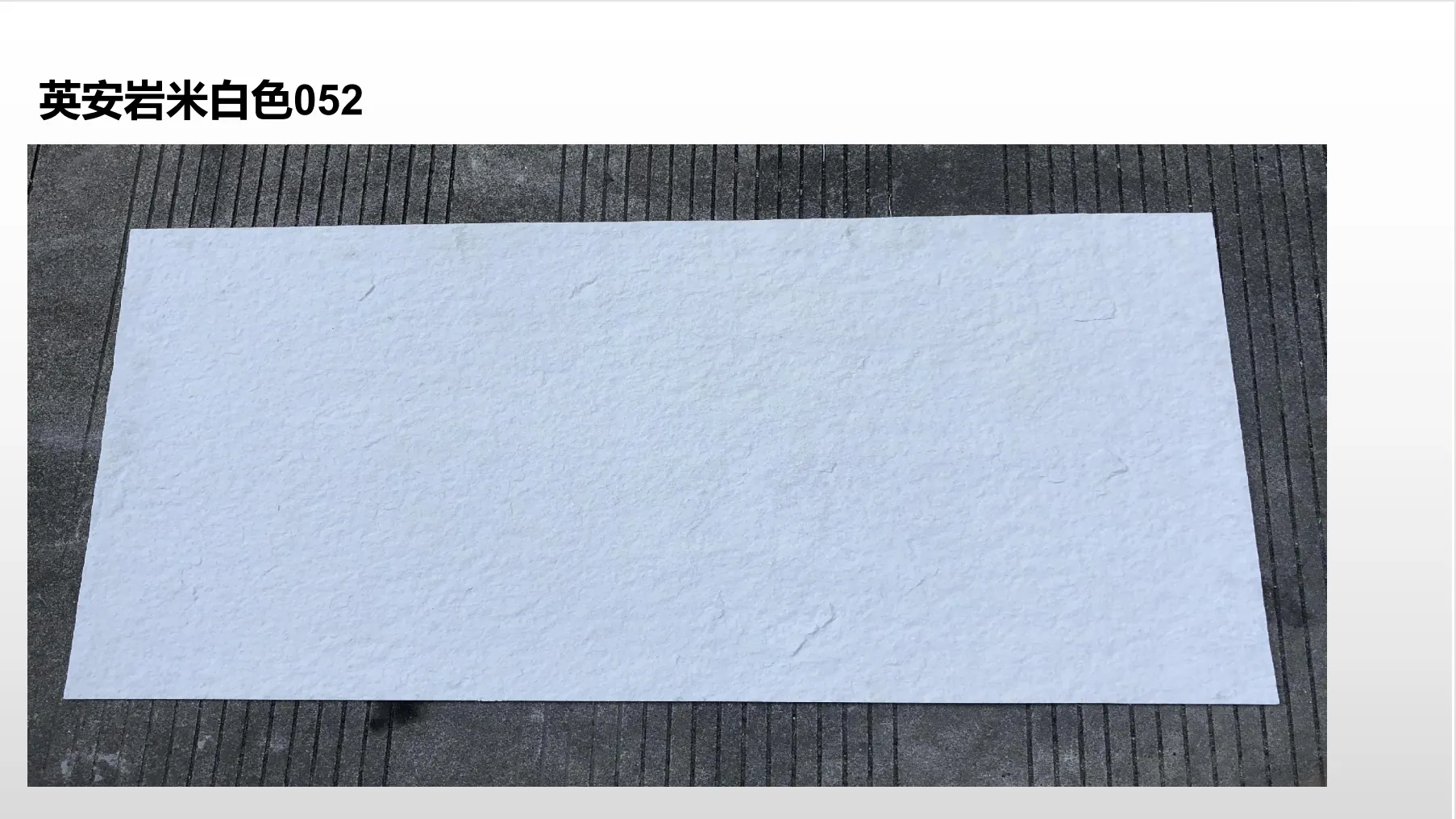
Dacite, in particular, stole the show. "We first saw dacite samples from a quarry in the Hijaz region," recalls Kareem Hassan, the project's material specialist. "Its surface has this beautiful, almost tactile quality—like the desert floor after a sandstorm, with tiny grains and subtle color variations. When we held it up to the light, we knew it would glow at sunset, mirroring the Saudi sky. That's when we started taking dacite real photos obsessively—documenting every shade, every texture, to make sure we could replicate that magic on a large scale."
The facade's most striking feature isn't just the materials—it's the custom patterns that adorn them. Inspired by Saudi Arabia's traditional "sadu" weaving and the geometric precision of ancient Nabataean rock carvings, the design team spent months iterating on motifs that would feel both familiar and forward-thinking. "We didn't want to copy historical patterns—we wanted to reinterpret them," says Al-Mansoori. "Think of it as a conversation between a grandmother's sadu blanket and a modern art gallery."
The process began with hand-drawn sketches, then moved to digital renderings, and finally to full-scale prototypes. For the dacite panels, artisans used waterjet cutting to etch the patterns, carefully calibrating the depth to ensure the texture would catch light at different times of day. "Dacite is unforgiving," Hassan notes. "One wrong cut, and the whole panel is ruined. We worked with local stonecutters who've been shaping rock for generations—their hands know how to read the stone's grain, almost like a story."
The MCM flexible stone, meanwhile, allowed for more fluid designs. "We used it to create sweeping curves that mimic the movement of sand dunes," Al-Mansoori explains. "In some sections, the MCM patterns overlap with the dacite, creating a dialogue between rigidity and flow. It's a metaphor for Saudi culture—rooted in tradition, but never static."
No ambitious project is without hurdles. For the mall facade, the biggest challenge was dacite's natural variability. "Every batch of dacite from the quarry looked slightly different—some panels were grayer, others more terracotta," Hassan says. "At first, we panicked. We wanted consistency. But then we realized: that variability is what makes it alive. It's like the desert itself—no two sand dunes are the same, and that's its beauty."
The team embraced the imperfection, arranging the dacite panels in a way that highlighted their unique tones, creating a gradient effect that shifts from cool grays at the base to warm terracottas at the top—echoing the transition from desert floor to sunset sky. "We took hundreds of dacite real photos during installation, mapping each panel's color and texture, then arranged them like a painter mixing hues on a canvas," Al-Mansoori adds.
Another challenge was ensuring the facade could withstand Saudi Arabia's harsh sun. "Dacite is heat-resistant, but we needed to make sure the panels wouldn't expand and crack," Hassan explains. The solution? A custom mounting system with built-in ventilation, allowing air to circulate behind the panels and prevent heat buildup. "We tested it in a climate chamber for months, simulating 50°C days and sandstorms. It held up better than we expected."
Since the mall opened earlier this year, the facade has become a destination in itself. Locals gather at sunset to watch the dacite panels glow, their custom patterns casting intricate shadows on the sidewalks below. "I bring my kids here every weekend," says Riyadh resident Amina Al-Saud. "They love tracing the patterns with their fingers—it's like a giant puzzle. And the dacite feels so… real. Not like some cold, modern buildings. It has soul."
The dacite real photos, shared widely on social media, have also sparked conversations about architectural identity in Saudi Arabia. "We're seeing a shift away from generic glass towers and toward materials that tell our story," Al-Mansoori observes. "Dacite isn't just a rock—it's a piece of our land, our history. When people see it on the facade, they feel proud. That's the power of good design: it doesn't just look beautiful; it makes you belong."
The Saudi Arabia mall facade is more than a collection of materials—it's a testament to what happens when innovation meets heritage, and when architects listen to the land. Dacite, with its rugged charm, MCM flexible stone, with its adaptability, and fair-faced concrete, with its quiet strength, have come together to create something truly unique. And in the dacite real photos that document this journey, we see not just a building, but a community's pride, a team's passion, and a vision for a future where architecture speaks to the soul.
As the sun sets on Riyadh, casting golden light over the dacite panels, one thing is clear: this facade isn't just shaping the city's skyline—it's shaping its story. And that story, like the dacite itself, is built to last.
Recommend Products












