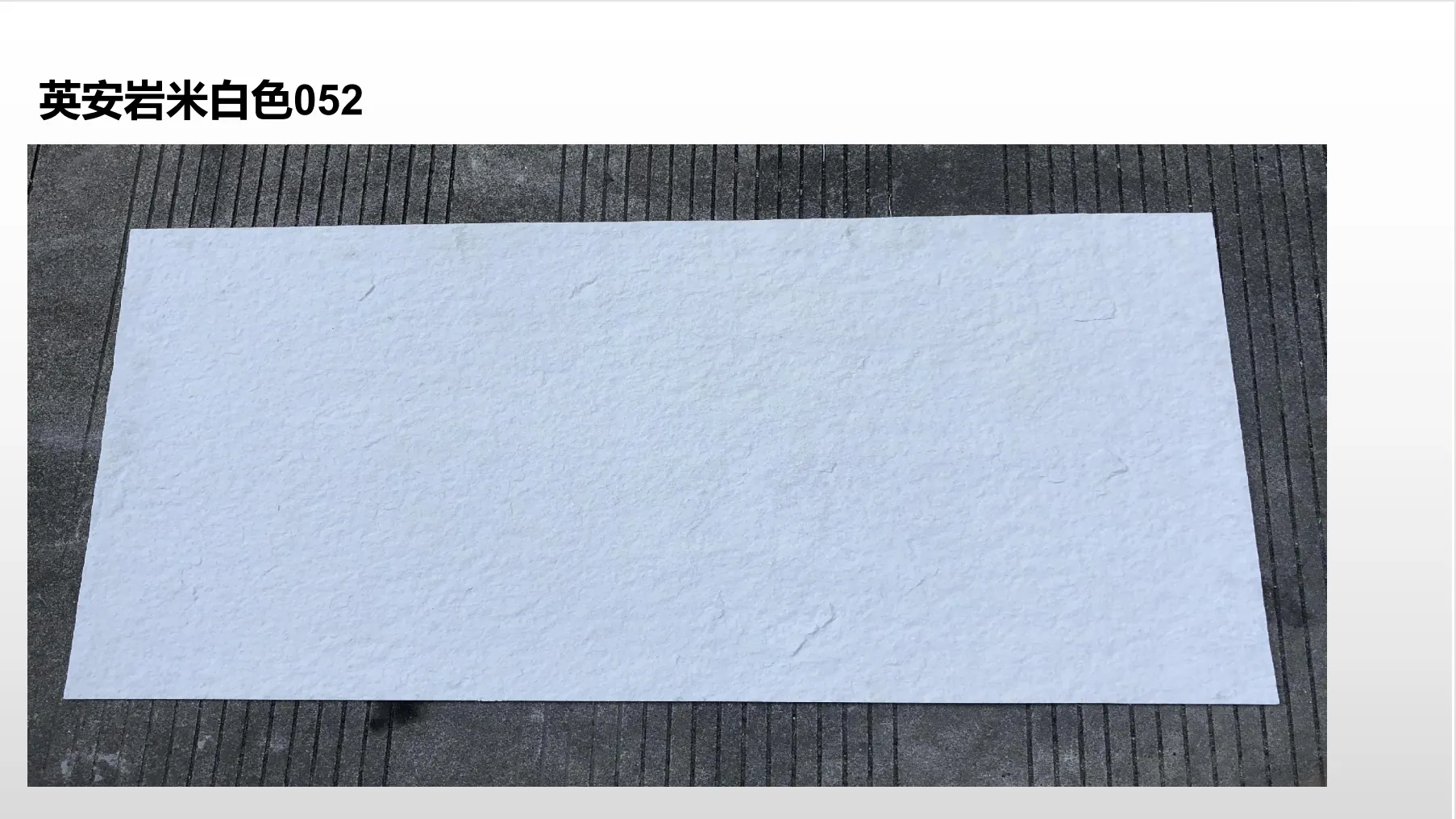
There's a quiet magic in stepping into a building on a frigid winter day—the kind where snowdrifts pile high outside, and the air bites at your cheeks—but inside, warmth wraps around you like a well-loved blanket. That magic isn't just about heaters or fireplaces; it starts with the bones of the structure itself. In cold climates, where temperatures can plummet to -30°C or lower, the choice of building materials isn't just an aesthetic decision—it's a promise of comfort, energy efficiency, and resilience. Today, we're diving into one material that's been turning heads in architectural circles: dacite. And not just in theory, but through the lens of
dacite real photos
that showcase its beauty and brawn in real-world cold climate settings. But we won't stop there. We'll explore how dacite stacks up against other standout materials like
lunar peak silvery
,
rammed earth board (gradient)
,
foamed aluminium alloy board (vintage silver)
, and
fair-faced concrete
, each bringing its own blend of insulation and charm to the table.
Let's start with the star of the show: dacite. If you've seen
dacite real photos
, you'll know it's a stone with personality. Its texture is a study in contrasts—subtly rough to the touch, yet with a refined, almost velvety appearance when light plays across its surface. Earthy hues dominate: think deep grays streaked with warm taupe, or soft beiges flecked with charcoal. But dacite isn't just about looks. Geologically, it's an igneous rock, formed from magma that cools slowly beneath the Earth's surface, resulting in a dense, crystalline structure. That density is key to its thermal superpowers.
In cold climates, a material's ability to resist heat flow—measured by thermal conductivity (λ)—is everything. Dacite boasts a thermal conductivity of around 1.2–1.5 W/m·K, which might sound high until you compare it to, say, standard concrete (around 1.7–2.3 W/m·K) or natural stone like granite (2.0–3.0 W/m·K). What does that mean for a building? Less heat escaping through walls, which translates to lower energy bills and a more stable indoor temperature. Imagine a ski chalet in the Swiss Alps, its exterior clad in dacite panels. In
dacite real photos
of such a chalet, you can almost feel the difference: the stone absorbs sunlight during the day, releasing that stored warmth slowly as night falls, acting as a natural thermal buffer against the mountain chill.
From the Architect's Desk:
"We chose dacite for the facade of our client's mountain home not just for its durability—though it stands up to heavy snow and freeze-thaw cycles beautifully—but for how it regulates temperature," says Elena Marquez, a Colorado-based architect specializing in cold climate design. "In winter, the interior stays consistently warm without overworking the heating system. The clients often remark on how 'alive' the space feels, like the stone itself is contributing to the coziness."
Before we dive into comparisons, let's get clear on why thermal insulation is non-negotiable in cold climates. Heat naturally moves from warm areas to cold ones, so in winter, your home's heat is constantly trying to escape outside. A material with low thermal conductivity slows this process down, acting like a barrier. The lower the λ value, the better the insulation. But here's the catch: cold climate materials need to do more than just insulate. They must also withstand harsh conditions—freezing rain, heavy snow, temperature swings—and look good while doing it. That's where the lineup we're exploring today truly shines.
To truly appreciate dacite's role, let's compare it to four other materials making waves in cold climate construction. The table below breaks down their thermal performance, aesthetic appeal, and best uses—think of it as a cheat sheet for anyone dreaming of a warm, winter-ready home.
|
Material
|
Thermal Conductivity (λ, W/m·K)
|
Aesthetic Features
|
Best Cold Climate Applications
|
|
Dacite
|
1.2–1.5
|
Earthy tones, crystalline texture, matte finish
|
Exterior cladding, accent walls, fireplace surrounds
|
|
Lunar Peak Silvery
|
0.8–1.0
|
Metallic silver sheen, smooth surface with subtle grain
|
Roofing, facade panels, interior feature walls
|
|
Rammed Earth Board (Gradient)
|
0.7–0.9
|
Warm color transitions (e.g., terracotta to sand), natural texture
|
Load-bearing walls, partition walls, outdoor patios
|
|
Foamed Aluminium Alloy Board (Vintage Silver)
|
0.15–0.25
|
Lightweight, brushed silver finish, industrial-chic vibe
|
Insulated facades, ceiling panels, sunrooms
|
|
Fair-Faced Concrete
|
1.4–1.7
|
Raw, minimalist gray, visible aggregate, smooth or rough texture
|
Structural walls, floors, outdoor fire pits
|
Let's unpack this.
Foamed aluminium alloy board (vintage silver)
takes the top spot for thermal resistance with its ultra-low λ value—thanks to its cellular structure, which traps air and slows heat transfer. But it's lightweight and has a sleek, modern look, making it ideal for retrofits or buildings where weight is a concern.
Lunar peak silvery
, with its metallic luster, adds a touch of elegance while offering better insulation than dacite. It's particularly popular in contemporary mountain homes, where its silvery hue mirrors snow-capped peaks.
Then there's
rammed earth board (gradient)
—a material that feels almost poetic. Its gradient color palette, shifting from deep reds to soft beiges, brings warmth to cold spaces visually and thermally. Rammed earth has been used for centuries in arid climates, but modern formulations with stabilized soil make it a star in cold regions too, with a thermal mass that keeps interiors cool in summer and warm in winter. And
fair-faced concrete
? It's the quiet workhorse, valued for its strength and industrial beauty. While its thermal conductivity is similar to dacite, it's often paired with insulation layers to boost performance, proving that even classic materials can adapt.
Numbers and specs tell part of the story, but
dacite real photos
tell the rest. Take, for example, a recent project in Tromsø, Norway—a region where winter days are short and temperatures hover around -15°C. The home's exterior features dacite cladding in a mix of deep gray and taupe, its rough texture catching snowflakes like a gentle embrace. In photos, the stone looks almost alive, its surface changing with the light: golden at sunrise, moody at dusk. Inside, dacite lines the living room fireplace wall, its density radiating heat long after the fire dies down. "Our clients wanted a home that felt connected to the Norwegian landscape, but without sacrificing warmth," says the project's designer. "Dacite was the answer—it's rugged enough for the elements, but has this quiet warmth that makes the space feel like a retreat."
Another set of
dacite real photos
comes from a ski lodge in Banff, Canada. Here, dacite is used not just on the exterior but as flooring in common areas. Its slip-resistant surface is perfect for snowy boots, and its thermal mass ensures the floors stay comfortably warm underfoot, even on the coldest days. Guests often comment on how "grounded" the space feels—a testament to dacite's ability to blend functionality with emotional resonance.
The best cold climate buildings rarely rely on a single material—they're a team effort. Dacite, for instance, pairs beautifully with
lunar peak silvery
roofing. Imagine a home where dacite walls absorb and store solar heat, while the silvery roof reflects sunlight (and snow!) to reduce heat loss. Or consider combining
rammed earth board (gradient)
interior walls with dacite exterior cladding: the rammed earth's gradient colors add warmth inside, while dacite stands guard against the elements outside.
Foamed aluminium alloy board (vintage silver)
is another great teammate. Lightweight and highly insulating, it's often used as a backing for dacite panels, adding an extra layer of thermal protection without adding bulk. And
fair-faced concrete
structural elements? They provide the backbone, with dacite accents adding texture and personality. Together, these materials create buildings that are not just insulated—they're intentional, designed to thrive in cold climates while feeling like home.
Of course, no material is perfect. Dacite, for example, is heavier than some alternatives, requiring sturdy structural support. But architects and builders have found clever workarounds—like using thinner dacite panels with a lightweight backing, or limiting its use to key areas like facades and fireplaces. Similarly,
rammed earth board (gradient)
can be prone to cracking if not properly sealed, but modern sealants have solved that issue, making it as durable as it is beautiful.
The biggest win? These materials prove that cold climate buildings don't have to be stark or utilitarian. In
dacite real photos
and beyond, we see warmth, texture, and character—spaces that celebrate the beauty of winter rather than just surviving it.
As we've explored, materials like dacite,
lunar peak silvery, rammed earth gradient, foamed aluminium, and
fair-faced concrete are more than just building blocks—they're the heart of cold climate architecture. They remind us that resilience and beauty can go hand in hand, that a home can be both a fortress against the cold and a sanctuary of warmth. And in
dacite real photos
, we see the proof: buildings that stand tall in snowstorms, interiors that glow with cozy light, and families and communities thriving, even when the mercury drops.
So the next time you bundle up against the cold, spare a thought for the materials that make your warm space possible. And if you're dreaming of building or renovating in a cold climate? Let these materials be your guide. After all, the best winters are spent inside—surrounded by the kind of materials that don't just insulate, but inspire.