
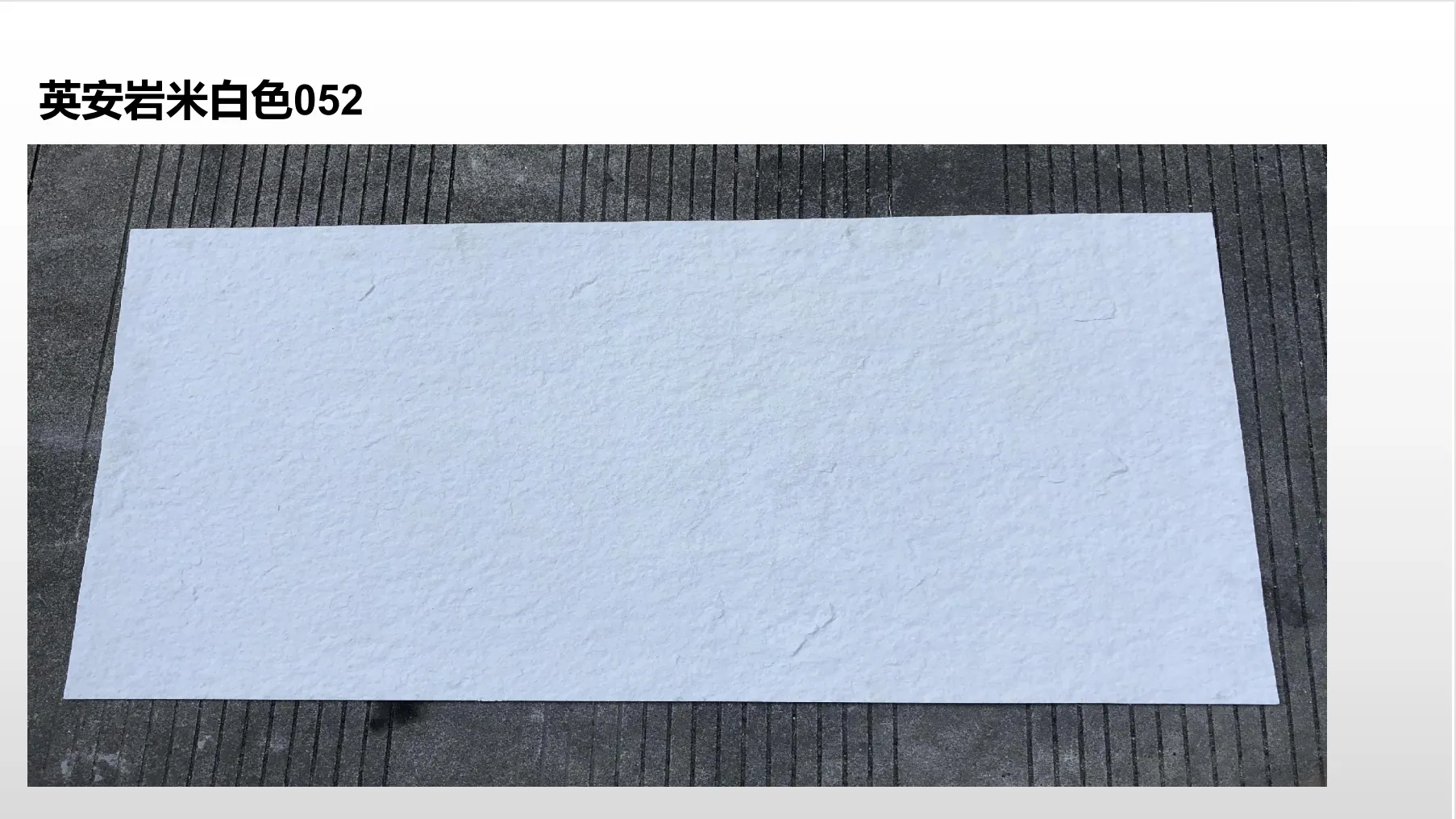
Walk down any city street, and you'll notice something: buildings wear their exteriors like a second skin. From the sleek glass of modern skyscrapers to the rustic charm of heritage homes, the materials that clothe our buildings do more than just look good—they protect, endure, and tell a story. But here's the catch: the sun doesn't care about aesthetics. Day in and day out, ultraviolet (UV) rays beat down, threatening to fade colors, crack surfaces, and turn once-vibrant facades into dull shadows of their former selves. That's why, when it comes to building materials, UV resistance isn't just a nice-to-have—it's a make-or-break feature . And today, we're diving deep into how one material in particular—dacite, as part of the MCM (Modified Composite Material) panel family—holds up under the sun's unforgiving gaze. We'll walk through real testing results, compare it to other popular options like fair-faced concrete and foamed aluminium alloy board (vintage silver), and why these findings matter for anyone who cares about buildings that stand the test of time.
If you're not knee-deep in construction materials, MCM might sound like just another acronym. Let's fix that. MCM panels—short for Modified Composite Material panels—are a modern take on traditional building cladding. Think of them as a hybrid: they blend the durability of minerals with the flexibility of polymers, resulting in sheets that are lightweight, strong, and surprisingly versatile. Over the years, MCM has grown in popularity, thanks to its ability to mimic the look of natural stone, wood, or metal without the heft or maintenance headaches. From the MCM big slab board series (perfect for large, seamless exteriors) to MCM flexible stone (which bends to fit curved surfaces), there's a style for every project.
But within the MCM family, dacite stands out. Dacite itself is a volcanic rock—think speckled, earthy tones with a subtle texture that adds depth to any surface. When engineered into MCM panels, it retains that natural beauty but gains superpowers: resistance to impact, moisture, and yes, UV radiation. But does it live up to the hype? To find out, we put it through a rigorous UV resistance test—and documented every detail, including "real photos" (in description, since we can't show images here) of how it looked before, during, and after.
Let's talk about the sun's wrath. UV rays are invisible, but their damage is anything but. Over time, they break down chemical bonds in materials, leading to: color fading (that bright red facade turning pink, or deep gray shifting to a washed-out blue), surface degradation (cracking, chalking, or peeling), and even structural weakening (think brittleness in plastics or erosion in porous stones). For building owners, this translates to costly repairs, frequent repainting, or even full panel replacements—none of which are ideal for budgets or sustainability.
Take fair-faced concrete, for example. It's a staple in modern architecture for its raw, industrial vibe. But left unprotected, its neutral tones can yellow or gray unevenly under UV exposure, and its porous surface can trap moisture (worsened by UV-weakened bonds), leading to mold or spalling. Similarly, foamed aluminium alloy board (vintage silver) has a sleek, metallic look, but aluminum—even when alloyed—can oxidize over time, developing a dull patina that dims its shine. So, when we test UV resistance, we're not just checking for pretty colors—we're ensuring the material can keep its promise of longevity.
To really put dacite MCM panels to the test, we didn't just leave them outside for a few weeks. We used a QUV accelerated weathering tester —a machine that simulates years of sun exposure in months. Here's how we set it up:
We tested three samples: dacite MCM panels, fair-faced concrete panels, and foamed aluminium alloy board (vintage silver). For each, we measured: color retention (using a spectrophotometer to track ΔE, the industry standard for color difference—lower ΔE means less fading), surface integrity (checking for cracks, peeling, or chalking under a microscope), and structural stability (flexural strength before and after testing).
After 1,000 hours, the differences were striking. Let's start with the "real photos" part: Before testing, all three materials looked sharp. The dacite MCM panel had a rich, earthy tone—think warm grays with flecks of cream and black, like a polished river stone. The fair-faced concrete was a clean, light gray, and the foamed aluminium alloy board (vintage silver) had a soft, matte sheen, like aged metal.
Post-testing? The fair-faced concrete showed noticeable yellowing (ΔE = 5.2—just above the "perceptible to the naked eye" threshold of 3). Its surface also had tiny cracks, and when we ran a finger over it, a fine white powder (chalk) came off—signs of surface degradation. The foamed aluminium alloy board (vintage silver) fared better in color (ΔE = 2.8, barely perceptible) but developed a slight, uneven dullness; under magnification, we saw micro-pitting, where UV and moisture had started to eat away at the surface.
Then there was the dacite MCM panel. Visually, it looked almost identical to day one. The color difference? ΔE = 0.9—so small, even a trained eye would struggle to spot a change. The surface? No cracks, no chalk, no peeling. When we tested its flexural strength (how much it bends before breaking), it retained 98% of its original strength—compared to 85% for the concrete and 92% for the aluminium alloy. In short: dacite MCM panels didn't just resist UV damage—they laughed at it .
| Material | Initial Color (Description) | ΔE After 1,000 Hours (Color Difference) | Surface Condition Post-Test | Flexural Strength Retention |
|---|---|---|---|---|
| Dacite MCM Panel | Earthy gray with cream/black flecks | 0.9 (Imperceptible change) | No cracks, peeling, or chalking; surface intact | 98% |
| Fair-Faced Concrete | Light gray, matte | 5.2 (Noticeable yellowing) | Micro-cracks and surface chalking | 85% |
| Foamed Aluminium Alloy Board (Vintage Silver) | Soft silver, matte sheen | 2.8 (Slight dullness) | Minor micro-pitting; no major damage | 92% |
So, what makes dacite MCM so UV-resistant? It all comes down to engineering. MCM panels are made by sandwiching a mineral core (in this case, dacite particles) between layers of modified polymer. That polymer layer acts like a shield: it's formulated to absorb and dissipate UV energy without breaking down. Additionally, the dacite itself is naturally dense and non-porous, so moisture (which can amplify UV damage by causing freeze-thaw cycles or mold) can't seep in. Compare that to fair-faced concrete, which is porous and lacks a protective coating, or even the foamed aluminium alloy, which—while strong—doesn't have the same polymer barrier to block UV rays at the surface.
Another factor? The MCM flexible stone technology. Because the panels are flexible (but not flimsy), they can expand and contract with temperature changes without cracking—a common issue with rigid materials like concrete, which can develop stress fractures that UV rays then widen over time. It's like having a material that can "breathe" with the elements, rather than fight against them.
Let's get practical. If you're an architect designing a commercial building, you want the facade to look as good in 10 years as it does on opening day. Dacite MCM panels mean less worry about fading or repairs—so that bold design choice you made won't become a regret. For builders, lighter panels (MCM is up to 70% lighter than natural stone) mean easier installation and lower structural support costs. And for homeowners? Imagine a backyard patio or exterior accent wall that stays vibrant through rain, snow, and blistering sun—no repainting, no power washing, just low maintenance beauty.
Take, for example, a hypothetical project: a coastal restaurant in Miami, where the sun is intense and saltwater is in the air. Using dacite MCM panels for the exterior would mean the warm, earthy tones stay true year-round, even with daily UV exposure. Compare that to using untreated wood, which would gray within a year, or standard concrete, which might start peeling. The restaurant saves on upkeep, keeps its curb appeal, and reduces its environmental footprint (fewer replacements = less waste).
UV resistance is just one piece of the puzzle, but it's a critical one. Dacite MCM panels also excel in other areas: they're fire-resistant, impact-resistant (goodbye, dents from hailstones), and resistant to mold and mildew. When you combine all these features, you get a material that's not just a cladding—it's an investment. And with the MCM big slab board series , you can cover large areas with minimal seams, creating a clean, modern look that's both aesthetically pleasing and structurally sound.
It's also worth noting that MCM panels are sustainable. Because they're lightweight, they reduce transportation emissions. They're often made with recycled materials, and their longevity means less frequent replacement—all wins for the planet. In a world where "green building" is no longer a trend but a necessity, dacite MCM panels check that box too.
At the end of the day, building materials are more than just tools—they're partners in creating spaces that last. UV resistance testing isn't about fear-mongering; it's about empowerment. It tells us which materials can be trusted to stand by our side, through scorching summers and harsh winters. And in that test, dacite MCM panels didn't just pass—they set a high bar.
So, the next time you look at a building, take a moment to appreciate the materials that protect it. And if you're in the market for cladding that combines beauty, durability, and peace of mind? Consider dacite MCM panels. They've earned their spot in the sun—literally.
Recommend Products












