
Blending Timeless Texture with Cutting-Edge Technology for Greener Buildings
Let's be honest: architecture has a bit of a sustainability problem. For decades, we've prioritized grand designs and quick builds over the planet's health—think massive concrete jungles, energy-guzzling skyscrapers, and materials extracted with little regard for ecosystems. But here's the good news: the tide is turning. Today's architects and builders aren't just asking, "Does it look good?" They're asking, "Does it do good?" And that's where materials like Dark Grey Dolomitic Travertine and the MCM 3D Printing Series come into play. These aren't just building supplies; they're tools to craft a future where our buildings work with the Earth, not against it.
You might be wondering, "Why focus on materials?" Because the truth is, sustainability starts at the foundation—literally. The materials we choose dictate everything from a building's carbon footprint to its lifespan. A facade that fades after 10 years means more replacements, more waste, more emissions. A cladding material that's so heavy it requires steel reinforcements? That's extra energy used in manufacturing and transport. So, when we talk about sustainable architecture, we're really talking about materials that are kind to the planet, easy on the eyes, and tough enough to stand the test of time. And that's exactly what we're diving into today.
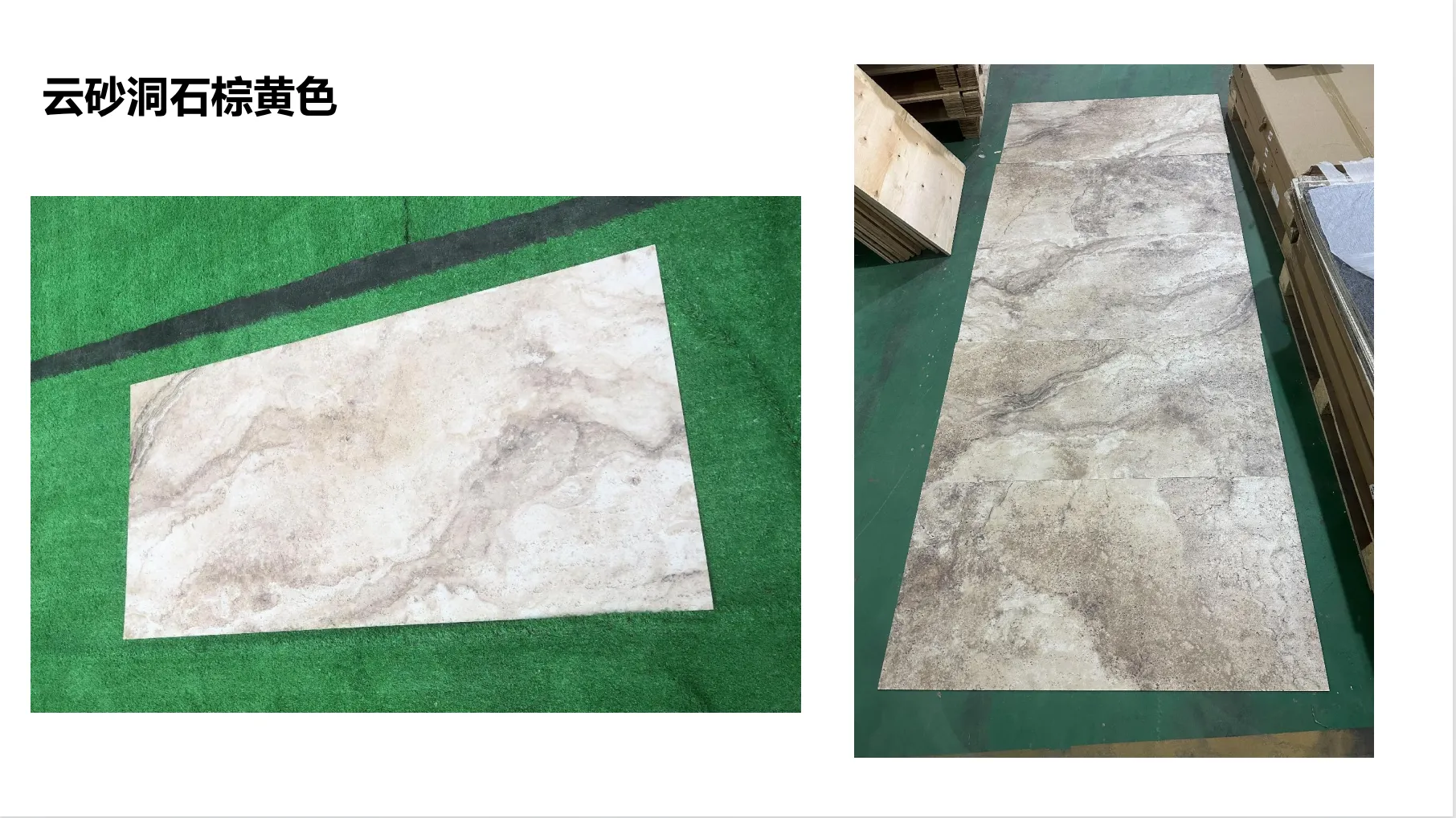
Let's start with the rockstar of natural materials: Dark Grey Dolomitic Travertine . If you've ever wandered through an ancient Roman ruin and run your hand over a weathered stone wall, you know the feeling—there's something inherently grounding about travertine. It's a stone formed by mineral-rich water, layered over centuries, which gives it that unique, porous texture and subtle veining. But Dark Grey Dolomitic Travertine? It's travertine with a modern twist. Picture a deep, moody gray base, swirled with hints of silver and charcoal, like a storm cloud frozen mid-sky. It's dramatic without being overpowering, rustic without feeling outdated. And here's the kicker: it's one of the most sustainable natural stones out there.
First, let's talk extraction. Traditional stone mining can be brutal—bulldozers tearing up landscapes, dynamite blasting through rock, tons of waste material left behind. Dark Grey Dolomitic Travertine is different. Most quarries that harvest this stone use precision cutting instead of blasting, which reduces waste by up to 40% compared to standard granite or marble extraction. And because dolomitic travertine forms in layers (thanks to those mineral-rich springs we mentioned), quarries can extract thin slabs without sacrificing structural integrity. That means less stone is dug up overall, and the surrounding ecosystem stays mostly intact.
Then there's durability. This stone is tough—really tough. It's resistant to water, fire, and even the harshest weather (we're talking freezing winters and scorching summers). That longevity matters because a building facade that lasts 50 years instead of 20 means fewer replacements, less material consumption, and lower emissions over time. Plus, when it does eventually reach the end of its life, dolomitic travertine is 100% recyclable—crush it up, and it can be used as aggregate for new construction or landscaping. No landfill-bound waste here.
Dark Grey Dolomitic Travertine isn't just for fancy hotels or museums (though it does look stunning there). It's versatile enough for everything from residential exteriors to public plazas. Take the Harbor View Hotel in Seattle, for example. The architects wanted a facade that felt both luxurious and connected to the city's industrial roots. They chose Dark Grey Dolomitic Travertine for the lower three floors, its rough-hewn surface echoing the texture of old warehouse bricks, while the upper floors feature glass and steel. The result? A building that feels grounded and modern, with a facade that's already withstood 15 years of Pacific Northwest rain and wind without a single crack.
Or consider the Riverside Community Plaza in Denver. The plaza's central walkway is paved with large slabs of Dark Grey Dolomitic Travertine. Why? Because its porous surface allows rainwater to seep through, reducing runoff and helping recharge the city's groundwater (a huge win for sustainability). Plus, its non-slip texture makes it safe for pedestrians, even in snow. Local residents love it—kids skip across its uneven surface, artists use its veining as inspiration for murals, and businesses report that the plaza's "earthy, welcoming vibe" has boosted foot traffic. It's proof that sustainable materials can also build community.
Now, let's shift from ancient stone to cutting-edge tech: the MCM 3D Printing Series . If Dark Grey Dolomitic Travertine is nature's answer to sustainability, MCM 3D printing is humanity's clever follow-up. MCM stands for Modified Composite Material—a blend of natural minerals (like limestone and marble dust), recycled polymers, and glass fibers. It's engineered to be lightweight, flexible, and surprisingly strong. And when you pair that with 3D printing? You get a building material that's as customizable as it is eco-friendly.
Here's the thing about traditional building materials: they're one-size-fits-most. You order sheets of metal or stone, cut them to fit your design, and throw away the scraps. With 3D printing, that waste disappears. Instead of cutting, you "grow" the material layer by layer, using only what you need. Think of it like baking a cake in a custom mold—no extra batter left in the bowl. Manufacturers report that 3D-printed MCM panels produce up to 70% less waste than traditional cladding materials. That's a massive reduction, especially on large projects.
And let's talk weight. MCM materials are up to 80% lighter than natural stone. That might not sound like a big deal, but for architects, it's a game-changer. Lighter cladding means less stress on a building's structure, which translates to using less steel and concrete in the frame. Less steel and concrete? Lower carbon emissions (since concrete production alone accounts for 8% of global CO2 emissions). Plus, lighter panels are cheaper and easier to transport—you can fit more panels on a truck, reducing fuel use and delivery costs. It's a sustainability win across the board.
A close cousin to 3D-printed MCM panels is MCM Flexible Stone , and it's worth a shoutout. Imagine a stone-like material that's thin enough to bend around a curved wall or wrap over an arch, without cracking. That's flexible stone. It's made with the same MCM base but rolled into thin sheets (some as thin as 3mm), making it perfect for irregular surfaces. Want a facade that undulates like a wave? Flexible stone can do that. Need to clad a spiral staircase? No problem. It's like having a material that's both rigid and malleable—ideal for architects who want to push the boundaries of design without compromising on sustainability.
And because it's made with recycled materials (up to 40% of MCM is recycled content), flexible stone has a lower carbon footprint than traditional cladding. It's also resistant to fading, mold, and mildew, so it stays looking fresh for decades. Architects love it for its versatility; builders love it for its ease of installation (it can be glued directly to walls, no heavy machinery needed). It's sustainability with a side of creativity.
Now, here's where it gets exciting: Dark Grey Dolomitic Travertine and MCM 3D Printing aren't competitors—they're collaborators. Together, they offer architects the best of both worlds: the organic, timeless beauty of natural stone and the precision, customization, and lightness of 3D-printed tech. Let's break down how they work in harmony.
Natural stone is heavy, which can limit where and how it's used—especially in high-rise buildings. MCM 3D-printed panels, on the other hand, are lightweight. So why not use both? For example, a 20-story office building might use Dark Grey Dolomitic Travertine for the lobby and first few floors (where its weight is supported by the building's foundation) and 3D-printed MCM panels for the upper floors (reducing structural load). The travertine adds that grand, grounded feel, while the MCM panels keep the design modern and efficient. It's a visual and structural balance that's hard to beat.
Dark Grey Dolomitic Travertine has a unique, organic texture that can't be replicated—but 3D printing can complement it. Suppose you want a facade with both rough-hewn stone and sleek, geometric patterns. Use travertine for the main sections, then 3D-print MCM panels in a matching dark grey tone to create accents—maybe a repeating diamond pattern or a wave-like motif that echoes the travertine's veining. The result is a facade that feels cohesive but dynamic, like a conversation between nature and technology.
| Material | Sustainability | Aesthetics | Durability | Cost-Effectiveness |
|---|---|---|---|---|
| Traditional Granite | High carbon footprint; wasteful extraction | Classic, but limited customization | High, but very heavy | High (extraction + transport costs) |
| Dark Grey Dolomitic Travertine | Low waste extraction; 100% recyclable | Organic veining, moody texture | High; weather and fire-resistant | Moderate (higher upfront, low maintenance) |
| MCM 3D Printed Panels | Minimal waste; recycled content; lightweight | Customizable shapes and patterns | High; flexible and impact-resistant | Moderate (lower labor and waste costs) |
Let's put this all together with a real example: the EcoTech Office Tower in Chicago, completed in 2023. The client wanted a building that was LEED Platinum certified (the highest sustainability rating) but also stood out in the city's skyline. The architects turned to Dark Grey Dolomitic Travertine and MCM 3D Printing Series to make it happen.
The lower five floors feature Dark Grey Dolomitic Travertine cladding, its rough texture creating a welcoming base that invites pedestrians in. The stone was sourced from a local quarry (reducing transport emissions) and installed using dry-stack techniques (no mortar, making future recycling easier). For the upper 35 floors, the team used 3D-printed MCM panels in a gradient of dark greys, designed to mimic the travertine's veining but in a lightweight, geometric pattern. The panels were printed on-site, cutting down on transport costs and waste.
The result? A building that uses 40% less energy than a standard office tower (thanks to the travertine's thermal mass, which regulates temperature, and the MCM panels' insulating properties). Construction waste was reduced by 65% compared to similar projects, and the tower is on track to recoup its initial material costs through lower energy and maintenance bills in just 12 years. Plus, it's become a local icon—people stop to take photos of the facade, where the organic stone and precise 3D-printed patterns play off each other like art.
So, what's next? As technology improves, we can expect even more innovation in sustainable materials. Imagine 3D printers that can embed solar panels directly into MCM panels, turning entire facades into power generators. Or Dark Grey Dolomitic Travertine treated with self-cleaning coatings that reduce maintenance needs. The possibilities are endless, but one thing is clear: the future of architecture isn't just about glass and steel—it's about materials that work with nature, not against it.
And here's the best part: these materials aren't just for "sustainable projects." They're for all projects. Whether you're designing a home, a school, or a skyscraper, choosing materials like Dark Grey Dolomitic Travertine and MCM 3D-printed panels means building something that will last, look good, and leave a smaller footprint. It's a win for architects, a win for builders, and most importantly, a win for the planet.
At the end of the day, architecture is about more than just buildings. It's about creating spaces that inspire, protect, and connect us. And in a world where sustainability is no longer optional, materials like Dark Grey Dolomitic Travertine and the MCM 3D Printing Series are helping us do just that. They're proof that we don't have to choose between beauty and the planet—that with a little creativity and the right tools, we can build structures that stand tall for decades, without standing in the way of a healthier Earth. So here's to the future: one sustainable, stunning building at a time.
Recommend Products












