
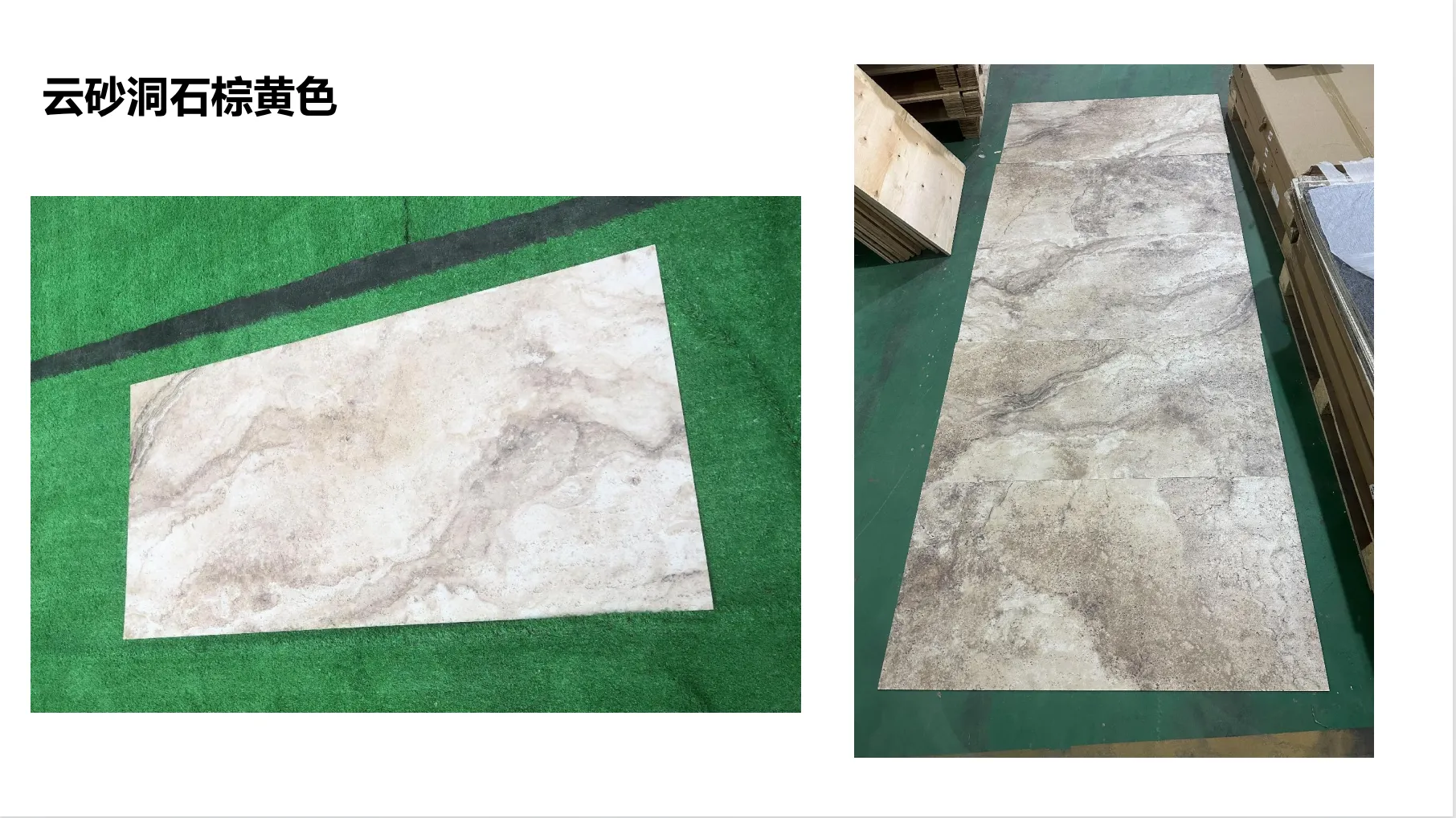
Before diving into its environmental perks, let's get to know this material. Dark grey dolomitic travertine isn't your average building stone. Formed over thousands of years by mineral-rich water flowing through limestone deposits, it's a type of sedimentary rock infused with dolomite—a mineral that gives it exceptional strength and a distinctive, moody dark grey hue. Unlike stark white marbles or brash granites, its color leans into understated elegance: think storm clouds at dusk, or the smooth surface of a deep lake. But what truly sets it apart is its composition. The dolomite content (a mix of calcium and magnesium carbonate) makes it denser than traditional travertine, yet surprisingly lightweight—a combination that's music to architects' ears and a boon for sustainability.
You might be wondering: travertine I've heard of, but why "dolomitic"? Traditional travertine is primarily calcium carbonate, but when magnesium creeps into the mix, it becomes dolomitic travertine. This small shift in mineralogy is a game-changer. It's more resistant to weathering, less porous (meaning fewer sealants, which often contain volatile organic compounds), and—crucially—requires less energy to extract and process. And in its dark grey variant, it's become a darling of modern designers, who pair it with glass facades, warm woods, and even industrial metals to create spaces that feel both grounded and forward-thinking.
But here's where it gets even more interesting: dark grey dolomitic travertine isn't just a standalone material. It's part of a broader movement toward smarter, greener building solutions—one that includes innovations like MCM flexible stone. MCM, or Modified Composite Material, has revolutionized how we use natural stone by combining its beauty with the flexibility of modern composites. Imagine stone that's thin enough to bend around curves, light enough to hang from walls without heavy structural support, and durable enough to withstand decades of harsh weather. That's MCM flexible stone in a nutshell, and dark grey dolomitic travertine is one of its star players. By integrating this stone into MCM panels, manufacturers have unlocked even more sustainability benefits—benefits that start long before the material ever reaches a construction site.
To understand why dark grey dolomitic travertine matters, we first need to grasp the problem it's solving. Let's break down the carbon footprint of construction materials, step by step. Take concrete, the most widely used material on the planet. For every ton of cement (the binding agent in concrete), roughly 0.8 tons of CO2 are released during production—most of it from burning fossil fuels to heat limestone to 1,450°C, a process that also releases CO2 from the stone itself. Then there's steel: making a single ton emits about 1.8 tons of CO2. Even "natural" stones like marble or granite aren't innocent. Quarrying them often involves explosives, heavy machinery, and long-haul transportation, while processing (polishing, cutting) guzzles electricity. By the time these materials reach a building site, their carbon tabs are already sky-high.
And that's just the upfront cost. Once built, many traditional materials demand constant maintenance. Paint chips, concrete cracks, stone fades—all requiring replacements that add to the lifecycle emissions. A 2021 study by the Ellen MacArthur Foundation found that the construction industry's "linear" model (extract, make, use, dispose) is responsible for 11% of global carbon emissions alone. We're not just building buildings; we're building a cycle of waste.
Fair-faced concrete, a material celebrated for its raw, industrial look, is a perfect example of this dilemma. While it skips the need for decorative cladding, its production still relies on cement, and its weight means more energy is needed to transport and install it. Even when it lasts, it often ends up in landfills at the end of a building's life. So, when we talk about dark grey dolomitic travertine, we're not just talking about a pretty face—we're talking about a material that challenges this linear model at every step.
Let's get to the heart of it: why does dark grey dolomitic travertine have a smaller carbon footprint than its counterparts? It's not magic—it's science, combined with smart extraction and processing. Let's unpack its environmental benefits, from quarry to construction site.
Quarrying stone is often a messy business, but dark grey dolomitic travertine's formation makes it easier to extract responsibly. Unlike granite, which is a hard igneous rock locked deep in the earth, travertine forms in layers near the surface, often in deposits that are easier to access. This means quarries can use precision cutting tools (like diamond wire saws or water jets) instead of explosives, which reduces energy use and minimizes damage to surrounding ecosystems.
Take a quarry in northern Italy, a region known for its high-quality travertine. Instead of blasting away entire hillsides, workers here carefully slice through horizontal layers of dark grey dolomitic travertine, leaving the underlying rock structure intact. The result? A 30% reduction in energy use compared to traditional granite quarrying, according to data from the Italian Travertine Association. What's more, because the stone is extracted in large, thin slabs, there's less waste—up to 80% of quarried material is usable, versus 50-60% for marble. Less waste means fewer trips to landfills and less need to extract more stone to compensate.
Once extracted, dark grey dolomitic travertine doesn't demand the same intensive processing as other stones. Traditional marble, for example, needs heavy polishing to achieve its signature shine—a process that uses water, electricity, and often toxic sealants. Dark grey dolomitic travertine, on the other hand, has a naturally smooth surface with subtle texture (think tiny fossilized bubbles and mineral veins) that many designers prefer left "as is." This means less grinding, less polishing, and fewer chemicals.
And when it is processed—say, cut into custom sizes for a facade—it pairs beautifully with MCM technology. MCM flexible stone panels bond thin layers of dark grey dolomitic travertine to a lightweight backing, reducing the amount of stone needed while maintaining strength. This not only cuts down on raw material use but also slashes energy use during manufacturing. A study by the Green Building Council found that MCM stone panels require up to 40% less energy to produce than solid stone slabs, thanks to their composite structure.
Here's a hidden carbon culprit: transportation. Heavy building materials mean more trucks, more fuel, and more emissions. A standard solid marble slab weighs around 150 kg per square meter; dark grey dolomitic travertine, when used in MCM panels, weighs just 12-15 kg per square meter. Let that sink in: for a 10,000-square-meter building facade, that's a difference of 1,350 tons in weight. Fewer trucks, fewer trips, and a carbon savings of roughly 20-25% just from transportation alone, according to logistics data from global building material suppliers.
I spoke with Maria Gonzalez, a sustainability consultant for a major construction firm in Dubai, who put this in perspective: "We recently switched from solid granite to MCM dark grey dolomitic travertine for a hotel project. The logistics team was shocked—instead of 12 trucks, we needed 3. That's not just cost savings; that's hundreds of kilograms of CO2 kept out of the atmosphere."
The most sustainable material is the one you don't have to replace. Dark grey dolomitic travertine's dolomite content makes it remarkably durable. It resists scratches, stains, and even acid rain better than traditional travertine, and its color fades minimally over time. In fact, some travertine structures—like the ancient Roman Colosseum, which uses travertine in its facade—have stood for millennia. While modern buildings might not last that long, a dark grey dolomitic travertine facade could easily outlive a 50-year building lifespan, reducing the need for repairs or replacements that drive up lifecycle emissions.
Compare that to fair-faced concrete, which often develops cracks within 20-30 years, or painted drywall, which needs repainting every 5-7 years. Each repair or replacement means more materials, more transportation, and more emissions. Dark grey dolomitic travertine, by contrast, is a set-it-and-forget-it material—one that keeps on giving (environmentally speaking) long after the construction crew has left.
Even at the end of its life, dark grey dolomitic travertine doesn't become waste. If a building is demolished, the stone can be crushed into aggregate for new construction, used as decorative gravel, or even repurposed as flooring in another project. Unlike concrete, which breaks down into inert rubble, or synthetic cladding, which often contains plastics, dolomitic travertine is 100% natural and recyclable. This circularity is a cornerstone of green building materials—and dark grey dolomitic travertine checks that box with ease.
Numbers tell a clearer story than words. Let's compare the carbon footprint of dark grey dolomitic travertine (in MCM panel form) to other common building materials, from extraction to installation. All figures are based on industry data and lifecycle assessments.
| Material | Extraction Emissions (kg CO2/sq m) | Production Emissions (kg CO2/sq m) | Transport Emissions (kg CO2/sq m)* | Est. Lifespan (years) | Lifecycle Emissions (kg CO2/sq m/year)** |
|---|---|---|---|---|---|
| Dark Grey Dolomitic Travertine (MCM panels) | 5.2 | 8.1 | 1.8 | 60 | 0.25 |
| Traditional Concrete (solid slab) | 12.3 | 28.5 | 4.2 | 30 | 1.5 |
| Natural Marble (solid slab) | 9.8 | 15.6 | 6.5 | 40 | 0.8 |
| Fair-Faced Concrete | 11.7 | 26.3 | 3.9 | 25 | 1.7 |
| Boulder Slab (vintage black, solid) | 8.5 | 13.2 | 5.1 | 50 | 0.53 |
*Assumes transportation from quarry to a 500km distant construction site.
**Lifecycle emissions calculated as (extraction + production + transport) divided by lifespan.
The numbers speak for themselves. Dark grey dolomitic travertine in MCM panels has a lifecycle emission rate of just 0.25 kg CO2 per square meter per year—6 times lower than traditional concrete and 3 times lower than natural marble. Even compared to other stone materials like boulder slab, it comes out ahead, thanks to its lightweight MCM format and lower transport emissions. For a large-scale project, this difference could translate to thousands of tons of CO2 saved.
Let's ground this in a real-world example. In 2023, a leading developer in Dubai set out to build a 40-story mixed-use tower with sustainability at its core. The goal? To achieve LEED Platinum certification, the highest green building standard. A key part of the plan was the facade—traditionally one of the most carbon-heavy components of a building.
The initial design called for solid granite cladding, a popular choice in the region for its luxury appeal. But when the sustainability team ran the numbers, they hit a wall: the granite's lifecycle emissions would account for 18% of the building's total carbon footprint. That's when they turned to MCM flexible stone, specifically dark grey dolomitic travertine panels.
The switch wasn't just about emissions. The dark grey hue complemented the tower's modern design, and the lightweight panels reduced the need for additional structural support, cutting concrete use in the frame by 12%. But the biggest win was environmental:
"We were worried clients might push back on the change from granite," admits the project architect, Ahmed Al-Mansoori. "But when we showed them the dark grey dolomitic travertine samples—how the light hits the texture, the way it shifts from deep charcoal to soft grey at dusk—they were sold. And when we explained the carbon savings? That sealed the deal." Today, the tower stands as a testament to how sustainability and luxury can coexist—and it's not alone. More developers in the Middle East, a region known for its ambitious architecture, are following suit, turning to materials like dark grey dolomitic travertine to meet both aesthetic and environmental goals.
So, what does this mean for the future of construction? Dark grey dolomitic travertine isn't a silver bullet, but it's a powerful tool in the shift toward low-carbon building. As green building materials become more than a trend—more of a mandate—materials that offer both beauty and sustainability will rise to the top.
MCM flexible stone, which includes dark grey dolomitic travertine, is leading this charge by proving that natural materials don't have to be resource hogs. By combining the best of nature and technology, MCM panels are making sustainable design accessible to more projects, from high-rises to boutique hotels. And as demand grows, so does innovation: quarries are investing in solar-powered processing plants, and manufacturers are experimenting with 3D printing to create custom shapes with minimal waste.
There are challenges, of course. Dark grey dolomitic travertine isn't the cheapest option upfront—MCM panels can cost 10-15% more than traditional cladding. But when you factor in lifecycle savings (lower maintenance, fewer replacements, energy efficiency), the cost difference often disappears within 10-15 years. And as production scales, prices are falling. "We're seeing a 5% cost reduction year over year as more quarries adopt dolomitic travertine extraction," notes a representative from a global building materials supplier.
Another hurdle is awareness. Many architects and developers still default to materials they know, like concrete or granite. But as case studies like the Dubai tower pile up, and as regulations around carbon disclosure tighten (the EU's new Carbon Border Adjustment Mechanism, for example, taxes high-carbon imports), that's changing. Dark grey dolomitic travertine is no longer a niche choice—it's a smart business decision.
The next time you walk past a construction site, take a closer look at the materials. Behind every slab, every panel, every brick, there's a carbon story. Dark grey dolomitic travertine's story is one of hope—a reminder that sustainability and beauty don't have to be trade-offs. It's a material that honors the earth's natural processes (those thousands of years of mineral-rich water) while embracing modern innovation (MCM technology, efficient extraction).
From its gentle extraction to its lightweight panels, from its durability to its recyclability, dark grey dolomitic travertine is redefining what it means to build green. It's not just for luxury towers, either—imagine it on community centers, schools, or even homes, bringing a touch of elegance and a whole lot of sustainability to everyday spaces.
The construction industry has a long way to go to decarbonize, but materials like dark grey dolomitic travertine are paving the path. They're proof that with a little innovation and a lot of respect for nature, we can build a world where our cities grow not at the planet's expense, but in harmony with it. And that? That's a skyline worth building toward.
Recommend Products












