
Before we explore the specifics of Dark Grey Dolomitic Travertine, it's worth pausing to understand why certifications like BREEAM (Building Research Establishment Environmental Assessment Method) and LEED (Leadership in Energy and Environmental Design) have become cornerstones of modern construction. These frameworks aren't just checklists; they're holistic systems that evaluate a building's environmental performance across its entire lifecycle—from design and construction to operation and demolition. BREEAM, born in the UK in 1990, and LEED, developed by the U.S. Green Building Council (USGBC) in 1998, have since become global benchmarks, guiding projects toward reduced carbon footprints, improved energy efficiency, and healthier indoor environments.
For developers and architects, achieving BREEAM or LEED certification isn't just about ethics—it's about value. Certified buildings often command higher rental rates, attract eco-conscious tenants, and reduce long-term operational costs through lower energy and water usage. They also signal a commitment to corporate social responsibility, a growing priority for investors and consumers alike. But to reach these heights, every material choice counts. And that's where Dark Grey Dolomitic Travertine steps in.
At first glance, Dark Grey Dolomitic Travertine captivates with its understated elegance. Its deep, moody hues—ranging from charcoal to slate—are swirled with subtle veins of lighter grey, creating a texture that feels both timeless and contemporary. But beyond its aesthetic appeal lies a material with a host of properties that make it ideal for sustainable construction. Let's break down what sets it apart.
Dark Grey Dolomitic Travertine is a type of sedimentary rock formed over millions of years by the precipitation of calcium carbonate from mineral-rich water. What makes it "dolomitic" is its high magnesium content, which enhances its durability compared to traditional travertine. Unlike synthetic materials derived from fossil fuels, this stone is a product of nature—renewable in the geological sense, though extracted responsibly to ensure minimal environmental impact. Many quarries today operate with strict sustainability protocols, reforesting areas post-extraction and minimizing water and energy use during processing.
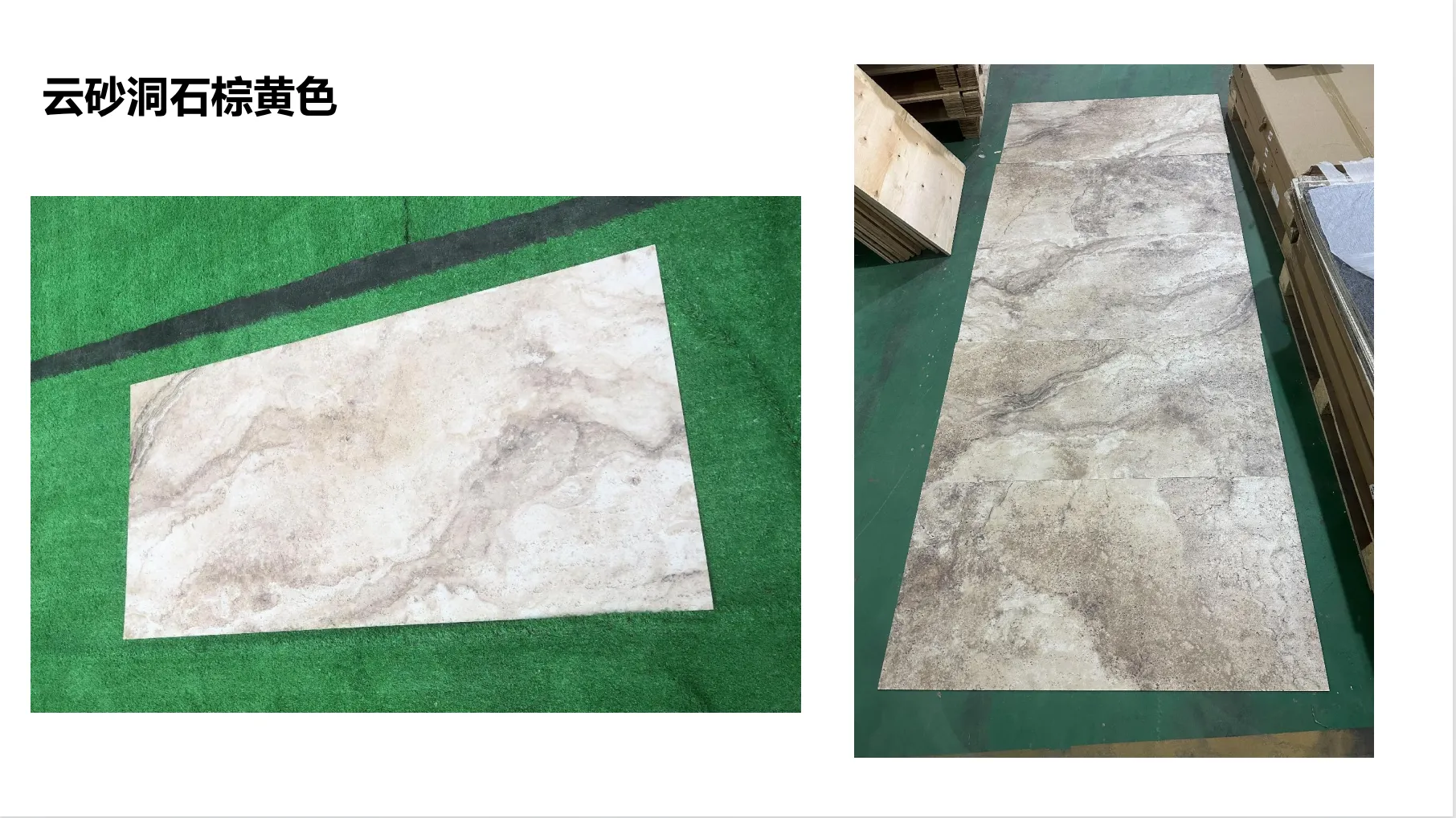
One of the most innovative aspects of Dark Grey Dolomitic Travertine, especially when part of the MCM Big Slab Board Series, is its adaptability. MCM, or Modified Composite Material, technology transforms natural stone into lightweight flexible stone sheets that retain the stone's authentic look and feel but with added benefits. These sheets are thinner and lighter than traditional stone slabs, reducing the structural load on buildings and cutting down on transportation emissions. Imagine a material that offers the grandeur of natural stone but with the ease of installation of more lightweight alternatives—that's the magic of MCM-processed Dark Grey Dolomitic Travertine.
Sustainability isn't just about what a material is made of—it's about how long it lasts. Dark Grey Dolomitic Travertine is inherently durable, resistant to scratches, heat, and weathering. This longevity means fewer replacements over a building's lifetime, reducing waste and the need for resource-intensive manufacturing of new materials. In outdoor applications, like facades or landscaping, it weathers gracefully, developing a rich patina that adds character without compromising structural integrity. Indoors, it stands up to heavy foot traffic, making it a staple for high-use spaces like lobbies, retail areas, and public buildings.
BREEAM certification is all about balancing environmental, social, and economic sustainability. To achieve a high BREEAM rating, a building must excel in categories like Energy, Materials, Waste, Water, and Indoor Environmental Quality. Let's explore how Dark Grey Dolomitic Travertine contributes to each of these areas.
BREEAM's Materials category evaluates the environmental impact of construction materials, from extraction to disposal. Dark Grey Dolomitic Travertine shines here for several reasons. First, its natural composition means it has a lower embodied carbon footprint compared to synthetic alternatives like PVC cladding or engineered stone, which often require energy-intensive manufacturing processes. Second, when sourced from quarries with responsible practices—such as those certified by the Extractive Industries Transparency Initiative (EITI) or local sustainability programs—it meets BREEAM's criteria for ethical material sourcing. Many suppliers also provide Environmental Product Declarations (EPDs) for their stone, giving architects and developers clear data on its environmental impact, a key requirement for BREEAM credits.
BREEAM's Energy category focuses on reducing a building's energy consumption and carbon emissions. Here, Dark Grey Dolomitic Travertine's thermal mass properties are a game-changer. Thermal mass refers to a material's ability to absorb, store, and release heat. Stone, with its dense structure, excels at this: during the day, it absorbs heat from sunlight or indoor spaces, and at night, it releases that heat, helping to regulate indoor temperatures. This reduces the need for artificial heating and cooling, lowering a building's energy use. When used as cladding or flooring, Dark Grey Dolomitic Travertine acts as a natural insulator, making it easier for buildings to meet BREEAM's stringent energy efficiency targets.
Construction waste is a major environmental concern, and BREEAM's Waste category rewards projects that minimize waste during construction and demolition. Dark Grey Dolomitic Travertine, particularly in MCM Big Slab Board form, addresses this in two ways. First, the large slab format means fewer joints and less cutting on-site, reducing offcuts and waste. Second, its flexibility allows for custom shaping, ensuring that even complex designs can be executed with minimal material loss. Additionally, because the stone is durable, it's less likely to be damaged during installation, further cutting down on waste. Any unavoidable waste can often be recycled or repurposed, such as crushed stone for landscaping or aggregate in concrete, aligning with BREEAM's circular economy principles.
BREEAM recognizes that a building's impact extends beyond the environment to the people who use it. The Indoor Environmental Quality category evaluates factors like air quality, lighting, and acoustic performance. Dark Grey Dolomitic Travertine contributes here by being a low-VOC (volatile organic compound) material. Unlike some paints, carpets, or synthetic flooring, it doesn't release harmful chemicals into the air, improving indoor air quality and reducing health risks for occupants. Its natural texture also helps with sound absorption, reducing echo in large spaces—a benefit for both comfort and productivity. Plus, its neutral, earthy tones can enhance visual comfort, reducing eye strain and creating a calming atmosphere, which BREEAM acknowledges as part of occupant well-being.
LEED certification, like BREEAM, emphasizes sustainability across a building's lifecycle, but with a focus on credits that can be earned in categories such as Materials and Resources (MR), Energy and Atmosphere (EA), and Indoor Environmental Quality (EQ). Let's see how Dark Grey Dolomitic Travertine helps projects earn these valuable credits.
LEED's MR category encourages the use of locally sourced materials to reduce transportation emissions. Dark Grey Dolomitic Travertine, quarried in regions like Italy, Turkey, or parts of Asia, can often be sourced within a 500-mile radius of construction projects, qualifying for LEED's Regional Materials credit (MRc5). Additionally, because it's a natural material, it's fully recyclable at the end of its life. Even if a building is demolished, the stone can be crushed and reused as aggregate or landscaping material, diverting waste from landfills and earning points under LEED's Construction and Demolition Waste Management credit (MRc2).
LEED's EA category rewards projects that optimize energy performance. As we noted earlier, Dark Grey Dolomitic Travertine's thermal mass helps regulate indoor temperatures, reducing the load on HVAC systems. In LEED terms, this translates to lower energy consumption, which can contribute to earning points under EAc1 (Optimize Energy Performance). For example, a building with a travertine facade may require 10-15% less energy for heating and cooling compared to one with synthetic cladding, a significant difference that adds up over time.
LEED recognizes that indoor spaces should support human health and well-being, and Dark Grey Dolomitic Travertine delivers here in spades. Its natural, non-toxic composition means it doesn't off-gas harmful chemicals, contributing to LEED's Low-Emitting Materials credit (EQc4). Beyond air quality, its aesthetic appeal plays a role in occupant satisfaction. Studies have shown that natural materials like stone can reduce stress and improve mood, which LEED acknowledges indirectly through credits related to daylighting and views (EQc6). A lobby clad in Dark Grey Dolomitic Travertine, with its warm greys and organic, isn't just visually striking—it's a space that feels welcoming and grounded, enhancing the overall user experience.
| Certification Criteria | BREEAM Requirements | LEED Requirements | Dark Grey Dolomitic Travertine's Contribution |
|---|---|---|---|
| Material Sourcing | Ethical extraction, low embodied carbon | Regional sourcing (500-mile radius) | Responsibly quarried with EPDs; available from regional suppliers |
| Energy Efficiency | Reduced operational energy use | Optimized HVAC performance | Thermal mass regulates temperatures, lowering energy demand |
| Waste Reduction | Minimal construction waste | Recyclability and waste diversion | Lightweight sheets reduce installation waste; fully recyclable |
| Indoor Air Quality | Low-VOC materials | Low-emitting products | Natural composition with no harmful off-gassing |
| Durability | Long material lifespan | Reduced replacement frequency | Resistant to wear, weathering, and damage; long service life |
To put this in context, consider a recent project: a 12-story office building in Milan, Italy, aiming for LEED Platinum certification. The architects wanted a facade material that would reflect the city's rich architectural heritage while meeting strict sustainability goals. They chose Dark Grey Dolomitic Travertine from the MCM Big Slab Board Series for the building's exterior cladding and lobby floors.
By using lightweight flexible stone sheets, the construction team reduced the building's structural load, allowing for a more efficient steel frame design that saved on material costs and reduced embodied carbon. The stone's thermal mass helped the building achieve a 20% reduction in energy use compared to code requirements, earning points under LEED's Energy and Atmosphere category. Additionally, the stone was quarried just 300 miles from the site, qualifying for LEED's Regional Materials credit. The result? The building not only achieved LEED Platinum but also became a landmark in Milan's financial district, praised for its blend of modern design and environmental responsibility.
"We wanted a material that felt timeless but forward-thinking," said the project's lead architect. "Dark Grey Dolomitic Travertine gave us that—its depth and texture make the building feel rooted in history, while its sustainable properties ensure it's ready for the future."
While BREEAM and LEED compliance is a major draw, Dark Grey Dolomitic Travertine offers benefits that go beyond green credentials. Its versatility makes it a favorite among designers, who appreciate its ability to adapt to various styles—from industrial chic to minimalist modern. In commercial spaces, it adds a touch of luxury without feeling ostentatious; in residential projects, it creates a sense of warmth and permanence.
The MCM Big Slab Board Series takes this versatility a step further, offering large-format slabs (up to 120x240 cm) that minimize grout lines, creating a seamless, expansive look. This is particularly impactful in open-concept spaces, where the stone can serve as a unifying design element. Imagine a hotel lobby with floor-to-ceiling Dark Grey Dolomitic Travertine walls, their subtle veining drawing the eye upward—this is the kind of drama that turns buildings into experiences.
Maintenance is another practical advantage. Unlike wood, which requires regular sealing, or carpet, which traps allergens, Dark Grey Dolomitic Travertine is easy to clean and resistant to stains. A simple sweep and damp mop are usually enough to keep it looking fresh, making it ideal for busy spaces where time and resources for upkeep are limited.
As the construction industry continues to evolve, the demand for materials that balance aesthetics, performance, and sustainability will only grow. Dark Grey Dolomitic Travertine, with its natural origins, durability, and alignment with BREEAM and LEED standards, is poised to be a leader in this shift. Whether used in a LEED Platinum office tower, a BREEAM Excellent residential complex, or a community center aiming for a basic green certification, it proves that sustainability and beauty don't have to be mutually exclusive.
For architects and developers, choosing Dark Grey Dolomitic Travertine isn't just a material decision—it's a statement. It says that you value the planet as much as you value design, that you believe in building for the long term, and that you understand that the spaces we create shape both our present and our future. In a world where green building materials are no longer a trend but a necessity, Dark Grey Dolomitic Travertine stands out as a choice that makes sense—for the environment, for occupants, and for the bottom line.
So, the next time you walk into a building that feels both grand and grounded, that looks beautiful and feels responsible, take a closer look at the walls or floors. Chances are, you might be standing on—or admiring—Dark Grey Dolomitic Travertine. And in that moment, you'll see exactly why it's more than just a stone—it's a symbol of sustainable building done right.
Recommend Products












