
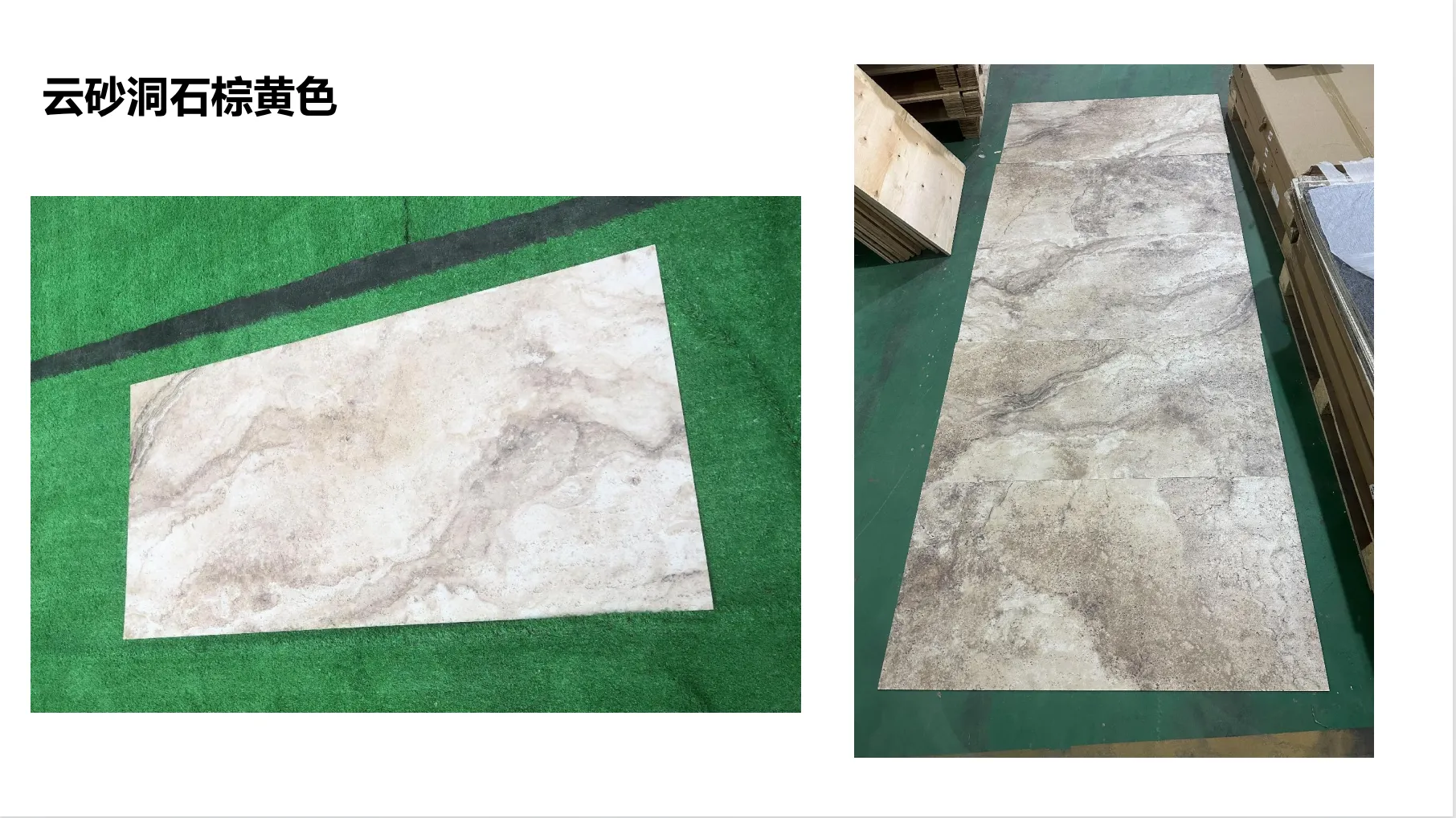
Picture this: It's the dead of winter, and you're cranking up the heat for the third time that day. Your furnace hums nonstop, yet your living room still feels drafty. Or maybe it's midsummer, and your air conditioner is working overtime to combat the sun beating down on your exterior walls. Sound familiar? For many homeowners and building managers, this scenario is all too common—and it's costing them hundreds, even thousands, of dollars annually in wasted energy.
The culprit? Often, it's the very materials we use to clothe our buildings. Traditional exterior cladding—think plain concrete, standard brick, or even some types of stone—can act like a bridge for heat, letting precious warmth escape in winter and unwanted heat seep in during summer. But what if there was a material that didn't just look beautiful, but actively helped your building hold onto temperature, slashing those energy bills in the process? Enter dark grey dolomitic travertine —a natural stone that's quietly revolutionizing how we think about both aesthetics and efficiency in construction.
Before we dive into its thermal superpowers, let's get to know this material. Travertine itself is a type of limestone formed from mineral-rich spring water, known for its unique porous texture and earthy charm. But dolomitic travertine (dark grey) is a specialized variant, infused with dolomite—a mineral that gives it enhanced durability and a distinctive, moody hue that architects and designers adore. Unlike its lighter cousins, the dark grey shade isn't just for show; it plays a subtle role in heat absorption and reflection, which we'll explore later.
What makes this stone stand out, though, isn't just its looks. It's a product of both nature and careful engineering. Quarried from select regions where geological conditions create the perfect balance of density and porosity, dark grey dolomitic travertine undergoes minimal processing to preserve its natural structure. Those tiny, honeycomb-like pores you see on its surface? They're not just a design feature—they're the secret to its impressive thermal insulation abilities.
To understand why dark grey dolomitic travertine is a star insulator, let's break down the basics of thermal insulation. At its core, insulation is all about slowing down heat transfer. Heat moves in three ways: conduction (through direct contact, like a spoon heating up in hot soup), convection (through air or liquid currents, like warm air rising), and radiation (heat waves traveling through space, like the sun warming your skin). A good insulating material disrupts all three.
Most traditional building materials—take fair-faced concrete , for example—are dense and solid. That density makes them great for structural support, but terrible for insulation. Heat zips through them via conduction, turning your walls into a one-way street for temperature control. In contrast, materials with tiny air pockets (like fiberglass insulation or, yes, porous stone) trap air, which is a poor conductor of heat. Those pockets act like mini barriers, slowing conduction and convection. And when a material has the right color and texture? It can even reflect radiant heat, keeping your building cooler in summer.
Now, let's zoom in on what makes dark grey dolomitic travertine so effective. First, its porosity. Those natural pores aren't random—they're evenly distributed, creating a network of air pockets that act as insulators. Imagine a sponge full of tiny bubbles; heat struggles to move through those bubbles because air is 20 times less conductive than solid stone. Tests show that dark grey dolomitic travertine has a porosity of around 15-20%, which is just enough to trap air without sacrificing structural strength.
Then there's its density. At roughly 2,300 kg/m³, it's less dense than fair-faced concrete (which clocks in at 2,400-2,500 kg/m³) but denser than lightweight synthetic insulators. This sweet spot means it's sturdy enough for exterior cladding while still retaining those insulating air pockets. But the real numbers that matter? Thermal conductivity. This measures how well a material conducts heat, and lower is better. Dark grey dolomitic travertine has a thermal conductivity of about 0.8-1.0 W/m·K, compared to fair-faced concrete's 1.5-2.0 W/m·K. That might not sound like a huge difference, but over the surface area of a building, it adds up to significant energy savings.
Let's put that in context: A wall clad in fair-faced concrete allows heat to transfer through it twice as fast as one clad in dark grey dolomitic travertine. In winter, that means your furnace doesn't have to work as hard to replace lost heat. In summer, your AC can take a breather because less outdoor heat is seeping in. It's like upgrading from a screen door to a double-paned window—suddenly, your home or office is working with you, not against you.
Numbers tell a clearer story when we compare. Let's take a look at how dark grey dolomitic travertine holds up against common alternatives, including fair-faced concrete , standard travertine, and even some popular stone composites like marble concrete board .
| Material | Thermal Conductivity (W/m·K) | Estimated R-Value (m²·K/W)* | Annual Energy Savings Potential** | Key Tradeoffs |
|---|---|---|---|---|
| Dark Grey Dolomitic Travertine | 0.8-1.0 | 0.5-0.6 | 15-20% | Higher upfront cost than concrete, but long-term savings offset it |
| Fair-Faced Concrete | 1.5-2.0 | 0.2-0.3 | 5-8% | Low cost, high strength, but poor insulation |
| Standard Travertine (Beige) | 1.0-1.2 | 0.4-0.5 | 10-15% | Similar insulation to dolomitic, but less durable |
| Marble Concrete Board | 1.2-1.4 | 0.3-0.4 | 8-12% | More uniform look, but higher conductivity than dolomitic travertine |
*R-Value measures resistance to heat flow; higher = better insulation. **Based on a 2,000 sq ft commercial building in a temperate climate, compared to fair-faced concrete.
The table speaks for itself: dark grey dolomitic travertine outperforms fair-faced concrete by 10-15% in energy savings and holds its own against other stones. What's more, its durability means it won't degrade over time like some synthetic insulators, so those savings compound year after year. Unlike marble concrete board , which often requires synthetic binders that can off-gas, dolomitic travertine is all natural—so you're not just saving on energy; you're breathing cleaner air, too.
Let's get practical. Suppose you're managing a mid-sized office building in Chicago, where winters are cold and summers are humid. The building has 10,000 sq ft of exterior wall space, currently clad in fair-faced concrete. Your annual heating and cooling costs average $25,000. If you switch to dark grey dolomitic travertine, based on our earlier 15-20% savings estimate, you could cut that bill by $3,750 to $5,000 per year. Over a decade, that's $37,500 to $50,000 back in your budget—money that could go toward upgrades, staff bonuses, or sustainability initiatives.
For homeowners, the impact is just as tangible. Let's say you own a 2,500 sq ft home in Portland, Oregon, with average monthly energy bills of $150. A 15% savings would trim that to $127.50—about $270 per year. Over 30 years (the typical lifespan of a cladding material), that's $8,100 saved. And remember, dolomitic travertine is low-maintenance; unlike wood or vinyl siding, it won't rot, fade, or need repainting. So those savings are net —no extra costs for upkeep eating into your gains.
Take the example of a recent project in Seattle: a boutique hotel replaced its aging wood concrete board exterior with dark grey dolomitic travertine. Within the first year, their HVAC costs dropped by 18%, and guests reported feeling more comfortable in common areas. "We didn't just upgrade the look—we upgraded the building's performance," said the project architect. "It's rare to find a material that checks both boxes so well."
In today's world, energy efficiency and sustainability go hand in hand. Dark grey dolomitic travertine aligns with both. As a green building material , it ticks several boxes:
Compare that to foamed aluminium alloy board (vintage silver) or other metal claddings, which often require energy-intensive manufacturing and can't be easily recycled. Or synthetic insulators like foam boards, which degrade over time and release harmful chemicals. Dark grey dolomitic travertine is a material that respects the planet and your wallet—a rare win-win.
If you're sold on the benefits, here's what you need to know before diving in. First, work with a supplier who specializes in natural stone cladding—they can help you source high-quality dolomitic travertine with consistent porosity. Installation is similar to other stone claddings, but those pores mean you'll want to seal the surface to prevent water absorption (especially in rainy climates). A good sealer will preserve the stone's look and insulation properties for decades.
Aesthetically, dark grey dolomitic travertine is surprisingly versatile. It pairs beautifully with warm woods (try wood grain board accents) or cool metals like foamed aluminium alloy board (vintage gold) for a modern-industrial vibe. Its earthy tone also complements greenery, making it a favorite for buildings aiming for a biophilic design—bringing nature indoors while staying energy-efficient.
Finally, don't overlook local climate. In hot, sunny regions, the dark grey color may absorb some radiant heat, so consider pairing it with overhangs or reflective windows to balance. In colder climates, that same dark hue can work to your advantage, absorbing winter sun and passively warming the building. It's all about smart design!
In a world where energy costs are rising and sustainability is no longer optional, dark grey dolomitic travertine stands out as a material that delivers on both fronts. It's not just about saving money (though the savings are real); it's about creating buildings that are comfortable, durable, and kind to the planet. Whether you're an architect designing the next iconic structure or a homeowner wanting to future-proof your house, this stone offers a rare combination of beauty, performance, and peace of mind.
So the next time you're evaluating cladding options, don't just think about how it looks—think about how it works. Dark grey dolomitic travertine isn't just a surface; it's a partner in keeping your space comfortable, your bills low, and your impact on the environment lighter. And in the end, isn't that what great design is all about?
Recommend Products












