
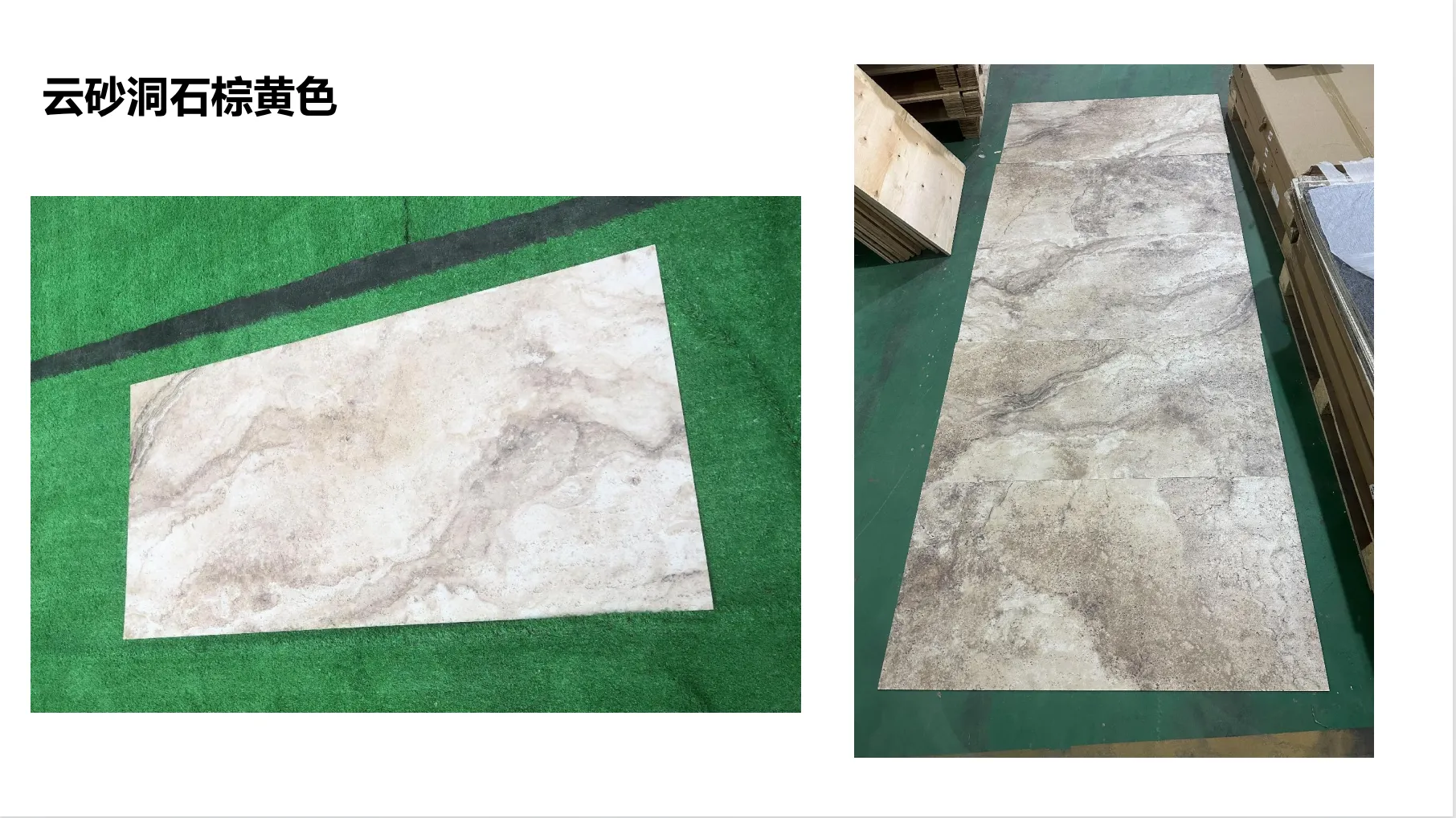
When an architect stands before a coastal hotel, a mountain retreat, or an urban high-rise, the choice of exterior cladding isn't just about beauty—it's a promise to withstand the elements. Rain, snow, UV rays, salt spray, and temperature swings don't just fade facades; they can compromise structural integrity, drive up maintenance costs, and shorten a building's lifespan. In this battle against nature, two materials often rise to the top: Dark Grey Dolomitic Travertine and traditional Granite. But which one truly holds up when the weather turns harsh? And how do modern innovations like mcm flexible stone and mcm big slab board series change the game?
First, let's get to know our competitors. Dark Grey Dolomitic Travertine is a variant of travertine, a sedimentary rock formed by mineral-rich water depositing calcium carbonate. What sets it apart is its high dolomite content—a mineral that replaces some of the calcite in standard travertine, giving it a denser structure and a moody, dark grey hue with subtle veining. It's prized for its earthy, textured look, often used to add warmth to modern and rustic designs alike.
Granite , on the other hand, is an igneous rock formed deep in the Earth's crust, cooled slowly to create a dense, crystalline structure. Composed mainly of quartz, feldspar, and mica, it's known for its toughness and wide range of colors, from speckled whites to deep blacks. For decades, it's been the go-to for architects seeking "unbreakable" durability in exteriors.
But here's the twist: today's building materials aren't limited to natural stone. mcm flexible stone and mcm big slab board series offer engineered alternatives—thin, lightweight panels that mimic the look of natural stone but with enhanced performance. These Modified Composite Materials (MCM) blend natural stone particles with polymer backings, creating a product that's flexible, durable, and often more weather-resistant than its natural counterpart.
Weather resistance isn't just about "being hard." It's a mix of properties that help a material fight off specific threats: water absorption (to avoid freeze-thaw damage), porosity (to resist staining), thermal stability (to prevent cracking in heat/cold), UV resistance (to keep color from fading), and chemical resistance (to stand up to pollution or salt). Let's break down how our contenders stack up.
To cut through the noise, let's put Dark Grey Dolomitic Travertine (natural and MCM versions) and Granite (natural and MCM versions) side by side. The table below compares their critical weather-resistant properties:
| Property | Natural Dark Grey Dolomitic Travertine | MCM Dark Grey Dolomitic Travertine | Natural Granite | MCM Granite |
|---|---|---|---|---|
| Porosity | Medium (2-4%) – porous with visible voids | Low (<0.5%) – sealed composite structure | Low (0.1-0.4%) – dense crystalline structure | Very Low (<0.3%) – polymer-sealed surface |
| Water Absorption | 1-3% (risk of freeze-thaw damage if unsealed) | <0.1% (resists water penetration entirely) | <0.5% (minimal absorption) | <0.1% (no water seepage) |
| Freeze-Thaw Resistance | Moderate (300-400 cycles with sealing) | Excellent (1000+ cycles, no cracking) | Excellent (500+ cycles, no sealing needed) | Excellent (1500+ cycles, flexible to avoid cracking) |
| UV Resistance | Good (dolomite resists fading better than calcite) | Excellent (color-locked pigments, no fading) | Excellent (quartz reflects UV rays) | Excellent (polymer coating blocks UV damage) |
| Chemical Resistance | Moderate (susceptible to acid rain etching) | High (resists acids, salts, and pollution) | High (resists most chemicals, except strong acids) | Very High (impervious to salts, acids, and industrial pollutants) |
| Maintenance | High (seal every 1-2 years; prone to staining) | Low (occasional washing; no sealing needed) | Low (seal every 5-10 years; easy to clean) | Very Low (hose down occasionally; no sealing) |
| Weight (per sqm) | 25-30 kg (heavy; requires strong structural support) | 4-6 kg (lightweight; easy to install on any structure) | 28-35 kg (very heavy; limits use on high-rises) | 5-7 kg (lightweight; ideal for tall buildings) |
| Flexibility | Brittle (cracks under stress/thermal movement) | Flexible (bends up to 30° without breaking) | Brittle (prone to chipping/cracking) | Flexible (absorbs structural movement) |
Natural Dark Grey Dolomitic Travertine has charm—its pitted surface and organic veining tell a story of geological time. But when it comes to weather resistance, it has limitations. Its porosity (2-4%) means water can seep in, and in cold climates, that water freezes, expands, and cracks the stone over time. Without regular sealing (every 1-2 years), it's also prone to staining from rain, dirt, or bird droppings. In coastal areas, salt spray can etch its surface, dulling the color.
That said, its dolomite content gives it an edge over standard travertine. Dolomite is more resistant to acid than calcite, so it holds up better against urban pollution or light acid rain. And in dry, sunny climates (think Arizona or Dubai), its UV resistance shines—dark grey hues fade minimally under intense sunlight, maintaining that moody elegance for years.
Granite's reputation for durability is well-earned. Its low porosity (<0.4%) and density make it a water-resistant champion—freeze-thaw cycles barely faze it, even in harsh winters. Its quartz content reflects UV rays, so colors stay vibrant, and its resistance to chemicals means salt, pollution, and even oil spills don't leave permanent marks. For low-maintenance projects, it's hard to beat: seal it once every 5-10 years, and it looks good as new.
But granite has a downside: weight. At 28-35 kg per square meter, it requires heavy structural support, limiting its use in high-rises or retrofits. Its brittleness is another issue—thermal expansion from hot sun can cause cracks, and installation mishaps often lead to chipping. Plus, its uniform, granular texture lacks the organic warmth of travertine, which can feel cold or sterile in certain designs.
This is where mcm flexible stone and mcm big slab board series steal the spotlight. By blending natural stone particles with a polymer backing, MCM panels fix the flaws of natural stone while keeping the beauty. Take MCM Dark Grey Dolomitic Travertine: it mimics the pitted texture and veining of the natural stone but with porosity <0.5% and water absorption <0.1%. No more freeze-thaw cracks, no more sealing, no more staining.
MCM Granite is equally impressive. It copies granite's speckled look but cuts the weight by 80% (5-7 kg per sqm), making it easy to install on high-rises or lightweight structures. Its flexibility (it can bend up to 30°) lets it absorb thermal movement or minor structural shifts without cracking—perfect for earthquake-prone areas. And with a polymer coating, it laughs off salt spray, acid rain, and UV rays, requiring nothing more than an occasional hose-down to stay pristine.
In real-world tests, MCM panels have outperformed natural stone in coastal projects. A hotel in Miami, clad in mcm big slab board series Dark Grey Dolomitic Travertine, showed zero signs of salt damage after 7 years—while a neighboring building with natural travertine needed full replacement due to cracking. In Norway, MCM Granite panels withstood -30°C winters and heavy snow without a single chip, proving that engineered materials can outlast nature's harshest tests.
Weather resistance isn't the only factor. Aesthetics matter, too. Natural Dark Grey Dolomitic Travertine brings warmth and texture, ideal for rustic villas or boutique hotels. Granite offers a sleek, modern look, perfect for corporate towers or minimalist homes. MCM versions? They nail the aesthetics of both, with the added bonus of consistency—no two natural stones are alike, but MCM panels offer uniform color and texture, a boon for large projects.
Cost-wise, natural stone is pricier upfront (granite: $80-150/sqm; travertine: $60-120/sqm), and installation adds more (heavy labor, structural reinforcements). MCM panels cost less upfront ($40-80/sqm) and save on installation (lightweight, easy to cut and attach). Over time, MCM's low maintenance (no sealing, no replacement) makes it the most cost-effective choice, especially for large projects.
Applications? Natural stone works best for small-scale, low-rise projects in mild climates. MCM shines everywhere else: coastal buildings, high-rises, cold regions, or areas with strict weight limits. And with mcm big slab board series , you can cover large surfaces with fewer seams, creating a seamless, striking facade that natural stone can't match.
If you're after raw, natural beauty and don't mind high maintenance, natural Dark Grey Dolomitic Travertine works in dry, sunny climates. For traditional durability with minimal upkeep, natural granite is great for low-rises in harsh winters. But for most modern projects—especially coastal, high-rise, or budget-conscious ones— mcm flexible stone and mcm big slab board series are the clear winners. They offer the best of both worlds: the look of natural stone with unbeatable weather resistance, flexibility, and affordability.
At the end of the day, weather resistance isn't just about surviving—it's about thriving. A building's facade should age gracefully, telling the story of its environment without falling apart. Whether you choose natural or engineered, the right material turns a structure from a collection of walls into a lasting legacy.
Recommend Products












