
Exploring Flexibility, Durability, and the Future of Architectural Materials
For architects and designers, choosing the right surface material is more than just a matter of aesthetics—it's about balancing beauty with performance, tradition with practicality. In one corner, we have Dark Grey Dolomitic Travertine , a natural stone with centuries of history, its dark, veined surface telling stories of ancient mineral deposits and slow geological time. In the other, MCM Flexible Stone , a modern marvel born from modified composite materials, engineered to bend, adapt, and redefine where stone can go. Today, we're diving deep into these two contenders, comparing their flexibility, durability, and ability to transform spaces. Let's start by getting to know each material up close.
Imagine standing in a quarry, running your hand over a slab of Dark Grey Dolomitic Travertine . Its surface is cool, slightly porous, with delicate veins of lighter grey weaving through the dark base like shadows on a stormy sea. This stone is a type of travertine, but with a twist: it's rich in dolomite, a mineral that gives it a denser structure and deeper color compared to traditional calcium carbonate travertine. Formed over millennia by mineral-rich hot springs depositing layers of sediment, each slab is a one-of-a-kind masterpiece—no two are exactly alike.
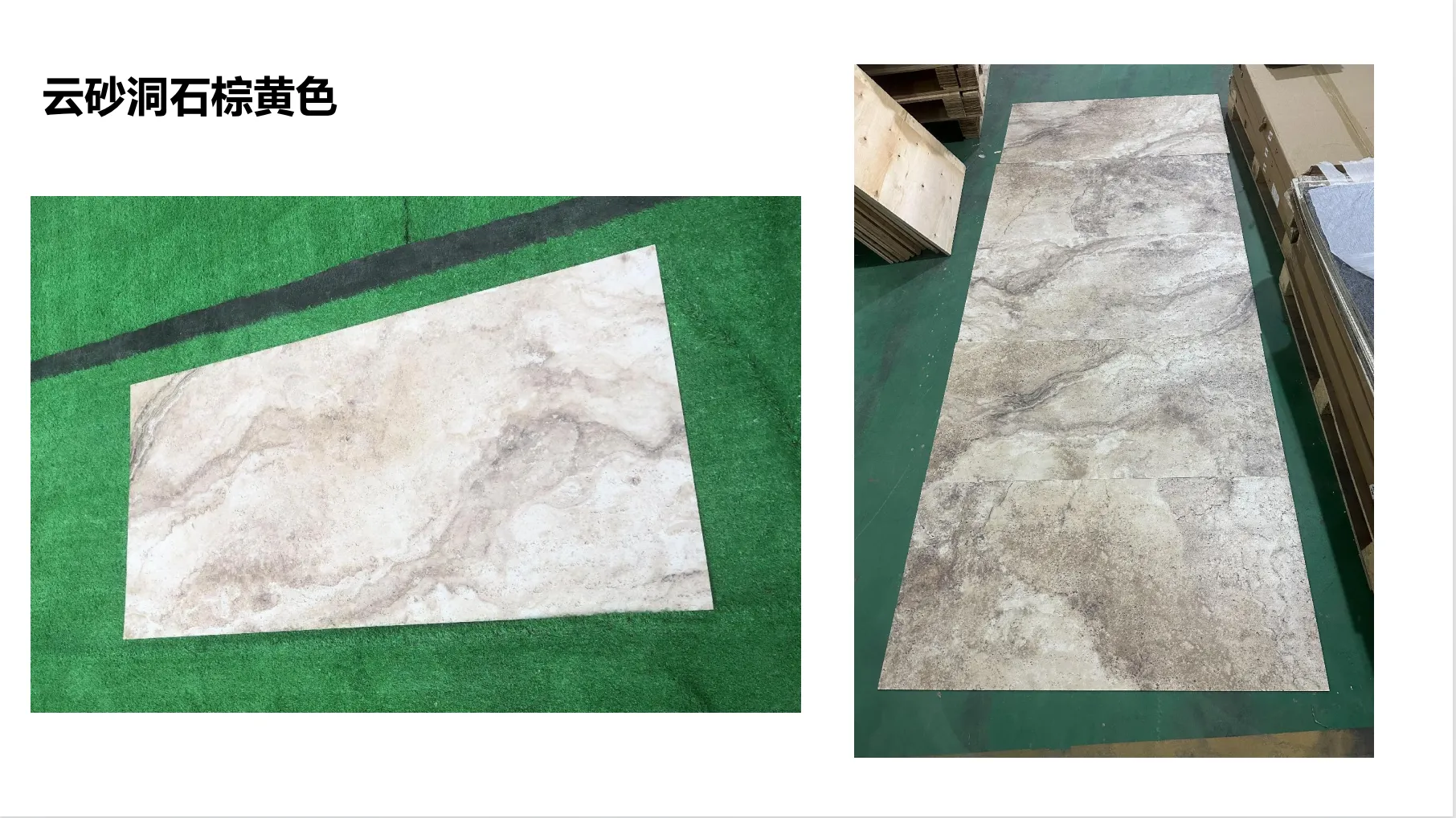
Unlike its warmer cousin, Dolomitic Travertine (claybank) , which leans into earthy, terracotta hues, Dark Grey Dolomitic Travertine exudes sophistication. It's been used in everything from ancient Roman baths to modern luxury hotels, prized for its ability to add depth and gravitas to interiors. But its natural origins also mean it comes with the quirks of nature: porosity that demands sealing, rigidity that limits installation possibilities, and a weight that can challenge structural designs.
Now, picture holding a sheet of MCM Flexible Stone . At first glance, it might look like natural stone—same veining, same texture—but when you pick it up, it bends. Gently, easily, like a thick fabric. That's the magic of MCM, or Modified Composite Material: a blend of natural stone aggregates (think crushed travertine, marble, or granite), high-performance polymers, and a flexible backing that lets it defy the rigidity of traditional stone. Part of the broader MCM project board series , this flexible stone is designed for the modern world—where walls curve, ceilings slope, and surfaces demand more than just flat, heavy slabs.
MCM Flexible Stone isn't trying to replace natural stone; it's trying to expand its possibilities. It mimics the look of materials like Dark Grey Dolomitic Travertine but adds a level of adaptability that natural stone can't match. Want to clad a rounded column? No problem. Need to cover a ceiling with a stone-like finish? It can handle that. And because it's engineered, it skips many of natural stone's headaches: less porosity, lighter weight, and a consistency that makes large-scale installations a breeze.
Flexibility isn't just about how much a material can bend—it's about how it empowers design. Let's break down how our two contenders stack up.
Natural stone is, by nature, rigid. Dark Grey Dolomitic Travertine, like all natural stones, has a crystalline structure that resists bending. Install it on a flat wall or floor, and it's a champion. But try to curve it, and you're asking for trouble. To cover a curved surface with traditional stone, you'd need to cut it into small, wedge-shaped pieces, painstakingly fitting them together like a puzzle. Even then, there's a high risk of cracking—especially if the curve is tight. For example, a 90-degree rounded corner might be manageable, but a full 180-degree arch? You'd likely need custom-carved slabs, which are expensive, time-consuming, and prone to breakage during installation.
This rigidity also limits its use in unconventional spaces. Want to clad a furniture piece with a curved front? Or add stone accents to a spiral staircase? Dark Grey Dolomitic Travertine would require extensive structural support and careful engineering—if it's even possible. Its beauty is undeniable, but its flexibility? Let's just say it's not winning any yoga competitions.
MCM Flexible Stone was born to bend. Thanks to its polymer binding and flexible backing, it can curve up to 90 degrees (and sometimes more, depending on thickness) without cracking or delaminating. This isn't just a party trick—it's a game-changer for design. Imagine a hotel lobby with a sweeping, curved feature wall clad in a stone-like finish that flows seamlessly from floor to ceiling. With MCM, that's achievable with large, continuous sheets, no ugly seams or fragile cuts required.
Architects love it for renovation projects, too. Old buildings often have uneven walls or structural quirks that natural stone can't adapt to. MCM Flexible Stone, however, conforms to those imperfections, hiding gaps and irregularities without compromising on aesthetics. It's also lightweight—typically 3-5 pounds per square foot, compared to 15-20 pounds for natural stone—so it puts less stress on walls and ceilings, opening up possibilities for vertical and overhead installations that would be impossible with traditional stone.
Even furniture designers are getting creative. Picture a bar with a curved countertop wrapped in MCM Flexible Stone, mimicking the look of Dark Grey Dolomitic Travertine but without the weight that would require reinforced supports. Or a retail display with a wave-like backdrop, where the stone "flows" around corners. MCM doesn't just fit into spaces—it transforms them.
A material's beauty means little if it can't withstand daily life. Let's dig into how Dark Grey Dolomitic Travertine and MCM Flexible Stone hold up over time.
Natural stone is famously durable—think of the Roman Colosseum, still standing after 2,000 years. Dark Grey Dolomitic Travertine is no exception. Its dolomite content makes it harder and more scratch-resistant than standard travertine, and it can handle heat, sunlight, and heavy foot traffic with ease. In low-moisture, low-traffic areas like a living room floor or a feature wall, it could last decades, even centuries, with proper care.
But here's the catch: porosity. Like all travertine, Dark Grey Dolomitic Travertine has tiny pores that absorb liquids, oils, and stains. Spill a glass of red wine, and if you don't wipe it up immediately, it could seep in, leaving a permanent mark. To prevent this, it needs regular sealing—usually once a year, more often in high-moisture areas like bathrooms or kitchens. Even with sealing, it's not impervious. Harsh chemicals (like acidic cleaners) can etch the surface, and freeze-thaw cycles can cause cracking if water seeps into pores and expands.
MCM Flexible Stone might be flexible, but it's no pushover. Its polymer matrix fills in the gaps between stone aggregates, making it far less porous than natural travertine. That means no sealing required—spills wipe right off, and moisture struggles to penetrate. UV-resistant additives keep it from fading in sunlight, and impact-resistant polymers help it stand up to bumps, scrapes, and even the occasional dropped tool on a construction site.
In high-traffic commercial spaces—airport lobbies, shopping malls, restaurant exteriors—this resilience shines. Unlike natural stone, which can show wear over time (think scratches or dulling), MCM maintains its finish for years. It's also resistant to mold and mildew, making it ideal for humid environments like swimming pool areas or coastal buildings. And because it's lightweight, there's less risk of damage from structural movement—no more cracks from a building settling or vibrations from nearby traffic.
Does it last as long as natural stone? Maybe not millennia, but for most building projects (which have lifespans of 50-100 years), MCM Flexible Stone will hold its own—with far less maintenance along the way.
At the end of the day, design is about how a space feels. Let's compare the aesthetic impact of these two materials.
There's a reason natural stone has been revered for centuries: its authenticity. Dark Grey Dolomitic Travertine has a depth that engineered materials struggle to replicate. Its pores, veining, and subtle color variations tell a story of time and nature. Install a slab in a living room, and the light plays off its surface differently throughout the day—warm in the morning, moody in the evening. It's organic, alive, and full of character.
Pair it with materials like Lunar Peak silvery (a metallic-finished stone from the Lunar Peak series) for contrast, and you get a space that feels both grounded and luxurious. It's perfect for projects that value history, uniqueness, and the "wow" factor of a rare, natural material.
MCM Flexible Stone doesn't try to outdo natural stone's uniqueness—it offers something else: consistency. If you're cladding a 10,000-square-foot office lobby, you don't want some slabs darker than others or veins that clash. MCM delivers uniform color and pattern across every sheet, ensuring a cohesive look. And while it mimics natural stone, it also opens doors to new aesthetics. Want a stone-like finish with a metallic sheen? There's a version for that. Prefer a matte, industrial vibe? No problem. It's a chameleon, adapting to the designer's vision.
That said, some purists might argue it lacks the "soul" of natural stone. But for many projects—especially commercial ones where consistency and cost matter—MCM's ability to deliver the look of stone without the unpredictability is a major win.
| Feature | Dark Grey Dolomitic Travertine | MCM Flexible Stone |
|---|---|---|
| Flexibility | Rigid; cracks under bending; limited to flat/gentle curves | Flexible; bends up to 90°+; ideal for curved surfaces |
| Durability | High scratch/heat resistance; porous (needs sealing); prone to staining | Moisture/UV/impact resistant; non-porous; low maintenance |
| Weight | Heavy (15-20 lbs/sq ft); requires structural support | Lightweight (3-5 lbs/sq ft); easy to install |
| Aesthetics | Unique veining; organic patterns; natural depth | Consistent look; mimics natural stone; customizable finishes |
| Best For | High-end interiors, historical renovations, accent walls | Curved surfaces, commercial spaces, low-maintenance areas |
So, which material wins? The answer depends on your project's heart. If you crave the irreplaceable authenticity of natural stone—its history, its uniqueness, its ability to age gracefully— Dark Grey Dolomitic Travertine is a timeless choice. It's perfect for spaces where tradition and luxury take center stage, and where maintenance is a priority.
But if your design demands flexibility, durability, and ease of installation—if you're pushing the boundaries of where stone can go— MCM Flexible Stone is the innovator you need. It's a material for the future, where form doesn't have to follow rigid function.
At the end of the day, both materials have their place. And maybe that's the real takeaway: in architecture and design, there's no one "best" material—only the best material for the story you want to tell. Whether you choose the ancient whispers of Dark Grey Dolomitic Travertine or the modern hum of MCM Flexible Stone, you're not just building spaces—you're crafting experiences.
Recommend Products












