
Choosing the right material for your space is more than just a design decision—it's about crafting an environment that feels like an extension of who you are. Whether you're renovating a kitchen, designing a boutique hotel lobby, or building a home from the ground up, the materials you select will shape how the space looks, feels, and functions for years to come. And in that process, one question inevitably arises: Do you prioritize the raw, unscripted beauty of natural materials, or do you lean into the reliability and consistency of engineered options? Today, we're diving into two popular contenders in this debate: Dark Grey Dolomitic Travertine, a star of the MCM Flexible Stone series, and porcelain tiles, the workhorse of modern interior design. Let's explore their stories, their strengths, and how they might just be the missing piece in your next project.
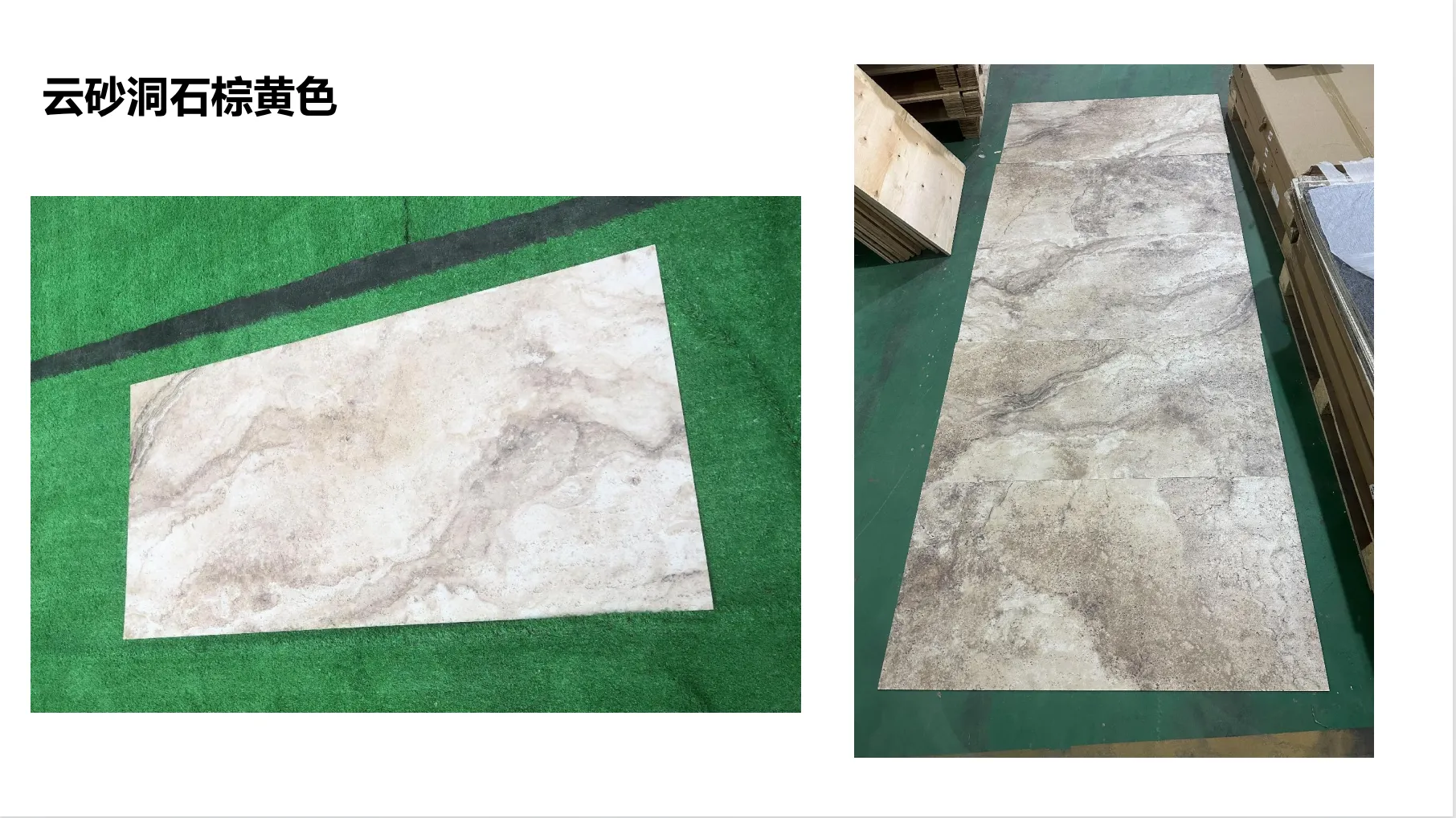
To truly understand Dark Grey Dolomitic Travertine, you have to start with its roots—literally. This stone isn't just a material; it's a piece of Earth's history, formed over millennia by mineral-rich hot springs depositing layers of calcium carbonate. What makes dolomitic travertine unique is the presence of dolomite, a mineral that adds density and a distinctive, moody color palette. Dark grey, in particular, isn't just a shade here—it's a depth. Imagine storm clouds meeting the ocean at dusk, or the quiet elegance of a well-worn leather armchair; that's the energy this stone brings to a space.
Walk into a room clad in Dark Grey Dolomitic Travertine, and the first thing you'll notice is how it interacts with light. Unlike uniform engineered surfaces, this stone plays with shadows and highlights, thanks to its natural veining and pitting. Those "imperfections" are actually its greatest charm: a honeycomb of tiny holes (formed by trapped gases during formation) that catch light like scattered stars, and veins that twist and turn like rivers frozen in time. No two slabs are identical—one might have a bold, charcoal vein snaking through, while another leans into soft, smoky gradients. It's the kind of material that makes a space feel alive, as if the walls themselves have a story to tell.
And let's talk texture. Run your hand over a polished slab, and you'll feel a smoothness that's almost silky, yet with a subtle grit that reminds you it's natural. Opt for a honed finish, and it becomes softer, more matte—like the surface of a river stone worn smooth by water. This versatility is why designers often turn to Dark Grey Dolomitic Travertine for both modern and traditional spaces. In a minimalist loft, it adds warmth without clutter; in a classic villa, it grounds the ornate details with earthy gravity.
Natural stone has a reputation for being high-maintenance, but Dark Grey Dolomitic Travertine might just change your mind. Thanks to its dolomite content, it's denser than standard travertine, making it more resistant to scratches and stains. That said, it's not indestructible. Like all natural stones, it's porous, which means it needs sealing—typically once a year—to prevent liquids from seeping in. But here's the thing: that maintenance ritual is part of what makes it special. Sealing becomes a small act of care, a way to preserve the stone's beauty as it ages. And age it does—gracefully. Unlike materials that fade or wear unevenly, Dark Grey Dolomitic Travertine develops a patina over time, a soft sheen that deepens its color and tells the story of the life lived on it. A spilled glass of red wine might leave a mark if not wiped quickly, but with proper sealing, it's easily cleaned. Think of it like a favorite pair of jeans: a little wear only makes it more characterful.
Installation is another consideration. Because each slab is unique, it requires a skilled installer who can "read" the stone—matching veins, balancing colors, and ensuring the layout feels intentional. It's not a plug-and-play process, but the result is a space that feels curated, not cookie-cutter. And while it's heavier than porcelain, advances in thin-cutting technology (part of the MCM Project Board Series) have made it more manageable for both floors and walls, without sacrificing durability.
Dark Grey Dolomitic Travertine isn't picky about where it goes—it elevates just about any space. In residential settings, it's a standout choice for bathrooms, where its water-resistant properties (when sealed) and natural texture add spa-like serenity. Imagine a walk-in shower with walls of dark grey travertine, steam curling around the veined surfaces—it's luxury with a raw, organic edge. For living rooms, it works beautifully as a fireplace surround, where the stone's heat resistance and rich color complement the warm glow of a fire.
Commercial spaces love it too. Boutique hotels often use it for lobby floors, where its durability stands up to foot traffic, and its elegance sets a sophisticated tone. Restaurants pair it with wood accents for a rustic-chic vibe, or with brass fixtures for old-world glamour. Even outdoor spaces benefit: a patio clad in dark grey travertine becomes an extension of the indoors, blending seamlessly with garden greenery or city skylines.
If Dark Grey Dolomitic Travertine is Earth's story, porcelain tiles are human ingenuity. Born in the fires of high-temperature kilns, these tiles are made from fine clay, sand, and feldspar, pressed into shape and fired at over 1200°C. The result? A material that's dense, non-porous, and designed to be… well, perfect. No two tiles are identical in the way natural stone is, but that's the point: porcelain offers consistency, variety, and practicality that's hard to beat in busy, high-traffic spaces.
Porcelain's greatest trick? It can look like almost anything. Thanks to digital printing technology, modern porcelain tiles mimic natural stone, wood, concrete, even fabric—with stunning accuracy. Want the look of Dark Grey Dolomitic Travertine without the variation? There's a porcelain tile for that, with veining so precise it's almost hard to tell the difference at first glance. Prefer the warmth of Wood Grain Board? Porcelain can that too, right down to the knots and grain patterns.
The color range is endless, from stark whites to deep blacks, and everything in between. Unlike natural stone, which is limited by what the Earth produces, porcelain can be dyed to match any Pantone shade, making it a dream for designers with specific color palettes. And the finishes? Glossy, matte, textured, even "anti-slip" for wet areas—porcelain doesn't just mimic other materials; it improves on them, offering options natural stone can't match.
But here's the catch: while porcelain can look like natural stone, it doesn't feel like it. Run your hand over a tile designed to mimic travertine, and you'll notice the texture is uniform, almost plastic-like in its perfection. There's no variation in density, no subtle give—just a hard, consistent surface. For some, that's a plus: it feels clean, modern, and uncomplicated. For others, it lacks the soul of the real thing.
Let's cut to the chase: porcelain is tough. It's scratch-resistant, stain-resistant, and impervious to water—no sealing required. Spill coffee on it? Wipe it up with a cloth, no harm done. Let kids run around in cleats? The surface won't scratch. Install it in a shower? No mold or mildew issues, thanks to its non-porous nature. It's the reason why kitchens, bathrooms, mudrooms, and commercial spaces (think airports, malls, schools) swear by it. Porcelain doesn't just last—it stays looking new for decades, with minimal effort.
Installation is a breeze too. Tiles are lighter and more uniform than natural stone slabs, so they're easier to transport and lay. They come in standard sizes (12x24 inches, 24x48 inches, etc.), which means less cutting and waste. And if a tile does get damaged (a rare occurrence), it's simple to replace—just pop out the old one and drop in a new, identical tile. No need to worry about matching veining or color, because every tile in the box is the same.
Porcelain's practicality makes it a go-to for spaces where function is key. In family homes, it's perfect for kitchens and playrooms, where spills and scuffs are part of daily life. In commercial settings, it's ideal for high-traffic areas like hotel lobbies and restaurant floors, where maintenance needs to be quick and easy. Even outdoor spaces love porcelain: frost-resistant and fade-resistant, it holds up to rain, snow, and UV rays without losing its color.
Take the example of a busy café in downtown Chicago. The owner wanted the look of Travertine (Starry Blue)—a vibrant, natural stone with flecks of blue and grey—but needed something that could handle constant foot traffic, food spills, and daily cleaning. Porcelain tiles mimicking Starry Blue Travertine were the solution: they looked the part, and the staff could hose them down at the end of the night without a second thought. Practicality won out, but the aesthetic didn't suffer.
Still on the fence? Let's break down the key differences between Dark Grey Dolomitic Travertine and porcelain tiles, side by side.
| Aspect | Dark Grey Dolomitic Travertine | Porcelain Tiles |
|---|---|---|
| Aesthetics | Unique veining, natural variations, depth of color, organic texture. Ages with patina. | Consistent, uniform appearance. Mimics other materials (stone, wood, etc.) with digital printing. No patina—stays "new" looking. |
| Durability | Dense (thanks to dolomite), scratch-resistant, heat-resistant. Requires sealing to prevent stains. | Extremely durable: scratch-resistant, stain-resistant, impervious to water. No sealing needed. |
| Maintenance | Annual sealing; wipe spills quickly; avoid harsh chemicals. | Low maintenance: sweep/vacuum, mop with mild detergent. No sealing or special care. |
| Installation | Requires skilled installers to handle unique slabs; heavier than porcelain; may need additional structural support. | Easy to install: lightweight, uniform tiles; DIY-friendly for experienced homeowners. |
| Cost | Higher upfront cost (natural stone, labor-intensive installation). | Lower upfront cost (engineered, easier installation). |
| Sustainability | Natural, biodegradable, but quarrying has environmental impact. MCM Flexible Stone series uses eco-friendly extraction methods. | Energy-intensive manufacturing, but long lifespan reduces replacement needs. Some brands use recycled materials. |
| Best For | High-end residential, boutique hotels, spaces where ambiance and uniqueness matter. | Busy homes, commercial spaces, high-traffic areas, outdoor spaces, budget-conscious projects. |
The truth is, there's no "better" material—only the right material for your needs. Let's say you're designing a master bathroom in your forever home. You want it to feel like a retreat, a space that feels luxurious and personal. Dark Grey Dolomitic Travertine, with its natural veining and tactile texture, would turn that bathroom into a sanctuary. Yes, you'll have to seal it once a year, but the payoff is a space that feels uniquely yours, one that ages with you.
On the other hand, if you're a renter or flipping a house, porcelain tiles make sense. They're affordable, easy to install, and appeal to a wide range of buyers. Or if you have a large family with young kids and a busy kitchen, porcelain's durability and low maintenance will save you stress (and money) in the long run.
And here's a secret: you don't have to choose one or the other. Many designers mix materials to balance beauty and practicality. Imagine a kitchen with Dark Grey Dolomitic Travertine countertops (for beauty) and porcelain floors (for durability). Or a living room with a travertine accent wall and porcelain fireplace surround. The contrast between natural and engineered creates visual interest, and lets you have the best of both worlds.
At the end of the day, choosing between Dark Grey Dolomitic Travertine and porcelain tiles is about more than aesthetics or practicality—it's about the story you want your space to tell. Do you want a space that feels like a living, breathing part of nature, with all the quirks and character that come with it? Or do you want a space that's sleek, reliable, and ready to keep up with your fast-paced life?
Dark Grey Dolomitic Travertine, part of the MCM Flexible Stone series, is for the dreamers—the ones who believe a home should have soul, not just style. It's for those who don't mind a little maintenance because they know the patina of age will only make their space more beautiful. Porcelain tiles, on the other hand, are for the realists—the ones who want beauty without the hassle, who value consistency and durability above all else.
Whichever you choose, remember: the best materials are the ones that make you feel at home. So touch them, live with them, and let them tell your story—whether it's written in the veins of a natural stone or the precision of an engineered tile.
Recommend Products












