
Think about the last time you stood in front of a crackling fireplace on a cold winter evening, or grilled burgers on a scorching summer afternoon, the heat from the grill searing into the patio beneath your feet. Heat is a constant in our lives—whether from cooking, heating systems, or the sun itself—and the materials we choose to build and design with need to stand up to it. That's where heat resistance comes in: not just a technical specification, but a quiet workhorse that keeps our spaces safe, functional, and beautiful, even when the temperature rises.
Today, we're diving into a head-to-head comparison of two materials that often find themselves in the spotlight for high-heat environments: dark grey dolomitic travertine and soapstone. Both have loyal followings, but when it comes to withstanding heat, which one truly comes out on top? Let's start by getting to know each contender—and why this debate matters more than you might think.
Before we jump into the specifics of dark grey dolomitic travertine and soapstone, let's talk about why heat resistance should be on your radar, no matter what project you're tackling. It's easy to assume heat resistance only matters for fireplaces or industrial kitchens, but the truth is, heat touches almost every corner of our lives:
In short, heat resistance isn't just about surviving the occasional hot pan—it's about longevity. A material that can't handle heat will fade, warp, or crack prematurely, turning a beautiful investment into a costly regret. Now, let's meet the two stars of our show.
First up: dark grey dolomitic travertine. If you've ever admired the sleek, textured walls of a contemporary café or the warm, earthy floors of a high-end home, there's a good chance you've encountered travertine. But dark grey dolomitic travertine isn't just any travertine—it's a specific variety with a unique composition that sets it apart.
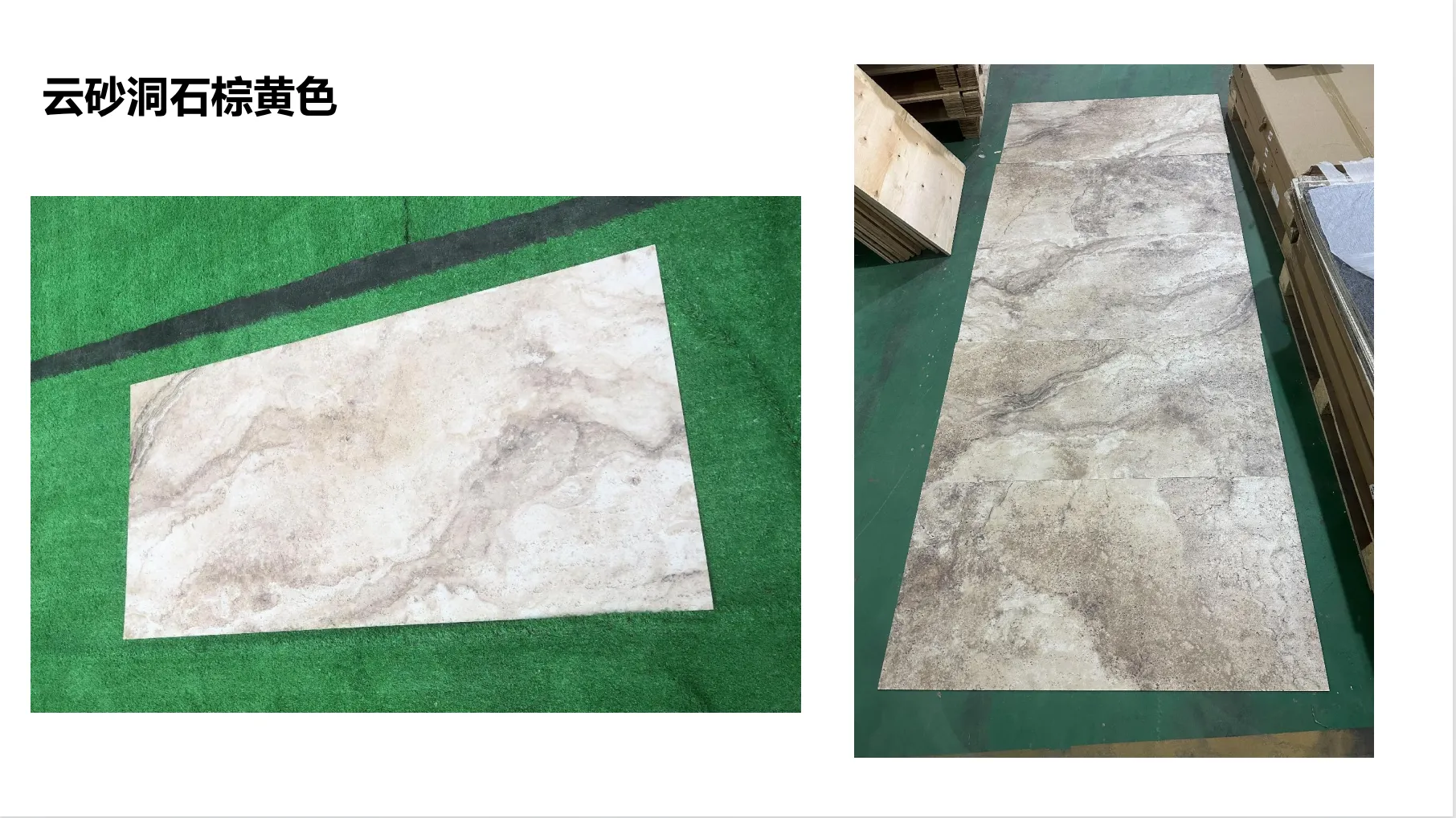
Travertine itself is a sedimentary rock, formed over thousands of years as mineral-rich hot springs cool and deposit layers of calcium carbonate. What makes dolomitic travertine(dark grey) different is its high dolomite content—a mineral composed of calcium magnesium carbonate, which adds strength and density. Picture a stone that's been shaped by the slow, steady flow of water, each layer capturing tiny bubbles and mineral deposits that create its signature pitted, porous texture. Now, imagine that stone in a deep, moody dark grey, with subtle veins of lighter grey or even hints of claybank (a nod to its sedimentary roots) running through it. That's dark grey dolomitic travertine: rugged yet refined, natural yet modern.
In recent years, travertine has seen a surge in popularity, thanks in part to innovations like mcm flexible stone —a technology that harnesses the beauty of natural stone (including travertine) and makes it more adaptable, lightweight, and easy to install. But even in its traditional slab form, dark grey dolomitic travertine has become a go-to for designers seeking a material that balances aesthetics with durability. And when it comes to heat resistance? Let's just say it's not here to play.
If dark grey dolomitic travertine is the modern up-and-comer, soapstone is the wise elder with centuries of stories to tell. Soapstone, also known as steatite, is a metamorphic rock primarily composed of talc, with smaller amounts of chlorite, magnesite, and other minerals. Its claim to fame? A texture so smooth and soft that it feels almost like soap to the touch (hence the name), and a heat resistance that has made it a staple in everything from ancient Roman baths to 18th-century fireplaces.
Unlike travertine, soapstone forms deep within the earth, where intense heat and pressure transform existing rocks into something new. The result is a stone that's dense, non-porous, and incredibly stable—qualities that make it a natural fit for high-heat environments. Walk into an old New England farmhouse, and you'll likely find soapstone hearths that have been radiating warmth for generations, their surfaces darkened by years of use into a rich, velvety patina. It's a stone that doesn't just resist heat; it embraces it, absorbing warmth and releasing it slowly, like a gentle hug for your space.
But soapstone isn't stuck in the past. Today, it's beloved by homeowners and designers for its minimalist, matte finish and its ability to age gracefully. Unlike some stones that fade or discolor over time, soapstone gets better with age, developing character that can't be replicated by newer materials. So, when it comes to heat resistance, soapstone has a reputation that's been tested by time—but does that mean it's unbeatable?
Before we pit these two stones against each other, let's break down what "heat resistance" really means. It's not just about "not melting"—there's a whole science to how materials interact with heat. To keep it simple, we'll focus on three key factors that determine a material's ability to stand up to high temperatures:
Thermal conductivity is a measure of how quickly heat travels through a material. Think of it like a game of hot potato: a material with low thermal conductivity holds onto heat, while one with high conductivity passes it along quickly. For example, metal has high thermal conductivity—touch a hot pan handle, and the heat burns your hand in seconds. Wood, on the other hand, has low conductivity—you can hold a wooden spoon in a pot of boiling water without getting burned.
Why does this matter for our stones? If you place a hot pan on a countertop with low thermal conductivity, the heat stays localized to the area under the pan, reducing the risk of damage to the rest of the surface. High conductivity, on the other hand, means heat spreads out, potentially warping or discoloring larger areas.
Heat capacity (or specific heat) is the amount of heat a material can absorb before its temperature rises. Materials with high heat capacity act like a sponge for heat—they can soak up a lot before feeling "hot." This is especially important for materials used in fireplaces or hearths, where they need to absorb intense heat without transferring it to surrounding areas.
For example, a stone with high heat capacity will stay cool to the touch longer when exposed to sunlight, making it ideal for outdoor patios. A stone with low heat capacity, by contrast, will heat up quickly, making it uncomfortable to walk on barefoot.
Thermal shock is what happens when a material is exposed to sudden, extreme temperature changes—think a cold stone being hit with a burst of hot steam, or a hot fireplace surround being splashed with cold water. Materials with poor thermal shock resistance will crack or shatter under this stress, as the rapid expansion and contraction of their molecules weakens their structure.
This is a critical factor for materials used near water (like in bathrooms) or in outdoor spaces where rain can drench a sun-heated surface. A stone that can't handle thermal shock won't last long in these environments.
Now that we've got the basics down, let's put dark grey dolomitic travertine and soapstone to the test, starting with our modern contender.
We already know that dark grey dolomitic travertine is rich in dolomite, but how does that translate to heat resistance? Let's start with the numbers. Dolomite has a melting point of around 730°C (1346°F), which is higher than pure calcium carbonate (found in standard travertine), which melts around 550°C (1022°F). That extra heat tolerance is thanks to the magnesium in dolomite, which stabilizes the crystal structure and makes it more resistant to thermal breakdown.
But dolomite isn't the only player here. The porous nature of travertine—those tiny holes and pits we mentioned earlier—actually works in its favor when it comes to heat. Think of a sponge: just as a sponge absorbs water, the pores in travertine can absorb heat, acting as a buffer against sudden temperature spikes. Of course, those pores also mean the stone is more absorbent, which is why sealing is crucial (more on that later).
Dark grey dolomitic travertine has a thermal conductivity of about 1.5–2.0 W/m·K (watts per meter-kelvin), which is moderate for natural stones. For comparison, marble typically ranges from 2.0–2.5 W/m·K, while granite is around 2.5–3.0 W/m·K. What does this mean in real life? If you set a hot pan on a dolomitic travertine countertop, the heat will spread slowly, giving you time to grab a trivet before the entire surface gets too hot.
This moderate conductivity makes it a solid choice for kitchens, where you want a surface that won't instantly transfer heat but also won't hold onto it so long that it stays hot for hours. It's a balance that works well for everyday cooking—no more burning your forearms on a countertop that's still radiating heat from lunch when you're making dinner.
When it comes to heat capacity, dark grey dolomitic travertine shines—literally. Its heat capacity is roughly 0.8–1.0 J/g·K (joules per gram-kelvin), which is on the higher end for natural stones. This means it can absorb a significant amount of heat from sunlight before its temperature rises. If you've ever walked barefoot on a dark pavement in summer, you know how hot surfaces can get—but dolomitic travertine stays cooler, making it a favorite for outdoor patios, pool decks, and even rooftop gardens.
I spoke with a landscape designer in Arizona recently, where summer temperatures regularly hit 110°F, and she swears by dark grey dolomitic travertine for outdoor projects. "We had a client who wanted a dark patio to complement their modern home, but they were worried about it being too hot for their kids to play on," she told me. "We installed dolomitic travertine, and even on the hottest days, you can walk on it barefoot without burning your feet. It's like the stone knows to hold onto the heat just enough to stay warm, not scorching."
Here's where dark grey dolomitic travertine has a slight Achilles' heel: thermal shock resistance. Because of its porous structure, sudden temperature changes can cause the stone to crack. For example, if you have a dolomitic travertine fireplace surround and accidentally splash cold water on it while it's still hot from a fire, the rapid cooling could cause small fractures in the stone.
But don't let that scare you off. With proper sealing, this risk is significantly reduced. A good quality sealer fills in those pores, creating a barrier that slows down heat transfer and prevents moisture from seeping in (which can expand when heated, worsening cracks). Most manufacturers recommend sealing dolomitic travertine every 1–2 years, depending on use—a small price to pay for its durability and beauty.
So, how does dark grey dolomitic travertine hold up in everyday life? Let's look at three common high-heat scenarios:
In the kitchen, dark grey dolomitic travertine is a showstopper. Its dark color hides minor stains (though sealing is still a must), and its moderate thermal conductivity means you can set a warm pan down for a few seconds without panicking. One homeowner I talked to, Sarah, a home cook in Chicago, uses it for her island countertop. "I'm terrible about using trivets—always in a hurry," she laughed. "I've set boiling pots of pasta down on it more times than I can count, and it's never warped or discolored. The only thing I've noticed is that if I leave a hot pan on for too long (like 10+ minutes), it can leave a faint ring—but thats right off with a little baking soda and water."
As we mentioned earlier, dolomitic travertine's high heat capacity makes it ideal for outdoor spaces. Its natural texture also provides traction, even when wet, which is a bonus for pool areas. A property manager in Florida told me they replaced their concrete pool deck with dark grey dolomitic travertine three years ago, and "the complaints about hot feet dropped to zero. Plus, it looks amazing—guests always comment on how luxurious it feels, like a high-end resort."
Fireplace surrounds are trickier. While dolomitic travertine can handle radiant heat from a fire, it's not recommended for direct contact with flames or extremely high temperatures (like those from a wood-burning stove). A designer in Colorado explained: "We used it for a gas fireplace surround last year, and it's held up perfectly. The gas logs don't get as hot as wood, so the stone stays warm but not scorching. For wood-burning fireplaces, though, we usually recommend a different material—or at least a heat shield behind the travertine to buffer the direct heat."
Let's break it down:
Pros:
Cons:
Now, let's turn to soapstone—the old-timer with a reputation for heat resistance that spans centuries.
Soapstone's claim to heat resistance fame lies in its talc content. Talc is a hydrated magnesium silicate mineral with a layered structure that's incredibly stable under heat. Unlike dolomite, which melts at 730°C, talc doesn't truly melt—it decomposes at around 900°C (1652°F), releasing water vapor. But even before that, it retains its structural integrity, making soapstone one of the most heat-resistant natural stones available.
Another key factor is soapstone's density. Unlike porous travertine, soapstone is non-porous, meaning it doesn't absorb water or moisture. This lack of porosity makes it highly resistant to thermal shock—no pores mean no trapped water to expand and crack the stone when heated. It's like comparing a solid brick to a sponge: the brick can handle sudden temperature changes far better because there's no space for moisture to get trapped.
Soapstone has a surprisingly low thermal conductivity—around 0.8–1.2 W/m·K, significantly lower than dark grey dolomitic travertine. Remember our hot potato analogy? Soapstone is the player who holds onto the potato, absorbing the heat instead of passing it along. This makes it ideal for applications where you want to retain heat, like fireplaces or wood stoves.
Take wood stoves, for example: soapstone stoves are prized for their ability to radiate heat long after the fire has died down. The stone absorbs heat while the fire is burning, then slowly releases it over hours, keeping rooms warm and cozy. It's like having a built-in heater that doesn't require electricity—perfect for power outages or off-grid homes.
Soapstone's heat capacity is similar to travertine's, around 0.8–1.0 J/g·K, but its low thermal conductivity means it holds onto that heat longer. Think of it as a thermos for your space: it takes longer to heat up, but once it's hot, it stays hot. This is a double-edged sword, though. While great for fireplaces, it can be a downside for outdoor spaces. In direct sunlight, soapstone will absorb heat and stay warm, which might be nice on a cool day but uncomfortable on a scorching one.
A friend of mine, Mark, installed soapstone tiles on his front porch in upstate New York. "In spring and fall, it's perfect—warm underfoot even when the air is cool," he said. "But in July? You have to wear shoes, or you'll burn your feet. It's like walking on a heated mat!"
If there's one area where soapstone truly outshines almost every other natural stone, it's thermal shock resistance. Its non-porous, dense structure means it can handle sudden temperature changes without cracking. drop a cold glass of water on a hot soapstone countertop? No problem. Splash rain on a sun-heated soapstone patio? It won't flinch. This makes it the go-to material for laboratories, where it's used for surfaces that come into contact with hot chemicals and cold liquids, and for industrial settings with extreme temperature fluctuations.
I visited a historic inn in Vermont last year that still uses its original soapstone sink, installed in the 1800s. The innkeeper told me it had survived countless cycles of hot water for dishes and cold water for cleaning, with no cracks or damage. "They don't make 'em like this anymore," he said, running his hand over the smooth, darkened surface. "It's seen more heat and cold than I can imagine, and it just keeps going."
Soapstone's heat resistance has been proven over centuries. Let's look at how it performs in the same scenarios we tested dolomitic travertine:
This is where soapstone truly shines. Unlike dolomitic travertine, it can handle direct contact with flames, making it ideal for wood-burning fireplaces and stoves. A fireplace designer I spoke with, James, called it "the gold standard. I've installed soapstone surrounds in homes where the fireplace is used daily in winter, and after 10+ years, they look as good as new. No cracks, no discoloration—just that beautiful patina that comes with age."
In the kitchen, soapstone is a dream for bakers and cooks who love tradition. Its soft, smooth surface is gentle on rolling pins, and its heat resistance means you can set hot pans directly on it without a second thought. "I make bread every weekend, and I proof dough right on the soapstone countertop," said Maria, a home baker in Oregon. "The stone stays at a consistent temperature, and I've never had an issue with heat damage. Plus, if it gets scratched, you can just sand it out and re-oil it—it's like it heals itself."
Beyond homes, soapstone is used in labs and factories for its ability to withstand extreme heat and chemicals. Its non-porous surface won't absorb spills, and its heat resistance means it can handle Bunsen burners and hot equipment. A chemistry professor I know explained: "We use soapstone for our lab benches because it's inert—no chemicals react with it—and it can take the heat from hot plates and flasks. We've had the same benches for 20 years, and they're still in great shape."
Let's summarize:
Pros:
Cons:
Now that we've explored each material in depth, let's put them side by side with a quick comparison table to see how they stack up in key heat resistance categories:
| Category | Dark Grey Dolomitic Travertine | Soapstone |
|---|---|---|
| Composition | Calcium magnesium carbonate (dolomite), porous sedimentary rock | Talc (magnesium silicate), dense metamorphic rock |
| Thermal Conductivity (W/m·K) | 1.5–2.0 (moderate) | 0.8–1.2 (low) |
| Heat Capacity (J/g·K) | 0.8–1.0 (high) | 0.8–1.0 (high) |
| Thermal Shock Resistance | Moderate (requires sealing to improve) | Excellent (non-porous, no sealing needed) |
| Melting Point/Decomposition Temp | ~730°C (dolomite melting point) | ~900°C (talc decomposition temp) |
| Best For | Outdoor patios, kitchen countertops, modern interiors | Fireplaces, wood stoves, labs, traditional/interior spaces |
| Maintenance | Seal every 1–2 years | Oil occasionally; sand out scratches |
| Cost | Mid-range ($10–$20/sq ft) | High-end ($20–$35/sq ft) |
As you can see, both materials have their strengths and weaknesses. Dark grey dolomitic travertine is a versatile, affordable option with great heat capacity and a modern look, perfect for outdoor spaces and kitchens where you want a balance of style and functionality. Soapstone, on the other hand, is the ultimate heat-resistant champion for indoor, high-heat applications like fireplaces and stoves, with a timeless beauty that only improves with age.
Heat resistance is crucial, but it's rarely the only factor when choosing a material. Let's take a quick look at other considerations that might sway your decision:
Dark grey dolomitic travertine is all about texture and variation. Its porous surface, with tiny pits and veins, adds depth to any space, and its dark grey color pairs beautifully with both warm and cool palettes. It's a stone that feels alive, with unique patterns that no two slabs share. Thanks to innovations like mcm flexible stone , it's also available in thinner, more flexible formats, making it easier to install on curved surfaces or walls—a huge plus for modern design.
Soapstone, by contrast, is sleek and understated. Its smooth, matte finish and consistent color (usually shades of grey, from light to almost black) exude a quiet elegance. What it lacks in variation, it makes up for in character: over time, it develops a rich, dark patina as oils from your hands and the environment seep into its surface. It's a stone that tells a story, perfect for traditional homes or spaces where you want a sense of history.
Dark grey dolomitic travertine is harder than soapstone (rating around 3.5–4 on the Mohs scale, compared to soapstone's 1–2), which means it's more resistant to scratches. However, its porosity makes it prone to stains if not sealed—spills like wine or oil can seep into the pores and discolor the stone. Regular sealing solves this problem, but it's an ongoing maintenance task.
Soapstone, being softer, scratches more easily—you can even scratch it with your fingernail. But here's the kicker: those scratches are easy to fix. A quick sanding with fine-grit sandpaper removes the scratch, and a coat of mineral oil restores the finish. Plus, its non-porous surface is virtually stain-proof—no need to panic if you spill coffee or tomato sauce. It's a trade-off: soapstone requires more attention to scratches, but less to stains.
Dark grey dolomitic travertine is generally more budget-friendly, with prices ranging from $10–$20 per square foot for materials. Installation costs add another $5–$10 per square foot, depending on the complexity of the project. Sealing costs are minimal—around $50–$100 for a good sealer that will last 1–2 years.
Soapstone, on the other hand, is a premium material, with prices starting at $20–$35 per square foot for materials. Installation is similar to travertine, but you may also need to factor in the cost of mineral oil and sandpaper for maintenance. Over time, though, soapstone can be more cost-effective: it doesn't require sealing, and its durability means it rarely needs replacement. It's an investment, but one that pays off in longevity.
At the end of the day, there's no "winner"—only a better fit for your needs. Here's how to decide:
Choose Dark Grey Dolomitic Travertine if:
Choose Soapstone if:
Heat resistance is a critical factor, but it's just one piece of the puzzle when choosing building materials. Whether you lean toward dark grey dolomitic travertine with its modern flair and travertine heritage, or soapstone with its centuries-old reputation, the most important thing is to choose a material that aligns with your lifestyle, design vision, and budget.
Both stones have stood the test of time in their own ways: travertine, shaped by the earth's waters, and soapstone, forged by heat and pressure deep underground. They're reminders that nature, when harnessed thoughtfully, provides us with materials that are not just functional, but beautiful—materials that can turn a house into a home, one heat-resistant surface at a time.
So, the next time you're gathered around a fireplace or cooking a meal in your kitchen, take a moment to appreciate the stone beneath your hands. Whether it's the rough, earthy texture of dark grey dolomitic travertine or the smooth, cool feel of soapstone, it's more than just a material—it's a partner in creating spaces that are safe, comfortable, and full of life.
Recommend Products












