
High-rise buildings are more than just steel and concrete reaching for the sky—they're the punctuation marks of a city's skyline, telling stories of ambition, innovation, and culture. And if a high-rise is a story, its facade is the opening line. Architects and designers don't just choose materials; they select voices. A voice that speaks to durability when winds howl at 50 stories, to beauty when the sun rises over the horizon, and to responsibility when the world demands greener choices. In recent years, one material has emerged as a standout narrator in this narrative: dark grey dolomitic travertine. More than just a stone, it's a bridge between nature's artistry and modern engineering—a material that doesn't just cover a building, but elevates it.
Walk past a high-rise clad in dark grey dolomitic travertine, and you'll notice something immediately: it doesn't shout. It murmurs, in the best way. Its color is a study in depth—neither flat black nor washed-out grey, but a rich, velvety charcoal that shifts with the light. In the soft glow of dawn, it warms, taking on hints of taupe and silver; at noon, it stands bold against a blue sky, its matte finish muting harsh reflections; as dusk falls, it deepens, blending into the twilight like a well-tailored suit. This chameleon-like quality makes it a favorite for architects who want facades that evolve with the day, never feeling static.
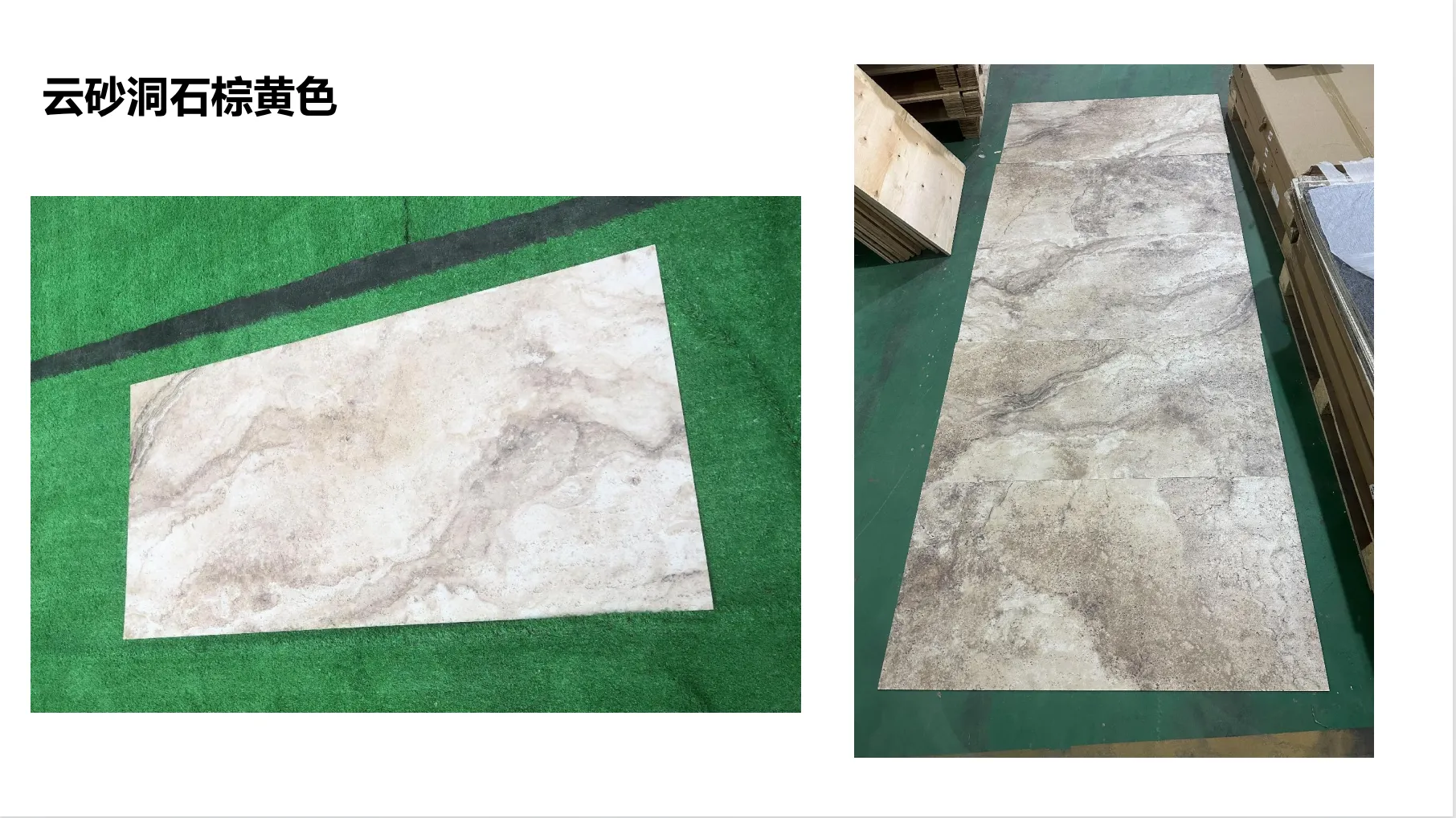
But it's the texture that truly sets it apart. Unlike polished marbles or uniform fair-faced concrete, dark grey dolomitic travertine carries the fingerprint of the earth itself. Subtle veins of lighter grey, tiny fossilized pockets, and gentle undulations in the stone create a surface that feels alive—like looking at a slice of a mountain, compressed over millennia. These natural variations mean no two panels are identical, giving each facade a unique, organic rhythm. It's a far cry from the sterile repetition of some modern cladding materials; instead, it's a celebration of imperfection, a reminder that beauty lies in the unplanned.
Compare this to travertine (vintage black), a close cousin in the travertine family. While vintage black travertine leans into drama with its near-black hue, dark grey dolomitic travertine offers a softer, more versatile palette. It pairs effortlessly with glass, metal, and wood accents, making it adaptable to everything from sleek, minimalist towers to buildings with warmer, more traditional elements. It's not just a color choice—it's a design philosophy: timelessness over trendiness.
A high-rise facade isn't just about looks; it's a shield. At 50 stories, wind speeds can exceed 100 km/h, rain lashes sideways, and UV rays beat down relentlessly. Dark grey dolomitic travertine isn't just pretty—it's a warrior in stone form. Dolomitic travertine, formed from mineral-rich hot springs, is denser and harder than standard travertine, thanks to its high dolomite content. This density translates to impressive compressive strength (often exceeding 250 MPa) and low water absorption (less than 1%), making it resistant to freeze-thaw cycles, mold, and moisture damage—critical for buildings in harsh climates.
Its durability also makes it a practical choice for high-strength construction boards, the backbone of modern facade systems. When cut into thin, lightweight panels (often 12-20mm thick), it retains its structural integrity while reducing the load on the building's frame. This combination of strength and lightness is a game-changer for tall buildings, where every kilogram saved matters. Unlike materials that degrade over time—like painted metal, which chips, or some composite panels that fade—dark grey dolomitic travertine ages gracefully. Its surface weathers slowly, developing a subtle patina that adds character rather than detracting from it. A facade clad in this stone today will still look striking in 50 years, a rarity in a world of fast-fashion architecture.
In an era where "green building" is no longer a buzzword but a mandate, dark grey dolomitic travertine shines as a responsible choice. Unlike foamed aluminium alloy boards or synthetic composites, which require energy-intensive manufacturing processes, this stone is quarried, cut, and finished with minimal processing. Its extraction has a lower carbon footprint than materials like steel or even some types of concrete, and its natural composition means it contains no harmful chemicals or VOCs. For developers aiming for LEED or BREEAM certifications, this is a significant advantage.
But sustainability isn't just about extraction—it's about longevity. A facade that needs replacement every 20 years is a drain on resources, no matter how "eco-friendly" the material claims to be. Dark grey dolomitic travertine's lifespan of 100+ years (when properly maintained) means fewer replacements, less waste, and lower long-term environmental impact. And when it does reach the end of its life, it's fully recyclable—crushed and reused as aggregate in new construction projects, closing the loop on its lifecycle.
To truly understand why dark grey dolomitic travertine is rising in popularity, it helps to see how it measures up against other common facade materials. Let's break it down:
| Criteria | Dark Grey Dolomitic Travertine | Fair-Faced Concrete | MCM Flexible Stone | Travertine (Vintage Black) |
|---|---|---|---|---|
| Aesthetic Versatility | High (adapts to light, pairs with diverse materials) | Medium (industrial, limited color range) | High (customizable finishes) | High (dramatic, bold, but less versatile than dark grey) |
| Durability (50+ story use) | Excellent (resistant to wind, UV, moisture) | Good (prone to cracking over time) | Very Good (flexible, impact-resistant) | Excellent (similar to dark grey, but denser) |
| Sustainability | High (low embodied energy, recyclable) | Medium (high cement production emissions) | Medium (depends on core material) | High (same as dark grey) |
| Installation Ease | Moderate (requires skilled labor for cutting) | High (poured on-site, fast) | High (lightweight, flexible panels) | Moderate (similar to dark grey) |
| Long-Term Maintenance | Low (occasional sealing, no painting) | Medium (may require patching, staining) | Low (resistant to fading, easy to clean) | Low (same as dark grey) |
What stands out here is dark grey dolomitic travertine's balance. It doesn't excel in just one area—it's strong across the board. Fair-faced concrete is cheaper and faster to install but lacks warmth; MCM flexible stone offers flexibility but can feel less "authentic" to some designers; travertine (vintage black) is stunning but can overwhelm smaller facades. Dark grey dolomitic travertine, however, walks the line between art and engineering, sustainability and strength.
It's one thing to talk about a material's merits; it's another to see it in action. Take, for example, a recent 42-story residential tower in Chicago, where architects opted for dark grey dolomitic travertine panels on the lower 10 floors, transitioning to glass above. The stone grounds the building, giving it a sense of permanence, while the glass upper levels keep it light and modern. Residents report that the facade's texture reduces noise from the street, and the color keeps interiors cool by reflecting less heat than lighter materials. It's a practical, beautiful solution that checks every box.
In Dubai, a commercial high-rise used the stone to pay homage to the city's desert roots. The dark grey panels, arranged in a subtle, wave-like pattern, evoke sand dunes at dusk, creating a connection to the landscape that feels both local and global. It's a reminder that materials like dark grey dolomitic travertine aren't just about function—they're about storytelling, about making buildings feel rooted in place, even as they reach for the clouds.
At the end of the day, high-rise facades are about trust. Architects trust that the material they choose will perform as promised, developers trust it will add value, and communities trust it will enhance their skyline for generations. Dark grey dolomitic travertine has earned that trust. It's a material that doesn't force compromises: beauty without fragility, strength without sterility, sustainability without sacrifice.
As cities grow taller and more crowded, the demand for materials that can do it all will only increase. Dark grey dolomitic travertine isn't just keeping up—it's leading the way. It's a testament to the power of natural materials in modern design, proving that sometimes, the best solutions are the ones the earth crafted for us, refined by human ingenuity.
So the next time you look up at a high-rise and pause, struck by its beauty and presence, take a closer look. If that facade has a depth of color, a texture that feels alive, and a quiet confidence that commands attention, there's a good chance it's dark grey dolomitic travertine. And in that moment, you'll understand: it's not just a material. It's a masterpiece, in stone.
Recommend Products












