

Walk into a modern café with high ceilings and exposed brick, or an open-plan office with sleek glass partitions, and you'll notice something quickly: noise. It bounces off hard surfaces, blends into a dull roar, and suddenly, that "airy, spacious" design feels more like a echo chamber. We all crave beautiful spaces, but what good is aesthetics if you can't hear yourself think? Enter Dark Grey Muretto Stone—a material that doesn't just catch the eye, but quietly works behind the scenes to turn chaotic rooms into calm, conversation-friendly havens. Let's dive into why this unassuming stone is becoming a favorite for designers who care about both looks and peace.
First things first: let's get to know the star of the show. Dark Grey Muretto Stone isn't your average polished marble or generic concrete slab. Its name hints at its personality—"muretto" comes from the Italian word for "small wall," evoking images of rustic, hand-laid stonework that's been part of European architecture for centuries. But don't let the old-world vibe fool you; this stone is a modern marvel.
Visually, it's a study in understated elegance. Think deep, moody grey tones that shift from charcoal to soft slate, with a textured surface that feels like it's been weathered by time—subtle ridges, tiny crevices, and a matte finish that absorbs light rather than reflecting it. It's not flashy, but that's the point. It complements everything from industrial steel beams to warm wooden furniture, making it a chameleon in design schemes.
But what really sets it apart? Unlike smooth stones that repel sound, or overly porous ones that feel flimsy, Dark Grey Muretto Stone strikes a balance. Its composition—dense enough to feel solid, yet porous enough to trap sound waves—makes it a secret weapon in the fight against noise pollution. And that texture? Those little nooks and crannies aren't just for show; they're acoustic allies.
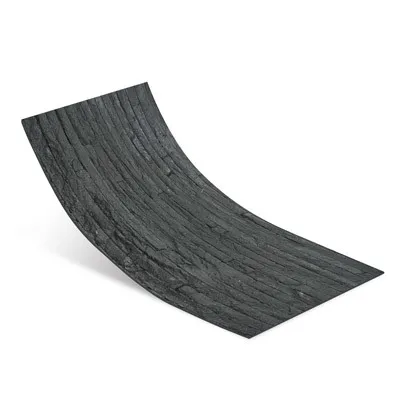
Let's get a little science-y (but don't worry, I'll keep it simple). Sound travels in waves, right? When those waves hit a surface, one of three things happens: they bounce back (echo), pass through (transmission), or get absorbed (converted into tiny amounts of heat). For a material to be good at soundproofing, it needs to do two things well: block sound from passing through (that's mass and density at work) and absorb what's already in the room (porosity and texture help here).
Dark Grey Muretto Stone nails both. Its natural density—thanks to a mix of minerals like calcium carbonate and silica—acts as a barrier, preventing noise from bleeding through walls. Ever noticed how a thick stone wall in an old cottage feels quieter than a thin drywall? That's density at play. But here's the twist: its textured surface takes it a step further. Those tiny indentations and rough patches disrupt sound waves, scattering them instead of letting them bounce back as echo. It's like a maze for noise—waves get lost in the texture, losing energy as they go.
Compare that to something like fair-faced concrete, which is smooth and dense. Concrete is great at blocking sound, but its flat surface reflects noise, turning a room into a giant drum. Or take travertine—a popular porous stone. Travertine absorbs sound well, but its lighter density means it might not block as much noise from the next room. Dark Grey Muretto Stone? It's the middle ground we've been waiting for: dense enough to block, textured enough to absorb.

Curious how Dark Grey Muretto Stone measures up against other common materials? Let's break it down with a quick table. We'll look at density (how well it blocks sound), sound absorption coefficient (SAC, a scale from 0 to 1 that measures how much sound it soaks up), and where each material shines.
| Material | Density (kg/m³) | Sound Absorption Coefficient (mid-range frequencies) | Best For | Aesthetic Vibe |
|---|---|---|---|---|
| Dark Grey Muretto Stone | 2200–2500 | 0.4–0.6 | Restaurants, offices, home theaters | Rustic-industrial, earthy, textured |
| Travertine (Beige) | 2100–2300 | 0.3–0.5 | Bathrooms, accent walls | Light, porous, Mediterranean |
| Fair-Faced Concrete | 2400–2600 | 0.1–0.3 | Industrial lofts, garage conversions | Sleek, modern, minimalist |
See the pattern? Dark Grey Muretto Stone has a higher SAC than concrete (meaning it soaks up more noise) and similar density to travertine but with better absorption. That makes it ideal for spaces where you want both privacy (blocking outside noise) and comfort (reducing echo inside). It's not just about "being quiet"—it's about creating spaces where people can connect without raising their voices.
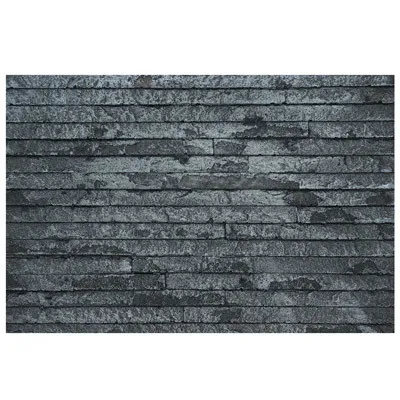
Let's talk real-world applications. Where would you actually use this stone to maximize its sound-dampening superpowers? Turns out, the answer is: almost anywhere noise is a problem. Here are a few standout examples:
Busy Cafés & Restaurants: We've all been there—shouting over the clink of plates and chatter. A wall of Dark Grey Muretto Stone behind the bar or along the dining area can absorb that ambient noise, making it easier to have a conversation without straining. One café owner in Portland swears by it: "After installing Muretto panels, customers started staying longer. They said it felt 'cozier'—turns out, 'cozier' just means they could hear each other."
Open-Plan Offices: Love 'em or hate 'em, open offices are here to stay. But privacy? Hard to come by. Adding Muretto Stone partitions between workstations can block mid-level chatter and keyboard clatter, turning a chaotic floor into a calmer, more focused space. Plus, that textured grey look beats the heck out of boring fabric cubicles.
Home Theaters & Music Rooms: If you're a movie buff or musician, you know how important sound quality is. Muretto Stone walls absorb excess echo, making dialogue clearer and music richer. No more "boomy" bass or muddled lines—just crisp, immersive sound.
Libraries & Study Spaces: These places live and die by quiet. Muretto Stone's ability to absorb background noise (like chairs scraping or people whispering) keeps the atmosphere peaceful, so students and readers can focus without distraction.
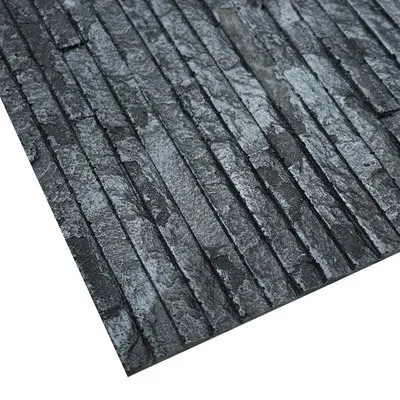
Let's be honest: if Dark Grey Muretto Stone looked terrible, no one would use it, no matter how good it is at hushing noise. But the best part? It's a stunner. Its dark grey palette adds depth to a room without feeling heavy—think of it as a neutral that has personality. Pair it with warm wood accents, and it feels rustic and inviting. Mix it with black metal and white walls, and it leans industrial-chic. It even works in minimalist spaces, where its texture adds subtle interest without overwhelming the eye.
And unlike some acoustic materials (looking at you, ugly foam panels), it ages well. That weathered texture only gets more charming over time, developing a patina that tells a story. It's the kind of material that makes you want to reach out and touch it—which, let's be real, is half the fun of good design.
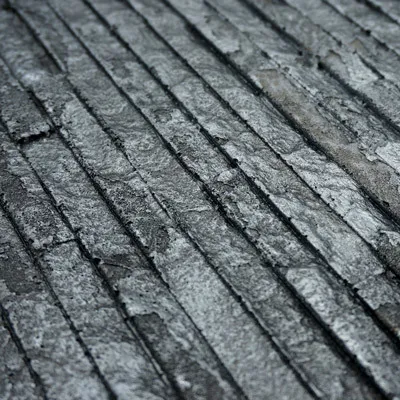
At the end of the day, Dark Grey Muretto Stone is a reminder that great design isn't just about how things look—it's about how they make us feel. A noisy room feels stressful; a quiet one feels calm. A space that looks beautiful but sounds terrible? It's incomplete. This stone bridges that gap, proving that function and aesthetics don't have to be enemies.
So the next time you're in a café where you can actually hear your friend laugh, or an office where you can focus without headphones, take a peek at the walls. Chances are, you might be looking at Dark Grey Muretto Stone—quietly doing its job, turning chaos into calm, one textured surface at a time.
Recommend Products












