
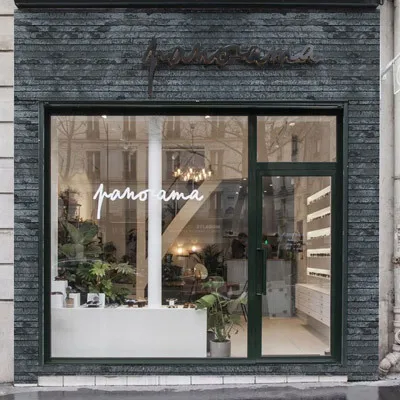
In the world of architecture and design, every material tells a story. From the rough-hewn charm of ancient stone walls to the sleek precision of modern facades, the materials we choose shape not just the look of a space, but how we feel in it. Today, we're diving into a material that's been quietly making waves in contemporary design: Dark Grey Muretto Stone. But more than that, we're exploring a detail that often goes unnoticed by the casual eye but can make or break a project's success: color consistency. Why does it matter? Let's pull back the curtain and find out.
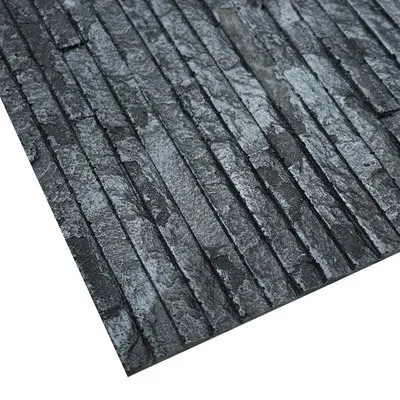
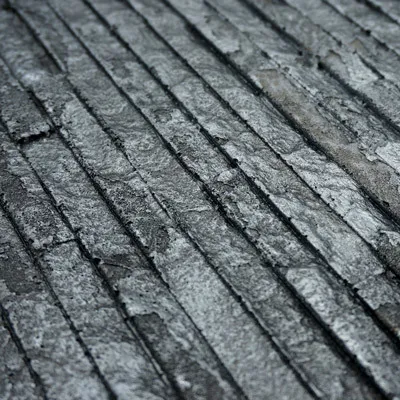
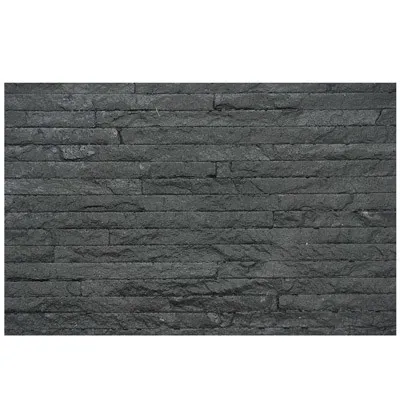
Before we talk about color, let's get to know the star of the show. Dark Grey Muretto Stone is part of MCM's expansive family of innovative building materials—a line that includes everything from the tactile warmth of wood grain board to the industrial edge of fair-faced concrete . Muretto Stone itself draws inspiration from traditional Mediterranean masonry, where rough-textured, hand-laid stones create walls that feel both sturdy and full of character. The "dark grey" variant leans into modern minimalism, offering a deep, moody hue that pairs beautifully with both warm woods and cool metals.
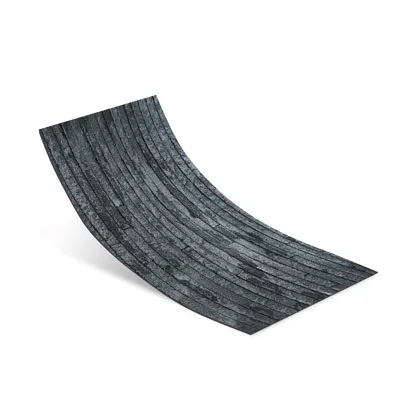
But what sets MCM's Dark Grey Muretto Stone apart isn't just its aesthetic—it's the material's versatility. It's part of the mcm flexible stone series, meaning it's lightweight, easy to install, and adaptable to curved surfaces, unlike heavy natural stone. Imagine wrapping a commercial lobby's curved wall in it, or cladding a home's exterior to weatherproof it without sacrificing style. It's a material designed for the way we build now: efficiently, creatively, and with an eye on both form and function.
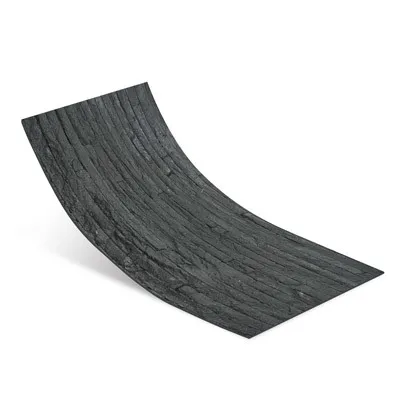
Here's the thing about color in design: when it's consistent, you don't notice it. But when it's not? It screams. Picture this: you're walking into a high-end boutique, and the walls are supposed to be a smooth, uniform dark grey. But as your eye travels across the surface, you spot patches—some slightly lighter, some with a hint of blue, others veering toward charcoal. Suddenly, that "luxurious" vibe feels off. The space feels disjointed, almost unprofessional. That's the impact of poor color consistency.
Color consistency refers to how uniform a material's hue, saturation, and tone are across a batch, a panel, or even an entire project. For Dark Grey Muretto Stone, it means that whether you're installing the first panel or the hundredth, the shade of grey should match. No surprises, no mismatched sections, no "close enough" compromises. It's the difference between a design that feels intentional and one that feels haphazard.
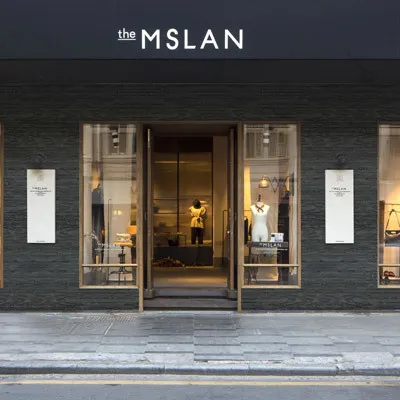
Let's break it down. For designers, architects, and even homeowners, color consistency isn't just a "nice-to-have"—it's a cornerstone of successful design. Here's why:
First and foremost, consistent color makes a space look finished. Think of a gallery wall with frames that are all the same shade of black—clean, cohesive, and focused on the art. Now imagine those frames in varying blacks: some matte, some glossy, some with a purple undertone. The art fades into the background, and all you see is the chaos of mismatched frames. Dark Grey Muretto Stone works the same way. When its color is consistent, it becomes a backdrop that elevates the rest of the design—whether that's sleek furniture, vibrant art, or soft lighting. Inconsistent color, on the other hand, becomes a distraction, pulling the eye away from the intended focal points.
Color consistency isn't just about looks—it's often a marker of material quality. Natural stone, for example, can vary wildly in color due to mineral deposits, weathering, or extraction location. But MCM's Dark Grey Muretto Stone is engineered, not just quarried. That means the color is integrated into the material during production, not just applied as a surface coat. So, if a batch of Muretto Stone has inconsistent color, it could be a red flag for other issues: uneven mixing, poor quality control, or shortcuts in the manufacturing process. Consistent color, then, is a sign that the material is reliable—built to last without fading, chipping, or discoloring over time.
Designers spend hours crafting mood boards, renderings, and color palettes. They select materials based on how they'll interact in the space—how Dark Grey Muretto Stone will complement the warm tones of wood grain board on the ceiling, or how it will contrast with the coolness of fair-faced concrete floors. If the stone arrives with inconsistent color, that carefully planned palette falls apart. Suddenly, the "dark grey" on the mood board is nowhere to be found, and the designer is left scrambling to adjust. Consistent color ensures that what's on the page translates to the physical space, preserving the integrity of the original vision.
For contractors and installers, working with consistent materials saves time, money, and stress. Imagine ordering 500 square feet of Dark Grey Muretto Stone, only to find that half of it is a different shade. You'd have to reorder, delay the project, or try to hide the mismatched panels in less visible areas—none of which are ideal. When a material is consistently colored, contractors can work efficiently, knowing they won't hit unexpected snags. It builds trust: they know they can rely on MCM to deliver a product that meets the specs, every single time.
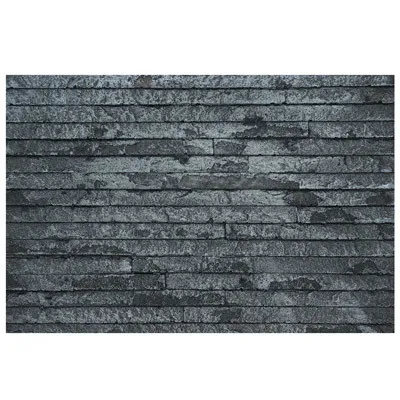
So, how does MCM pull off that level of consistency? It starts with a commitment to precision at every step of the manufacturing process. Let's take a peek behind the scenes:
MCM sources its raw materials from trusted suppliers, ensuring that the base components—whether natural stone aggregates, resins, or pigments—are consistent in quality. For Dark Grey Muretto Stone, the pigments used to achieve that deep, moody hue are tested and measured to exact specifications. No "eyeballing" here: every batch of pigment is checked for color accuracy before it ever touches the production line.
MCM's production facilities use state-of-the-art mixing and molding equipment. The stone mixture—including aggregates, binders, and pigments—is blended in computer-controlled machines that ensure every batch has the exact same ratio of ingredients. Temperature, pressure, and curing time are also tightly monitored. Even small variations in these factors can affect color, so MCM leaves nothing to chance. For example, curing time that's too short might result in a slightly lighter shade, while too much heat could darken the pigment. By controlling these variables, MCM keeps the color on target.
Before any panel leaves the factory, it undergoes a series of color checks. MCM uses spectrophotometers—devices that measure the color of a surface against a standard—to ensure each panel matches the master sample for Dark Grey Muretto Stone. If a panel is even slightly off, it's rejected. This isn't just about catching mistakes; it's about preventing them from ever reaching the customer. MCM's quality control team also tests panels under different lighting conditions (natural light, LED, incandescent) to ensure the color remains consistent no matter how the space is lit.
Every batch of Dark Grey Muretto Stone is assigned a unique lot number. This allows MCM to track the material from production to delivery, and if there's ever a question about consistency, they can trace it back to the source. Batch testing also ensures that even across different production runs, the color remains the same. So, if a project requires additional panels six months after the initial order, MCM can match the original color exactly—no guesswork, no "new batch" surprises.
Dark Grey Muretto Stone isn't the only MCM product where color consistency shines. The brand's commitment to uniformity extends across its entire range, from wood grain board to fair-faced concrete and beyond. Let's take a quick look at how this plays out in a few other popular lines:
| Product Line | Color Consistency Feature | Why It Matters |
|---|---|---|
| Wood Grain Board | Digitally replicated wood patterns with consistent grain and color variation | Avoids the "patchwork quilt" look of natural wood, where knots and grain can vary drastically |
| Fair-Faced Concrete | Controlled cement blends and curing processes for uniform gray tones | Creates the sleek, industrial look of exposed concrete without splotchy discoloration |
| Travertine (Starry Series) | Consistent distribution of "starry" pigment flecks (red, blue, orange) in a base hue | Ensures the decorative flecks look intentional, not random or sparse in some panels |
| Lunar Peak Series (Silvery, Golden, Black) | Metallic pigments blended to exact brightness and tone | Maintains the "lunar glow" effect across large surfaces, avoiding dull or overly shiny patches |
This cross-product consistency is a game-changer for designers who love mixing MCM materials. Imagine pairing Dark Grey Muretto Stone walls with wood grain board accents and a fair-faced concrete floor. Because each material's color is consistent, the overall palette feels harmonious, not clashing. It's like having a box of crayons where every color stays true, no matter which one you pick.
Numbers and processes are great, but let's talk about real-world impact. Here are a few projects where Dark Grey Muretto Stone's color consistency made all the difference:
A design firm in Chicago was tasked with converting a historic warehouse into luxury lofts. They chose Dark Grey Muretto Stone for the accent walls in each unit, aiming for a modern, industrial vibe that still felt warm. The challenge? Each loft was unique in layout, with some requiring over 20 panels of stone. Thanks to MCM's color consistency, every wall—from the first loft to the last—had the same rich, uniform dark grey. The result? A cohesive building where each unit feels like part of a curated collection, not a random assortment of materials. "We didn't have to worry about swapping out panels or hiding mismatches," said the lead designer. "It let us focus on the creative stuff, not the logistics."
A boutique hotel in Barcelona wanted to stand out on a busy street with a bold, monochromatic exterior. They chose Dark Grey Muretto Stone for the facade, paired with gold accents. With over 1,000 square meters of stone to install, color consistency was non-negotiable—any variation would be visible from the street. MCM delivered panels that matched perfectly, creating a seamless, striking look that has since become a local landmark. "Guests often comment on how the building 'feels' expensive," said the hotel manager. "I think a lot of that is because the stone looks so uniform. It feels intentional, like no detail was overlooked."
A tech company in Seattle wanted their break room to feel like a "zen retreat" for employees. They used Dark Grey Muretto Stone for the feature wall, paired with wood grain board shelving and soft lighting. The consistent grey of the stone created a calming backdrop, while the uniform wood tones added warmth. "Employees love it," said the HR director. "They say it feels like a different world from their desks. The stone wall is definitely the star—it looks so smooth and put-together, it's almost meditative."
It's not all smooth sailing, of course. Achieving color consistency in building materials comes with its share of challenges. Here are a few common hurdles and how MCM navigates them:
Even with controlled sourcing, natural materials like stone aggregates can have slight variations. A batch of sand might be a touch coarser, or a mineral deposit might add a subtle undertone. MCM's solution? Blending raw materials from multiple sources to average out these variations. By mixing aggregates from different quarries, they create a more consistent base before adding pigments.
A panel that looks perfect under factory lights might look different in sunlight or warm indoor lighting. MCM tests panels under a range of lighting conditions—including simulated daylight, cool white LED, and warm incandescent—to ensure the color remains consistent across environments. They also provide designers with physical samples that can be viewed on-site, so there are no surprises once installation begins.
Over time, even the most precise machines can drift slightly—mixers might wear, pigments might settle, or temperatures might fluctuate. MCM addresses this with in-line color monitoring. Sensors on the production line continuously check panel color, alerting operators if a batch starts to deviate from the standard. Adjustments are made in real time, ensuring that the first and last panel of a run match.
At the end of the day, color consistency in Dark Grey Muretto Stone—and in all building materials—is about more than just "looking good." It's about trust: trust between designer and material, between contractor and supplier, between a space and the people who inhabit it. When a material's color is consistent, it becomes a reliable partner in the design process, allowing creativity to take center stage without technical hiccups.
MCM's commitment to color consistency isn't just a selling point—it's a promise. A promise that when you choose Dark Grey Muretto Stone, you're getting a material that will live up to your vision, panel after panel, project after project. It's the quiet confidence that comes from knowing the details are handled, so you can focus on what matters most: creating spaces that inspire, delight, and endure.
So, the next time you walk into a space with Dark Grey Muretto Stone, take a moment to appreciate the consistency. That uniform, moody grey isn't just a color—it's a testament to the care, precision, and passion that goes into crafting materials that shape our world.
Recommend Products












