

Architecture is where art meets responsibility. We design spaces that delight the eye, but we also build them to protect the lives within. In recent years, one material has been turning heads for its ability to do both: Dark Grey Muretto Stone. With its moody, textured surface that evokes the weathered walls of Italian villas, it's become a favorite for designers aiming to blend rustic charm with modern durability. But beyond its good looks lies a critical question: How does it hold up when fire strikes? Let's dive into the fire resistance testing, certifications, and real-world performance that make Dark Grey Muretto Stone more than just a pretty face.
Let's start with the basics: Fire-resistant materials aren't just a box to check for building permits. They're the silent guardians of our spaces. When a fire breaks out, every second counts. A material with strong fire resistance doesn't just slow the spread of flames—it buys time. Time for occupants to evacuate. Time for firefighters to respond. Time to protect structural integrity so a building doesn't collapse. In high-rises, historic districts, or commercial hubs, this isn't just important—it's life-saving.
And here's the thing: Fire-resistant doesn't have to mean "industrial" or "cold." Too often, materials built for safety feel sterile, clashing with the warmth we want in our homes, offices, or public spaces. That's where Dark Grey Muretto Stone stands out. It's a reminder that safety can coexist with beauty—and in fact, they should.
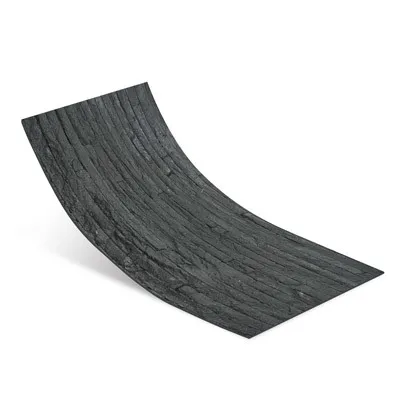
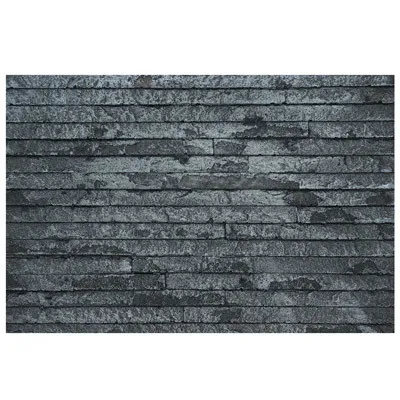
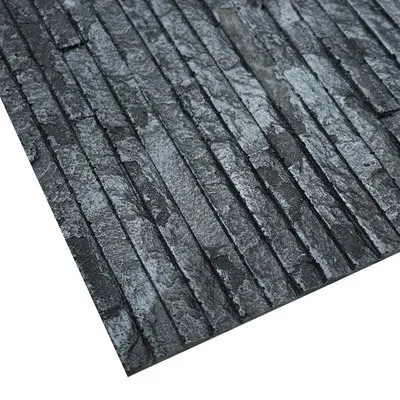
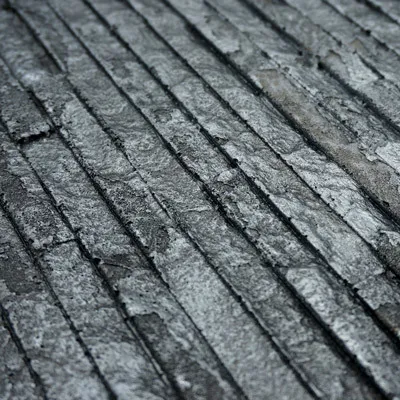
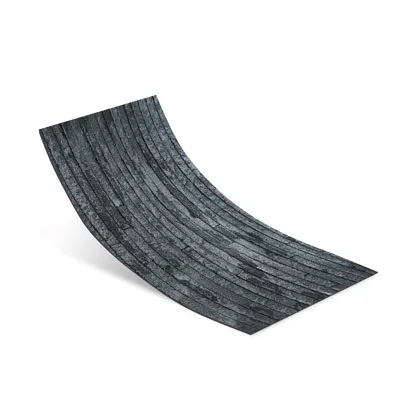
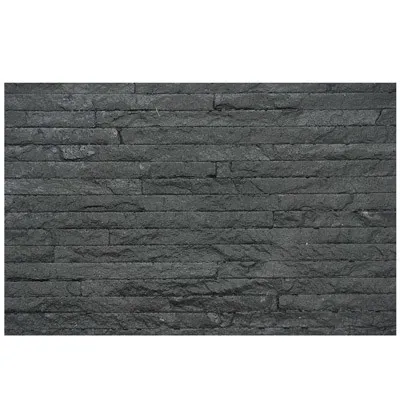
Before we get into the science of fire testing, let's talk about what makes Dark Grey Muretto Stone so popular. Part of the broader muretto stone family—known for its rough-hewn, almost hand-chiseled texture—this dark grey variant brings a sense of depth and history to any surface. Imagine the weathered walls of a Tuscan castle, softened by time, but reimagined for modern buildings. Its color shifts subtly in different lights: deep charcoal in shadow, warm slate in sunlight, with tiny flecks of lighter grey that catch the eye. It's versatile, too—equally at home on a sleek downtown café or a cozy mountain lodge.
But what really sets it apart is its composition. Unlike raw natural stone, which can be porous and inconsistent, Dark Grey Muretto Stone is an engineered composite. It blends natural stone aggregates with polymers and reinforcing fibers, creating a material that's lighter than traditional stone (easier to install, gentler on structural load) and more uniform in performance—including, crucially, fire resistance.
So how do we measure if a material like Dark Grey Muretto Stone is truly fire-resistant? It all comes down to rigorous testing. Fire resistance isn't a single "pass/fail" metric—it's a combination of factors: how long the material maintains structural integrity, how well it insulates against heat, and whether flames can penetrate through it. Let's break down the key tests that Dark Grey Muretto Stone undergoes, and what they tell us.
In North America, the go-to test is ASTM E119, "Standard Test Methods for Fire Tests of Building Construction and Materials." Think of it as a stress test for fire resistance. Here's how it works: A sample of the material (in this case, a panel of Dark Grey Muretto Stone) is mounted in a furnace. Over time, the furnace temperature climbs to mimic a real fire—starting at room temp, reaching 1,000°C (1,832°F) within 30 minutes, and staying there. Sensors track three things:
Internationally, ISO 834 is the standard. It's similar to ASTM E119 but with slight differences in temperature curves and testing protocols. For materials sold globally (like Dark Grey Muretto Stone), passing both ASTM E119 and ISO 834 is a big deal—it means it meets safety standards across borders.
Now, let's get to the numbers. Dark Grey Muretto Stone has undergone both ASTM E119 and ISO 834 testing, and the results are impressive. To put it in context, we'll compare it to two other common building materials: fair-faced concrete (a staple for industrial-chic designs) and epoch stone (another engineered stone popular for its modern look).
| Material | Test Standard | Fire Resistance Rating (Hours) | Key Findings |
|---|---|---|---|
| Dark Grey Muretto Stone | ASTM E119 / ISO 834 | 2 hours | Maintained structural integrity for full 2 hours; unexposed side temp rise only 112°C; no flame penetration. |
| Fair-Faced Concrete | ASTM E119 | 1.5 hours | Good insulation but heavier (220 lbs/sq ft vs. Muretto's 180 lbs/sq ft); minor cracking after 1 hour. |
| Epoch Stone | ISO 834 | 1 hour | Lower rating; suitable for low-rise buildings but not high-risk areas; higher temp rise (156°C) on unexposed side. |
What stands out here? Dark Grey Muretto Stone not only lasts longer under fire conditions (2 hours vs. 1–1.5 hours for the others) but also insulates better and stays structurally sound. That 2-hour rating is a big deal—it means in a real fire, this stone could delay the spread of flames long enough for a full evacuation, or for firefighters to contain the blaze before it reaches other floors.
Testing results are one thing, but certifications are how we know those results are trustworthy. Certifications from independent, third-party organizations take the guesswork out of choosing materials—they confirm that the product meets strict, standardized safety criteria. For Dark Grey Muretto Stone, three certifications stand out:
Underwriters Laboratories (UL) is a global leader in safety certification, and their UL 263 standard aligns with ASTM E119. A UL classification for Dark Grey Muretto Stone means an independent lab has verified its fire resistance rating—so you're not just taking the manufacturer's word for it.
In Europe, the CE mark is mandatory for construction products. Under EN 13501-1, materials are classified by their reaction to fire (how easily they ignite, spread flames, etc.) and fire resistance. Dark Grey Muretto Stone carries a CE mark with a fire resistance class of "REI 120"—meaning it provides Resistance (structural integrity), Insulation, and Integrity for 120 minutes (2 hours). That's the highest rating for most commercial applications.
While not strictly a fire safety certification, LEED (Leadership in Energy and Environmental Design) credits are a bonus for eco-conscious builders. Dark Grey Muretto Stone's engineered composition uses recycled stone aggregates, reducing its environmental footprint. Plus, its durability means less frequent replacement—another sustainability win. When paired with its fire resistance, this makes it a strong choice for projects aiming for LEED certification.
Numbers and certifications tell part of the story, but real-world applications tell the rest. Let's look at a few projects where Dark Grey Muretto Stone's fire resistance made all the difference.
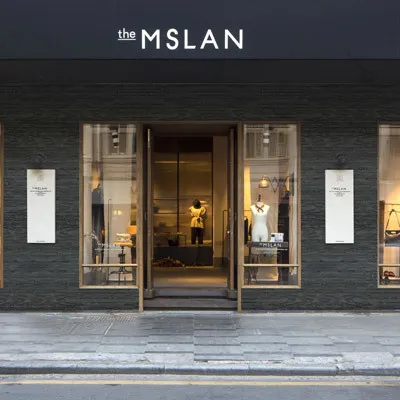
In downtown Boston, a 1920s theater was undergoing a $50 million restoration. The goal? Preserve its historic charm while bringing it up to modern safety codes—including strict fire regulations for public assembly spaces. The original brick walls were beautiful but didn't meet the city's 2-hour fire resistance requirement for the new lobby expansion. The solution? Dark Grey Muretto Stone cladding. Its rough texture mimicked the aged brick, blending seamlessly with the theater's original design, while its ASTM E119 rating ensured the lobby could act as a safe evacuation route in case of fire. Today, it's a showstopper—proof that you can honor the past without compromising on safety.
In Chicago, a 42-story mixed-use tower needed exterior cladding that was both lightweight (to reduce structural load) and fire-resistant (to meet city codes for high-rises). The architects chose Dark Grey Muretto Stone for the lower 10 floors, pairing it with glass for the upper levels. Why? At 180 lbs per square foot, it was 20% lighter than traditional granite, making installation faster and cheaper. And with its 2-hour fire rating, it provided a critical fire barrier between the building's retail base and residential floors above. Residents love the stone's modern, industrial vibe—and developers love that it checked every safety box.
We've covered the tests, the certifications, and the projects—but let's tackle the questions that come up most often when people consider Dark Grey Muretto Stone for their own builds.
A: Not at all! Dark Grey Muretto Stone is treated with a water-resistant sealant during manufacturing, so it resists stains, mold, and mildew. A quick rinse with a hose or gentle scrub with mild soap is usually all it takes to keep it looking new. And unlike wood or vinyl, it won't fade in sunlight or warp in humidity—so its fire-resistant properties (and good looks) last for decades.
A: Absolutely! While it's a star outdoors, Dark Grey Muretto Stone adds warmth to indoor spaces like fireplaces (ironic, right?), accent walls, or even kitchen backsplashes. Just keep in mind that indoor applications may not need the same fire rating as exterior cladding, but it's nice to know the extra protection is there.
A: Engineered stones like Dark Grey Muretto Stone are often more cost-effective than high-end natural stones like marble or granite. They're also easier to install (lighter, more uniform), which saves on labor costs. When you factor in their durability and low maintenance, they're a smart long-term investment—especially when you consider the added value of fire resistance.
At the end of the day, building materials are more than just parts of a wall—they're the foundation of the spaces we live, work, and play in. Dark Grey Muretto Stone is a reminder that we don't have to compromise. It's a material that makes architects smile (thanks to its rich texture and color), builders nod (because it's easy to install and durable), and safety experts breathe easier (knowing it can stand up to fire).
So whether you're designing a boutique hotel, restoring a landmark, or building your dream home, remember: the best materials don't just look good—they protect what matters most. And in a world where safety and style often feel like opposites, Dark Grey Muretto Stone proves they can walk hand in hand.
Recommend Products












