
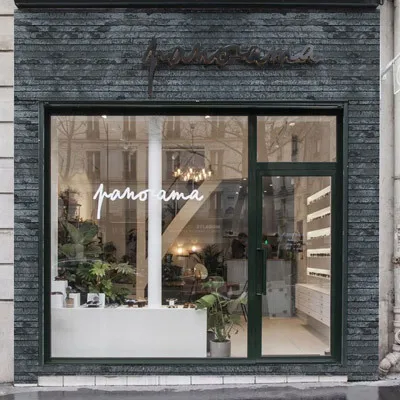
How a single stone is redefining the art of curved architecture—one gentle bend at a time
Architecture, at its core, is a language. It speaks in lines—sharp, angular ones that demand attention, or soft, flowing curves that whisper. For decades, we've leaned into the bold: skyscrapers with glass and steel edges that cut the sky, homes with boxy rooms that prioritize function over feeling. But lately, there's a quiet rebellion happening. Architects and designers are reaching for curves again, and it's not just about aesthetics—it's about emotion.
Think about the last time you walked into a room with a curved wall. Maybe it was a hotel lobby, where the ceiling dipped gently toward a central fountain, or a cozy café with a curved banquette that wrapped around a corner, making you feel instantly welcome. Curves do that. They soften the harshness of right angles, create flow, and invite people to linger. They're the architectural equivalent of a warm hug.
But here's the catch: for centuries, building curved walls has been a battle. Traditional stone, concrete, even wood—they're rigid by nature. Try to bend them, and they crack. Force them into a curve, and you're left with gaps, uneven surfaces, or a finish that looks more "accidental" than intentional. Architects have long dreamed of a material that could keep up with their curves—a material that's strong, beautiful, and… well, flexible .
Enter Dark Grey Muretto Stone. Part of the innovative mcm big slab board series , this isn't just another building material. It's a solution to the curve conundrum. And in a world where we're craving spaces that feel less like machines and more like homes, it might just be the key to unlocking a new era of architectural warmth.
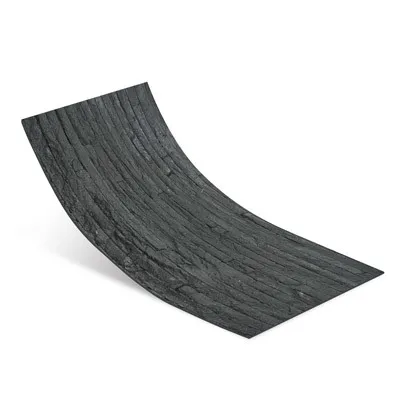
Let's start with the basics. Dark Grey Muretto Stone is a star player in the mcm flexible stone lineup—a category of modified composite materials designed to marry the timeless beauty of natural stone with the modern need for adaptability. "MCM" stands for Modified Composite Material, and that "modified" part is where the magic happens. Unlike traditional stone, which is quarried and cut into rigid slabs, MCM stones like Muretto are engineered to be lightweight, durable, and yes—flexible.
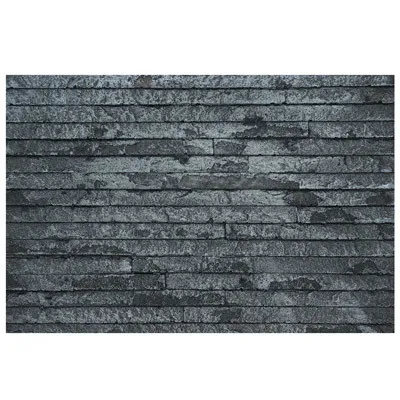
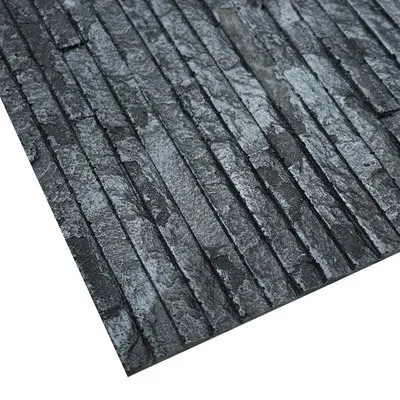
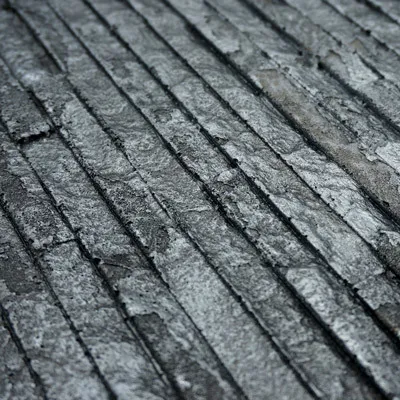
Run your hand over a slab of Dark Grey Muretto Stone, and you'll notice something immediately: it feels real . Not like a cheap imitation, but like a stone that's been weathered by time—subtle pits, soft edges, and a depth of color that shifts from charcoal to graphite depending on the light. It's the kind of texture that makes you want to reach out and touch it, to trace the patterns with your fingertips. But here's the surprise: pick it up, and it's surprisingly light. No more straining under the weight of marble or granite slabs.
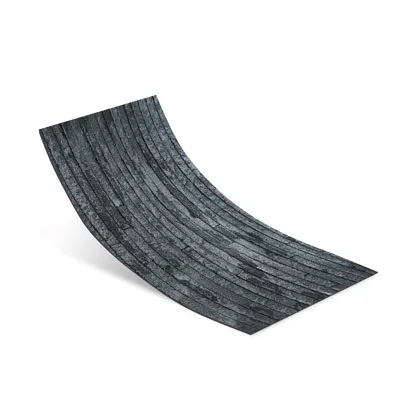
But the real showstopper? Its flexibility. Imagine holding a large slab of Muretto—maybe 4 feet by 8 feet—and gently bending it. Not enough to snap, but enough to curve it into a 90-degree arc, or even a soft S-shape. Traditional stone would shatter. Ceramic tile would crack. But Muretto? It bends. It adapts. It moves with the curve, not against it. That's because its composite structure—layers of natural stone particles bonded with a flexible resin—allows it to flex without compromising strength. It's like nature's resilience meets human ingenuity.
And let's talk about that color: dark grey, but not flat. It's a nuanced shade, with hints of taupe and slate that give it warmth. In a curved wall, this color becomes a canvas. When light hits it from the side, the curves cast soft shadows, highlighting the stone's texture and making the wall feel alive. When lit from above, it glows subtly, turning a simple curve into a work of art. It's versatile, too—equally at home in a sleek, modern penthouse as it is in a rustic, countryside villa.
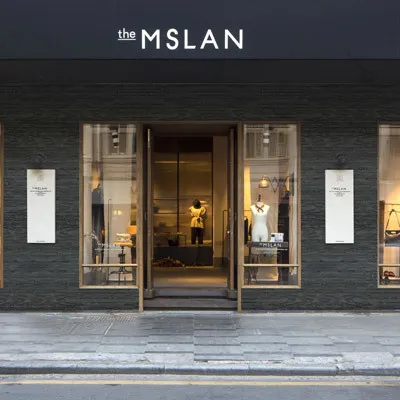
To understand why Dark Grey Muretto Stone is a game-changer, let's take a step back and think about why curved walls have been so hard to pull off. For most of architectural history, builders have worked with rigid materials. Brick, stone, concrete—these are materials that excel at standing straight and tall, but ask them to curve, and they become problematic.
Take traditional travertine, for example. Travertine is beautiful—porous, warm, with a timeless appeal. But it's also heavy and brittle. To create a curved wall with travertine, you'd need to cut small, wedge-shaped pieces and painstakingly fit them together like a puzzle. The result? Gaps between the stones, uneven surfaces, and a finish that often looks forced. And if the wall has a tight curve? Forget it. The travertine would crack under the pressure.
Then there's fair-faced concrete —a popular choice for modern, industrial designs. It's strong, it's durable, and it has a raw, honest look. But fair-faced concrete is poured into forms, which means curved walls require custom molds—expensive, time-consuming, and hard to adjust if the design changes. And once it's set? It's rigid. No second chances.
This is where Dark Grey Muretto Stone flips the script. Its flexibility isn't just a party trick—it's a solution to these age-old problems. Let's break down why it matters:
Still not convinced? Let's put Dark Grey Muretto Stone head-to-head with two other popular materials: travertine (starry blue) —a stunning, textured stone with a celestial pattern—and fair-faced concrete , a staple of modern architecture. The table below breaks down their key attributes, focusing on what matters most for curved walls:
| Material | Flexibility (1-5) | Texture | Installation Ease | Best For |
|---|---|---|---|---|
| Dark Grey Muretto Stone | 5/5 | Weathered, subtle pits, warm dark grey with taupe undertones | Easy (lightweight, cuts with standard tools, bends to curves) | Tight curves, sweeping arcs, high-traffic areas, both interior and exterior |
| Travertine (Starry Blue) | 2/5 | Porous, with bold blue veins and "starry" pits (like a night sky) | Difficult (heavy, requires custom wedge cuts, prone to cracking on curves) | Flat walls, accent pieces, low-traffic areas where texture is the focus |
| Fair-Faced Concrete | 3/5 | Smooth, industrial, uniform gray with subtle aggregate exposure | Complex (requires custom molds, long curing time, hard to adjust) | Large, gentle curves (e.g., stadiums, museums) where uniformity is key |
The table tells the story: when it comes to curved walls, Dark Grey Muretto Stone outshines the competition. Travertine (Starry Blue) is undeniably beautiful—its starry pattern is a conversation starter—but its rigidity makes it a nightmare for curves. Fair-faced concrete can handle gentle curves, but it lacks the warmth and texture of stone, and its installation is costly and time-consuming. Muretto? It's the sweet spot: flexible enough for any curve, textured enough to add depth, and easy enough to install that it won't blow your budget or timeline.
Enough theory—let's talk about real spaces where Dark Grey Muretto Stone has transformed curves from a design dream into a reality. Take the Belle Vie Boutique Hotel in Barcelona, a 1920s building with a modern renovation. The hotel's lobby was once a cramped, angular space with low ceilings. The design team wanted to open it up, to create a sense of flow that welcomed guests the moment they walked in. Their solution? A sweeping curved wall that wraps around the reception desk, leading guests toward the elevator bank.
"We originally considered marble," says lead architect Maria Sanchez, "but the curve was too tight—marble would have cracked. Then we thought about travertine (starry blue), but the weight would have required reinforcing the floor, which wasn't feasible. Dark Grey Muretto was a revelation. We could bend it to the exact curve we wanted, and the texture added so much warmth. Now, guests stop to take photos of that wall. It's become the hotel's signature."
Walk into the lobby today, and you'll see why. The Muretto wall curves gently from the entrance, its dark grey surface catching the light from the floor-to-ceiling windows. Behind the reception desk, recessed LED strips highlight the curve, turning it into a glowing focal point. The stone's texture softens the space, making the lobby feel intimate despite its size. And because Muretto is sound-absorbent, the area stays quiet—no echo, no harsh noise—just the soft murmur of guests checking in.
Another example: the Serene Residence , a modern home in Portland, Oregon, where the owner wanted a curved feature wall in the living room. "I've always loved curves," says homeowner James Lin, "but I didn't want something that felt cold. I wanted stone, but I thought stone was too rigid." His designer introduced him to Dark Grey Muretto, and together, they created a wall that curves around the fireplace, wrapping into the dining area. "It's like the wall is giving the room a hug," Lin laughs. "The texture is incredible—when the fire's on, the heat makes the stone glow, and the curves reflect the light, making the whole space feel cozy."
And it's not just interiors. In Dubai, the Oasis Community Center used Dark Grey Muretto for an exterior curved wall that shelters an outdoor seating area. Exposed to the desert sun and occasional sandstorms, the wall has held up beautifully. "We were worried about fading," says project manager Ahmed Hassan, "but after two years, the color is as rich as the day we installed it. And because it's flexible, it's withstood the expansion and contraction from the heat. Traditional stone would have cracked long ago."
These stories aren't anomalies. From restaurants and retail stores to private homes and public spaces, Dark Grey Muretto Stone is proving that curved walls don't have to be a luxury—they can be a reality, even on a budget, even with tight deadlines.
While flexibility is Muretto's claim to fame, it's far from its only strength. Let's talk about sustainability. As part of the mcm flexible stone family, Muretto is eco-friendly. Traditional stone quarrying disrupts ecosystems, uses massive amounts of water, and generates tons of waste. Muretto, on the other hand, uses recycled stone particles and requires less energy to produce. It's also lightweight, which reduces transportation emissions—no need for heavy trucks burning diesel to haul slabs from the quarry.
Then there's maintenance. Unlike natural stone, which needs regular sealing to prevent staining, Muretto is non-porous. Spill coffee on it? Wipe it up with a damp cloth. Scuff it with a chair? No problem—the resin binding makes it scratch-resistant. It's also mold and mildew resistant, making it perfect for bathrooms or outdoor spaces where moisture is a concern. For busy homeowners or commercial spaces, this means less time and money spent on upkeep, and more time enjoying the beauty of the wall.
And let's not forget about cost. While Muretto may have a slightly higher upfront cost than, say, fair-faced concrete, the savings add up quickly. Installation is faster, so labor costs are lower. No need for custom molds or heavy machinery. No expensive repairs if the curve cracks. Over time, Muretto often ends up being the more affordable choice—especially for complex curved designs.
Finally, versatility. Dark Grey Muretto isn't just for walls. It can be used for backsplashes, countertops (yes, even curved ones!), fireplace surrounds, and even furniture. Imagine a curved kitchen island with a Muretto countertop, or a bathroom vanity with a Muretto backsplash that wraps around the sink. The possibilities are endless, and because it's available in large slabs (thanks to the mcm big slab board series ), you can create seamless surfaces that span multiple areas.
Curved architecture isn't a trend—it's a return to what makes spaces feel human. For too long, we've prioritized function over feeling, building boxes that are efficient but soul-less. Curved walls remind us that architecture is about emotion, about creating spaces that nurture us, inspire us, and make us feel connected to our surroundings.
Dark Grey Muretto Stone is more than a material; it's a tool for this movement. It's allowing architects to dream beyond the straight line, to design buildings that flow like rivers, curve like hills, and wrap around us like a blanket. It's making curved walls accessible to everyone—not just luxury hotels or million-dollar homes, but cafes, schools, libraries, and community centers.
And as our cities grow more crowded, more chaotic, these curved spaces will become even more important. They'll be places to breathe, to slow down, to connect. A curved wall in a busy train station could reduce stress. A curved classroom could help students focus. A curved hospital corridor could make patients feel more at ease. Dark Grey Muretto, with its warmth, texture, and flexibility, is helping to build these healing spaces.
So the next time you see a curved wall, take a closer look. Maybe it's made of Dark Grey Muretto Stone. Maybe it's bending gently, telling a story of innovation and artistry. Maybe it's not just a wall, but a reminder that in architecture, as in life, the most beautiful things often come with a little curve.
Recommend Products












