
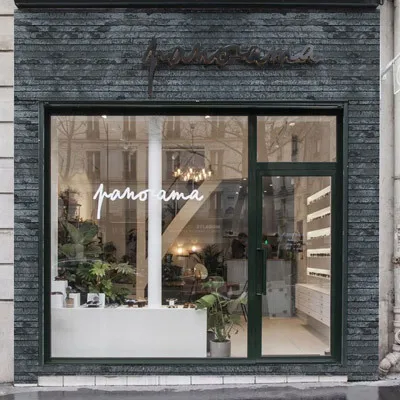
How a Modern Stone Cladding Solution is Redefining Sustainable Architecture
Walk through any major city today, and you'll notice a quiet revolution unfolding across skylines and streetscapes. Glass facades gleam with solar panels, green roofs burst with native plants, and buildings seem to "breathe" in a way that feels almost alive. This isn't just about aesthetics—it's about survival. With global carbon emissions from the construction industry accounting for nearly 40% of the world's total, according to the UN Environment Programme, the shift toward green buildings isn't a trend; it's a necessity.
But here's the truth that often gets overlooked: for all the focus on energy-efficient HVAC systems and smart lighting, the materials we choose to clothe our buildings with matter just as much. A structure can have the most advanced insulation, but if its exterior is made from resource-heavy, carbon-intensive materials, its sustainability credentials are already compromised. That's where innovative cladding solutions come into play—and why products like Dark Grey Muretto Stone are quickly becoming the darlings of architects and developers aiming for green building certifications.
You might be thinking, "Stone? Isn't that a traditional material? How can it be 'green'?" It's a fair question. Traditional natural stone extraction is notoriously hard on the planet: quarries scar landscapes, transportation emits tons of CO2, and cutting and finishing require massive energy inputs. But Dark Grey Muretto Stone isn't your grandfather's stone cladding. As part of the broader MCM flexible stone family, it's a product of cutting-edge engineering that marries the timeless beauty of stone with the eco-conscious demands of modern construction. Let's dive into what makes it tick—and why it's becoming the key to unlocking those coveted green certifications.
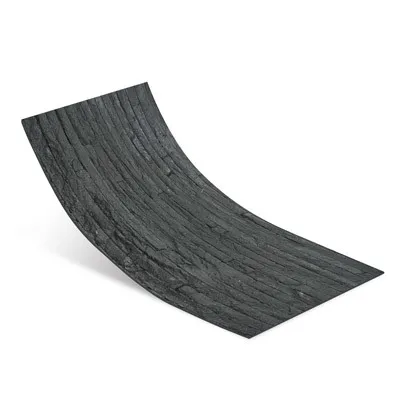
First things first: What exactly is Dark Grey Muretto Stone? To understand it, we need to zoom out and look at its bigger family: MCM flexible stone. MCM, or Modified Composite Material, is a game-changer in the world of building materials. It's a lightweight, durable composite that mimics the look and feel of natural stone but with a fraction of the environmental impact. Think of it as stone's smarter, greener cousin—one that's been raised on a diet of recycled materials and low-carbon manufacturing.
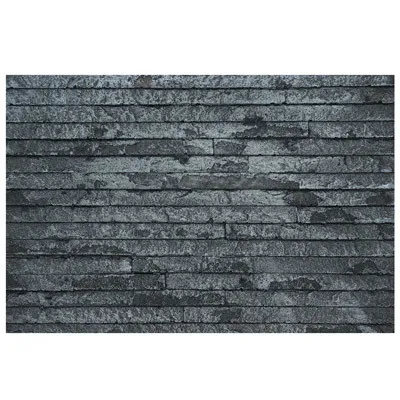
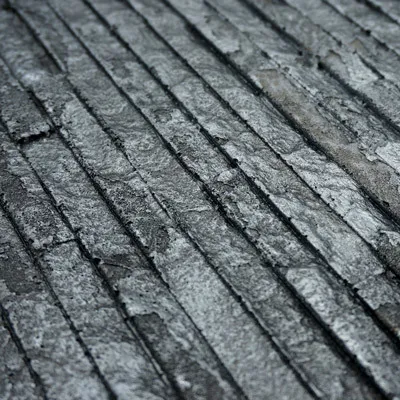
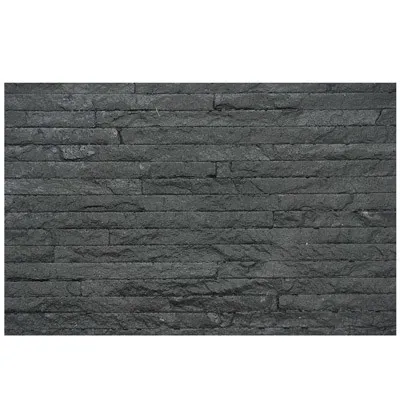
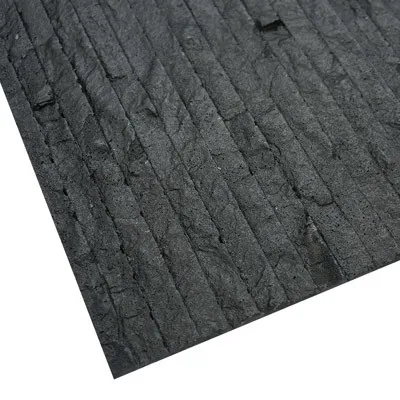
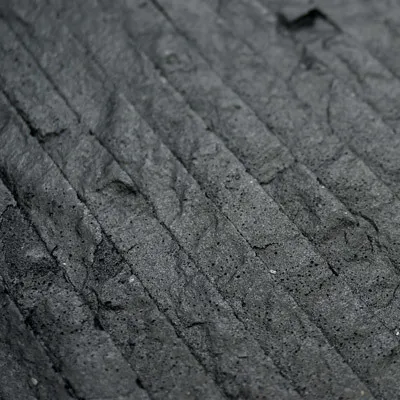
Dark Grey Muretto Stone, in particular, is a standout in this lineup. Its name hints at its character: "Muretto" evokes the rustic charm of Mediterranean stone walls, while "Dark Grey" speaks to its sleek, contemporary palette. Run your hand over a panel, and you'll feel the subtle texture—rough enough to nod to natural stone, smooth enough to feel intentional. It's a material that bridges the gap between old-world warmth and new-world minimalism, making it versatile for everything from boutique hotels in Barcelona to tech campuses in Silicon Valley.
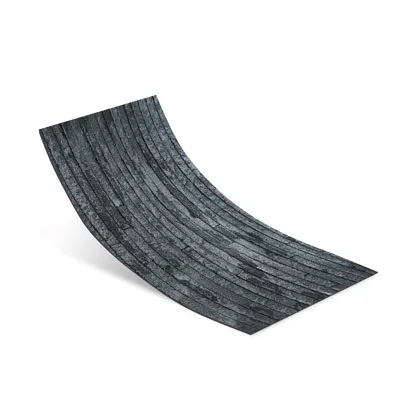
But what truly sets it apart is its composition. Unlike traditional stone, which is hacked from quarries in massive blocks, Muretto Stone starts with a base of recycled minerals and polymers. These are mixed, molded, and cured using a low-heat process that slashes carbon emissions compared to firing bricks or cutting natural stone. The result? A panel that's 70% lighter than natural granite, 100% recyclable at the end of its life, and so flexible it can be curved around architectural details without cracking. For builders, that translates to easier installation, lower transportation costs, and fewer on-site waste materials—all wins for both the budget and the planet.
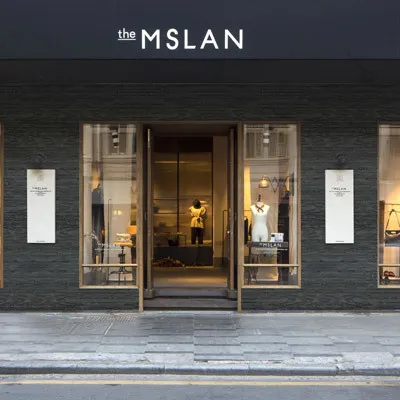
Let's break down the features that make Dark Grey Muretto Stone a sustainability powerhouse. These aren't just technical specs—they're the building blocks of green certification points, and they directly address the most pressing challenges in eco-friendly construction.
Traditional stone cladding can weigh upwards of 50 kg per square meter. That's a lot of stress on a building's structure, requiring beefed-up foundations and support systems—both of which add to material use and carbon footprints. Dark Grey Muretto Stone, by contrast, weighs in at just 8–12 kg per square meter. "It's like comparing a brick to a foam board," jokes Maria Gonzalez, a structural engineer with Portland-based firm GreenSpaces. "We recently used it on a 10-story apartment complex, and the savings in steel and concrete for the facade support were enormous. That's less mining, less manufacturing, less everything."
Don't let the lightness fool you, though. Muretto Stone is engineered to withstand extreme weather—from the freezing rains of Stockholm to the scorching sun of Dubai. Its surface resists fading, chipping, and moisture absorption, meaning it won't need repainting or replacement for decades. In sustainability terms, durability equals longevity, and longevity equals less waste. When a material lasts 50 years instead of 20, you're halving the environmental impact of replacement cycles.
Here's where the "flexible stone cladding panels" label really shines. Unlike rigid natural stone, which requires precise cutting and leaves little room for error, Muretto Stone panels can bend up to 5 degrees without breaking. This flexibility is a dream for architects pushing the boundaries of design. Imagine a building with undulating curves that mimic a sand dune, or a facade that wraps around a corner like a ribbon—all clad in stone-like material that would be impossible with traditional quarried stone.
"We used to have to compromise on design when clients wanted both stone aesthetics and unique shapes," says James Chen, principal architect at Chen & Partners in Singapore. "With Muretto Stone, we don't. On our recent 'Wave House' project, we curved the cladding around a spiral staircase, and the installers finished the job in half the time it would have taken with natural stone. Less labor, less waste from cutting mistakes—again, sustainability in action."
The sustainability story of Dark Grey Muretto Stone starts long before it arrives on a construction site. Its manufacturing process uses up to 30% recycled content, including post-industrial stone dust and plastic polymers that would otherwise end up in landfills. The production facility runs on solar power, and water used in the mixing process is recycled and reused. Even the pigments that give it that rich dark grey hue are low-VOC (volatile organic compound), meaning they don't off-gas harmful chemicals into the air during curing.
And when the day finally comes to replace the cladding (decades from now), the panels can be ground down and repurposed into new MCM products. That's a closed-loop system—a far cry from traditional stone, which often ends up in demolition waste dumps when buildings are renovated.
Before we dive into how Dark Grey Muretto Stone helps achieve green certifications, let's make sure we're on the same page about what these certifications actually are. Think of them as report cards for buildings, grading everything from energy use to material sustainability. The two big players globally are LEED (Leadership in Energy and Environmental Design) from the U.S. Green Building Council and BREEAM (Building Research Establishment Environmental Assessment Method) from the UK. There are others, like Australia's Green Star or Germany's DGNB, but LEED and BREEAM are the most widely recognized.
These certifications aren't just badges of honor. They translate to real value: LEED-certified buildings command 7–10% higher rental rates, according to a 2023 study by the Urban Land Institute, and they sell faster on the resale market. For developers, that's a strong business case. For cities, they mean lower carbon footprints and healthier communities. For the planet, they're a step toward meeting global climate goals.
So, how do materials like Dark Grey Muretto Stone factor in? Both LEED and BREEAM award points for categories like "Materials and Resources," "Indoor Environmental Quality," and "Innovation in Design." The more points a building earns, the higher its certification level (e.g., LEED Silver, Gold, Platinum; BREEAM Pass, Good, Very Good, Excellent, Outstanding). Let's break down the key areas where Muretto Stone shines.
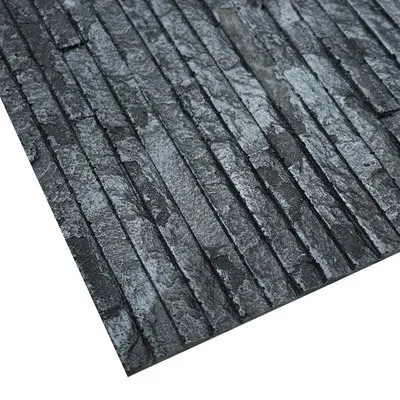
Let's get specific: How does choosing Dark Grey Muretto Stone directly help a project earn those all-important certification points? Let's map it to LEED v4.1, the latest version, and BREEAM 2025 to see the impact.
LEED's MR category is where sustainable materials really shine, and Dark Grey Muretto Stone checks multiple boxes here:
BREEAM's Materials category focuses on the environmental impact of building products, and Muretto Stone excels here too:
It's not just about the planet—green certifications also care about the people inside the building. Dark Grey Muretto Stone contributes here too, thanks to its low-VOC pigments and non-porous surface. Unlike some paints or treated woods, it doesn't off-gas formaldehyde or other harmful chemicals, improving indoor air quality. LEED's IEQ Credit 4.1 (Low-Emitting Materials) and BREEAM's Hea 02 (Indoor Air Quality) both reward this feature, making buildings healthier for occupants.
To really understand why Dark Grey Muretto Stone is a leader in sustainable cladding, let's compare it to two common alternatives: fair-faced concrete and traditional natural stone. The table below breaks down key sustainability metrics, based on data from the International Living Future Institute and the BRE Green Guide.
| Property | Dark Grey Muretto Stone (MCM) | Fair-Faced Concrete | Traditional Natural Stone (Granite) |
|---|---|---|---|
| Weight per sq.m (kg) | 8–12 | 200–250 | 45–55 |
| Recycled Content (%) | 30 | 5–10 | 0 |
| Embodied Carbon (tCO2e/sq.m) | 0.3 | 0.8 | 1.2 |
| Installation Waste (%) | <2 | 5–8 | 10–15 |
| LEED Points Contribution | 3–4 (MR Credits) | 1–2 (if using recycled aggregates) | 0–1 (regional sourcing only) |
| Lifespan (Years) | 50+ | 30–40 | 50+ (but heavier, higher replacement cost) |
The numbers speak for themselves. Dark Grey Muretto Stone outperforms fair-faced concrete and traditional stone in recycled content, embodied carbon, and installation waste, while matching natural stone's lifespan. And when you factor in the reduced structural support needed (thanks to its light weight), the carbon savings multiply even further. It's a holistic win for sustainability.
Enough with the specs—let's look at how Dark Grey Muretto Stone has performed in real projects. These case studies show exactly how the material contributes to green certifications and delivers tangible benefits.
Completed in 2023, the Evergreen Office Campus is a 4-building complex in Seattle's South Lake union district, home to tech firms and nonprofits. The developers aimed for LEED Platinum, the highest certification level, and Dark Grey Muretto Stone was a linchpin in their strategy.
"We needed a cladding material that looked premium but didn't kill our sustainability goals," says project manager Lisa Wong. "Traditional stone was too heavy and carbon-intensive, and metal panels felt too industrial. Muretto Stone gave us the warm, natural look we wanted with the eco-credentials we needed."
The campus used over 12,000 square meters of Dark Grey Muretto Stone on its exteriors. Here's how it contributed to LEED Platinum:
Today, the campus is 35% more energy-efficient than code requirements and has become a model for sustainable commercial development in the Pacific Northwest.
In London, the Riverbank Residences—a 150-unit affordable housing complex along the Thames—needed to meet BREEAM Outstanding to qualify for government grants. The design team chose Dark Grey Muretto Stone for its durability, cost-effectiveness, and sustainability.
"Affordable housing can't compromise on quality, but we also can't overspend," says architect Raj Patel. "Muretto Stone was the sweet spot: it's low-maintenance, so long-term costs are down, and it helped us hit BREEAM's strict materials targets."
The project earned 85 out of 100 BREEAM points, with Muretto Stone contributing to:
Residents love the look too. "The stone walls feel solid and safe, but the building doesn't feel heavy," says tenant Maria Alvarez. "And knowing it's good for the planet? That's just the cherry on top."
It's not just about certifications—Dark Grey Muretto Stone offers practical benefits that make it a no-brainer for architects and builders. Let's hear from the pros about why they're choosing it over traditional materials.
"Gone are the days when 'sustainable' meant 'boring,'" says James Chen, the Singapore-based architect we heard from earlier. "Dark Grey Muretto Stone comes in large format panels (up to 1.2m x 2.4m), which means fewer seams and a cleaner aesthetic. And because it's flexible, we can play with curves and angles that would be impossible with natural stone. On our 'Cloud Tower' project, we used it to create a facade that undulates like a wave—something the client initially thought was too ambitious."
Sustainable materials are often assumed to be more expensive, but Muretto Stone flips that script. "The upfront cost is slightly higher than standard concrete panels, but the total cost of ownership is lower," explains builder Mike Torres of Torres Construction in Miami. "Installation is faster because it's lighter—we use fewer workers and less equipment. Transportation costs are down because you can fit more panels per truck. And maintenance? Zero. No sealing, no repainting, no replacing cracked stones. Over 20 years, it's a net savings of 15–20% compared to traditional stone."
In a market where tenants and buyers increasingly prioritize sustainability, having a LEED or BREEAM certification is a powerful marketing tool. "We're seeing more clients ask for green certifications upfront," says real estate developer Sarah Kim of UrbanGreen Developments. "Properties with LEED Platinum or BREEAM Outstanding lease faster and at higher rates. Dark Grey Muretto Stone helps us check that box while keeping the building looking premium. It's a win-win."
As the world races to meet net-zero targets, the demand for innovative, sustainable building materials will only grow. MCM flexible stone, including products like Dark Grey Muretto Stone, is poised to lead this charge. Here's what industry experts predict for the next decade:
Manufacturers are already working to boost recycled content from 30% to 50% by 2030. "We're experimenting with using recycled glass and even plastic waste from oceans in the mix," says Dr. Elena Rodriguez, a materials scientist at the MCM Research Institute. "The goal is to create a circular economy where old cladding panels are ground down and turned into new ones, with zero waste."
Imagine cladding panels that generate electricity or change color to reflect heat. While that might sound like sci-fi, MCM technology is moving in that direction. "We're exploring integrating thin-film solar cells into Muretto Stone panels," Dr. Rodriguez adds. "The dark grey color is actually ideal for solar absorption, so the aesthetic and functionality could align perfectly."
So far, Muretto Stone has been popular in commercial projects, but that's changing. "Homeowners are becoming more eco-conscious, and they want their houses to reflect that," says residential architect Lisa Wong. "I've used Dark Grey Muretto Stone on three luxury homes this year alone—clients love that it looks like natural stone but has a smaller environmental footprint. As production scales, costs will come down, making it accessible for mid-range homes too."
Dark Grey Muretto Stone isn't just a building material—it's a statement. It says that sustainability and beauty don't have to be mutually exclusive, that "green" can be bold and timeless, and that every choice we make in construction ripples out to impact the planet. As green building certifications become the norm rather than the exception, materials like Muretto Stone will be the foundation upon which we build a more sustainable future.
So the next time you walk past a building with a striking dark grey stone facade, take a closer look. It might just be more than meets the eye—a symbol of how innovation, design, and environmental responsibility can come together to shape the cities of tomorrow. And for architects, builders, and developers ready to make that commitment, Dark Grey Muretto Stone isn't just a choice—it's the key to unlocking a new era of sustainable architecture.
Recommend Products












