
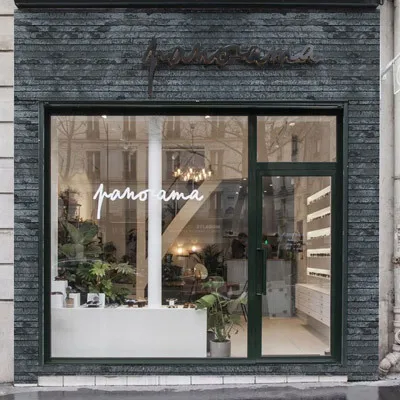
Choosing materials that stand the test of time—without losing soul or style
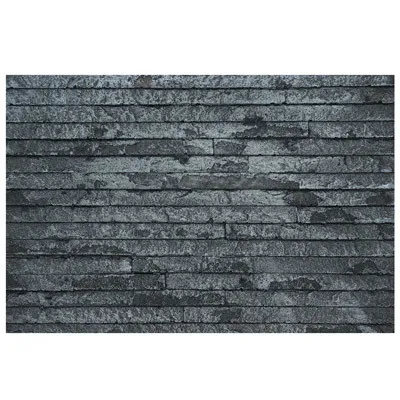
Picture this: Maria, an architect with 15 years of experience, stands in her studio, coffee in hand, staring at two samples on her desk. One is a slab of muretto stone (dark grey) —rough-hewn, with subtle variations in tone that catch the morning light like a storm cloud softened by dawn. The other is a sleek fiber cement panel, uniform in color and smooth to the touch, promising low maintenance and consistency. Outside her window, the city hums with construction; her latest project, a mixed-use development in a coastal neighborhood, needs a facade that's both striking and resilient. "It has to feel alive," she mutters, running a finger over the Muretto Stone's texture, "but it also has to survive salt spray, kids climbing, and whatever else this city throws at it."
Durability isn't just about numbers on a spec sheet. It's about stories: a wall that still looks dignified after 20 winters, a surface that doesn't fade when summer sun blazes, a material that ages gracefully instead of falling apart. Today, we're diving into that story—comparing the rugged charm of Dark Grey Muretto Stone with the modern reliability of fiber cement. Which one earns the title of "project workhorse"?
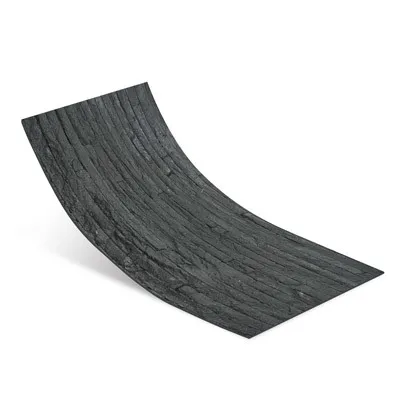
Muretto stone isn't just a material—it's a piece of the earth, quarried from layers of sedimentary rock compressed over millennia. The dark grey variant, in particular, is prized for its depth: think charcoal streaked with hints of slate and the occasional fleck of mica that glints like a forgotten star. It's part of a family that includes muretto stone (light grey) and muretto stone (beige) , but today, we're focusing on the dark horse (pun intended) of the bunch.
What makes it special? Its natural density, for starters. Each slab is unique, with tiny pores that breathe (good for moisture management) and a surface that hardens over time as minerals in the stone react with air. It's been used in European villages for centuries—cottages, castles, even village squares—standing up to rain, snow, and the chaos of daily life.
Fiber cement is the new kid on the block, but it's no lightweight. Made by blending cement, sand, and cellulose fibers (think wood pulp), it's pressed into panels that are then cured under high heat. The result? A material that's dense, fire-resistant, and designed to mimic the look of wood, stone, or even fair-faced concrete —without the fuss of natural materials. It's the go-to for builders who want consistency: every panel is the same thickness, color, and texture, making installation a breeze.
It rose to fame in the 20th century as a low-maintenance alternative to wood siding, but today, it's everywhere: facades, fences, even interior accent walls. Proponents love it for its affordability and resistance to pests (no termites here!) and rot. But does it have the staying power of stone?
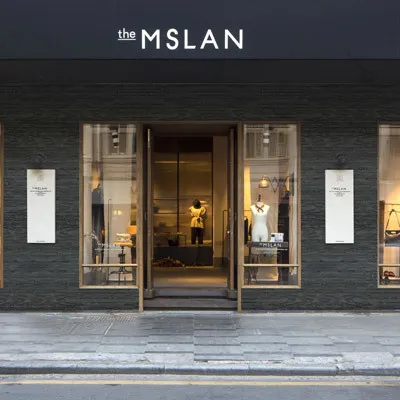
| Category | Dark Grey Muretto Stone | Fiber Cement |
|---|---|---|
| Weather Resistance | Thrives in extreme conditions: -40°C to 50°C. Salt spray? No problem—its density repels corrosion. Tested in coastal Italy for 50+ years with minimal wear. | Handles rain and wind well, but prolonged exposure to salt can cause edge fraying. Warms quickly in direct sun, which may lead to expansion cracks in hot climates. |
| Impact Strength | Tough as nails. A stray baseball or falling branch might leave a tiny chip, but it won't shatter. Perfect for high-traffic areas like schoolyards. | Resilient to minor impacts, but heavy blows can crack the panel (especially at the edges). Repairs require patching with specialized filler. |
| Moisture & Mold | Naturally porous, but when sealed properly, it resists water. Mold? Not a chance—stone doesn't provide food for fungi. | Water-resistant, but not waterproof. If edges are exposed (e.g., from poor installation), moisture can seep in and cause warping or mold growth. |
| UV Exposure | Ages like fine wine. Fades slightly over decades, but the effect is subtle—adding character, not looking worn. Think of an old castle wall. | Color can fade noticeably in 7-10 years, especially in sunny regions. Lighter shades (like beige) are more prone to yellowing. |
| Maintenance Needs | Low effort, high reward. Seal once every 5-7 years (less in dry climates). A quick power wash removes dirt; chips can be filled with matching mortar. | Requires painting/staining every 3-5 years to prevent fading and moisture damage. Dents or cracks need professional repair (costly!). |
| Lifespan | 50-100+ years. Some muretto structures in Italy date back to the Renaissance—need we say more? | 20-30 years on average. After that, panels may warp, crack, or lose structural integrity. |
| Eco-Friendliness | 100% natural, recyclable, and biodegradable (though you'll never need to dispose of it). Quarrying has a carbon footprint, but it's offset by its longevity. | Contains cement (high CO2 during production) and synthetic fibers. Not easily recyclable; ends up in landfills after its lifespan. |
On paper, Dark Grey Muretto Stone outperforms fiber cement in almost every durability category. But here's the catch: it's heavier (requiring stronger structural support), more expensive upfront, and trickier to install (you need masons, not just handy contractors). Fiber cement, on the other hand, is lightweight, budget-friendly, and a breeze to put up—making it ideal for projects where time and cost are tight.
In Portofino, Italy, there's a hotel called "La Scogliera" (The Reef) that's been standing since 1926. Its facade? Dark grey muretto stone. Over the years, it's weathered storms that sent 10-meter waves crashing against its walls, salt spray that corrodes steel, and summer heatwaves that made asphalt melt. Today, it still looks as imposing as ever—its stone walls slightly pitted, its color deepened to a rich charcoal, like a grandparent with wrinkles that tell stories.
"We've never replaced a single stone," says the current owner, Giovanni. "Every 10 years, we clean it with a soft brush and reapply sealant. That's it. The stone does the rest."
In a suburban neighborhood outside Austin, Texas, a developer built 50 townhomes in 2018—all with fiber cement siding. Why? Speed. "We needed to finish in 6 months," explains project manager Lisa. "Stone would have taken twice as long and required reinforcing the framing. Fiber cement panels went up in weeks, and we saved $15,000 per unit on labor."
Six years later, the homes still look sharp—though Lisa notes, "We're starting to see some fading on the south-facing walls. We'll need to repaint them next year, which'll cost about $3,000 per home. Not ideal, but manageable for rental properties."
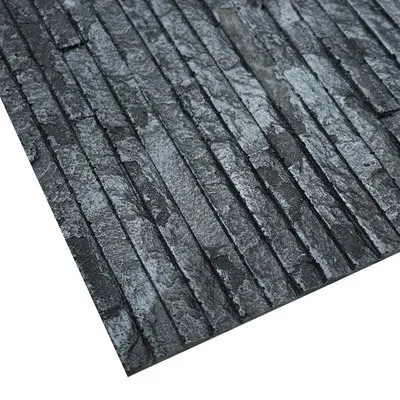
Back to Maria, the architect. After weeks of research, she made her decision: Dark Grey Muretto Stone for the main facade (the "face" of the building, visible from the street) and fiber cement for the rear walls and garage exteriors. "I wanted the front to feel permanent, like it's been there forever," she says. "The back? Function over form—we need it to go up fast and stay low-maintenance for the tenants."
Her logic? It's all about priority . Choose Dark Grey Muretto Stone if:
Choose fiber cement if:
Recommend Products












