
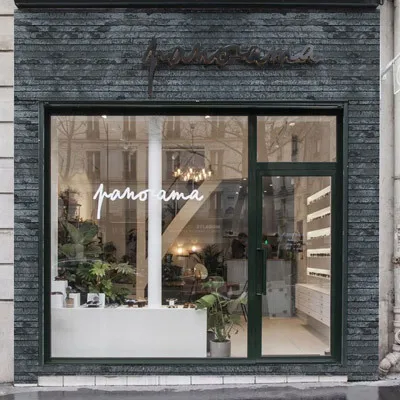
Walk down any street, and you'll notice it: buildings don't just exist —they speak . Their exteriors whisper stories of design intent, cultural context, and even the personalities of those who built them. Exterior cladding, the outermost layer that shields and adorns, is the voice of this conversation. Today, we're diving into a clash of two heavyweights in the cladding world: Dark Grey Muretto Stone and Quartzite. Both have loyal fans, but which one truly earns the title of "building storyteller"? Let's pull back the curtain and let the materials speak for themselves.
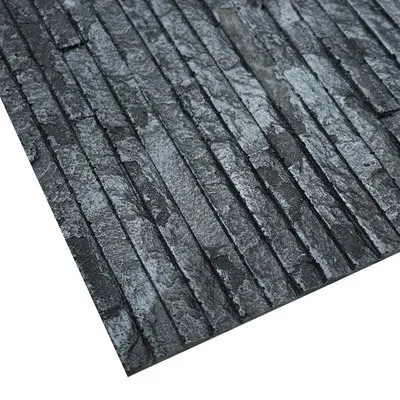
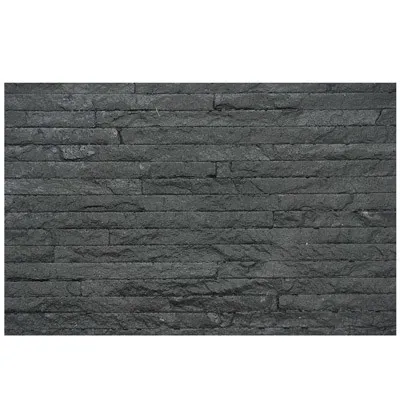
If architecture had a "new classic," Dark Grey Muretto Stone might just be it. Part of the broader mcm flexible stone family, this material is a love letter to traditional stonework reimagined for the demands of today's buildings. Born from MCM (Modified Composite Material) technology, it blends natural stone aggregates with advanced polymers to mimic the rugged charm of aged stone—think the weathered walls of a Tuscan villa or the historic fortresses of the Mediterranean—without the bulk or fragility of its ancestors.
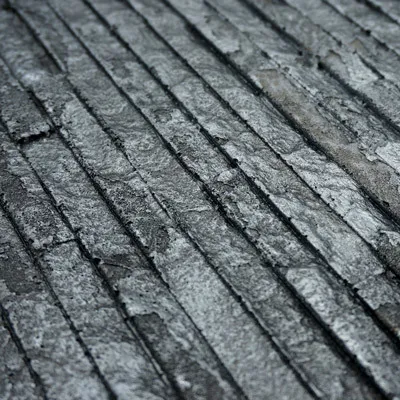
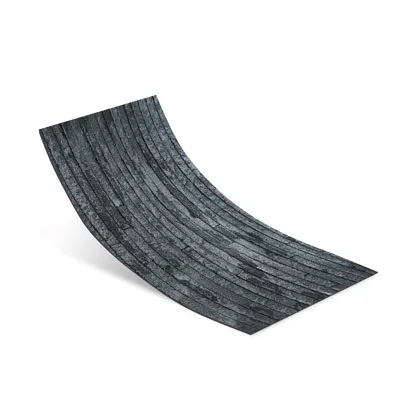
Run your hand over a panel, and you'll feel the texture: a subtle interplay of rough and smooth, like stone that's been kissed by rain and wind for decades. Its deep charcoal hue, "dark grey" through and through, isn't flat or monotonous. Instead, it shimmers with tiny flecks of lighter gray and even hints of silver, catching the light in a way that makes the building feel alive at different times of day. And here's the kicker: unlike solid stone, it's lightweight—around 8-12 kg per square meter—and flexible, meaning it can hug curved surfaces or adapt to uneven walls without cracking. For architects dreaming of bold, organic shapes, that's a game-changer.
"It's like having the soul of old-world stone with the brains of modern engineering," says Maria Gonzalez, a residential architect in Barcelona who recently used Dark Grey Muretto Stone on a coastal home. "My client wanted the look of a centuries-old cottage, but we needed something that could withstand salt spray and high winds. Muretto delivered—no chipping, no fading, and the installers finished in half the time they would have with real stone."
Quartzite, on the other hand, is a rock star in the truest sense—literally. Formed deep within the Earth when sandstone is heated and compressed by tectonic forces over millions of years, it's nature's version of "slow and steady wins the race." Harder than granite and nearly as dense as marble, it's a material with gravitas. Its color palette ranges from snowy whites to rusty reds, but for exterior cladding, the most popular picks are the muted grays and soft beiges that exude understated luxury.
What sets quartzite apart is its authenticity. Each slab is a one-of-a-kind masterpiece, with veins and patterns as unique as a fingerprint. Install a quartzite facade, and you're not just adding cladding—you're displaying a slice of Earth's history. "I had a client who called it 'bringing the mountains home,'" laughs James Chen, a contractor specializing in high-end residential builds in Colorado. "He wanted his mountain retreat to feel connected to the landscape, and quartzite did that. The way the sunlight hits those natural veins? It's like the building is breathing with the hills around it."
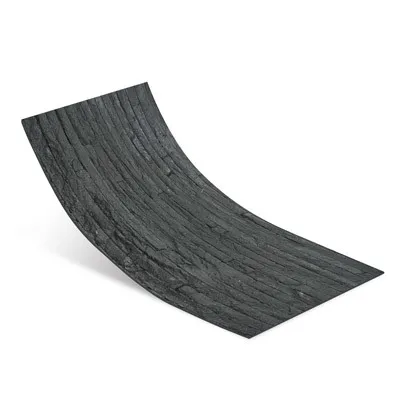
Cladding isn't just about protection—it's about personality. Let's put these two head-to-head in the (aesthetics) ring.
Dark Grey Muretto Stone thrives in versatility. In a modern urban setting, its sleek, uniform panels (often part of the MCM big slab board series for seamless, grout-line-minimizing installs) play well with glass and steel, adding warmth to an otherwise cold palette. Imagine a downtown loft building: floor-to-ceiling windows paired with Dark Grey Muretto walls—suddenly, the structure feels grounded, approachable, like it belongs in the neighborhood rather than towering over it.
In a rural context, it softens. Think a country home with a gabled roof and a Muretto Stone facade: the material's texture mimics the surrounding rocks and boulders, making the house feel like it grew out of the land. "We used it on a bed-and-breakfast in Vermont," recalls Gonzalez. "The owners wanted 'rustic elegance,' and Muretto delivered. Guests often comment on how the building 'feels like it's been there forever,' even though it was built in 2022."
Quartzite, by contrast, is unapologetically natural. Its veining—swirls of cream, gold, or even pink—adds movement and drama. It's the material for buildings that want to make a statement without shouting. A boutique hotel in Santorini, for example, might use white quartzite with soft gray veins to echo the island's iconic cliffs, creating a sense of calm luxury. In a historic district, a restored town hall clad in quartzite would blend in with its stone-built neighbors, honoring the past while standing strong for the future.
But here's the catch: quartzite's uniqueness can be a double-edged sword. While some homeowners crave one-of-a-kind veining, others prefer consistency. "I had a client who fell in love with a quartzite sample, but when the slabs arrived, the veining was more intense than expected," Chen admits. "We made it work, but it taught me that quartzite isn't for everyone—it requires a willingness to embrace imperfection."
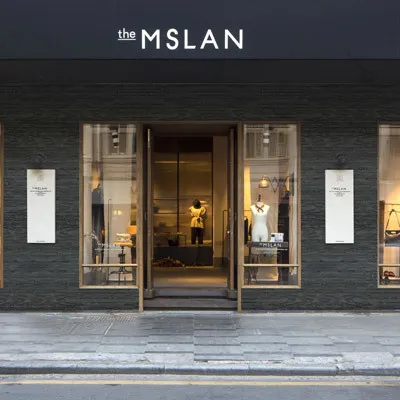
Looks matter, but a cladding material's true test is how it holds up when Mother Nature throws her worst. Let's talk about resilience.
| Attribute | Dark Grey Muretto Stone | Quartzite |
|---|---|---|
| Water Resistance | Low absorption (≤3%); resists mold/mildew | Very low absorption (≤0.5%); naturally waterproof |
| UV Stability | Fade-resistant; retains color for 20+ years | Highly stable; minimal fading over time |
| Impact Resistance | Flexible; resists cracking from minor impacts (e.g., hail) | Hard but brittle; can chip if hit with heavy objects |
| Maintenance | Annual washing with mild soap; no sealing needed | Sealing every 2-3 years; periodic cleaning to avoid staining |
| Expected Lifespan | 30-50 years with proper installation | 50-100+ years (if well-maintained) |
In coastal areas, where salt spray and humidity are constant foes, Muretto Stone's resistance to corrosion and mold gives it an edge. "I installed it on a beach house in Florida five years ago," says Chen. "After Hurricane Ian, the owners were sure the cladding would be ruined. They called me in a panic, but when I inspected, the panels were unscathed—no peeling, no discoloration. The only damage was a few loose shingles on the roof!"
Quartzite, though, is a champion in extreme cold. In places like Minnesota or Siberia, where freeze-thaw cycles can crack weaker materials, its density and low water absorption make it nearly indestructible. "We used quartzite on a ski lodge in the Rockies," Gonzalez notes. "After 12 winters of snow, ice, and sub-zero temps, the facade still looks brand new. It's like it laughs at the cold."
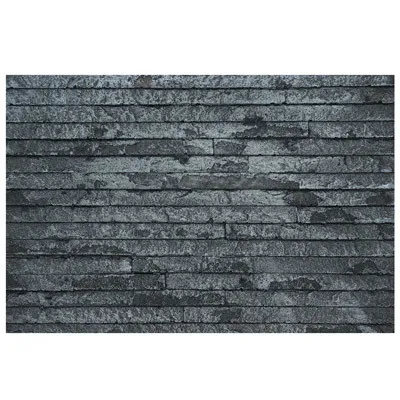
A material's beauty and durability mean little if installing it turns into a logistical nightmare. Let's talk about the realities of getting these materials from factory to facade.
If you've ever watched a stone mason struggle to lift a 50kg slab of natural stone, you'll appreciate why contractors rave about Muretto Stone. Weighing in at a fraction of the weight of solid stone, it's easy to handle—two people can carry a large panel without strain. Its flexibility also means it can be cut on-site with standard tools, reducing waste and allowing for last-minute adjustments.
"Installation is a breeze compared to quartzite," says Chen. "On a 2,000 sq ft home, we can have Muretto Stone up in 3-4 days. With quartzite? That same job might take a week or more, just because of the weight and the need for precise cutting. Plus, Muretto's interlocking panel system means fewer gaps and less grout—so less chance of water seeping in later."
Quartzite installation is a craft, not a quick job. Each slab is unique, so masons must carefully layout the pieces to ensure veins flow naturally—a process that can take hours of planning. The weight also requires reinforced framing in some cases, adding to both time and cost. "We once had to install steel brackets on a second-story wall to support the quartzite slabs," Chen recalls. "That added two days to the timeline and $5,000 to the budget. You don't realize how much your building's structure matters until you're staring at a 100kg slab."
Let's talk numbers. Dark Grey Muretto Stone typically costs $40-60 per square foot, including materials and installation. Quartzite, on the other hand, ranges from $70-120 per square foot—more than double in some cases. But here's the twist: quartzite's longer lifespan and minimal maintenance can make it a better investment for buildings (planning) to stand for generations, like historic landmarks or family estates.
"For a homeowner planning to sell in 10 years, Muretto Stone is a no-brainer—it adds curb appeal without breaking the bank," says Gonzalez. "But for a client building their 'forever home,' quartzite's longevity might be worth the upfront cost. It's like buying a classic car: pricier now, but it'll still turn heads 50 years later."
In an era where "green building" is more than a buzzword, both materials have their eco-credentials. Muretto Stone, as part of the mcm flexible stone lineup, uses recycled stone aggregates and requires less energy to produce than quarried natural stone. Its lightweight nature also reduces transportation emissions—trucks can carry more panels per trip, cutting down on fuel use.
Quartzite, being a natural stone, is biodegradable and non-toxic. However, quarrying it can disrupt local ecosystems, and the energy-intensive cutting and polishing process leaves a larger carbon footprint. That said, its (ultra-long) lifespan means less frequent replacement, which offsets some of these impacts.
"I had a client who insisted on carbon-neutral materials," Gonzalez shares. "We went with Muretto Stone and paired it with fair-faced concrete accents—another low-impact option. The result? A home that looks stunning and has a carbon footprint 30% lower than a traditional stone-clad house."
In downtown Portland, Oregon, a 12-story apartment building called "The Muretto" has become a local landmark. Clad in Dark Grey Muretto Stone, its facade contrasts with the surrounding glass towers, offering a warm, inviting presence in a sea of steel. "Residents love how it feels like a 'neighborhood building' despite its height," says the project's architect. "The stone softens the scale, making it feel human."
Over in Rome, the newly restored National Museum of Archaeology chose quartzite for its exterior renovation. The material was selected to match the original stone used in the museum's construction in 1889, ensuring continuity with the past. "Quartzite wasn't just a choice—it was a responsibility," says the lead conservator. "We needed something that would honor the building's history while protecting it for future generations."
At the end of the day, there's no "winner" in this showdown—only the right choice for your project. Dark Grey Muretto Stone is the ideal pick for those craving the look of natural stone with modern convenience, flexibility, and affordability. It's for the homeowner who wants a "lived-in" aesthetic without the maintenance hassle, or the architect designing a building with bold, curved lines.
Quartzite, meanwhile, is for the purists—the ones who believe in investing in materials that get better with age, that carry the weight of geological history in every slab. It's perfect for historic restorations, luxury homes, or buildings where longevity and natural beauty are non-negotiable.
And if neither feels quite right? The world of MCM offers other gems, like the MCM big slab board series for seamless modernism, or even travertine variants for warmer, earthier tones. The key is to ask: What story does my building want to tell? Once you answer that, the material will choose you.
After all, great architecture isn't just about bricks and mortar—or stone and slabs. It's about creating spaces that make us feel something. And whether that "something" comes from the modern ingenuity of Dark Grey Muretto Stone or the timeless allure of Quartzite, the result is a building that doesn't just stand—it matters .
Recommend Products












