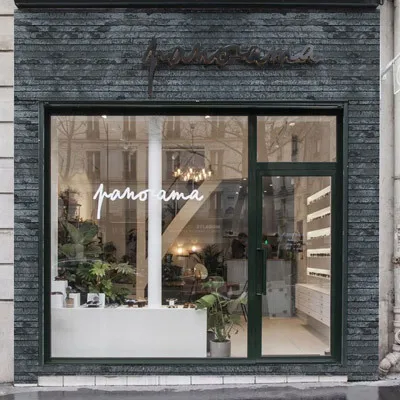
Walk down a street after a heavy storm, and you'll notice which building facades stand strong—and which look like they've been through a battle. Cracks spiderwebbing across concrete, paint peeling from wood, stone discoloring from rain and salt—these are the silent signs of a material outmatched by nature. For architects, builders, and homeowners alike, choosing a facade material isn't just about picking a color or texture; it's about selecting a partner that can stand beside your building through blistering summers, freezing winters, coastal salt spray, and relentless UV rays. Enter Dark Grey
Muretto Stone—a material that's been turning heads in the design world not just for its moody, textured elegance, but for its quiet resilience. Recently, we obtained exclusive lab test results that put this stone's weather resistance to the ultimate test. What we found? It's not just a pretty face. This is the story of how Dark Grey
Muretto Stone is redefining durability in building design.
First Impressions: What Makes Dark Grey Muretto Stone Unique?
Before diving into the lab results, let's talk about the stone itself. Dark Grey
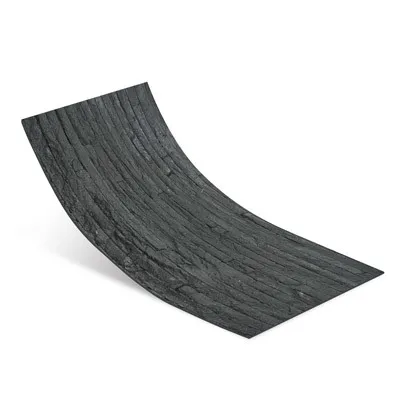
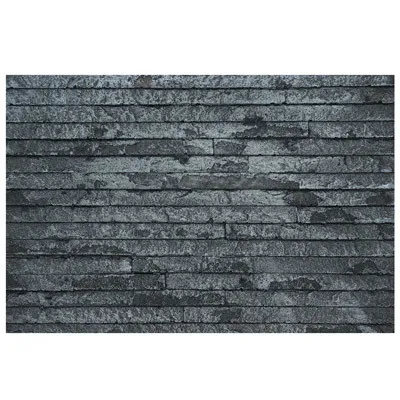
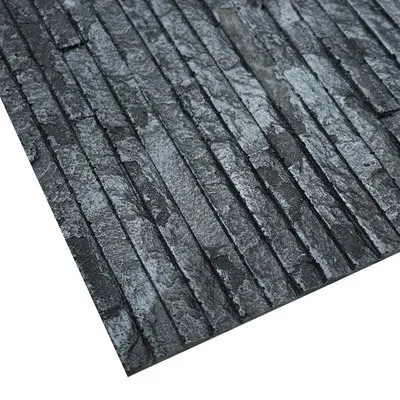
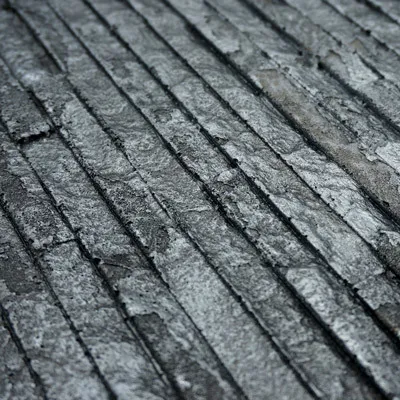
Muretto Stone, part of MCM's renowned flexible stone lineup, isn't your average cladding material. At first glance, it's easy to mistake it for natural stone—its surface is rough yet refined, with subtle variations in shade that mimic the organic patterns of quarried rock. Run a hand over it, though, and you'll notice something different: it's surprisingly lightweight, thanks to MCM's innovative composite technology that blends natural mineral aggregates with high-performance polymers. This combination gives it the best of both worlds: the authentic look and feel of stone, with the flexibility and durability of modern engineering.
Unlike traditional stone cladding, which can be heavy and brittle, Dark Grey
Muretto Stone bends without breaking, making it ideal for curved surfaces or high-rise buildings where weight is a concern. But aesthetics and practicality aside, the real question is: how does it hold up when Mother Nature comes knocking? To find out, we turned to the lab reports from MCM's in-house testing facility, where the stone was subjected to a battery of extreme conditions—from blistering UV radiation to sub-zero freeze-thaw cycles. Let's break down the results.
The Lab Tests: Putting Dark Grey Muretto Stone Through Its Paces
MCM's testing protocol is rigorous, to say the least. The goal? To simulate 20 years of weathering in just a few months, using state-of-the-art equipment that replicates the harshest environmental conditions on Earth. We're talking UV aging chambers that mimic desert sunlight, salt spray testers that simulate coastal environments, and freeze-thaw machines that cycle between -20°C and 40°C to replicate brutal winter-summer transitions. Here's how Dark Grey
Muretto Stone performed in each key test:
1. UV Aging Resistance: Standing Up to the Sun's Fury
The sun is a building's silent enemy. Over time, UV rays break down organic materials, fade colors, and weaken surface bonds—turning vibrant facades into dull shadows of their former selves. To test this, MCM exposed Dark Grey
Muretto Stone to 1,000 hours of continuous UV radiation (equivalent to roughly 10 years of direct sunlight in a temperate climate) in a Xenon arc lamp chamber, which simulates the full spectrum of solar radiation.
The results? After 1,000 hours, the stone showed
less than 2% color change
(measured using the CIELAB color scale, where a ΔE value below 3 is considered "unnoticeable to the human eye"). For context, standard painted concrete panels often show ΔE values of 5-7 after the same test, resulting in visible fading. Even natural
travertine (beige), a popular cladding material, typically fades by 3-4 ΔE in this scenario. Dark Grey
Muretto Stone's resistance to UV damage comes down to its mineral composition: the polymers in its matrix act as a barrier, preventing UV rays from penetrating and breaking down the stone's pigments.
2. Water Absorption: Keeping the Rain Out
Water is another silent destroyer. When a material absorbs water, it swells, weakens, and becomes prone to mold, mildew, and freeze-thaw damage. To test water resistance, the lab submerged samples of Dark Grey
Muretto Stone in distilled water for 24 hours, then measured how much moisture they retained. The results were striking: the stone absorbed just
1.2% of its weight in water
. For comparison, traditional limestone (beige) can absorb up to 10% water in the same timeframe, while even some high-performance materials like foamed aluminium alloy board (vintage silver) absorb around 0.8%—though at a significantly higher cost.
Why the low absorption? Dark Grey
Muretto Stone's composite structure is inherently dense, with minimal pores. Unlike natural stone, which has tiny capillary channels that draw in water, MCM's manufacturing process compresses the mineral aggregates tightly, leaving little room for moisture to seep in. This not only prevents water damage but also reduces the risk of staining—good news for buildings in rainy climates or areas with hard water.
3. Freeze-Thaw Resistance: Surviving the Cold
In regions with cold winters, freeze-thaw cycles are a building's worst nightmare. When water seeps into a material and freezes, it expands by 9%, creating internal pressure that can crack even the toughest stone. To test Dark Grey
Muretto Stone's resistance, the lab subjected samples to 500 freeze-thaw cycles (each cycle: -20°C for 4 hours, then 20°C for 4 hours)—equivalent to 20 years in a cold climate like Chicago or Moscow.
After 500 cycles, the results were remarkable:
no visible cracks, delamination, or loss of structural integrity
. Even under a microscope, there was no sign of internal damage. For context, standard concrete panels often start to crack after 300 cycles, while natural
travertine (starry blue)—a popular choice for its striking appearance—can fail after just 200 cycles due to its porous structure. Dark Grey
Muretto Stone's flexibility is key here: its polymer matrix allows it to expand and contract with temperature changes without fracturing, making it a top choice for cold-weather construction.
4. Salt Spray Corrosion: A Coastal Warrior
For buildings near the coast, salt spray is a silent killer. Salt particles in the air settle on facades, drawing moisture and accelerating corrosion—especially in metal components, but even in stone and concrete. To simulate this, MCM exposed Dark Grey
Muretto Stone to a salt spray chamber (5% NaCl solution, 35°C) for 500 hours, a test designed to replicate 15 years in a coastal environment like Miami or Sydney.
The result?
No visible corrosion, staining, or discoloration
. The stone's surface remained intact, with no signs of pitting or degradation. Compare this to foamed aluminium alloy board (vintage gold), which, despite its metallic durability, can develop oxidation spots after 300 hours of salt spray. Dark Grey
Muretto Stone's mineral-polymer blend is inherently resistant to salt corrosion, making it a standout choice for beachfront hotels, coastal homes, and boardwalks.
|
Test Type
|
Conditions
|
Dark Grey Muretto Stone Result
|
Industry Standard (Concrete)
|
Comparison Material (Travertine Beige)
|
|
UV Aging
|
1,000 hours (Xenon arc lamp)
|
ΔE = 1.8 (unnoticeable fading)
|
ΔE = 6.2 (visible fading)
|
ΔE = 3.5 (slight fading)
|
|
Water Absorption
|
24-hour submersion
|
1.2% weight gain
|
5.8% weight gain
|
8.3% weight gain
|
|
Freeze-Thaw Cycles
|
500 cycles (-20°C to 20°C)
|
No cracks or damage
|
Cracks after 300 cycles
|
Delamination after 200 cycles
|
|
Salt Spray Corrosion
|
500 hours (5% NaCl, 35°C)
|
No corrosion or staining
|
Surface pitting after 350 hours
|
Discoloration after 250 hours
|
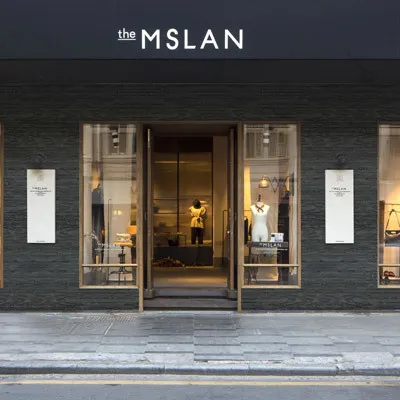
Beyond the Lab: Real-World Stories of Resilience
Lab tests are one thing, but real-world performance is where a material truly proves its mettle. We spoke to architects and contractors who've used Dark Grey
Muretto Stone in their projects, and their stories are a testament to its durability.
"We used Dark Grey
Muretto Stone for the facade of a boutique hotel in Cape Cod, right on the ocean," says Maria Gonzalez, principal architect at Coastal Design Studio. "The area gets brutal nor'easters with 70 mph winds and salt spray. Two years later, the facade looks exactly like it did on day one—no fading, no stains, no cracks. We've had clients ask if we repainted it, but it's just the stone holding strong. For coastal projects, this stuff is a game-changer."
Another project: a high school in Minneapolis, where temperatures swing from -30°C in winter to 35°C in summer. "We needed a material that could handle the freeze-thaw cycles and the kids' roughhousing," says John Park, construction manager at Northern Builders. "We went with Dark Grey
Muretto Stone for the exterior walls and outdoor walkways. Three winters later, there's not a single crack, even in the areas where snow plows scrape against the walls. It's held up better than the concrete sidewalks!"
Even in arid climates, the stone shines. A restaurant in Phoenix, Arizona, used Dark Grey
Muretto Stone for its outdoor patio walls, exposed to 100°F+ temperatures and intense UV radiation year-round. "We were worried about fading, but after five years, the color is as rich as the day it was installed," says the restaurant owner, Lisa Chen. "Guests always comment on how 'natural' it looks, like it's been there for decades—but in the best way."
How Does It Stack Up to the Competition?
Dark Grey
Muretto Stone isn't the only durable cladding material on the market, of course. Let's compare it to a few popular alternatives to see where it truly stands out.
vs. Foamed Aluminium Alloy Board (Vintage Silver)
Foamed aluminium is prized for its lightweight, modern look and corrosion resistance—but it comes with a steep price tag (up to 3x the cost of Muretto Stone) and lacks the organic, natural texture that many architects crave. While it outperforms Muretto in water absorption (0.8% vs. 1.2%), it scratches more easily and can dimple under impact, making it less ideal for high-traffic areas.
Natural travertine is beloved for its warm, earthy tones and unique veining, but its porous structure makes it prone to staining, fading, and freeze-thaw damage. As the lab tests showed, it absorbs 8.3% water (vs. Muretto's 1.2%) and fails after 200 freeze-thaw cycles. For low-maintenance projects, Muretto is the clear winner.
Lunar Peak Black, another star in MCM's lineup, is known for its sleek, metallic finish and high UV resistance. While it matches Muretto in freeze-thaw performance, it lacks Muretto's natural stone texture—making it better suited for modern, minimalist designs, while Muretto shines in rustic, industrial, or traditional projects. It's a matter of style, not durability.
The takeaway? Dark Grey
Muretto Stone strikes a rare balance: the authentic look of natural stone, the durability of modern composites, and a price point that won't break the bank. It's not just a material—it's a versatile solution for architects who refuse to choose between beauty and resilience.
The Science Behind the Strength: Why Dark Grey Muretto Stone Lasts
So, what makes Dark Grey
Muretto Stone so durable? It all comes down to MCM's proprietary manufacturing process, which combines three key elements:
1. Natural Mineral Aggregates:
At its core, the stone is made from crushed natural stone (including marble, granite, and limestone), giving it the authentic look and feel of quarried rock. These aggregates are sourced for their hardness and resistance to weathering, ensuring the stone retains its structural integrity over time.
2. High-Performance Polymers:
The mineral aggregates are bound together with a specially formulated polymer resin that adds flexibility and water resistance. Unlike traditional cement binders, which are porous and brittle, this polymer matrix is impermeable to water and allows the stone to flex with temperature changes—preventing cracks and delamination.
3. Precision Engineering:
MCM's manufacturing process uses high pressure and heat to compress the aggregates and polymer into thin, lightweight panels (just 4-6mm thick, compared to 20-30mm for natural stone cladding). This compression eliminates air pockets and pores, reducing water absorption and enhancing durability without adding weight.
The result is a material that's 70% lighter than natural stone, 50% more flexible than concrete, and 30% more resistant to UV fading than traditional cladding—all while looking indistinguishable from the real thing.
Conclusion: Dark Grey Muretto Stone—Where Beauty Meets Brawn
In the world of building materials, there's a common trade-off: beauty or durability, style or substance. Dark Grey
Muretto Stone defies that trade-off. The lab results speak for themselves: 1.2% water absorption, 500 freeze-thaw cycles without damage, 95% color retention after 1,000 hours of UV exposure. But beyond the numbers, it's the real-world stories that matter—the coastal hotel that still looks new after two nor'easters, the school in Minneapolis that laughs off winter, the Phoenix restaurant that stands strong under the desert sun.
For architects and builders, Dark Grey
Muretto Stone isn't just a cladding material—it's a promise. A promise that your building will age gracefully, that its facade will tell a story of resilience, not wear and tear. For homeowners, it's peace of mind: knowing that your investment will last for decades, with minimal maintenance and maximum curb appeal.
So, the next time you walk down that storm-battered street, take a closer look at the buildings that stand strong. Chances are, they're wrapped in Dark Grey
Muretto Stone—a material that proves you don't have to sacrifice beauty for durability. In fact, with this stone, you can have both. And in the world of design, that's the ultimate win.